Best Times of Day to Fish
Every angler has heard it: "You should have been here yesterday" or "The bite was on this morning." Timing matters in fishing, sometimes more than your lure…

The best times of day to fish are the golden hours around dawn and dusk, when low light and cooling water push fish to feed in the shallows. Midday and night both have their moments, but if you can only fish one window, make it first light or the last hour before dark.
Every angler has heard it: “You should have been here yesterday” or “The bite was on this morning.” Timing matters in fishing, sometimes more than your lure choice or your spot. Fish do not feed evenly throughout the day. They feed in windows, and those windows are driven by light, temperature, and the daily rhythms of their prey. If you learn to fish the best times of day, you will catch more fish with less effort.
This guide explains when fish feed, why, and how to plan your trips around those windows in every season.
Why Time of Day Matters
Fish are opportunistic feeders, but they are also vulnerable. They feed most aggressively when conditions favor them as predators and when their prey is active. Several factors drive the daily feeding rhythm:
- Light levels. Many gamefish are ambush predators that hunt best in low light, when they can see baitfish but baitfish cannot see them as well.
- Water temperature. Daily warming and cooling shifts fish comfort and activity.
- Baitfish activity. Predators feed when and where their prey is moving.
- Angling pressure. Quiet, low-traffic hours often fish better simply because the water is calm and undisturbed.
The Golden Hours: Dawn and Dusk
For the majority of freshwater gamefish, the best fishing of the day happens at dawn and dusk. These low-light periods are prime time for one simple reason: predators have the advantage.
Early Morning
The hour before sunrise and the two hours after are often the single best window of the day. The water is cool and calm, light is low, and fish move shallow to feed. This is when topwater fishing is at its best and when big fish let their guard down. It pays to have your fishing technique dialed in before first light, because the window is short.
Evening
The last two hours of daylight mirror the morning. As the harsh sun softens, fish move back up and feed again before dark. Evening can be even better than morning in hot weather because the water has had all day to oxygenate.
If you can only fish for a couple of hours, make them the first or last of the day.
Midday Fishing
Midday, from late morning through mid-afternoon, is generally the toughest stretch, especially in summer. Bright sun pushes fish deep and tight to cover, and the bite slows. But midday is not hopeless.
- Fish deep structure, shade, and heavy cover where fish retreat.
- Slow down and downsize your presentation.
- In cold seasons, midday can actually be the best window because it is the warmest part of the day.
- Overcast skies erase the midday slump entirely; clouds keep fish active and shallow all day.
Night Fishing
After dark, a whole different fishery opens up. Many species feed actively at night, including catfish, walleye, bass, crappie, and stripers. Night fishing has real advantages:
- Cooler, more comfortable temperatures in summer.
- Far fewer boats and anglers.
- Big fish feed with confidence in the dark.
Night fishing does require extra care: good lights, a clean and organized boat or bank setup, and a focus on safety. But for beating summer heat and crowds, it is hard to beat.
How Seasons Change the Best Times
The ideal time of day shifts with the seasons because it follows water temperature.
Spring
Spring fish often bite best in the afternoon, once the sun has warmed the shallow water a few degrees. Mornings can be cold and slow early in the season.
Summer
Dawn, dusk, and night are king. Midday is the hardest window. Get out early or fish late.
Fall
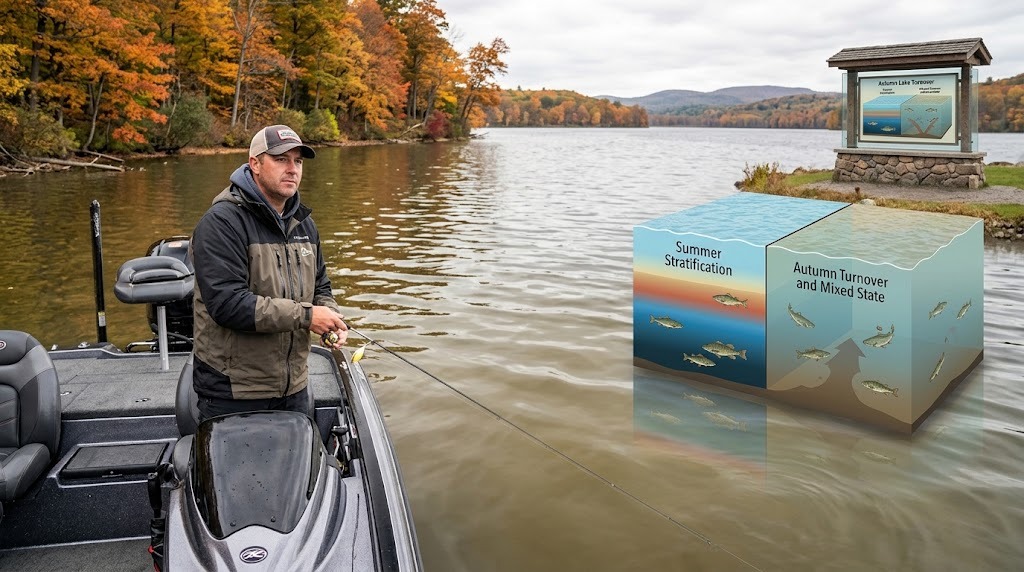
Fall is the great exception. Because the water is comfortable and fish are feeding hard for winter, the bite can be excellent all day long.
Winter
Winter flips the script. The warmest part of the day, midday into early afternoon, is usually the best window because that small temperature rise can trigger a short feeding flurry.
Other Timing Factors
Weather and Fronts
A stable weather pattern produces consistent feeding windows. An approaching front often triggers a strong feeding spree right before it arrives. The bluebird high-pressure day after a cold front is usually the slowest fishing of all.
Moon Phases and Solunar Theory
Many anglers track the moon. Solunar theory suggests fish feed more actively around the new and full moons and during major and minor periods tied to the moon overhead and underfoot. The science is debated, but it costs nothing to check a solunar table and plan a trip around a strong period that lines up with dawn or dusk. Our best fishing times calculator does that math for you, blending sun and moon windows for any date.
Tides (Coastal and Tidal Waters)
In coastal and tidal rivers, the moving water of incoming and outgoing tides is the most important timing factor of all, often more important than time of day. Moving water means feeding fish.
Practical Tips for Fishing the Right Times
- Plan to be on the water and fishing before first light, not just leaving the house then.
- If you are limited on time, fish the golden hours rather than the middle of the day.
- On overcast or rainy days, you can fish productively all day; take advantage.
- Keep a simple log of when you catch fish. Patterns will emerge for your home water.
- In winter, sleep in and fish the warm afternoon.
Conclusion
You cannot control the fish, but you can control when you show up. Dawn and dusk are reliably the best times across most of the year, midday belongs to deep water and shade except in winter, and night fishing opens a productive world of its own. Match your timing to the season and the weather, and you will turn slow trips into successful ones simply by being on the water when the fish are ready to eat.
🛒 Recommended Gear on Amazon
- Fishing headlamp - browse current options and reviews on Amazon.
- Topwater lures - browse current options and reviews on Amazon.
- Insect repellent - browse current options and reviews on Amazon.
As an Amazon Associate, we earn from qualifying purchases - at no extra cost to you. This helps us keep producing free, in-depth guides.