Northern Pike
The northern pike is the toothy apex predator of cool northern waters - a long, savage, ambush hunter that strikes lures with explosive violence and fights with wild, headshaking energy.
🗓️ Last reviewed: June 2026
Overview
The northern pike is the toothy apex predator of cool northern waters - a long, savage, ambush hunter that strikes lures with explosive violence and fights with wild, headshaking energy. Often called the "water wolf," the pike is one of the most exciting freshwater fish to target: aggressive, willing, widely available across the northern US, and capable of reaching impressive sizes. Pike fishing is fast, visual, and adrenaline-filled, making it a favorite of anglers who want hard strikes and a real battle. They are also a gateway to chasing their larger cousin, the muskellunge.
Identification & Appearance
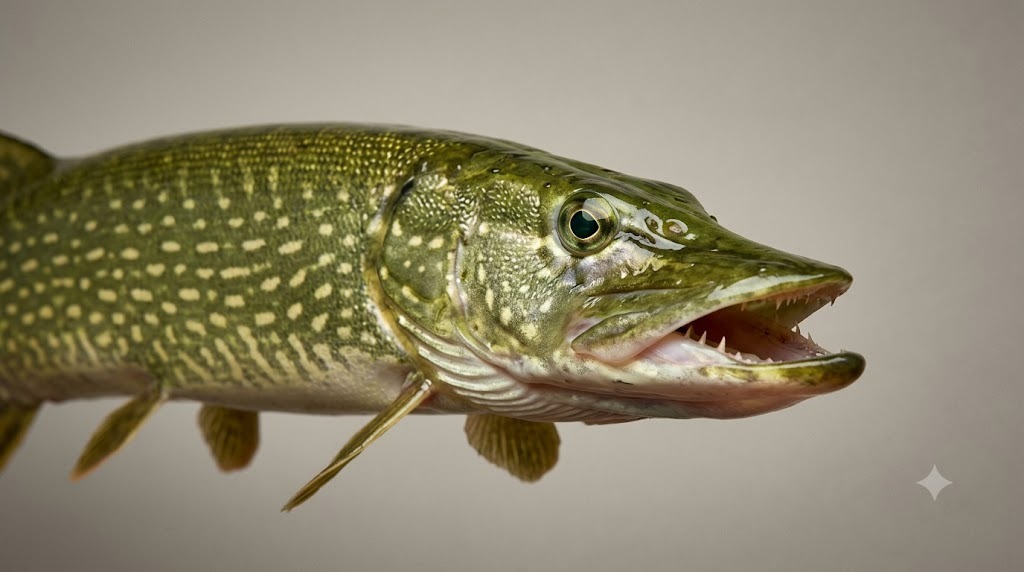
The northern pike has an unmistakable shape - long, slender, and torpedo-like, with the dorsal and anal fins set far back near a forked tail, perfect for explosive short-burst acceleration. Its body is olive-green to dark green, marked with rows of light, bean-shaped or oval cream-colored spots running horizontally along the flanks. The head is long and flattened, shaped like a duck's bill, and the large mouth is armed with hundreds of sharp, backward-slanting teeth. Pike are distinguished from muskellunge by their light spots on a dark body (the muskie has the reverse pattern) and by fully scaled cheeks.
Range & Habitat (US waters)
The northern pike is a cool- and cold-water fish native to the northern United States, abundant across the Great Lakes region, the upper Midwest, the northern plains, the Northeast, and Alaska. It thrives in lakes, large reservoirs, slow rivers, and weedy backwaters with clean, cool, well-oxygenated water. Pike are strongly associated with vegetation - they relate to weed beds, lily pads, bulrush edges, and submerged grass, using the cover to ambush prey. They prefer cooler water and, in summer, larger pike often retreat to deeper, cooler basins and weed edges to escape the heat.
Behavior & Feeding
The northern pike is a pure, opportunistic ambush predator. It hangs motionless in or beside cover, then accelerates in a sudden, ferocious burst to engulf prey crosswise in its toothy jaws before turning it to swallow head-first. Pike eat primarily fish - perch, suckers, ciscoes, smaller pike, and panfish - and will also take frogs, crayfish, ducklings, and small mammals. They are visual hunters that feed throughout the day, with the best activity in cool conditions. Pike are bold and curious, often following lures right to the boat before striking.
Best Seasons & Times to Catch
Spring is outstanding - pike spawn early, soon after ice-out, and feed aggressively in shallow, warming bays through the pre- and post-spawn period. Early summer continues strong before the heat pushes big fish deeper. Fall is the trophy season; as water cools, large pike feed heavily and aggressively to fatten for winter, producing many of the year's biggest fish. Pike are also a premier ice-fishing target, often taken on tip-ups baited with large minnows. On a daily basis pike feed across the day, but morning, evening, and overcast, breezy conditions tend to be best.
Where to Find Them - Reading the Water
Pike are weed-and-edge fish. In spring and early summer, focus on shallow, weedy bays, the edges of bulrushes and lily pads, submerged grass flats, and any visible vegetation in warming water. As summer heat builds, larger pike slide to the deeper outside weed edges, points, drop-offs, and cool main-lake areas, while smaller "hammer-handle" pike stay shallow. In fall, pike return to weed edges and relate to schools of baitfish. The classic pike spot is a green weed edge adjacent to deeper water - an ambush highway.
Tackle & Rigs
Pike demand stout tackle and, critically, bite protection. A medium-heavy to heavy 7-foot baitcasting or spinning rod with a strong reel and 30-65 lb braid is standard. The single non-negotiable item is a leader - pike teeth slice through monofilament and fluorocarbon instantly, so a wire leader or a heavy fluorocarbon leader of 40-80 lb is essential on every rig. For lures, the lure ties directly to the leader. For live or dead bait, a quick-strike rig - two treble or single hooks spread along a wire trace - allows an immediate, humane hookset and is far better than letting pike swallow the bait.
Best Baits & Lures
Pike will hammer a wide range of large lures. Top producers include large in-line spinners and spinnerbaits, big spoons (a classic and deadly pike lure), jerkbaits and large minnow baits, swimbaits, bucktail jigs, and topwater lures for explosive surface strikes over weeds. For bait fishing, large live minnows, suckers, and dead baits such as smelt or herring fished on a quick-strike rig are extremely effective, especially for big pike and through the ice. Bright colors - chartreuse, orange, fire-tiger, and silver - draw aggressive reaction strikes.
Techniques - How to Fish for It
Pike fishing is mostly active casting and covering water. Cast big spinners, spoons, and swimbaits along and over weed edges with a steady or erratic retrieve, and be ready for a strike at any moment, including right at the boat - a figure-eight motion at the end of the retrieve often triggers a following pike. Work topwater lures over submerged grass for heart-stopping blow-ups. For bait, suspend a large minnow or dead bait under a float along a weed edge on a quick-strike rig and set the hook quickly when the float runs. Always handle pike carefully with a long-nose pliers and a jaw spreader to deal with those teeth.
Common Mistakes
The single most dangerous mistake is fishing without a leader - pike will bite through unprotected line on the very first strike and swim off with the lure. Other errors include using tackle too light to control a thrashing pike, letting bait-caught pike swallow the bait deeply instead of using a quick-strike rig, retrieving lures too far from cover and weed edges, and careless handling that injures the angler or the fish. Failing to do a figure-eight at the boat costs many following fish.
Size, Records & Eating Quality
A 24-30 inch pike is a solid fish; a pike over 36 inches or 10 pounds is a genuine trophy in US waters, and fish over 20 pounds are rare and exceptional. The all-tackle world record is a 55-pound pike caught in Germany in 1986. Northern pike have firm, white, mild flesh and are good eating, though they carry a row of small Y-shaped bones that require a specific filleting technique to remove. Many anglers release large pike - which are valuable old females - and keep smaller fish for the table.
Pros & Cons (as a target species)
Pros: aggressive and willing to strike big lures, explosive and exciting strikes, hard fighters with wild headshakes, available across the northern US and through the ice, grow large, and reward active, fast-paced fishing. Cons: require wire or heavy leaders and stout tackle, those teeth demand careful handling and proper tools, the Y-bones make filleting tricky, and big fish become harder to find in the summer heat.
Best Suited For
Northern pike suit anglers who crave aggression, hard strikes, and a real fight, and who enjoy active casting and covering water. They are excellent for anglers in the northern states and Canada, ice fishers, and those who want a large, exciting fish without the extreme difficulty of muskie fishing. Pike are a great species for anglers ready to graduate from panfish to a true toothy predator.
FAQ
Do I really need a leader for northern pike? Absolutely - it is non-negotiable. Pike have hundreds of sharp teeth that slice through monofilament and fluorocarbon instantly. Use a wire leader or a heavy fluorocarbon leader on every single rig, or you will lose fish and lures.
What is the best lure for northern pike? A large spoon is the timeless classic and is deadly almost everywhere. Big in-line spinners, spinnerbaits, jerkbaits, and swimbaits are also outstanding. Bright colors trigger the most reaction strikes.
When is the best time to catch a trophy pike? Fall. As water cools, big pike feed aggressively to fatten for winter, and many of the largest fish of the year are caught in autumn. Spring, just after ice-out, is also excellent.
What is a figure-eight and why do it? Pike often follow a lure to the boat without striking. A figure-eight is a sweeping figure-eight motion with the rod tip beside the boat at the end of the retrieve, which often triggers a following pike to strike.
Are northern pike good to eat? Yes - they have firm, white, mild flesh. The catch is a row of small Y-shaped bones that requires a specific filleting technique to remove. Once you learn the cut, pike are excellent on the table.