Rainbow Trout
The rainbow trout is the iconic American cold-water game fish - beautiful, widely distributed, and beloved by everyone from a child fishing a stocked pond to a fly angler chasing wild fish in a mountain stream.
🗓️ Last reviewed: June 2026
Overview
The rainbow trout is the iconic American cold-water game fish - beautiful, widely distributed, and beloved by everyone from a child fishing a stocked pond to a fly angler chasing wild fish in a mountain stream. Native to the Pacific drainages of western North America, the rainbow has been stocked so widely that it is now available in nearly every state. It is a willing biter, an acrobatic fighter that jumps and runs, and excellent on the table. For millions of anglers, the rainbow trout is the first fish that turns a casual outing into a lifelong passion.
Identification & Appearance
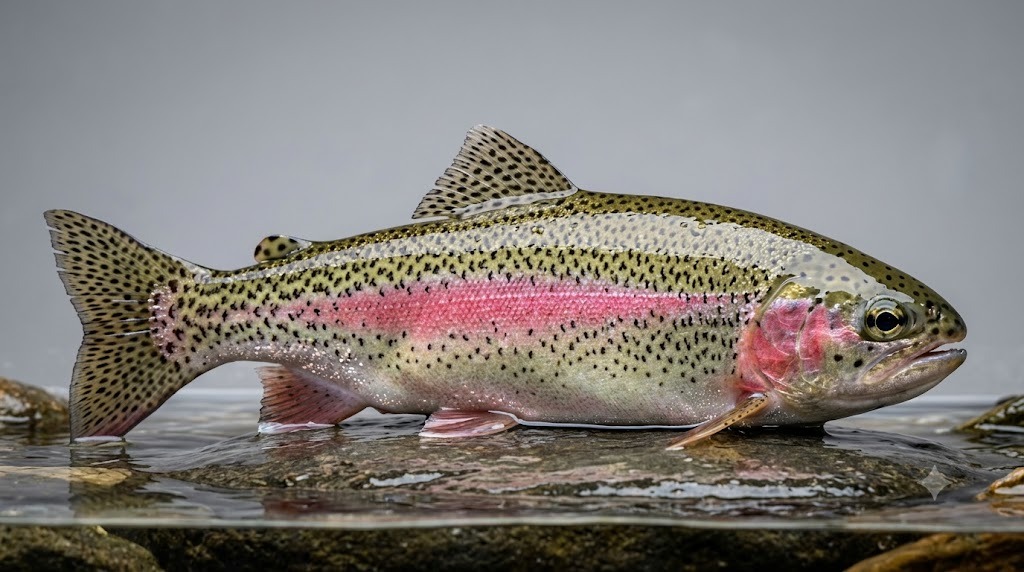
The rainbow is unmistakable when in good color: a silvery to greenish body with a broad band of pink, red, or rose running along the lateral line from gill to tail, giving the fish its name. The back and flanks are heavily covered with small black spots that extend onto the dorsal fin and the tail. The belly is white to silver. Coloration varies with habitat - stream fish are often brilliantly marked, lake and stocked fish tend to be more silvery. The steelhead is the same species in its sea-run or large-lake migratory form, typically chrome-bright with a fainter stripe.
Range & Habitat (US waters)
Native to cold rivers and lakes from Alaska down through the Pacific states, the rainbow trout has been introduced into suitable cold water across the entire country, including the Appalachians, the upper Midwest, and even tailwaters in southern states below cold-bottom-release dams. Rainbows need clean, cool, well-oxygenated water, generally below the low 70s. Look for them in mountain streams and rivers, spring creeks, cold reservoirs and natural lakes, and dam tailwaters. State agencies stock millions of rainbows annually in put-and-take fisheries, making them the most accessible trout in America.
Behavior & Feeding
Rainbow trout are opportunistic, drift-feeding predators. In streams they hold facing the current and intercept food carried past them - aquatic insect nymphs, emerging and adult insects, larvae, small fish, fish eggs, and crustaceans. In lakes they cruise and feed on insects, zooplankton, baitfish, and crayfish. They are sight feeders that rely on clear water and good light, though they spook easily and often feed best in low light or under a riffled surface. Their feeding is tightly linked to water temperature and to insect hatches, which can produce dramatic surface activity.
Best Seasons & Times to Catch
Spring and fall offer the best combination of cool water and active fish. Spring brings abundant insect hatches and aggressive feeding; many states open trout season in spring and stock heavily. Fall fish feed hard ahead of winter. Summer can be excellent in high-elevation streams and cold tailwaters but tough in waters that warm into the 70s. Winter fishing is productive on tailwaters and in milder regions. On a daily basis, early morning and evening - and the timing of insect hatches - usually produce the best action; overcast days extend the bite.
Where to Find Them - Reading the Water
In streams, read the current. Trout hold where they can rest out of heavy flow yet still intercept drifting food: behind and in front of rocks, along current seams, in the heads and tails of pools, in oxygenated riffles, under cut banks, and beneath overhanging brush. They want cover and a steady food conveyor. In lakes, look for cool water near inlets, drop-offs, points, and submerged structure, and watch for surface rises during a hatch. Recently stocked fish often school near the stocking access point before dispersing.
Tackle & Rigs
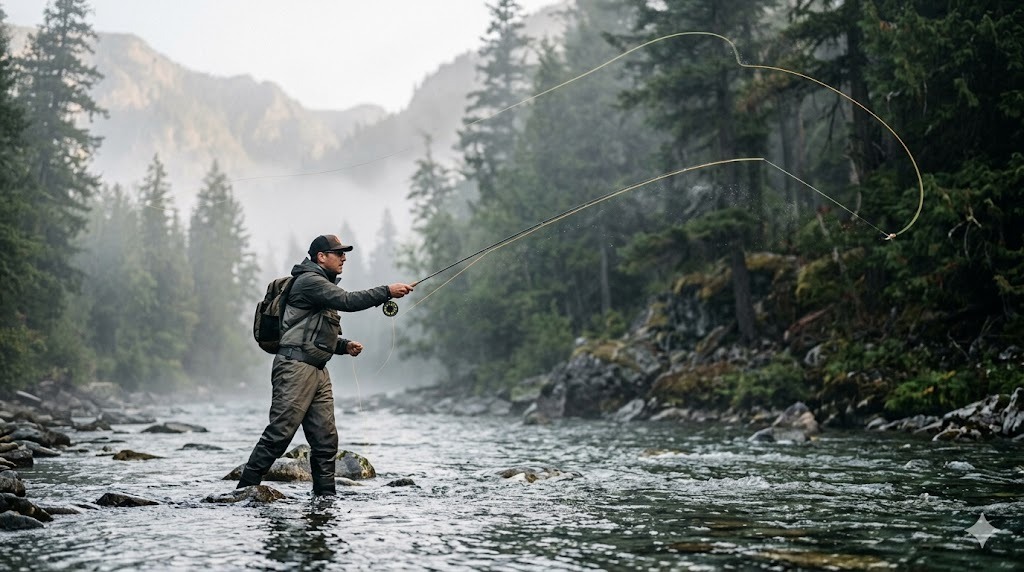
Two approaches dominate. For spin fishing, a light or ultralight 6-7 foot rod with a small spinning reel and 4-6 lb monofilament handles small lures and bait well. Common rigs include a bait setup with a small split shot and a single hook, a slip-bobber rig for suspending bait, and inline spinners or small spoons fished directly. For fly fishing, a 4 to 6 weight rod, 8.5-9 feet, with a matching reel and floating line covers most trout water; nymphs are typically fished under a strike indicator, and dry flies are cast to rising fish.
Best Baits & Lures
For bait anglers, nightcrawlers, prepared dough baits (PowerBait-style), salmon eggs, mealworms, and minnows all catch rainbows, with dough bait especially effective on stocked fish. Top lures include inline spinners, small spoons, small minnow-imitating crankbaits and jerkbaits, and soft-plastic trout worms. For fly anglers, the staples are nymphs such as the Pheasant Tail and Hare's Ear, dry flies like the Adams and Elk Hair Caddis, egg patterns, and small streamers. Match the size and color of the natural insects present.
Techniques - How to Fish for It
The core skill is presenting a bait or fly that drifts naturally with the current at the trout's level - anything moving unnaturally fast gets refused. Bait anglers add just enough split shot to tick along the bottom and drift it through likely lies. Spin anglers cast inline spinners across and slightly upstream, retrieving just fast enough to keep the blade turning. Fly anglers focus on the drag-free drift, dead-drifting nymphs under an indicator and casting dries to rising fish. In lakes, troll spoons and spinners, or suspend bait under a slip bobber near structure. Stealth matters everywhere - approach quietly and keep a low profile.
Common Mistakes
The most common mistake is spooking fish with heavy footsteps, shadows, and clumsy casts in clear water - trout see and feel everything. Another is an unnatural drift that drags the bait or fly across the current. Anglers also use line that is too heavy and visible, fish water that is too warm and stresses the trout, and ignore what the fish are actually eating instead of matching the hatch. Overplaying a fish to exhaustion is harmful if you intend to release it.
Size, Records & Eating Quality
Stocked rainbows commonly run 9-14 inches; stream and lake fish of 16-20 inches are excellent, and a wild rainbow over 5 pounds is a true trophy. The all-tackle world record is a 48-pound rainbow caught from Canada's Lake Diefenbaker in 2009, though that fish was from a strain of farm-raised origin. Rainbow trout are prized table fare with delicate, mild, pink-tinged flesh; they are excellent grilled, pan-fried, or smoked, which makes them a popular keep-and-eat fish in put-and-take fisheries.
Pros & Cons (as a target species)
Pros: available almost everywhere thanks to widespread stocking, beautiful and acrobatic, excellent eating, accessible to total beginners yet endlessly rewarding for fly anglers, and a willing biter on both bait and lures. Cons: requires cold clean water and is unavailable or stressed in warm waters, can spook easily in clear conditions, stocked fish can be inconsistent, and summer heat shuts down many fisheries.
Best Suited For
Rainbow trout suit nearly every angler. They are the perfect first fish for kids and beginners on a stocked pond with dough bait, and they are a lifelong pursuit for fly anglers reading current and matching hatches. They are ideal for anglers who enjoy scenic mountain streams, want a fish for the table, or want to learn the craft of cold-water fishing.
FAQ
What is the best bait for stocked rainbow trout? Prepared dough bait fished off the bottom is the most reliable choice for stocked fish, with nightcrawlers and salmon eggs close behind. Stocked trout are accustomed to pellet food, which dough bait imitates well.
Do I need to fly fish to catch rainbow trout? No. Fly fishing is effective and rewarding, but a light spinning rod with bait or an inline spinner catches plenty of rainbows. Many anglers fish trout their whole lives with spinning gear.
What water temperature do rainbow trout need? They thrive in cold, well-oxygenated water and become stressed above the low 70s. The best fishing happens when water sits in the 50s and 60s.
What is the difference between a rainbow trout and a steelhead? They are the same species. A steelhead is simply a rainbow trout that migrates to the ocean or a large lake and returns, typically growing larger and turning chrome-bright.
Why won't trout bite my bait in clear water? They have likely seen you. In clear water, trout spook easily - approach quietly, stay low, keep your shadow off the water, and use lighter, less visible line.