Channel Catfish
The channel catfish is the most widely distributed and most heavily fished catfish in North America.
🗓️ Last reviewed: June 2026
Overview
The channel catfish is the most widely distributed and most heavily fished catfish in North America. Hardy, abundant, and adaptable, it thrives in everything from giant rivers to tiny farm ponds, and it eats almost anything, which makes it one of the easiest game fish to target. The channel cat fights with a stubborn, powerful pull, grows to a respectable size, and is excellent on the table - the foundation of countless fish fries and the species that supports much of America's commercial catfish farming. For laid-back, productive, family-friendly fishing, few species rival the channel cat.
Identification & Appearance
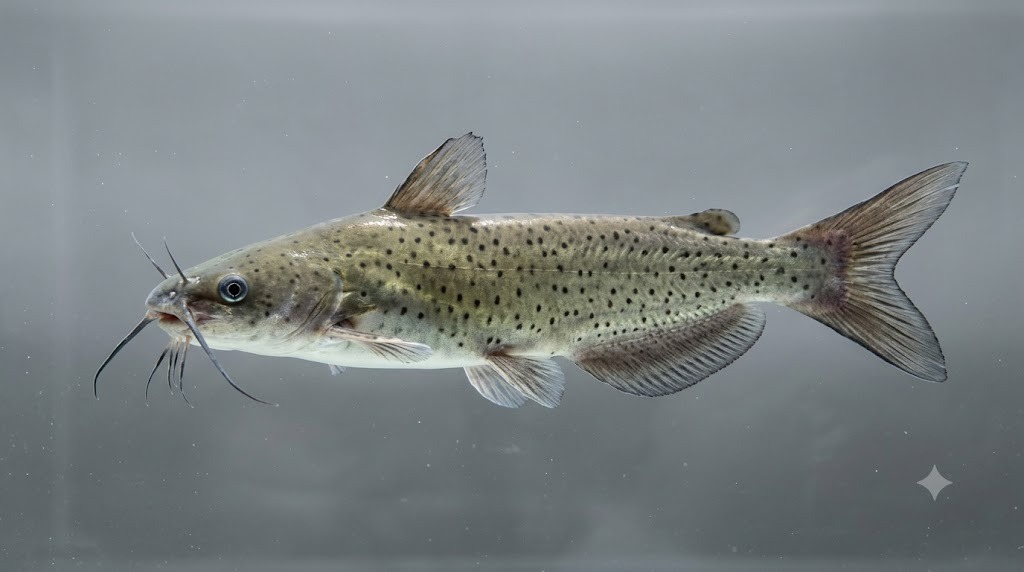
The channel catfish is a sleek, streamlined catfish with smooth, scaleless skin, eight whisker-like barbels around the mouth, and a deeply forked tail. Its color is olive, slate-gray, or bluish on the back, fading to a silvery or white belly. Young and mid-size channel cats usually carry scattered dark spots along the sides, though these often fade in large, old fish. The deeply forked tail and the rounded anal fin distinguish it from the similar blue catfish, which has a straight-edged anal fin, and from the flathead catfish, which has a flat head and a squared tail.
Range & Habitat (US waters)
Native to much of central North America, the channel catfish has been stocked so extensively that it is now found in all 48 contiguous states. It is remarkably adaptable, tolerating warm water, low oxygen, current, and stillness. Channel cats thrive in large and small rivers, reservoirs, natural lakes, farm ponds, and even brackish coastal waters. They favor deeper holes, channel edges, current breaks, and areas with cover such as logjams, undercut banks, and rock. Their adaptability is exactly why they are stocked in so many community ponds and small lakes.
Behavior & Feeding
The channel catfish is a true omnivore and opportunistic feeder, equipped with an extraordinary sense of smell and taste - its barbels and skin are covered in taste receptors, allowing it to find food in murky water and total darkness. Its diet includes fish, crayfish, insects, mollusks, worms, plant matter, and carrion. Channel cats feed actively at night and during low light, and they roam more than many anglers expect, moving between deep daytime holes and shallow nighttime feeding flats. Warm water triggers their heaviest feeding, making them a prime summer target.
Best Seasons & Times to Catch
Summer is the prime channel catfish season - warm water has them feeding aggressively, and the night bite is outstanding. Spring, after water warms past the upper 50s, brings strong fishing as cats feed up and prepare to spawn in early summer. Fall offers steady action as fish feed before winter. Even winter cats can be caught in deep holes with slow, patient presentations. On a daily basis, the bite typically improves dramatically from late afternoon through the night; channel cats feed best after dark, though they bite during the day in stained water and on overcast days.
Where to Find Them - Reading the Water
Channel cats relate to depth changes, current, and cover. In rivers, target deep holes, the outside bends of channels, current seams, eddies below riffles and dams, logjams, and undercut banks. In lakes and reservoirs, focus on creek channels, deep flats adjacent to shallow feeding areas, points, riprap, and humps. A reliable pattern is to fish deeper holes during the day and shallow flats and channel edges at night. Catfish often hold where current or structure concentrates food, and a good logjam or deep hole can hold many fish.
Tackle & Rigs
Channel catfish do not require heavy gear; a medium to medium-heavy rod, 6.5 to 7.5 feet, with a baitcasting or spinning reel and 12-20 lb monofilament handles most fish, with heavier line in snaggy current. The two essential rigs are the slip-sinker (Carolina) rig, with an egg or no-roll sinker sliding above a barrel swivel, leader, and hook, used to fish bait on or near the bottom; and the slip-bobber rig, used to suspend bait over snags or at a specific depth. A simple three-way rig works well in heavy current. Circle hooks in the 2/0 to 5/0 range are popular and improve hookups while reducing deep-hooking.
Best Baits & Lures
Channel catfish are caught almost entirely on bait, and their incredible sense of smell means scent matters most. Top baits include nightcrawlers, chicken liver, cut bait (chunks of shad, bluegill, or other fish), live minnows and small sunfish, shrimp, and a wide variety of commercial "stinkbaits" and dough baits designed to dissolve a scent trail. Cut bait and stinkbaits excel in stained water and for larger fish; worms and prepared baits are reliable for numbers. Fresh, smelly bait consistently outproduces stale offerings.
Techniques - How to Fish for It
Channel catfish fishing is patient, bottom-oriented fishing. The standard approach is to cast a slip-sinker rig with scented bait into a likely hole, current seam, or flat, set the rod in a holder with a slightly loose drag or a bait clicker, and wait for the fish to find the scent. Keeping the bait still and letting the scent disperse is key. In current, anchor upstream of a hole and fan baits across it. At night, move to shallow flats and channel edges. When a channel cat takes the bait, let it load up the rod, then sweep into it - circle hooks set themselves with steady pressure rather than a hard jerk.
Common Mistakes
A frequent mistake is using stale, dried-out bait - channel cats hunt by smell, and fresh, pungent bait is far more effective. Others include fishing too shallow during bright daylight, moving the bait too much instead of letting the scent work, striking too early before the fish commits, and using tackle and hooks far heavier than necessary, which reduces bites. Anglers also overlook the night bite, when channel catfish are at their most active and catchable.
Size, Records & Eating Quality
Most channel catfish caught run 1-5 pounds; a fish over 10 pounds is excellent, and a true trophy channel cat can exceed 20 pounds. The all-tackle world record is 58 pounds, caught from Santee-Cooper Reservoir in South Carolina in 1964. Channel catfish are outstanding eating, with firm, mild, slightly sweet flesh - they are the most commonly farmed food fish in the US. Smaller and mid-size channel cats are generally considered the best table fish; many anglers release the largest specimens to preserve the fishery's big-fish potential.
Pros & Cons (as a target species)
Pros: available almost everywhere, very easy to catch on simple bait rigs, hardy and forgiving, fight hard, grow to a satisfying size, and are excellent eating. Cons: largely a bottom-fishing waiting game that some anglers find slow, the night bite means the best fishing happens after dark, bait can be messy and smelly, and the largest fish require patience and persistence.
Best Suited For
Channel catfish are ideal for relaxed, social, and family fishing - a rod in a holder, bait on the bottom, and time to enjoy the outdoors. They are excellent for beginners, kids, and anyone who wants reliable action and fish for the table. They also reward dedicated trophy hunters who target big channel cats with cut bait in deep river holes. Bank anglers especially love them, since no boat is needed.
FAQ
What is the best bait for channel catfish? It depends on the goal. For numbers, nightcrawlers and prepared stinkbaits are reliable. For bigger fish and in stained water, fresh cut bait - chunks of shad or bluegill - is hard to beat. Whatever you use, fresh and smelly outperforms stale.
When is the best time to catch channel catfish? Summer is the prime season, and the bite is best from late afternoon through the night. Channel cats are most active in warm water and feed heavily after dark.
Do I need a boat to catch channel catfish? No. Channel cats are one of the best bank-fishing species. Deep holes, river bends, and pond edges reachable from shore all hold catfish, and a rod in a holder does the work.
How do I know when a catfish has my bait? The rod tip will tap and then load up steadily. With circle hooks, do not jerk - let the fish pull the rod down, then sweep the rod back with steady pressure to set the hook.
Are channel catfish good to eat? Yes, excellent. They have firm, mild, slightly sweet flesh and are the most farmed food fish in the US. Smaller and mid-size fish are generally considered the best eating.