Walleye
The walleye is the prized cool-water game fish of the northern United States - a sleek, golden predator that combines challenging, skill-rewarding fishing with what many anglers consider the finest fillets in all of freshwater.
🗓️ Last reviewed: June 2026
Overview
The walleye is the prized cool-water game fish of the northern United States - a sleek, golden predator that combines challenging, skill-rewarding fishing with what many anglers consider the finest fillets in all of freshwater. Named for its large, glassy, light-reflecting eyes, the walleye is the species that defines fishing culture across the upper Midwest and the northern tier. It is not the hardest fighter, but catching walleye consistently requires reading water, understanding light and depth, and refining presentation - and the reward, both sporting and culinary, keeps anglers obsessed for life.
Identification & Appearance
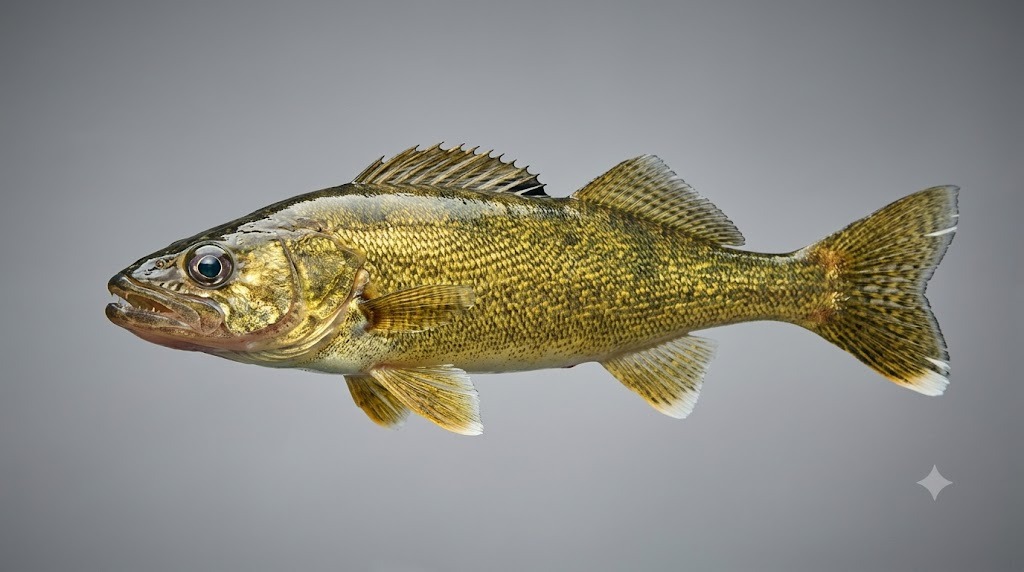
The walleye is the largest member of the perch family, with an elongated, torpedo-shaped body, two distinct dorsal fins, and a large, toothy mouth lined with sharp canine teeth. Its color is olive-gold to brassy yellow on the back and flanks, often with dark mottling, fading to a white belly. The signature features are the large, milky, reflective eyes - adapted with a light-gathering layer for hunting in low light - and a distinct white tip on the lower lobe of the tail fin. The similar sauger lacks that white tail tip and has distinct dark blotches and spotted dorsal fins.
Range & Habitat (US waters)
The walleye is native to and most abundant across the northern US, from the Great Lakes region through Minnesota, Wisconsin, the Dakotas, and into the Northeast, with strong introduced populations extending its range south and west. It is a cool-water fish, preferring large lakes, big reservoirs, and sizable rivers with clean water and firm bottoms of sand, gravel, or rock. Walleye favor open water and structure over heavy vegetation, and they relate strongly to wind-blown shorelines, rocky points, reefs, and current. The Great Lakes, particularly Lake Erie, and the Mississippi River system support world-class walleye fishing.
Behavior & Feeding
Walleye are efficient predators with a major low-light advantage. Their reflective eyes let them see and feed effectively at dawn, dusk, at night, and in turbid or wind-stirred water, when prey fish are at a disadvantage. They feed primarily on baitfish - yellow perch, shad, shiners, smelt - along with crayfish, leeches, and large insects. Walleye relate to bottom structure and follow baitfish, often suspending over open water in summer. Their feeding windows are tightly tied to light: bright, calm, clear conditions push them deep and make them tough, while wind, clouds, and low light bring them up and turn them on.
Best Seasons & Times to Catch
Spring is a premier walleye season, as fish stage and run toward shallow rocky and current areas to spawn after ice-out, feeding heavily before and after. Early summer offers excellent fishing as walleye settle onto structure. Midsummer fish often suspend over deep open water and are caught trolling. Fall brings another strong feeding push as walleye fatten for winter, sometimes producing the biggest fish of the year. Walleye are also a premier ice-fishing target. On any given day, dawn, dusk, and night are the prime windows - the low-light specialist feeds best when the light is low.
Where to Find Them - Reading the Water
Walleye location revolves around structure, bottom type, and light. Look for rocky and gravel points, mid-lake reefs and humps, sharp drop-offs, the edges of weed flats, and wind-blown shorelines where waves stir up food and reduce light penetration. In rivers, target current breaks, the slack water below dams and wing dams, deep holes, and seams. A reliable rule is to fish shallower in low light and wind, and deeper in bright, calm conditions. In summer, do not ignore open water, where walleye suspend at the depth of the baitfish.
Tackle & Rigs
Walleye fishing rewards a sensitive, moderate-power setup. A 6.5 to 7-foot medium or medium-light spinning rod with a fast tip, a 2500-3000 reel, and 6-10 lb monofilament, or braid with a fluorocarbon leader, is the standard. Core walleye rigs include the live-bait or "Lindy" rig, a sliding sinker ahead of a long leader and single hook for dragging live bait; the bottom-bouncer-and-spinner harness for covering water; the jig, perhaps the single most important walleye tool; and the slip-bobber rig for precisely presenting live bait over structure. For trolling open water, crankbaits on planer boards are key.
Best Baits & Lures
Walleye are caught on both live bait and lures. The classic live baits are nightcrawlers, leeches, and minnows - the "big three" - fished on jigs, harnesses, and rigs, with leeches and crawlers shining in warm water and minnows best in cold water. Top lures include lead-head jigs (often tipped with live bait or soft plastic), minnow-imitating crankbaits and jerkbaits, blade baits, and spinner harnesses. Natural and subtle colors work in clear water; brighter chartreuse, orange, and gold patterns excel in stained water and low light.
Techniques - How to Fish for It
Jigging is the foundational walleye technique: cast or vertically present a jig tipped with a minnow or plastic, working it along the bottom with a lift-and-drop motion and watching for a subtle take. Rigging - slowly dragging a live-bait rig along structure - tempts neutral fish. Trolling crankbaits or spinner harnesses on bottom bouncers and planer boards covers water and finds active and suspended fish. Slip-bobber fishing places a leech or minnow precisely over a reef or rock pile. The walleye bite is famously light, often just a tick or extra weight - stay in contact, and set the hook with a firm but controlled snap.
Common Mistakes
A key mistake is fishing through the bright, calm midday and expecting the same results as low-light periods - walleye are low-light feeders, so timing matters enormously. Others include missing the soft, subtle bite by not staying in bottom contact, fishing the wrong depth and ignoring where the baitfish are, using line too heavy and visible in clear water, and failing to adjust to wind, which is a walleye angler's friend. Trolling too fast or too slow for the water temperature also costs fish.
Size, Records & Eating Quality
A "keeper" walleye is often 14-18 inches; a fish over 6 pounds is excellent, and a true trophy walleye exceeds 10 pounds. The all-tackle world record is 25 pounds, caught by Mabry Harper from Old Hickory Lake, Tennessee, in 1960, though that long-standing record carries some historical dispute. Walleye are widely regarded as the best-eating freshwater fish in North America, with firm, white, sweet, mild fillets and no strong flavor - a walleye shore lunch is a celebrated tradition across the northern states and Canada.
Pros & Cons (as a target species)
Pros: arguably the finest-eating freshwater fish, intellectually rewarding and skill-driven, grows to a satisfying size, available across the northern US and through the ice, and supported by deep fishing traditions and infrastructure. Cons: not a spectacular fighter, the light bite is easy to miss, the best fishing is confined to low-light windows, success often requires understanding structure and electronics, and walleye are largely a cool-water fish absent from the warm South.
Best Suited For
Walleye suit anglers who enjoy the puzzle of fishing - reading structure, light, and depth, and refining presentation - more than raw fighting power. They are ideal for anglers who value a top-tier meal, who fish the northern lakes and rivers, and who enjoy methodical jigging, rigging, and trolling. They are also a beloved ice-fishing target and a strong choice for anglers willing to fish dawn, dusk, and after dark.
FAQ
Why do walleye bite best in low light? Walleye have large, reflective eyes adapted to gather light, giving them a hunting advantage at dawn, dusk, night, and in wind-stirred or stained water. They feed most aggressively when prey fish cannot see as well.
What is the best bait for walleye? The "big three" live baits - nightcrawlers, leeches, and minnows - are the classics, often fished on a jig. A jig tipped with a minnow or leech is the most versatile and productive walleye presentation.
Why is wind good for walleye fishing? Wind stirs up the bottom, concentrates food along shorelines, and reduces light penetration, which all favor the walleye's low-light hunting style. A "walleye chop" on the water often turns the bite on.
Are walleye good to eat? Yes - they are widely considered the best-eating freshwater fish in North America, with firm, white, sweet, mild fillets. The walleye shore lunch is a celebrated northern tradition.
Why do I keep missing walleye bites? The walleye bite is famously soft, often just a faint tick or a feeling of extra weight. Stay in constant contact with the bottom, watch your line closely, and set the hook the moment you sense anything different.