Fall Fishing: The Feeding Frenzy
Ask experienced anglers when they catch their best fish, and many will say fall. As the days shorten and the water cools, fish sense that winter is coming.…

Ask experienced anglers when they catch their best fish, and many will say fall. As the days shorten and the water cools, fish sense that winter is coming. Their instinct is simple and powerful: eat as much as possible while food is still abundant. The result is one of the most exciting feeding windows of the entire year. Fish chase baitfish in open water, gorge themselves, and reward anglers who are willing to bundle up and chase the action.
This guide explains why fall fishing is so good, how to track the fall migration, and the tactics that turn the feeding frenzy into a full cooler or a great day of catch and release.
Why Fall Fishing Heats Up When the Water Cools
The trigger for fall fishing is dropping water temperature. As the surface cools from the summer highs back into the 60s and 50s, several things happen at once:
- Fish metabolism shifts into a feeding mode driven by the approaching winter.
- Baitfish such as shad begin migrating, often into the backs of creeks.
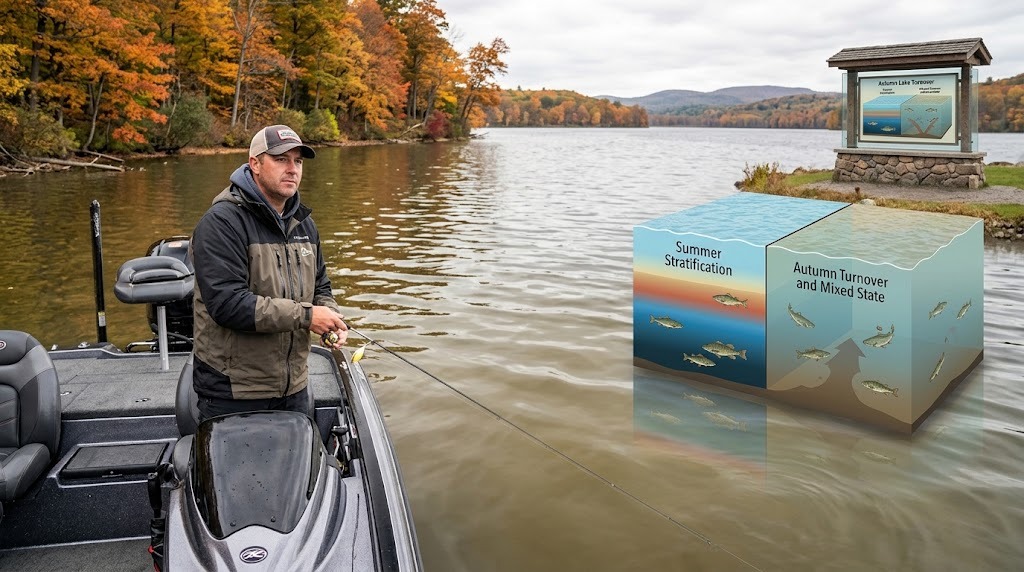
- The summer thermocline breaks down and the lake mixes, spreading oxygen and fish through the water column.
- Cooler, comfortable water lets fish roam and feed aggressively all day, not just at dawn and dusk.
The bottom line: fish are hungry, active, and often shallow. The challenge is that they move a lot, following the bait.
Follow the Bait
The single most important rule of fall fishing is to find the baitfish. In fall, gamefish do not relate to structure as tightly as they do in summer. Instead, they follow schools of shad and minnows. Find the bait and you find the predators.
- Watch for surface activity: dimpling shad, swirls, and especially birds. Diving gulls and herons are pointing right at feeding fish.
- Use your electronics to locate clouds of baitfish in open water and creek arms.
- Bait often pushes into the backs of creeks and pockets as fall progresses. Predators follow.
- When you see fish busting bait on the surface, cast immediately into the activity.
Where Fall Fish Go
The Backs of Creeks
As fall advances, baitfish migrate up creek arms toward the shallow ends, and gamefish follow. The backs of major creeks become some of the best water on the lake. Start at the mouth and work your way back until you find activity.
Main-Lake Points and Flats
Early in fall, fish stage on main-lake and secondary points, intercepting bait on the move. Wind-blown points are especially good because the wind concentrates plankton, then baitfish, then predators.
Open Water
Fall is the season for open-water fishing. Schools of bass, white bass, and stripers will corral shad against the surface anywhere in the lake. Keep a rod rigged and ready for these surface explosions.
Fall Tactics and Lures
Fall lure selection is all about imitating fleeing baitfish.
- Lipless crankbaits cover water fast and mimic shad. A staple of fall fishing.
- Squarebill and shallow crankbaits for banging cover in creeks and on points.
- Spinnerbaits for stained water and aggressive fish.
- Topwater walking baits and poppers when fish are schooling on the surface.
- Swimbaits and underspins for a more natural baitfish profile.
- Jigs and soft plastics for the slower, late-fall bite as water gets cold.
Match the size and color of your lure to the local baitfish. If the shad are small, throw a small bait. Shad-pattern and white colors are hard to beat.
How the Fall Bite Changes Over the Season
Early Fall
Water is still relatively warm. Fish transition from summer spots and feed aggressively. Power fishing with fast-moving baits shines.
Mid Fall
The peak. Bait is migrating, the feeding frenzy is in full swing, and fish can be caught all day. This is the time to be on the water as often as possible.
Late Fall
Water gets cold and the bite slows down but the fish are big. Slow down your presentations, fish jigs and soft plastics, and target the last warm pockets and deeper transitions. The fish you catch now are often the heaviest of the year.
Fall Fishing for Different Species
- Bass. Both largemouth and smallmouth feed hard in fall. Smallmouth in particular can be caught chasing bait in open water.
- White bass and stripers. These open-water predators put on legendary surface-feeding shows in fall. White bass will keep a topwater or spoon ready in your hand all afternoon.
- Crappie. Crappie school up around brush and timber and feed well in cooling water. A great time to fill a cooler.
- Walleye. Fall walleye feed heavily and move shallower as water cools, especially in low light.
- Trout. Stream trout feed up before winter; fall stocking and spawning runs add to the action.
Practical Fall Tips
- Dress in warm layers. Fall mornings are cold and the weather can change fast.
- Watch the birds. They are free fish finders.
- Move until you find active fish, then slow down and work the school.
- Stable, mild weather produces the best fall fishing; a hard cold front can shut it down for a day or two.
- Days are getting short, so plan your trip and watch the clock.
Conclusion
Fall fishing is a reward for anglers willing to embrace cooler weather. The fish are feeding with urgency, they are following the baitfish, and they are often shallow and aggressive. Find the bait, match the hatch, cover water, and be ready for surface-busting action. For many anglers, the fall feeding frenzy produces the best and biggest fish of the entire year. Bundle up and get out there before winter sets in.
🛒 Recommended Gear on Amazon
- Crankbaits - browse current options and reviews on Amazon.
- Jerkbaits - browse current options and reviews on Amazon.
- Cold-weather fishing gloves - browse current options and reviews on Amazon.
As an Amazon Associate, we earn from qualifying purchases - at no extra cost to you. This helps us keep producing free, in-depth guides.