How to Catch Crappie
If you want a fish that's easy to catch in numbers, fights with a feisty headshake, and tastes absolutely outstanding in the frying pan, the crappie is hard to…

If you want a fish that’s easy to catch in numbers, fights with a feisty headshake, and tastes absolutely outstanding in the frying pan, the crappie is hard to beat. These popular panfish are found across most of the country, in reservoirs, rivers, and ponds, and they’re a favorite of casual anglers and serious specialists alike. Crappie are also schooling fish, which means when you find one, you’ve usually found dozens. The catch is that crappie move around with the seasons. Pin down where they are right now and a cooler full of slabs is well within reach. Here’s how to catch crappie all year long.
Two Crappie, One Approach
You’ll encounter two species: the black crappie, which prefers clearer water and more cover, and the white crappie, which tolerates stained, murky water and open structure. Our crappie species guide covers both in more detail. They often share the same lakes, and the good news is that the techniques for both are nearly identical. So we’ll treat them together and focus on the season.
Spring: The Crappie Anglers’ Holiday
Spring is the most celebrated time of the year for crappie fishing, and for good reason. As water temperatures rise into the upper 50s and low 60s, crappie move from deep water into the shallows to spawn. They become concentrated, shallow, aggressive, and easy to reach from the bank or a boat.
- Where: Shallow coves and creek arms, especially the north side of the lake, which warms first. Look for fish around brush, flooded bushes, stake beds, and dock pilings in 2 to 8 feet of water.
- What: A small jig (1/16 or 1/32 ounce) under a bobber is the classic. A live minnow on a small hook under a float is equally deadly.
- How: Cast or dip your bait next to visible cover and let it sit. During the spawn, crappie hold tight to structure, so accuracy matters more than distance.
Pre-spawn fish stage on the first deep structure outside the spawning flats; catch those and you’ll find the biggest females of the year.
Summer: Go Deep and Find the Brush
Once the spawn ends and water heats up, crappie pull off the banks and relocate to deeper, cooler, more comfortable water. This is when a lot of casual anglers give up, but the fish are very catchable, you just have to go find them.
- Where: Brushpiles, standing timber, deep creek channels, main-lake points, and bridge pilings in 10 to 25 feet of water. Sunken brush is a magnet.
- What: Jigs and minnows fished vertically right over the cover. Tightlining and spider rigging (fanning multiple rods off the front of a slow-moving boat) shine here.
- Tip: A fish finder is a huge advantage in summer. Crappie suspend at specific depths, so once you mark fish at, say, 14 feet, present your bait right at that level.
Early morning and evening are best in the summer heat, and crappie often feed actively after dark around lighted docks and bridge lights. A quick look at the best fishing times can help you time those low-light windows.
Fall: The Feeding Push
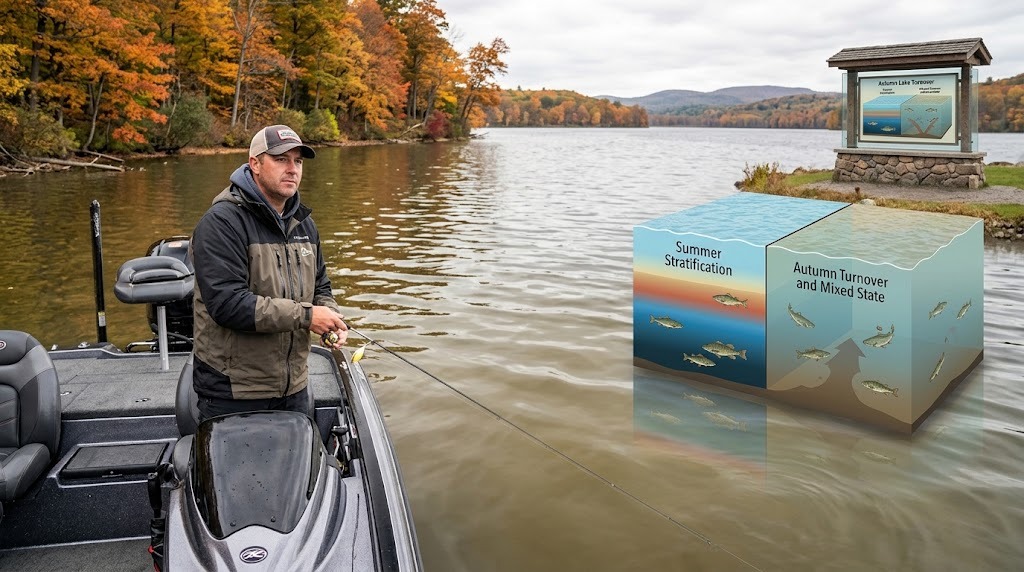
As water cools back down in fall, crappie scatter to chase shad, then begin grouping up again. They follow baitfish into the backs of creeks and feed heavily to prepare for winter.
- Where: Follow the shad. Crappie will be near the bait in creek channels and on points. They often move shallower again as the water cools through the 60s.
- What: Small crankbaits and jigs trolled or cast to cover water and locate roaming schools. Once you contact fish, slow down and work the area thoroughly.
Fall fishing can be a bit of a hunt because the fish move, but the reward is fat, healthy crappie in good numbers.
Winter: Slow, Deep, and Steady
Cold water makes crappie sluggish but predictable. They pack into the deepest available structure and barely move.
- Where: Deep brushpiles, river channel bends, deep points, and the deepest standing timber. Fish often stack in tight, dense schools.
- What: A jig or minnow fished vertically and held nearly still. The presentation must be slow; tiny, subtle movements only.
- Tip: In northern states, ice fishing for crappie is a winter institution. Small jigs and minnows fished through the ice over deep brush produce excellent catches.
The key in winter is patience and precision. Find the school, drop straight down on them, and finesse the bites.
Gear and Bait Essentials
Crappie fishing doesn’t demand expensive tackle.
- Rod and reel: A light or ultralight spinning rod 6 to 7 feet long, or a long crappie/spider-rigging rod for vertical work. A small spinning reel is fine.
- Line: 4- to 8-pound monofilament. Crappie have famously soft, papery mouths, so a little stretch helps keep hooks pinned.
- Jigs: Stock up on 1/16- and 1/32-ounce jig heads and a variety of soft-plastic bodies in tubes, grubs, and minnow shapes.
- Live minnows: The all-time best crappie bait. Fish them on a small light-wire hook under a float or on a jig head.
- Colors: Carry a range. Chartreuse, white, and black/chartreuse are reliable starters. Let the fish tell you what they want each day.
Tips for More Crappie
- Fish vertically over cover whenever possible; it puts the bait in the strike zone and out of snags.
- Set the hook gently. Crappie’s tissue-thin mouths tear easily, so a smooth sweep beats a hard jerk.
- When you catch one, slow down and stay put. Crappie school by size, so a slab usually has company.
- Use electronics in deep water. Knowing the exact depth of the fish turns a slow day around.
- Mark productive brushpiles on your GPS. Crappie use the same cover year after year.
Conclusion
Crappie are generous fish. They school up, they bite willingly, and they fill a fryer like nothing else in freshwater. The whole game is location: shallow and around cover in spring, deep on brush in summer, chasing shad in fall, and stacked in deep structure in winter. Match a small jig or a lively minnow to wherever the season has put them, fish it slow and accurate, and you’ll be cleaning crappie before long.
🛒 Recommended Gear on Amazon
- Crappie jigs - browse current options and reviews on Amazon.
- Slip bobbers - browse current options and reviews on Amazon.
- Minnow bucket - browse current options and reviews on Amazon.
As an Amazon Associate, we earn from qualifying purchases - at no extra cost to you. This helps us keep producing free, in-depth guides.