Trout Fishing for Beginners
Few fish are as beloved by American anglers as the trout. They live in the kind of places we all want to be: cold, clear mountain streams, tumbling freestone…

Few fish are as beloved by American anglers as the trout. They live in the kind of places we all want to be: cold, clear mountain streams, tumbling freestone rivers, and sparkling stocked lakes. They’re beautiful, they fight well above their weight, and they make excellent eating. Best of all, trout are a perfect species to learn on. You don’t need a boat or expensive gear to catch your first one. This guide will take you from total beginner to confident trout angler, one practical step at a time.
Meet the Trout
In the United States you’ll most often encounter four kinds of trout:
- Rainbow trout: The most widely stocked trout in America. Adaptable, eager to bite, and found in streams, rivers, and lakes nationwide.
- Brown trout: Wary, intelligent, and capable of growing very large. Browns reward patience and stealth.
- Brook trout: Native to the eastern U.S., these jewel-colored char love small, cold, headwater streams.
- Cutthroat trout: A western native, named for the orange-red slash under the jaw.
Most beginners start with stocked rainbows in a local lake or river, and that’s exactly the right place to begin.
Where to Find Trout
Trout need cold, well-oxygenated, clean water. In rivers and streams, they hold in predictable spots where they can rest out of the current while still grabbing food drifting past.
- Behind rocks and boulders: The calm pocket downstream is a classic trout lie.
- Riffles and seams: The line where fast water meets slow water funnels food.
- Undercut banks and overhanging trees: Cover from predators and shade.
- The head and tail of pools: Deeper, calmer water where trout rest and feed.
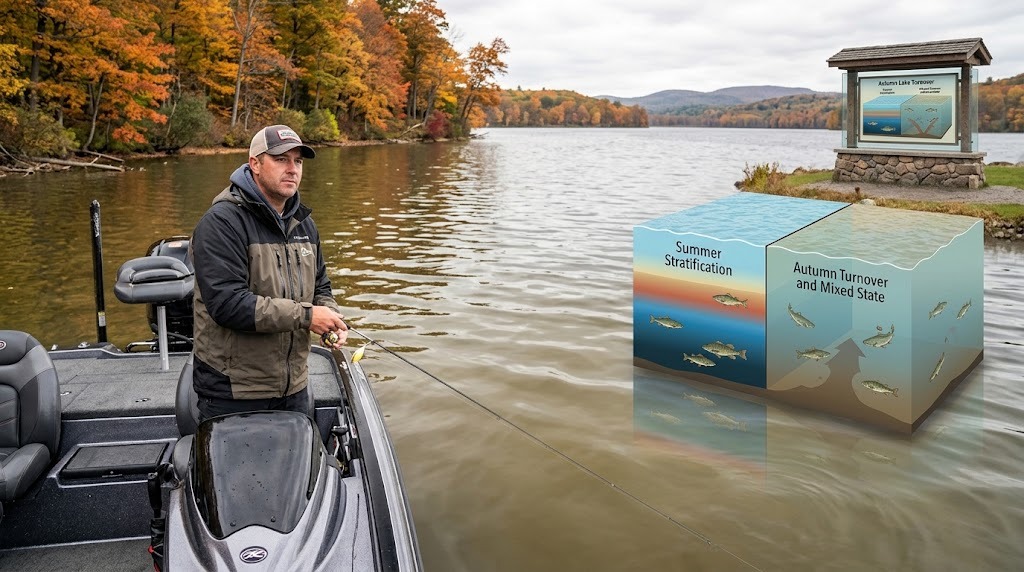
In lakes, trout often cruise the cooler, deeper water but move shallow to feed in the cool of morning and evening, especially in spring and fall. In summer, they go deeper to find comfortable temperatures.
Simple Gear to Start
Forget the idea that trout fishing requires a fancy fly rod. A basic spinning setup catches plenty of trout and is far easier to learn.
- Rod: A 6- to 7-foot ultralight or light spinning rod. The light tip protects light line and makes a small trout feel like a trophy.
- Reel: A small 1000- or 2000-size spinning reel.
- Line: 4- to 6-pound monofilament. Trout have good eyesight, so keep line light and thin.
- Terminal tackle: Small hooks (size 8 to 12), split shot weights, a few small bobbers, and a couple of swivels.
Three Beginner Methods That Work
Bait Fishing
The simplest, most effective approach for stocked trout.
- PowerBait and dough baits are designed to float. Use a small sliding sinker on the line, a swivel, then an 18-inch leader to a small hook. The bait floats up off the bottom where trout cruise.
- Live bait like nightcrawlers or mealworms is deadly. Fish a worm under a bobber set so it drifts just above the bottom, or on a bottom rig.
Keep your hands clean of strong scents and let trout take the bait before setting the hook gently.
Spinners and Small Lures
Inline spinners are a fantastic way to cover water and trigger aggressive trout. Cast upstream or across the current and retrieve just fast enough to feel the blade thumping. Spoons and tiny crankbaits work too. This is active, fun fishing and it catches the better fish.
Float Fishing
Suspending bait under a bobber lets you present it at a precise depth while keeping it drifting naturally with the current. It’s a relaxing, highly visual method, and watching that bobber dart under never gets old.
Reading the Water and Approaching Fish
Trout, especially wild browns, are spooky. Your approach matters as much as your bait.
- Move slowly and stay low. A trout can see a person waving a rod on the bank.
- Fish upstream when possible. Trout face into the current, so approaching from behind keeps you out of their view.
- Wear drab clothing and avoid casting a shadow over the water.
- Make your first cast count. The first drift through a fresh spot is the most likely to draw a strike.
Best Times to Fish
Trout feed most actively in cool, low-light conditions.
- Early morning and evening are prime, especially in warm weather.
- Spring and fall are the best seasons, when water temperatures are ideal.
- Overcast days often produce all-day action.
- After a stocking truck visits, fishing can be excellent for days; check your state agency’s stocking schedule.
Handling and Keeping Trout
If you plan to release fish, wet your hands first, keep the trout in the water as much as possible, and back the hook out gently. Barbless or pinched-barb hooks make this easier and are required on some waters.
If you’re keeping trout to eat, dispatch them quickly and get them on ice. Fresh trout, pan-fried with a little butter, is one of the great rewards of this sport. Always check your state’s licensing requirements, size limits, and bag limits before you go.
Conclusion
Trout fishing is the perfect entry point into angling: affordable, accessible, and immensely satisfying. Start with a light spinning rod and a stocked lake or stream. Learn to read the water, approach quietly, and present a simple bait or spinner naturally. Catch a few easy stocked rainbows to build confidence, then graduate to the wild browns and brookies hiding in the prettiest water in America. A cold, clear stream is waiting for you.
🛒 Recommended Gear on Amazon
- Ultralight trout combo - browse current options and reviews on Amazon.
- Trout spinners - browse current options and reviews on Amazon.
- Trout dough bait - browse current options and reviews on Amazon.
As an Amazon Associate, we earn from qualifying purchases - at no extra cost to you. This helps us keep producing free, in-depth guides.