Arctic Grayling
The Arctic grayling is one of the most beautiful fish that swims in North American fresh water - a slender, silver-and-violet member of the salmon family famous for its enormous, sail-like dorsal fin spangled with iridescent spots.
🗓️ Last reviewed: June 2026
Overview
The Arctic grayling is one of the most beautiful fish that swims in North American fresh water - a slender, silver-and-violet member of the salmon family famous for its enormous, sail-like dorsal fin spangled with iridescent spots. To catch a grayling is to fish wild, cold, remote places: the clear tundra rivers of Alaska, the high mountain lakes and streams of Montana and Wyoming, and the cold headwaters where few other fish can live. The grayling is not a fish of convenience. It rewards anglers who travel, who appreciate scenery and solitude as much as the catch, and who enjoy a fish that rises eagerly and freely to a dry fly.
Grayling are willing biters, often almost too eager, which makes them a wonderful fish for fly anglers of every skill level. They are not large by trophy standards, but a big grayling sailing that magnificent fin in cold, clear water is a sight that stays with you. In the lower 48 the Arctic grayling is also a story of conservation - once widespread, now reduced to a few precious populations and reintroduction efforts.
Identification & Appearance
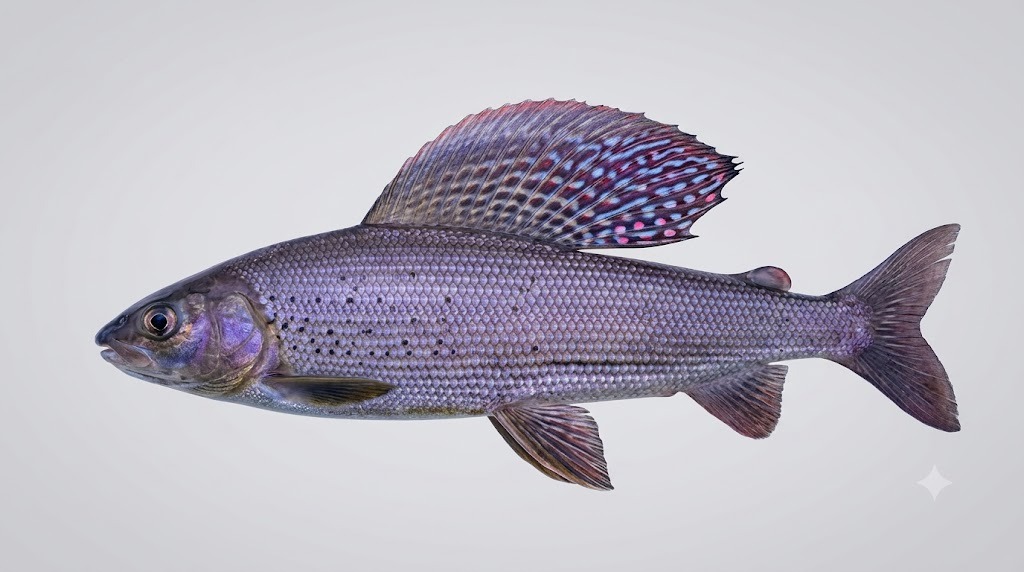
The Arctic grayling is unmistakable. Its body is slender and trout-like, silvery-gray with a wash of iridescent purple, blue, and bronze that shifts in the light, scattered along the flanks with small dark spots concentrated toward the front of the body. The scales are relatively large and give the fish a metallic shimmer.
The signature feature is the dorsal fin: tall, long, and sail-like, far larger than that of any trout or char, and decorated with rows of vivid spots in red, orange, blue, and turquoise edged with a bright margin. Males have the largest, most colorful dorsal fins, which they display during courtship. The mouth is small and the eyes are large - adaptations for feeding on drifting insects in clear, cold water. The body shape and adipose fin mark it clearly as a member of the salmon and trout family.
Range & Habitat (US waters)
In the United States, the Arctic grayling is primarily a fish of Alaska, where it is abundant and widespread throughout the clear rivers, streams, and lakes of the interior and the tundra. Alaska is the heart of grayling fishing in the US, and most anglers experience the species there.
In the lower 48, native grayling once ranged across the upper Missouri River system in Montana, but that population collapsed and now only a remnant native river population persists, centered on the upper Big Hole River area, alongside ongoing reintroduction efforts. Self-sustaining and stocked lake populations also exist in Montana, Wyoming, and a few other Western states, often in high, cold mountain lakes managed by fisheries agencies. Grayling require cold, clean, well-oxygenated water - clear streams, tundra rivers, and cold alpine lakes - and they are intolerant of warm or degraded conditions, which is why their lower-48 range has shrunk so dramatically.
Behavior & Feeding
The Arctic grayling is primarily an insect feeder and a classic drift-feeder. It holds in current, often in loose schools, and watches the water column for drifting food, rising freely to take aquatic insects from the surface and intercepting nymphs and emergers in the drift. Its diet centers on mayflies, caddisflies, stoneflies, midges, and terrestrial insects that fall onto the water; larger grayling will also take small fish, fish eggs, and other small prey.
Grayling are notably eager, even aggressive, surface feeders, which is a large part of their appeal. They are visual hunters built for clear water, and they feed actively whenever water temperatures and insect activity allow. In rivers they hold in current seams and feed in the drift; in lakes they cruise and feed near the surface and along shorelines, especially during insect hatches. They spawn in spring in streams over gravel, scattering eggs without building nests.
Best Seasons & Times to Catch
Grayling fishing follows the short, intense cold-country season. In Alaska, the prime window runs from late spring through early fall - roughly June through September - when rivers are open, insects are hatching, and the fish feed actively through the long subarctic days. The fishing can be excellent all summer. In the high lakes and streams of the lower 48, the season similarly opens after ice-out and runs through summer into early fall.
Within a day, grayling feed during periods of insect activity, so the timing of hatches matters more than the clock. Midday warmth often triggers strong hatches and surface feeding in cold mountain water; in warmer summer conditions, the cooler hours of morning and evening can be best. Overcast, mild days frequently bring steady hatches and excellent dry-fly fishing. Stable weather and good insect activity are the keys to a great grayling day.
Where to Find Them - Reading the Water
In rivers and streams, read the water as you would for trout. Grayling hold in current seams - the edges where fast water meets slow - in moderate-depth runs, in the tailouts of pools, behind boulders and other current breaks, and near the heads of pools where food funnels in. They often gather in loose schools, so a productive run can hold many fish. Look for clean gravel bottoms and steady, oxygenated flow.
In lakes, grayling cruise the shallows and shorelines, especially where insects are hatching or being blown onto the water; inlet and outlet streams, drop-offs, and points are reliable spots, and rising fish are an obvious target. Across all water types, the constants are cold, clear, clean water and the presence of insect life. In the vast wild rivers of Alaska, scattered grayling can be found throughout, but the best concentrations are in classic holding water with current and food.
Tackle & Rigs
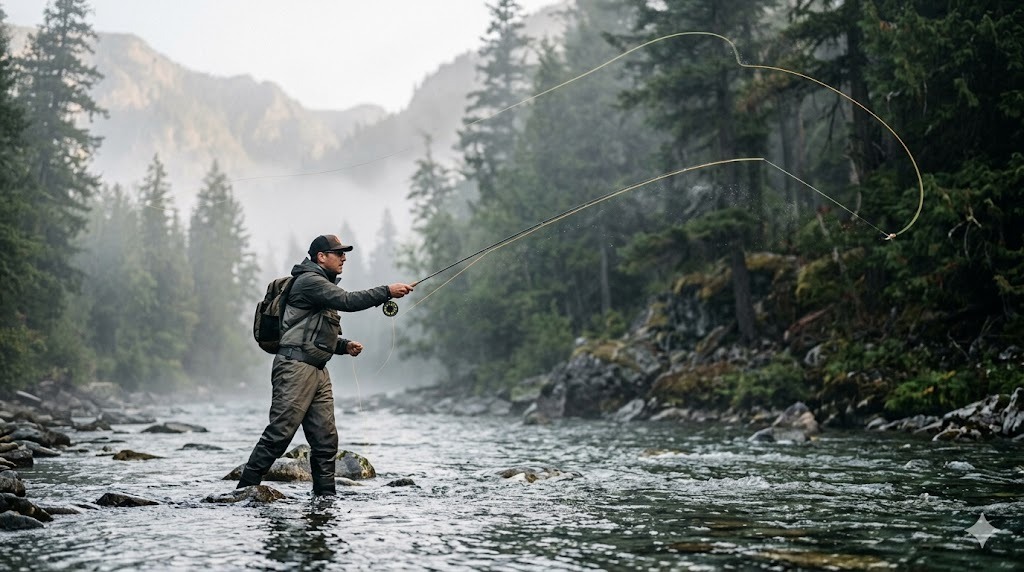
Grayling are an ideal light-tackle and fly-rod fish, and the gear is simple and modest. For fly fishing - the traditional and most rewarding method - a 3- to 5-weight fly rod, 8 to 9 feet, with a matching reel and floating line is perfect. Use a tapered leader of 9 feet or so tapered to a 4X to 6X tippet; grayling have small mouths and respond well to small flies presented delicately. The takes are quick, so a relatively soft, responsive rod helps protect the light tippet on the strike.
For spin fishing, an ultralight rod and reel with 2 to 6 lb line is plenty for these modest-sized fish and makes the fight enjoyable. Terminal tackle is minimal - small spinners and spoons need no special rigging, and a tiny split shot or a small float can present a fly or bait to fish holding deeper. Because grayling are not large, the emphasis is on light, balanced, sporting tackle rather than power.
Best Baits & Lures
Fly fishing is the heart of grayling angling, and the fly boxes are straightforward. Dry flies are the joy of the sport: small mayfly and caddis imitations, parachute patterns, Elk Hair Caddis, Adams, midge patterns, and attractor dries all draw eager rises. Because grayling are such willing surface feeders, dry-fly fishing for them is reliably productive. For subsurface work, small nymphs - Pheasant Tail, Hare's Ear, midge larvae and pupae - and soft-hackle wet flies fished in the drift catch fish steadily, and a dry-dropper rig combines both.
For spin anglers, small inline spinners and tiny spoons in silver, gold, and bright colors are very effective on grayling, which readily chase flash. Small jigs work as well. Where bait is legal and chosen, the natural choice is small worm pieces or insect larvae, though many anglers and managers favor flies and lures for clean releases. Across methods, small offerings win - grayling have small mouths and a preference for insect-sized food.
Techniques - How to Fish for It
The classic and most rewarding technique is dry-fly fishing. Position downstream or across from a likely seam or run, make an accurate cast, and present the dry fly with a drag-free drift over holding fish. Grayling rise quickly and decisively; because the take is fast and the tippet light, set the hook with a gentle, controlled lift rather than a hard strike. When fish are not looking up, switch to a nymph or soft-hackle drifted at the right depth, or fish a dry-dropper to cover both.
For spin fishing, cast a small spinner or spoon across and slightly upstream, let it swing through the run and current seams, and retrieve at a steady, moderate pace, varying speed and depth until you find the fish. In lakes, target rising fish and cruising shoreline grayling, casting flies or small lures ahead of moving fish. The fight is lively but short - grayling pull hard for their size and may flash that big fin near the surface. Handle them gently, keep them wet, and release them quickly; their populations, especially in the lower 48, deserve care.
Common Mistakes
A frequent mistake is using tackle that is too heavy - grayling are small, and oversized rods and lines rob the fishing of its sport and make delicate presentation harder. The opposite error is striking too hard on the take and breaking the light tippet; grayling rises are fast, and a gentle hookset is correct. Anglers also use flies and lures that are too large; small offerings match the grayling's small mouth and insect diet. Fishing water that is too warm or degraded is futile, since grayling need cold, clean conditions. Finally, careless handling and slow releases harm fish from populations that, particularly in the lower 48, are fragile and closely managed - always check regulations, which often require catch-and-release.
Size, Records & Eating Quality
The Arctic grayling is a modest-sized fish. A typical grayling runs 8 to 14 inches, a good fish reaches 15 to 17 inches, and a genuine trophy approaches or exceeds 18 to 20 inches. The all-tackle world record is around 5 pounds 15 ounces, taken in the Northwest Territories of Canada; in US waters a grayling over a pound and a half is an excellent fish. They are valued for beauty and willingness, not bulk.
Where regulations permit harvest, grayling are fine eating - the flesh is white, delicate, and mild, well suited to simple preparation over a fire on a wilderness trip, and a few grayling cooked streamside is a classic part of the Alaskan angling experience. However, in much of the lower 48 grayling populations are protected or closely regulated, and catch-and-release is required or strongly encouraged. The responsible approach is to know the local rules: harvest a meal where the population is healthy and the law allows, and release fish carefully everywhere else.
Pros & Cons (as a target species)
Pros: one of the most strikingly beautiful freshwater fish, with that unmistakable sail-like dorsal fin; an eager, willing biter that rises freely to dry flies, making it rewarding for anglers of all skill levels; found in spectacular wild, scenic country; a perfect light-tackle and fly-rod quarry; good eating where harvest is allowed.
Cons: small, so not a fish for trophy-weight hunters; lives in cold, remote places that often require travel, expense, or effort to reach; intolerant of warm or degraded water, so its range is limited and shrinking; fragile and tightly regulated populations in the lower 48 that demand catch-and-release; a short open-water season in its cold-country range.
Best Suited For
The Arctic grayling is ideal for fly anglers, especially those who love dry-fly fishing and delicate light-tackle presentation. It suits adventurous anglers drawn to wild, remote country - Alaska's tundra rivers and the high lakes of the Mountain West - and those who value scenery, solitude, and a beautiful fish over sheer size. It is an excellent species for teaching fly fishing because grayling are so willing to rise. It is well matched to conservation-minded catch-and-release anglers. It is not for those seeking big fish, hard-pulling brawlers, or easily accessible fishing close to home.
FAQ
Where can I catch Arctic grayling in the United States? Alaska is the primary and most productive destination, with abundant grayling throughout its clear interior rivers, streams, and lakes. In the lower 48, grayling exist in limited native and reintroduced river populations in Montana and in stocked high mountain lakes in Montana, Wyoming, and a few other Western states.
Why does a grayling have such a huge dorsal fin? The tall, sail-like dorsal fin is a display feature, most developed and colorful in males, used during courtship. It is the grayling's signature trait and the easiest way to identify the species at a glance.
Are grayling easy to catch? Yes, relatively. Grayling are eager, willing feeders that rise freely to dry flies, which makes them one of the more cooperative gamefish and an excellent species for beginning fly anglers - provided you use small flies and a gentle hookset.
Can I keep and eat Arctic grayling? Where regulations allow, yes - the white flesh is delicate and mild, and streamside-cooked grayling is a classic wilderness meal. But many lower-48 populations are protected or require catch-and-release, so always check local rules before keeping any fish.
What size tackle should I use for grayling? Light, sporting tackle. A 3- to 5-weight fly rod with light tippet, or an ultralight spinning rod with 2 to 6 lb line, suits these modest-sized fish best and makes the fishing both more sporting and more effective with small offerings.