Brook Trout
The brook trout is the jewel of America's coldest, cleanest headwater streams - a stunningly beautiful fish that is, for many anglers, the very soul of small-stream fishing.
🗓️ Last reviewed: June 2026
Overview
The brook trout is the jewel of America's coldest, cleanest headwater streams - a stunningly beautiful fish that is, for many anglers, the very soul of small-stream fishing. Despite the name, the brook trout is technically a char, not a true trout, and it is the only native "trout" across much of the eastern United States. To catch a wild brookie is to fish the most pristine water in the region, often in remote mountain settings, for a fish whose vivid colors are unmatched in freshwater. Brook trout fishing is less about size and more about beauty, place, and the purity of the experience.
Identification & Appearance
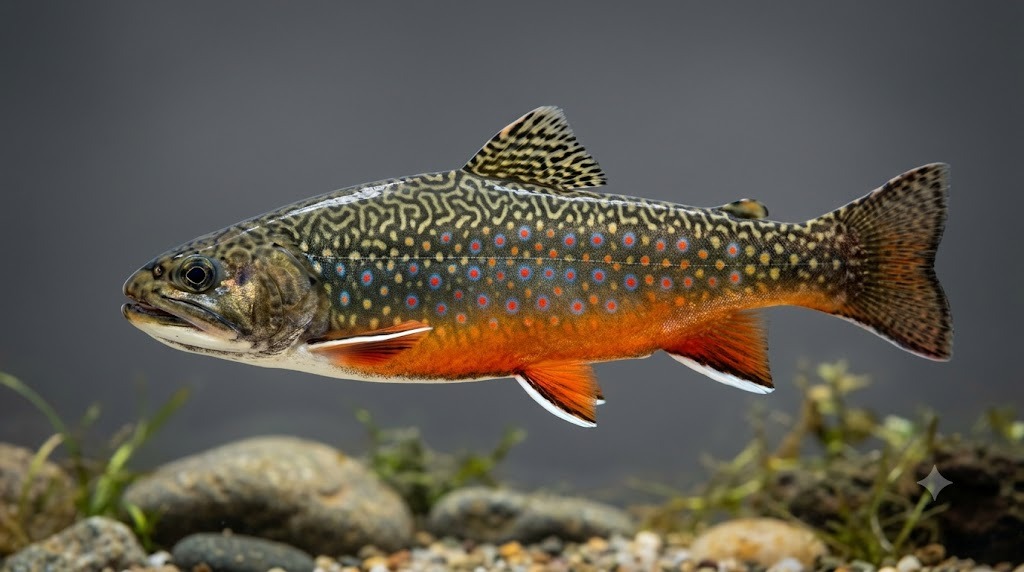
The brook trout is one of the most beautiful freshwater fish in North America. Its dark olive-green back is overlaid with a distinctive pale, worm-like marbled pattern called vermiculation, which extends onto the dorsal fin and the squarish tail. The flanks carry scattered yellow and red spots, and the red spots are encircled by striking blue halos. The belly and lower fins are often vivid orange to red, and those lower fins - the pectoral, pelvic, and anal fins - show a clean white leading edge backed by a black stripe. Spawning males in fall are spectacularly intense in color.
Range & Habitat (US waters)
The brook trout is native to the northeastern United States, the Appalachian Mountains down through the Southeast at high elevations, and the upper Midwest, and it has been introduced into suitable cold water in the Rockies and the West. It is the most demanding of the common stream trout, requiring the coldest, cleanest, most oxygen-rich water - generally below the upper 60s - and is therefore an indicator of pristine habitat. Look for brook trout in small headwater mountain streams, spring creeks, cold beaver ponds, and cold northern lakes. Where habitat warms or degrades, brook trout are the first trout to disappear.
Behavior & Feeding
Brook trout are opportunistic, eager, and relatively unselective feeders compared with the wary brown trout - a trait that makes them a delight to catch. They feed on aquatic insect nymphs, emerging and adult insects, terrestrial insects that fall onto the water, small crustaceans, worms, and small baitfish. In their tiny home streams, food is limited, so brook trout tend to strike quickly and willingly at anything that looks edible before a competitor gets it. They drift-feed in current and hold near cover, and they remain active in cold water that slows other species.
Best Seasons & Times to Catch
Late spring and summer are prime for small-stream brook trout, once flows settle from snowmelt and insects are active - and the cool, high-elevation streams brookies inhabit stay fishable through the heat of summer when lower trout waters are too warm. Fall brings intense feeding and the spawn, when brook trout color up brilliantly. Brook trout are also a classic ice-fishing target in northern lakes and ponds. On a daily basis they feed well through much of the day in their shaded, cold streams, though morning and evening remain the most reliable windows.
Where to Find Them - Reading the Water
In small streams, brook trout location is straightforward: they hold wherever there is cover and a current break with access to drifting food. Target the heads and tails of plunge pools, the slack water behind and beside boulders, undercut banks, the foam lines below little waterfalls, deeper pockets, and any shaded holding water. Even a pool the size of a bathtub can hold a brookie. In beaver ponds and lakes, look for cold inflows, spring seeps, drop-offs, and submerged wood. The colder and cleaner the water, the better the brook trout fishing.
Tackle & Rigs
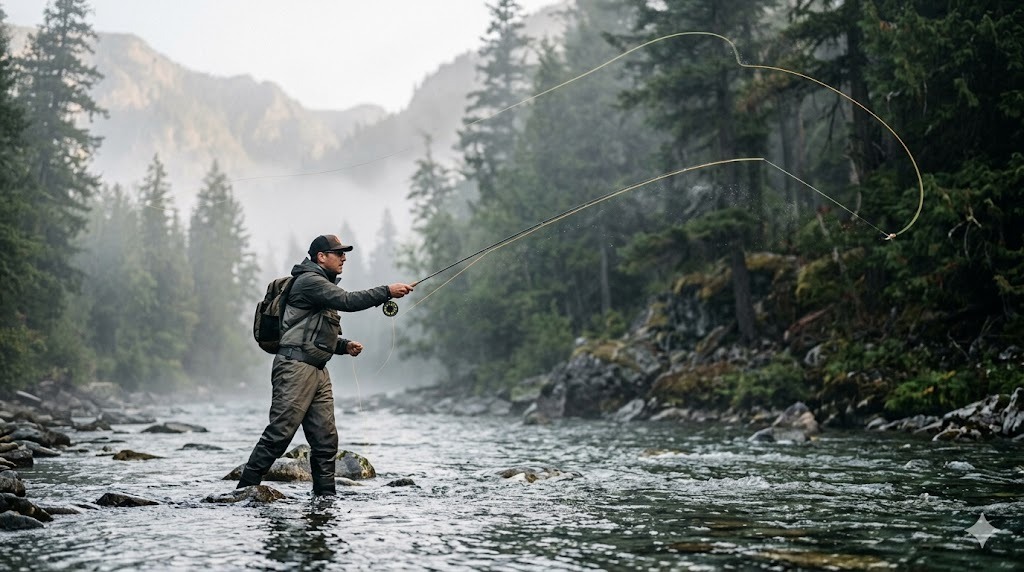
Brook trout streams are usually small and tight, so short, light tackle is ideal. An ultralight or light spinning rod of 4.5 to 6 feet with 2-4 lb monofilament handles small lures and bait and allows accurate casts in cramped quarters. A simple split-shot bait rig is effective. For fly fishing, a short 2 to 4 weight rod, 6.5 to 8 feet, is perfect for the small streams brookies love, allowing delicate presentations of small flies. Heavy gear is unnecessary and counterproductive for these typically small fish in confined water.
Best Baits & Lures
Because brook trout are willing feeders, a wide range of small offerings works. Top lures include small inline spinners, tiny spoons, and small soft-plastic baits - kept small to suit small streams and small fish. Live bait such as a piece of nightcrawler, garden worms, and small insects is highly effective. For fly anglers, brook trout are wonderfully cooperative with dry flies - attractor patterns like the Royal Wulff, the Adams, and Elk Hair Caddis draw eager surface strikes - along with small nymphs and tiny streamers. Bright accents can help, but brookies rarely require precise imitation.
Techniques - How to Fish for It
Small-stream brook trout fishing is intimate, mobile fishing. The approach is to move upstream quietly, fishing each likely pocket, pool head, and current seam with a short, accurate cast, then moving on. Drift bait or a fly naturally through the holding water. Cast small spinners across and slightly upstream and retrieve just fast enough to turn the blade. Dry-fly fishing is a joy here - drop a buoyant attractor pattern into the foam and pocket water and watch for the eager rise. Approach from downstream, keep low, and use the stream's noise and broken water as cover, since even unselective brookies can be spooked in tiny, clear water.
Common Mistakes
A frequent mistake is using tackle far too heavy for small streams and small fish, which kills accuracy and sport. Anglers also approach carelessly, walking the bank and casting shadows that spook fish in confined, shallow water; brookies are less wary than browns but still see an angler standing over a tiny pool. Other errors include overlooking how small a piece of holding water can hold a fish, fishing only the big obvious pools, and harvesting too many fish from fragile headwater populations that grow slowly and recover slowly.
Size, Records & Eating Quality
Wild brook trout in small headwater streams are typically small - a 6 to 9 inch fish is normal and a 12-incher is a fine stream brookie. Larger fish come from richer lakes, ponds, and northern waters, where brook trout can grow well past those sizes. The all-tackle world record is a 14-pound 8-ounce brook trout caught from the Nipigon River in Ontario, Canada, in 1915 - one of the oldest standing freshwater records. Brook trout have delicate, mild, sweet, pink-orange flesh and are excellent eating, though anglers should harvest fragile wild populations sparingly and consider releasing them.
Pros & Cons (as a target species)
Pros: arguably the most beautiful freshwater fish, eager and willing to bite which suits beginners, the native trout of the East, found in gorgeous remote pristine settings, fishable in summer when other trout water is too warm, and excellent eating. Cons: usually small in size, demands the coldest cleanest water so it is restricted in range, populations are fragile and sensitive to harvest and habitat loss, and small-stream fishing requires mobility and accurate short casts.
Best Suited For
Brook trout suit anglers who treasure the experience of fishing - wild, beautiful fish in pristine, scenic, often remote water - over the pursuit of size. They are excellent for beginners thanks to their willingness, ideal for small-stream and backcountry fly anglers, and rewarding for anyone who enjoys hiking to fish. They are the perfect species for an angler who wants beauty, solitude, and a connection to the cleanest water in the region.
FAQ
Is a brook trout actually a trout? Not technically. The brook trout is a char, in the same genus as lake trout and Arctic char, rather than a true trout. It is, however, the native "trout" of much of the eastern United States and is universally treated as a trout by anglers.
Why are brook trout usually small? Most wild brook trout live in tiny, cold, food-limited headwater streams that simply cannot support large fish. In richer lakes, ponds, and northern waters with more food, brook trout grow much larger.
What does it mean if a stream has wild brook trout? It means the water is cold, clean, and well-oxygenated. Brook trout are the most habitat-sensitive of the common stream trout and are an excellent indicator of pristine, healthy water.
What is the best way to catch brook trout? Fish small streams with light tackle, moving upstream and presenting a small spinner, a piece of worm, or a dry fly into each pocket and pool head. Brook trout are eager biters, so a natural drift into holding water usually produces.
Are brook trout good to eat? Yes - they have delicate, mild, sweet, pink-orange flesh and are excellent on the table. Because wild headwater populations are fragile and slow to recover, anglers should harvest them sparingly or release them.