Brown Trout
The brown trout is the wary, intelligent, and most challenging of America's common trout - the fish that humbles experts and rewards careful, skillful angling.
🗓️ Last reviewed: June 2026
Overview
The brown trout is the wary, intelligent, and most challenging of America's common trout - the fish that humbles experts and rewards careful, skillful angling. Introduced from Europe in the 1880s, the brown trout has thrived in US waters and is now prized for two things: it is the most difficult trout to fool, and it grows the largest of the stream trout, with big browns reaching predatory, almost fish-of-prey proportions. A trophy brown taken at dusk from a difficult piece of water is a genuine angling achievement, which is exactly why brown trout inspire such devotion.
Identification & Appearance
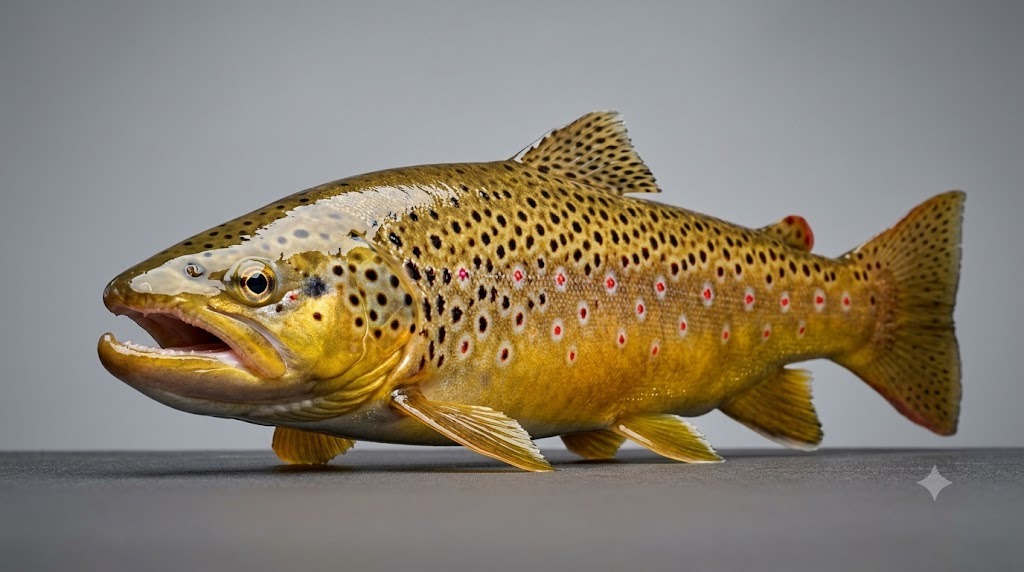
The brown trout is a handsome, golden-brown fish with a buttery-yellow to brassy body, a darker olive-brown back, and a creamy belly. Its defining marks are large black spots scattered over the back and upper flanks, mixed with distinctive red or orange spots, many of which are surrounded by pale blue or silver halos. Unlike rainbow trout, the brown trout has very few or no spots on its squarish tail. Stream and river browns are richly colored; lake-dwelling and sea-run browns are more silvery with fainter spotting. Large old browns develop a hooked lower jaw and an unmistakably predatory look.
Range & Habitat (US waters)
Though not native to North America, the brown trout has established self-sustaining wild populations and is stocked across cold-water fisheries throughout the country - the Northeast, the Appalachians, the upper Midwest, the Rocky Mountain states, and the West, as well as the Great Lakes. Brown trout tolerate slightly warmer and less pristine water than brook or rainbow trout, surviving where other trout cannot, though they still need clean, cool, oxygenated water generally below the low 70s. They thrive in rivers, spring creeks, tailwaters, and cold lakes, and they show a strong preference for cover and structure.
Behavior & Feeding
Brown trout are the most cover-oriented and structure-dependent of the stream trout, and they grow notably wary and nocturnal as they age. Smaller browns drift-feed on aquatic insect nymphs, emergers, adult insects, and crustaceans much like other trout. But large brown trout become dedicated predators, feeding heavily on baitfish, sculpins, crayfish, and even mice and other small creatures, and doing much of their feeding at dawn, dusk, and after dark. Their caution, their attachment to cover, and their low-light, predatory habits are what make big browns so difficult to catch.
Best Seasons & Times to Catch
Spring offers strong fishing with abundant insect hatches and active fish. Fall is the marquee season for big browns: brown trout are fall spawners, and as they stage and move toward spawning gravel they become aggressive and territorial, producing the year's best shot at a trophy. Summer fishing is good in cold tailwaters and high-elevation streams, especially in low light, and warm summer nights are prime for hunting big browns with mouse patterns and streamers. Winter fishing is productive on tailwaters. Daily, the low-light edges - dawn, dusk, and night - strongly favor the brown trout angler.
Where to Find Them - Reading the Water
Brown trout relate to cover more tightly than any other stream trout. Look for them under cut banks, beneath overhanging brush and logjams, in the deeper, shaded slots of pools, behind boulders, and along undercut current seams - anywhere that offers shade, security, and an ambush point near food. The largest browns claim the best lies, the deepest, most protected water with the strongest food supply, and defend them. In lakes, browns hold near drop-offs, points, rocky structure, and tributary mouths. In fall, search the gravel runs and pool tailouts where browns spawn.
Tackle & Rigs
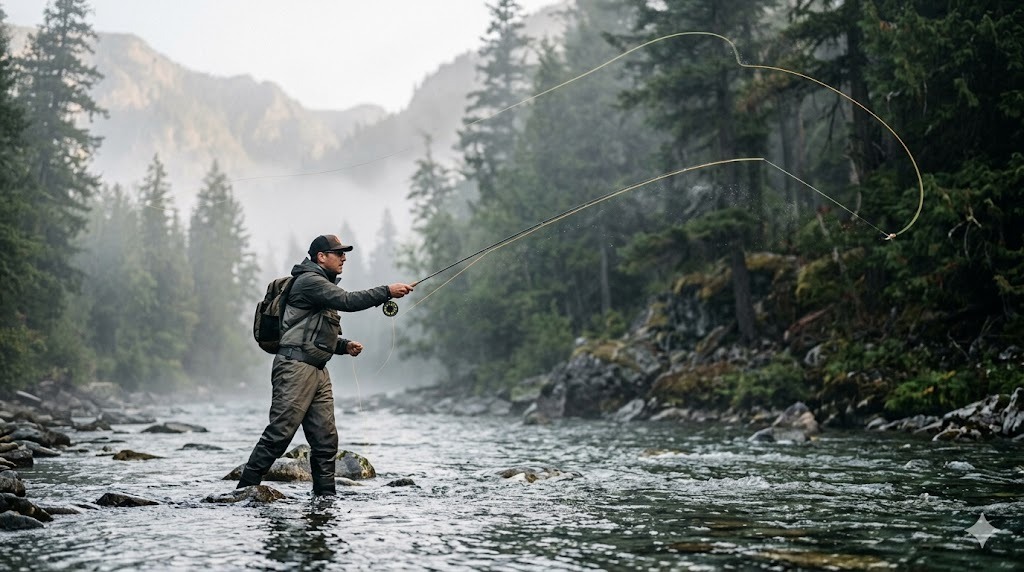
For spin fishing, a light to medium-light spinning rod, 6 to 7 feet, with 4-8 lb monofilament or fluorocarbon handles small lures and bait; step up slightly when chasing big browns with larger lures. Common rigs include a split-shot bait rig drifted naturally and a slip-bobber rig. For fly fishing, a 5 to 6 weight rod is the all-around choice for nymphs and dries, while a stouter 6 to 8 weight is preferred for casting the larger streamers used to target trophy browns. Fluorocarbon leaders and fine tippets help fool these line-shy fish in clear water.
Best Baits & Lures
Brown trout are caught on the full trout menu, with a tilt toward baitfish imitations for larger fish. Effective lures include inline spinners, small spoons, and especially minnow-imitating crankbaits and jerkbaits, which appeal to the brown's predatory nature. Live nightcrawlers and minnows are excellent baits. For fly anglers, nymphs such as the Pheasant Tail and dries like the Adams and caddis patterns take numbers of browns, while large streamers - sculpin and baitfish imitations - and even mouse patterns at night are the trophy-hunter's tools. Natural, subtle colors suit the wary brown in clear water.
Techniques - How to Fish for It
Catching browns is a game of stealth and precision. For average fish, present bait, lures, or flies with a natural drift through cover-rich water, fishing carefully and methodically. For big browns, the approach shifts to hunting: strip large streamers tight to cover with a pause-and-twitch retrieve, work minnow baits along cut banks and logjams, and fish the low-light hours hard. Night fishing with streamers and mouse patterns over known big-fish lies is a classic trophy-brown method. Above all, stealth is everything - browns spook easily, so a quiet approach, a low profile, and a delicate first cast matter more than for any other trout.
Common Mistakes
The biggest mistake is treating browns like easy stocked trout - they are the most cautious common trout, and a careless approach simply puts them down. Other errors include fishing the bright midday hours and expecting big-fish results, presenting baits and flies away from cover instead of tight to it, using heavy, visible line and tippet, and a poor, dragging drift. Many anglers also give up on a tough piece of water too soon, when patience and the right low-light timing would have produced the fish.
Size, Records & Eating Quality
Stream browns commonly run 8-14 inches; a wild brown of 16-20 inches is excellent, and a brown over 5 pounds is a true trophy in most rivers, with the biggest predatory browns far exceeding that in trophy waters and the Great Lakes. The all-tackle world record is around 44 pounds, caught from New Zealand's Ohau Canal in 2020. Brown trout have firm, mild, pink-tinged flesh and are good eating, though anglers frequently release wild and trophy browns to protect these prized, slow-growing fish.
Pros & Cons (as a target species)
Pros: the most challenging and rewarding common trout, grows the largest of the stream trout, available across cold-water fisheries nationwide, tolerates a wider range of conditions than other trout, and offers genuine trophy potential and exciting night fishing. Cons: famously wary and difficult to fool, the best fishing is confined to low-light and night hours, requires real stealth and skill, and big fish demand patience and persistence.
Best Suited For
Brown trout suit anglers who want a challenge and who take satisfaction in earning a fish through skill, stealth, and persistence. They are ideal for dedicated fly anglers, streamer enthusiasts, night fishers chasing trophies, and anyone who has mastered easier trout and wants to advance. They are less suited to anglers seeking fast, easy action, but for the angler willing to learn, no trout is more rewarding.
FAQ
Why are brown trout so hard to catch? Brown trout are the most cautious and intelligent of the common trout. They relate tightly to cover, spook easily, and the larger ones feed mostly at dawn, dusk, and night, which makes them genuinely difficult to fool in clear water.
How do I catch a big brown trout? Hunt them. Fish the low-light hours of dawn, dusk, and night, present large streamers and minnow baits tight to cover such as cut banks and logjams, and fish the fall season when big browns turn aggressive before spawning.
What is the difference between a brown trout and a rainbow trout? A brown trout is golden-brown with black and red spots, many ringed with pale halos, and has a nearly spotless tail. A rainbow is silvery with a pink stripe and heavy black spots covering the tail. Browns are also warier and grow larger in streams.
When is the best time of year for brown trout? Fall. As fall-spawning browns stage and move toward gravel, they become aggressive and territorial, offering the best chance at a trophy. Spring is also strong, with good hatches and active fish.
Can I catch brown trout with a spinning rod? Yes. A light spinning rod with inline spinners, minnow baits, or natural bait drifted through cover takes plenty of browns. Fly fishing is popular for them, but it is not required.