Chain Pickerel
The chain pickerel is the smaller cousin of the northern pike and muskellunge, but it gives up nothing in attitude.
🗓️ Last reviewed: June 2026
Overview
The chain pickerel is the smaller cousin of the northern pike and muskellunge, but it gives up nothing in attitude. Pound for pound, few freshwater fish are as aggressive - a pickerel will slash a lure with shocking violence, run, jump, and shake its head all the way to the boat. For eastern and southern anglers, especially in winter when bass slow down, the chain pickerel is a saving grace: a willing, hard-fighting predator that bites in cold water when little else will. It is often caught incidentally by bass anglers and just as often dismissed, but anglers who target pickerel on purpose find a thrilling, accessible gamefish in waters where pike and muskie do not range.
Identification & Appearance
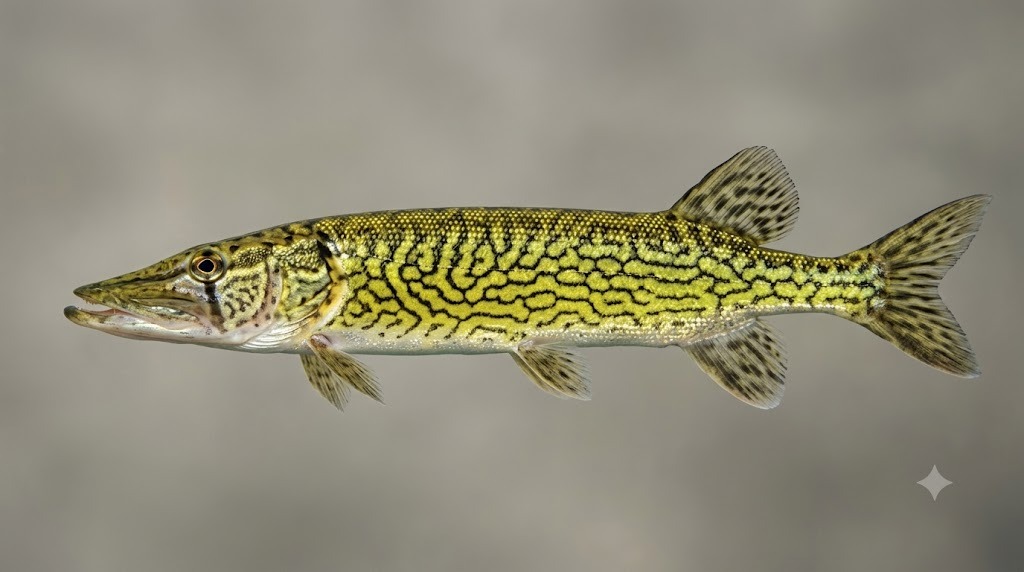
The chain pickerel is named for the bold black chain-link or net-like pattern overlaying its olive-green to yellowish flanks. It has the classic Esox body: long, slender, and torpedo-shaped, with a single dorsal fin set far back near the tail and a duck-bill snout full of needle-sharp teeth. A distinctive dark vertical bar runs down through the eye like a teardrop. The cheek and gill cover are fully scaled - a key feature separating it from the redfin and grass pickerels. Compared to a northern pike, the pickerel is smaller and has the dark-chain-on-light-body pattern, the reverse of the pike's light-spots-on-dark-body. Adults typically run 15 to 24 inches.
Range & Habitat (US waters)
Chain pickerel are native to the eastern United States, ranging from Maine and the Maritimes south along the Atlantic coast to Florida, and west into the Gulf states and up the Mississippi drainage. They are abundant throughout New England, the Mid-Atlantic, the Southeast, and into Texas. They favor clear, weedy, slow-moving water: vegetated lakes and ponds, backwaters and oxbows, sluggish rivers, swamps, and tidal freshwater creeks. Thick aquatic vegetation, lily pads, and submerged timber are essential - pickerel are ambush predators that need cover to hunt from.
Behavior & Feeding
Chain pickerel are pure ambush predators. They hover motionless in or beside cover - a weed edge, a pad field, a fallen tree - and explode on anything that swims past. Their diet is dominated by small fish (shiners, sunfish, perch, even smaller pickerel), supplemented by frogs, crayfish, large insects, and the occasional small mammal or bird. They are visual hunters that strike fast and hard. Crucially, chain pickerel remain active in cold water - they feed willingly through winter, including under the ice, when bass and other warmwater fish go dormant. This cold-tolerance makes them a year-round target.
Best Seasons & Times to Catch
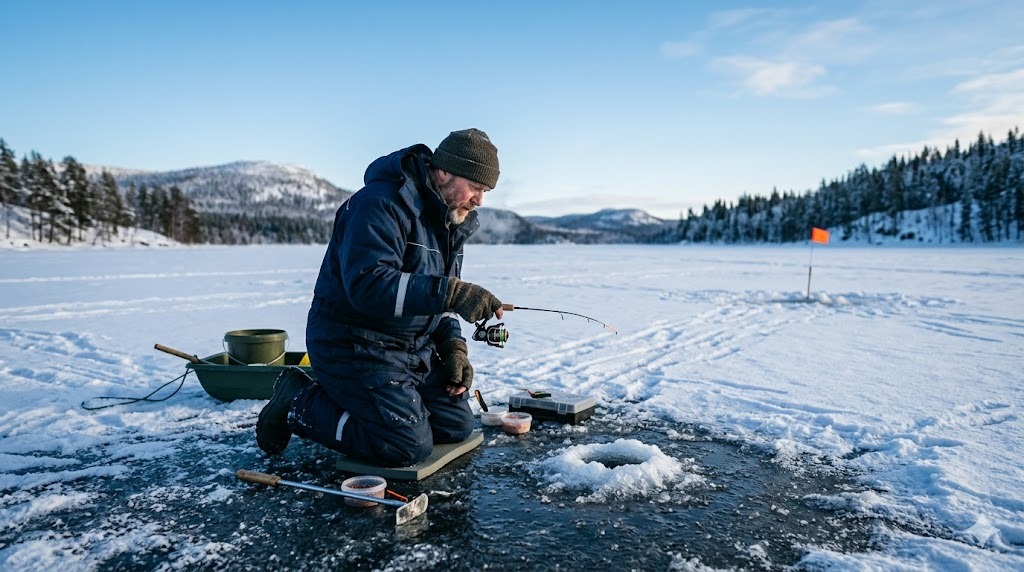
Pickerel can be caught all year, but they truly shine in the cold months. Late fall, winter, and early spring are prime, when pickerel are among the most active fish in the lake. They are a top ice-fishing species across the Northeast. In summer they remain catchable but retreat to cooler, deeper weed edges and bite best early and late in the day. Overcast days and low light improve the bite. Spring, around their pre-spawn period in late winter to early spring, produces aggressive, well-fed fish in the shallows.
Where to Find Them - Reading the Water
Find the weeds, find the pickerel. Focus on the outside and inside edges of vegetation, holes and lanes within weed beds, lily pad fields, submerged grass flats, and any wood - laydowns, stumps, dock pilings. Pickerel relate tightly to cover and to the edges where shallow cover meets slightly deeper water. In rivers they hold in slow backwaters and eddies out of the main current. In winter they pull to deeper weed edges and the first drop-off but stay associated with cover. A weedline in 4 to 10 feet of water is the classic pickerel zone.
Tackle & Rigs
A medium-power spinning or baitcasting rod, 6 1/2 to 7 feet, with a fast tip handles pickerel well. Use 10- to 15-pound monofilament or 20- to 30-pound braid. The single most important detail is a bite leader - pickerel teeth slice straight through mono and fluorocarbon. Use a 6- to 12-inch single-strand wire leader or a heavy fluorocarbon leader (30 to 40 pounds) to prevent cut-offs. For live bait, a simple shiner under a float with a leader is deadly. Bring long-nose pliers and a jaw spreader for unhooking these toothy fish safely.
Best Baits & Lures
Pickerel love flash and movement. Top lures include inline spinners, spoons (especially the classic Daredevle), spinnerbaits, lipless crankbaits, shallow-running minnow plugs, and soft-plastic swimbaits and flukes. Topwater frogs and buzzbaits draw explosive strikes over vegetation in warm weather. Bright colors - chartreuse, orange, gold, silver, and firetiger - work well. For live bait, a lively golden shiner is the number-one pickerel bait and is especially effective in winter and through the ice. Fly anglers catch them on big flashy streamers.
Techniques - How to Fish for It
Cast lures parallel to weed edges and over the tops of submerged grass, retrieving fast enough to keep the lure flashing - pickerel like a quick, erratic presentation. Pause near cover edges to trigger ambush strikes. Work spoons and spinnerbaits along pad lines and through weed lanes. With live shiners, suspend the bait just above or beside cover under a float and let a pickerel find it. For ice fishing, set tip-ups with shiners along deeper weed edges. When a pickerel strikes, set quickly and keep steady pressure - they fight hard but tire fast.
Common Mistakes
The number-one mistake is fishing without a leader and losing fish to cut-offs - always use wire or heavy fluorocarbon. Anglers also retrieve too slowly; pickerel prefer a faster, fleeing presentation. Many fish open water, ignoring that pickerel live in and on the weeds. Handling is another pitfall - those teeth and sharp gill plates cause cuts, so use pliers and a jaw spreader. Finally, anglers dismiss pickerel as "snakes" and miss out on a genuinely fun, hard-fighting, cold-weather gamefish.
Size, Records & Eating Quality
A good chain pickerel is 20 to 24 inches; anything over 24 inches and 3 pounds is a quality fish. Trophies push 28 inches and 5 pounds or more, with the largest fish coming from southern waters. The all-tackle world record stands at 9 pounds 6 ounces, caught in Georgia in 1961. Eating quality is good - pickerel have white, flaky, mild flesh - but they are notoriously bony, with a row of Y-bones. Anglers who learn to fillet around the bones, or who score and pickle them, find them well worth eating.
Pros & Cons (as a target species)
Pros: extremely aggressive, with explosive strikes and a strong fight; bites in cold water when other fish quit; widely available across the East and South; accessible from shore, kayak, or ice; willing to hit a wide range of lures. Cons: bony to clean; sharp teeth demand leaders and careful handling; rarely grows large; often considered a nuisance by bass anglers; can be slimy and thrashes hard when landed.
Best Suited For
Chain pickerel are ideal for cold-weather and winter anglers, ice fishers, and anyone wanting reliable action when bass fishing is slow. They suit shore and kayak anglers because they live in accessible shallow cover, and they are a great fish for kids and beginners thanks to their willingness to bite. They are less ideal for anglers who prize trophy size or hate dealing with bones and teeth, but as a fun, scrappy, year-round target they are hard to beat.
FAQ
Do I really need a wire leader for chain pickerel? Yes. Pickerel have rows of needle-sharp teeth that slice through monofilament and fluorocarbon instantly. Use a short single-strand wire leader or a heavy 30- to 40-pound fluorocarbon leader to avoid losing lures and fish.
Are chain pickerel good to eat? Yes - the flesh is white, mild, and flaky. The catch is the Y-bones; you must either learn the bone-out fillet technique or pickle the fish. Many anglers find them excellent once cleaned properly.
What's the best bait for pickerel? A live golden shiner is the top bait, especially in cold water and through the ice. Among lures, spoons, inline spinners, and spinnerbaits are hard to beat.
Why fish for pickerel in winter? Pickerel stay active in cold water when bass and other species go dormant. They are one of the most reliable open-water and ice-fishing targets through the cold months.
How do I tell a chain pickerel from a young pike? The pickerel has a dark chain-link pattern on a light body and fully scaled cheeks and gill covers. A pike has light bean-shaped spots on a dark body and only the upper half of the gill cover scaled.