Chinook Salmon
The Chinook salmon - also called the "king salmon" - is the largest of the Pacific salmon and one of the most prized freshwater gamefish in North America.
🗓️ Last reviewed: June 2026
Overview
The Chinook salmon - also called the "king salmon" - is the largest of the Pacific salmon and one of the most prized freshwater gamefish in North America. Whether caught on its native runs up the rivers of the Pacific Northwest and Alaska, or chased in its landlocked form in the Great Lakes, the Chinook is a fish of raw power and high drama. Kings pull drag in long, blistering runs, grow to weights that test heavy tackle, and provide some of the most coveted table fare in fresh water. For the angler who wants size, fight, and a genuine sense of occasion, hooking a Chinook is a milestone catch.
Identification & Appearance
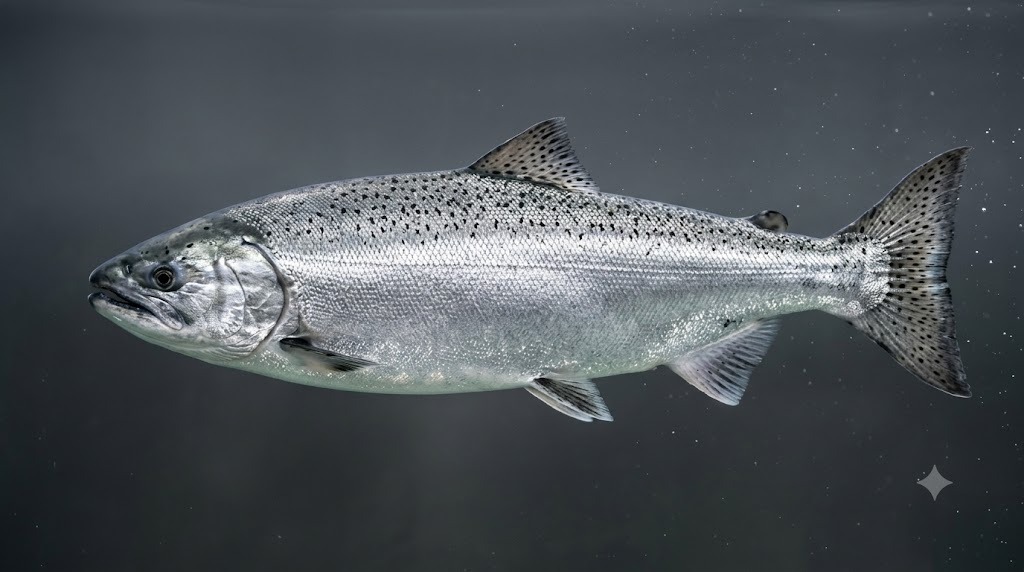
In its bright, fresh phase - silvery-chrome from time in big water - the Chinook is a deep, robust, powerful-looking fish with a blue-green to gunmetal back and a clean silver body. The defining identification features are precise: small black spots scattered over the back and across both lobes of the tail, and, critically, a dark or black gum line at the base of the teeth in the lower jaw - the source of the nickname "blackmouth." This black mouth distinguishes the Chinook from the similar coho salmon, which has a lighter gum line. As Chinook approach spawning, they darken dramatically, taking on olive, copper, or maroon tones, and males develop a hooked jaw, or kype.
Range & Habitat (US waters)
Chinook salmon are native to the Pacific drainages of the United States, running up rivers from California north through Oregon and Washington into Alaska. They are anadromous: born in fresh water, they migrate to the ocean to grow, then return to their natal rivers to spawn. Famous fisheries include the Columbia and Sacramento River systems, Washington's Puget Sound rivers, and the legendary salmon rivers of Alaska. Chinook have also been successfully introduced into the Great Lakes, where they live entirely in fresh water, growing fat on alewives and providing a world-class freshwater salmon fishery. In rivers they hold in deep pools, runs, and current seams; in big lakes they roam open water following bait and temperature.
Behavior & Feeding
In their ocean and big-lake feeding phase, Chinook are aggressive open-water predators, hunting baitfish - herring, alewives, smelt - and growing rapidly. Once they enter a river to spawn, their behavior changes: they largely stop feeding, drawing on stored energy, and migrate steadily upstream toward their spawning gravel. River-run Chinook do not strike out of hunger but out of aggression, territorial instinct, and reflex - which is why timing, presentation, and provocation matter more than imitating food. In the Great Lakes, Chinook follow the alewives and the cold water, suspending over deep water in summer and pushing toward tributaries as fall and spawning approach.
Best Seasons & Times to Catch
On Pacific rivers, Chinook return in distinct runs - spring, summer, and fall runs occur depending on the river and population - with the fall run being the most widespread. Anglers target the fish as they enter and ascend the rivers. In the Great Lakes, the open-water troll fires up in summer, and the most concentrated, accessible fishing comes in late summer and fall, when maturing kings stage off river mouths and run up the tributaries. Low-light periods - early morning especially - are prime in both river and lake fishing. Cool water and the urgency of an approaching spawn drive the most reliable action.
Where to Find Them - Reading the Water
In rivers, look for Chinook in the deeper, slower water where migrating fish rest - the tail-outs and heads of deep pools, slots, current seams, and softer water beside fast chutes. Fish hold and stage in these resting spots between pushes upstream. Near river mouths in fall, kings stack up waiting for rain and rising flows. In the Great Lakes, summer Chinook are an open-water troll: find the right temperature band and the alewives, often well offshore and at depth, and work the thermocline. As fall nears, concentrate on staging fish near tributary mouths, piers, and harbors. Electronics, water temperature, and forage location are the keys on big water.
Tackle & Rigs
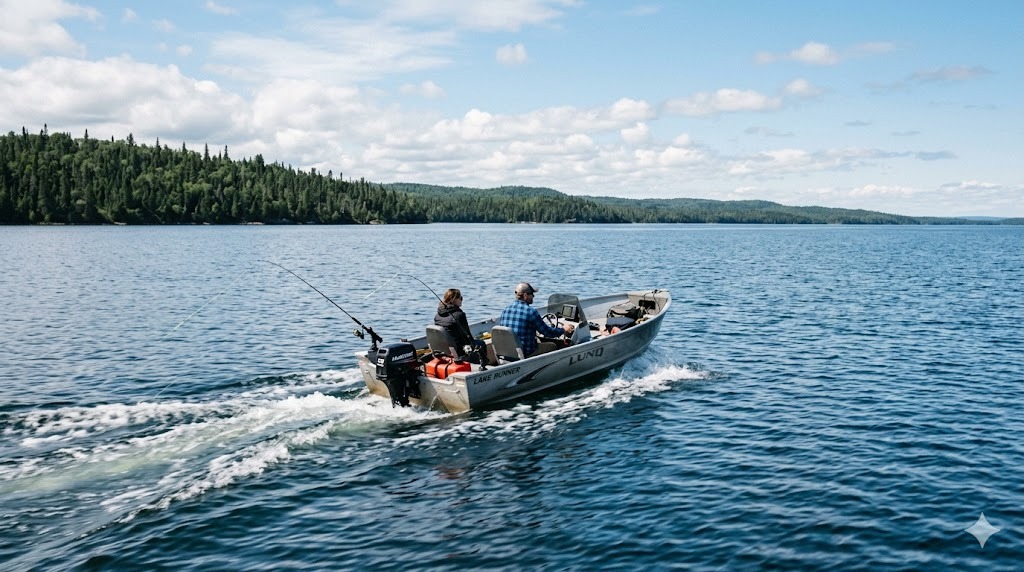
Chinook demand stout tackle. For river fishing, a 9 to 10.5 foot medium-heavy salmon rod with a strong baitcasting or large spinning reel and 20 to 40 pound line (or a heavy braid with leader) handles the fight and the heavy currents. Common river rigs include drift-fishing setups, bobber-and-jig or bobber-and-bait rigs, and plug-pulling outfits. For Great Lakes trolling, a stout trolling rod with a line-counter reel is run behind downriggers, divers, or lead-core line. Trolling rigs feature flashers and dodgers ahead of flies, spoons, or cut-bait. Whatever the method, heavy, well-maintained tackle and sharp hooks are non-negotiable against a fish this strong.
Best Baits & Lures
In rivers, salmon eggs (cured roe) are a top bait, fished in clusters or spawn sacs, along with sand shrimp and bait-plugs. Effective lures include large spinners, drift bobbers, marabou and bait jigs fished under floats, and big diving plugs back-trolled through holding water. Bright colors - chartreuse, orange, pink, red - and the addition of scent are widely used to provoke reluctant biters. In the Great Lakes troll, large flashy spoons, flasher-and-fly combinations, dodger rigs, and cut-bait (herring) rigs imitate or attract around alewives. Glow and UV finishes help in the dim depths. Provocation and visibility matter more than perfect food imitation, especially in rivers.
Techniques - How to Fish for It
River techniques include drift fishing - bouncing bait or drift bobbers naturally along the bottom through holding water - and float fishing, suspending eggs or jigs under a bobber at the depth fish are holding. Back-trolling or back-bouncing plugs and bait, where the boat holds against the current and works lures slowly downstream into pools, is a deadly way to provoke kings. Plunking with stationary bait in current is effective near river mouths. In the Great Lakes, trolling is the dominant method: spread flashers, spoons, and cut-bait across multiple depths with downriggers and divers, covering water until you find the temperature and the fish. Set hooks firmly - a king's jaw is tough.
Common Mistakes
A frequent mistake is using tackle too light for the fish and the water, leading to lost trophies and exhausting, harmful fights. In rivers, anglers often fish the fast, obvious current instead of the deeper, slower resting water where Chinook actually hold. Failing to present bait or lures right on the bottom, where kings travel, costs strikes. In Great Lakes trolling, ignoring water temperature and fishing the wrong depth band is the classic error. Anglers also fish too small or too dull - kings respond to size, flash, and bright color. And dull hooks simply will not penetrate a Chinook's hard mouth.
Size, Records & Eating Quality
The Chinook earns the name "king" - it is the largest Pacific salmon. River-run and ocean fish commonly weigh 10 to 30 pounds, with trophy kings exceeding 40 and 50 pounds; the all-tackle world record, a giant from Alaska's Kenai River, weighed 97 pounds 4 ounces. Great Lakes Chinook typically run 10 to 25 pounds, with the largest topping 30-plus. As table fare, the Chinook is superb - rich, deep-orange to red flesh, high in healthy oils, prized for grilling, baking, and smoking. Bright, fresh-run fish are best; quality declines as fish darken and near spawning, so the chrome ones are the keepers.
Pros & Cons (as a target species)
Pros: Chinook are the biggest Pacific salmon, fight with spectacular power and long runs, and provide outstanding, premium table fare. River runs offer accessible bank and boat fishing, and the Great Lakes provide a world-class freshwater salmon fishery far from the ocean. Cons: they require heavy, sometimes specialized and expensive tackle; Great Lakes trolling demands a rigged boat with downriggers; river runs are timing-dependent and can draw crowds; and river-run fish that have darkened toward spawning lose much of their eating quality.
Best Suited For
Chinook salmon suit anglers who want a big, powerful, prestigious fish and an excellent meal. Great Lakes Chinook are ideal for boaters equipped to troll deep and willing to learn temperature and electronics. Pacific river runs reward both bank anglers and drift-boat fishermen who time the runs and master drift, float, and plug techniques. The king is not a casual, fish-anytime species - it rewards planning, proper gear, and skill. But for the angler chasing a true freshwater (or anadromous) heavyweight with table quality to match, the Chinook is a top-tier target.
FAQ
Why is the Chinook called the "king salmon"? Because it is the largest of the Pacific salmon species, growing far bigger than coho, sockeye, pink, or chum. Trophy kings exceed 40 to 50 pounds, and the world record approached 100 pounds. Size earns it the crown.
How do I tell a Chinook from a coho salmon? The clearest tell is the mouth: a Chinook has a black or dark gum line at the base of the teeth in the lower jaw - the "blackmouth" - while a coho's gum line is lighter, often whitish. Chinook also have spots on both lobes of the tail; coho usually have spots only on the upper lobe.
Are there salmon in the Great Lakes? Yes - Chinook salmon were introduced into the Great Lakes and now thrive there entirely in fresh water, growing large on abundant alewives. They support a world-class freshwater salmon fishery, trolled in open water in summer and caught near tributaries in fall.
What is the best bait for river Chinook? Cured salmon eggs (roe), fished in clusters or spawn sacs, are a top river bait, along with sand shrimp. Large spinners, drift bobbers, float-fished jigs, and big back-trolled plugs in bright colors all provoke strikes from migrating kings.
Are Chinook salmon good to eat? Excellent - the flesh is rich, deep orange to red, and high in healthy oils, making it superb grilled, baked, or smoked. Bright, fresh-run "chrome" fish are the best quality; eating quality declines as fish darken and approach spawning.