Coho Salmon
The coho salmon - widely known as the "silver salmon" - is the acrobatic, hard-charging member of the Pacific salmon family that many anglers consider the most fun to catch, pound for pound.
🗓️ Last reviewed: June 2026
Overview
The coho salmon - widely known as the "silver salmon" - is the acrobatic, hard-charging member of the Pacific salmon family that many anglers consider the most fun to catch, pound for pound. Smaller than its giant cousin the Chinook, the coho more than makes up for it with blistering surface runs, cartwheeling jumps, and a willingness to chase and strike a lure with reckless aggression. Found on its native Pacific runs and thriving as an introduced species in the Great Lakes, the coho offers fast action, beautiful chrome-bright fish, and excellent eating. For the angler who wants excitement and a fair fight on lighter tackle, the silver is a favorite.
Identification & Appearance
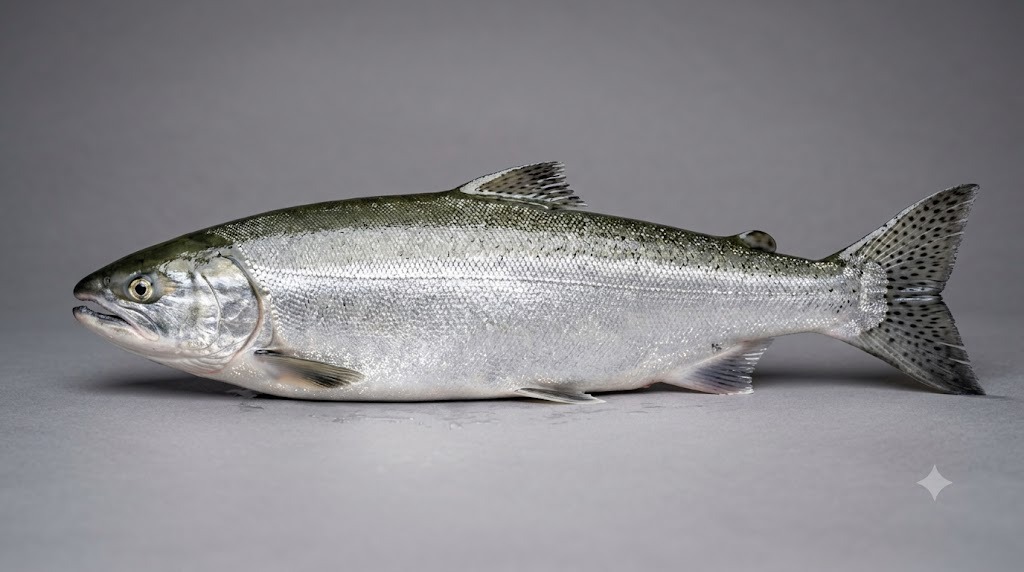
A fresh, ocean- or lake-bright coho is a stunning chrome-silver fish with a metallic blue-green back. The identification features that separate it from a Chinook are precise and important. The coho has small black spots on the back and on the upper lobe of the tail only - the lower lobe of the tail is generally unspotted. Most diagnostically, the gum line at the base of the teeth in the lower jaw is light or whitish, not black - the opposite of the Chinook's "blackmouth." Coho are also more slender than the deep-bodied king. As coho near spawning, they transform dramatically: males develop bright red sides, a dark back and head, and a pronounced hooked jaw.
Range & Habitat (US waters)
Coho salmon are native to the Pacific coast of the United States, running up rivers from California through Oregon, Washington, and into Alaska. Like all Pacific salmon they are anadromous - hatched in freshwater streams, grown in the ocean, and returning to spawn in their natal waters. Coho typically favor smaller coastal streams and tributaries for spawning compared to the big-river Chinook. They have also been introduced into the Great Lakes, where they live their whole lives in fresh water, feeding on alewives and providing a popular freshwater silver salmon fishery. In rivers they hold in pools, pockets, and current edges; in the big lakes they roam open water, often near the surface.
Behavior & Feeding
In their saltwater and big-lake growth phase, coho are aggressive, fast-moving predators that hunt baitfish in schools and feed voraciously, which is why they grow quickly. Coho are well known for striking lures aggressively and chasing fast presentations - a trait that makes them exciting to target. When they enter rivers to spawn, like other Pacific salmon they largely cease feeding, but coho retain a notably aggressive, territorial streak and will attack lures and bright presentations out of reflex and irritation more readily than some salmon. In the Great Lakes, coho often hold higher in the water column than Chinook, frequently near the surface, following the alewives and comfortable temperatures.
Best Seasons & Times to Catch
On Pacific rivers, coho are primarily a fall-run salmon, entering coastal streams and rivers from late summer through fall, with the run often triggered by autumn rains and rising flows. This fall river fishing is the prime opportunity. In the Great Lakes, coho are trolled in open water from spring through summer - early spring near-shore action is a notable feature, when coho school in warmer surface water close to the bank - and they stage and run up tributaries in the fall. Low-light periods, especially early morning, are productive across the board. Fresh rain and rising rivers reliably trigger river coho into moving and biting.
Where to Find Them - Reading the Water
In rivers, look for coho in pools, slots, soft pockets behind boulders, and the seams where current meets slower water - they hold and rest in these spots and stack up at river mouths waiting for rain. Coho often hold a little higher in the water column than Chinook. In the Great Lakes, spring coho are frequently found near shore in warmer surface water, making them accessible to small boats and even shore casters; as the season progresses they move offshore. In fall, concentrate on staging fish near tributary mouths, harbors, and piers. Bait location and water temperature drive the open-water fishery; resting water and rising flows drive the river fishery.
Tackle & Rigs
Coho can be enjoyed on lighter tackle than a king. For river fishing, an 8.5 to 10 foot medium-power salmon or steelhead rod with a spinning or baitcasting reel and 10 to 20 pound line offers a sporting fight while still landing fish. Float-fishing rigs (a bobber over a jig or bait), drift-fishing setups, and spinner outfits all suit river coho. For Great Lakes trolling, line-counter reels on trolling rods are run behind downriggers, divers, or planer boards - and because coho hold high, planer boards and shallow presentations are especially effective. Light, flashy terminal tackle and sharp hooks complete the kit.
Best Baits & Lures
Coho love to chase, so lures shine. Bright spinners, spoons, and flashy plugs draw aggressive strikes, and coho jigs fished under a float are a deadly river presentation. In rivers, cured salmon eggs (roe) and sand shrimp also produce. Coho show a strong attraction to bright colors - chartreuse, orange, pink, and red - and adding scent helps. In the Great Lakes troll, small to medium flashy spoons, flasher-and-fly combinations, and dodger rigs imitate and attract around alewives, with bright and orange patterns being longtime favorites. Because coho strike out of aggression as much as hunger, flash, movement, and color are the keys.
Techniques - How to Fish for It
Float fishing is one of the most productive and enjoyable river techniques for coho: suspend a jig or bait under a bobber and drift it naturally through pools and holding water at the depth fish are sitting. Drifting bait along the bottom and casting and retrieving bright spinners and spoons through pools both trigger aggressive coho. Twitching jigs - casting a jig and working it back with sharp rod snaps - is a favorite, exciting tactic that draws hard reaction strikes. In the Great Lakes, trolling with planer boards to spread shallow lures works well because coho ride high; in spring, troll the warm near-shore water. Cover water and provoke the strike.
Common Mistakes
A common mistake in the Great Lakes is fishing too deep - coho frequently hold near the surface, especially in spring, so running all lures down deep misses them. In rivers, anglers often fish too slowly or too dully for a fish that wants to chase flash and color. Poor float depth - fishing the jig or bait too high or too low for where coho hold - costs strikes. Missing the rain-driven nature of the run, and fishing low, clear water when the fish haven't moved, leads to slow days. And, as with all salmon, dull hooks and worn line lose these strong, jumping fish.
Size, Records & Eating Quality
Coho are mid-sized salmon - far smaller than Chinook but spirited fighters. They commonly weigh 6 to 12 pounds, with a 15-pounder being a quality trophy and the largest fish pushing into the high teens and low twenties; the all-tackle world record is just over 33 pounds, an exceptional fish. Great Lakes coho run similar, generally in the high single digits to low teens. As table fare, coho are excellent - the flesh is orange-red, rich but a touch milder and leaner than Chinook, and outstanding grilled, baked, or smoked. Bright, fresh-run fish are best; quality fades as they darken toward spawning.
Pros & Cons (as a target species)
Pros: coho are spectacular fighters with acrobatic jumps and fast surface runs, they strike aggressively and willingly chase lures, they can be enjoyed on sporting lighter tackle, and they make excellent eating. Spring near-shore Great Lakes coho are accessible even to small boats and shore anglers. Cons: they run smaller than Chinook, so they are not the choice for a pure size trophy; the river run is heavily timing- and rain-dependent; and the open-water troll, while productive, still benefits from a properly rigged boat. Fish darkening toward the spawn lose eating quality.
Best Suited For
Coho salmon suit anglers who value fight and fun over sheer size - the silver is one of the most exciting salmon to catch on appropriate tackle. They are ideal for river anglers who enjoy float fishing and casting lures, and for Great Lakes anglers, including those with smaller boats, who can take advantage of the accessible spring near-shore run. They reward anglers who follow the fall rains and time the river runs. For a beautiful, hard-jumping, great-eating salmon that delivers nonstop action, the coho is an outstanding target.
FAQ
Why is the coho called the "silver salmon"? Because in its fresh ocean- or lake-bright phase the coho is a brilliant chrome-silver fish. The nickname reflects that bright, metallic appearance, which fades as the fish darkens and the males turn red approaching the spawn.
How do I tell a coho from a Chinook? Check the mouth and tail. A coho has a light or whitish gum line in the lower jaw, while a Chinook has a black gum line ("blackmouth"). A coho's tail is spotted only on the upper lobe; a Chinook is spotted on both lobes. Coho are also more slender and run smaller.
When is the best time to catch coho? On Pacific rivers, coho are mainly a fall run, entering streams from late summer through fall and triggered by autumn rain. In the Great Lakes, they are trolled spring through summer - with notable spring near-shore action - and run the tributaries in fall.
What is the best technique for river coho? Float fishing a jig or bait under a bobber, drifted through holding water, is one of the most productive and enjoyable methods. Casting bright spinners and spoons and twitching jigs also draw the aggressive reaction strikes coho are known for.
Are coho salmon good to eat? Yes - coho are excellent table fare. The orange-red flesh is rich but a bit milder and leaner than Chinook, and it grills, bakes, and smokes beautifully. Bright, fresh-run fish offer the best quality, which declines as the fish darken toward spawning.