Crappie
The crappie is one of America's most beloved panfish - a slab-sided, paper-mouthed member of the sunfish family that schools in big numbers, fights gamely on light tackle, and produces some of the finest fillets in freshwater.
🗓️ Last reviewed: June 2026
Overview
The crappie is one of America's most beloved panfish - a slab-sided, paper-mouthed member of the sunfish family that schools in big numbers, fights gamely on light tackle, and produces some of the finest fillets in freshwater. Two species exist, the black crappie and the white crappie, and most anglers chase them with equal enthusiasm. Crappie fishing is a social, productive, and addictive pursuit: locate a school stacked on a brush pile in spring and you can fill a cooler in an afternoon. For countless anglers, the arrival of crappie season is the true start of the fishing year.
Identification & Appearance
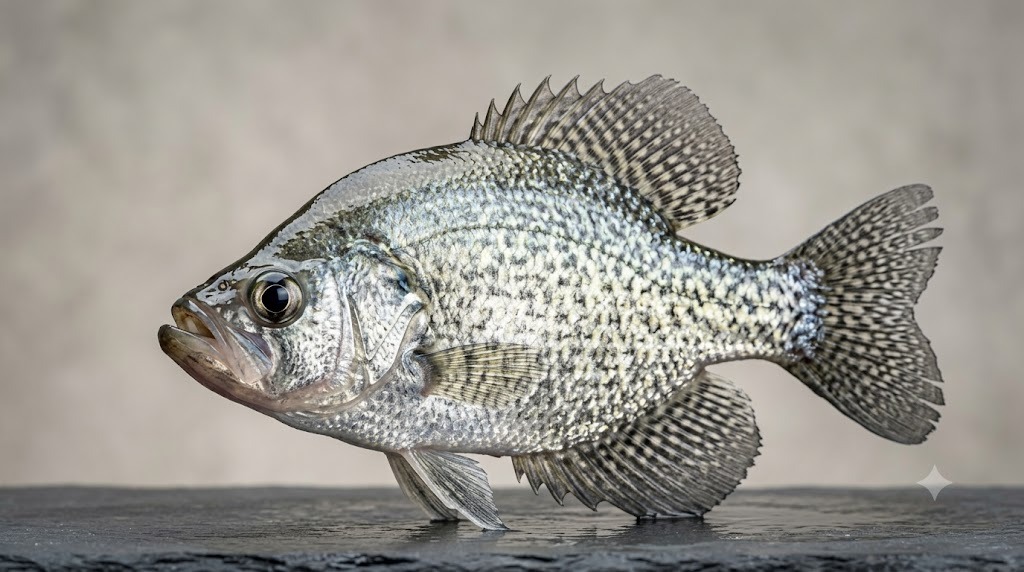
Crappie are deep, thin, silvery fish with large eyes and a distinctively oversized, delicate mouth - the source of the nickname "papermouth." The black crappie has irregular dark speckles scattered randomly over a silvery-green body, while the white crappie shows the same speckling arranged into faint vertical bars. The most reliable way to separate them is to count the spines on the front of the dorsal fin: the black crappie has seven or eight, the white crappie has only six. Both species turn darker, with males developing near-black coloration on the head and breast during the spring spawn.
Range & Habitat (US waters)
Crappie are found across nearly all of the lower 48 states. The black crappie generally prefers clearer, weedier, more vegetated water, while the white crappie tolerates and even favors more turbid, off-color reservoirs and rivers. Both thrive in lakes, large reservoirs, slow rivers, oxbows, and backwaters. They relate strongly to brush, standing timber, fallen trees, dock pilings, weed edges, and any submerged cover. Crappie are a backbone species of reservoir fishing throughout the South and Midwest and are widely available everywhere in between.
Behavior & Feeding
Crappie are open-water schooling fish and primarily minnow eaters. Their diet is dominated by small baitfish - shad, minnows, and the young of other fish - supplemented by aquatic insects, larvae, and small crustaceans, especially when the fish are smaller. They suspend at a specific depth and roam in search of bait, relating to cover and structure as ambush points. Crappie feed most actively in low light, and they have a soft, tentative bite that can be easy to miss. Schools tend to group tightly by size, so a spot full of small fish stays full of small fish.
Best Seasons & Times to Catch
Spring is the legendary crappie season. As water warms through the upper 50s and into the 60s, crappie move shallow to spawn and stack in predictable, accessible cover - this is when limits come fast. Fall is the second-best window, with cooling water pulling fish back toward feeding zones. Summer crappie suspend over deeper structure and bite well early, late, and at night. Crappie are also a premier ice-fishing target in the North. Daily, low light wins - dawn, dusk, overcast skies, and night fishing under lights all concentrate and trigger feeding crappie.
Where to Find Them - Reading the Water
Crappie location is all about cover and depth. In spring, search shallow cover near spawning flats - brush, laydowns, flooded bushes, dock posts, and the edges of vegetation in protected coves. As the year progresses, crappie pull out to deeper structure: standing timber, brush piles, creek-channel edges, bridge pilings, and main-lake points. The critical detail is depth - crappie suspend, so finding the right cover at the right depth is the whole puzzle. Modern anglers lean heavily on sonar to spot suspended schools and the cover that holds them.
Tackle & Rigs
Crappie are a light-tackle fish. A light-action spinning rod, 6 to 7 feet, with a small reel and 4-8 lb monofilament or braid covers most situations, while specialized crappie anglers use very long rods, 10 to 16 feet, for "spider rigging" and dock shooting. Key rigs include a single jig fished on light line, a jig or live minnow suspended under a slip bobber set to the fish's depth, a double-minnow drop rig for vertical fishing, and a small spinner rig. Spider rigging - fanning multiple rods off the front of a slowly moving boat - is a classic crappie method.
Best Baits & Lures
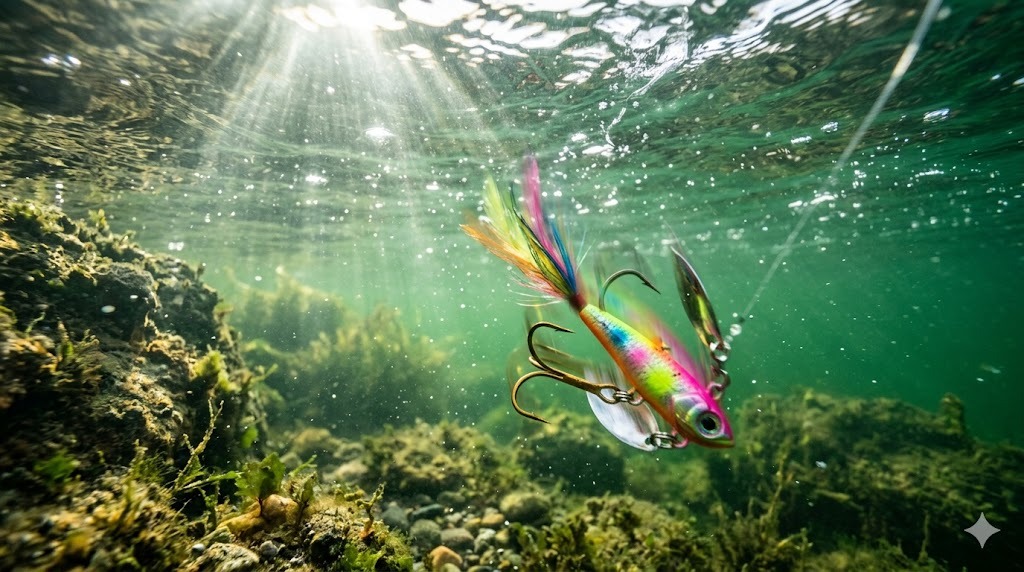
Two presentations dominate crappie fishing: small jigs and live minnows. Soft-plastic crappie jigs in the 1/32 to 1/16 ounce range, fished on a light jighead, come in endless colors - chartreuse, white, pink, and shad patterns are perennial favorites. Live minnows hooked through the lips or back and suspended under a float are deadly and often outproduce everything else, especially for finicky fish. Marabou and hair jigs, tiny crankbaits, small spinners, and tube jigs all catch crappie. Tipping a jig with a minnow combines the best of both.
Techniques - How to Fish for It
The core skill is presenting a bait at the exact depth crappie are holding. Suspend a jig or minnow under a slip bobber set to that depth and ease it past cover. Vertically jig directly over brush piles and timber, watching the line and sonar. "Shoot" jigs far back under docks with a slingshot motion of the rod. Spider rig multiple baits at staggered depths to find the fish, then concentrate on the productive depth. Above all, set the hook with a smooth sweep rather than a hard jerk - the crappie's paper-thin mouth tears easily, and overzealous hooksets cost fish.
Common Mistakes
The most common mistake is fishing at the wrong depth - crappie suspend, and a bait above or below them gets ignored. Another is a hard, jerking hookset that rips through the papermouth and loses the fish. Anglers also overlook how tightly crappie relate to cover, fish too fast past brush, use line too heavy for the light bite, and fail to keep moving when a spot produces only small fish. Ignoring sonar in deep water makes summer crappie far harder than they need to be.
Size, Records & Eating Quality
A 9-11 inch crappie is a good keeper; a fish of 12 inches or better is excellent, and a true slab over 2 pounds is a trophy of a lifetime. The all-tackle world record black crappie is around 5 pounds 7 ounces, and the white crappie record stands at 5 pounds 3 ounces from Mississippi's Enid Lake - both exceptional fish. Crappie are widely considered among the very best-eating freshwater fish, with sweet, flaky, mild white fillets. Their table quality is a major reason crappie fishing is so popular across the South and Midwest.
Pros & Cons (as a target species)
Pros: abundant and widespread, school in large numbers so catches come fast, fight well on light tackle, and rank among the best-eating freshwater fish. Cons: the soft papermouth is easy to tear and loses fish on poor hooksets, locating suspended schools at the right depth can be challenging, summer fish often require sonar, and schools group by size so finding big fish takes work.
Best Suited For
Crappie suit anglers who enjoy productive, social fishing and want a quality meal - they are a favorite of family and group outings. They are excellent for beginners during the easy spring shallow bite, rewarding for sonar-savvy anglers chasing suspended summer schools, and a top target for ice anglers. Anyone who values a full cooler of fine fillets should learn to chase crappie.
FAQ
What is the difference between black crappie and white crappie? Count the dorsal spines: black crappie have seven or eight, white crappie have six. Black crappie show random speckling and prefer clearer water; white crappie show speckling arranged into vertical bars and tolerate murkier water.
What is the best bait for crappie? Small jigs and live minnows are the two best choices. Live minnows under a float are deadly for finicky fish, while soft-plastic crappie jigs let you cover water and target specific cover.
Why do I keep losing crappie when I hook them? Crappie have a very thin, delicate mouth - the "papermouth." A hard, jerking hookset tears the hook out. Set with a smooth, steady sweep and keep steady pressure as you fight the fish.
When is the best time to catch crappie? Spring, when warming water draws crappie shallow to spawn and stacks them in accessible cover. Fall is the second-best window, and low-light periods produce best on any given day.
How deep should I fish for crappie? Whatever depth the fish are suspended at - crappie hold at a specific level. Use sonar or fish staggered depths until you find them, then keep your bait right at that depth.