Cutthroat Trout
Cutthroat trout are one of the West's most iconic native fish - a beautiful, willing, and widely distributed trout named for the bright orange-red slash marks under the jaw.
🗓️ Last reviewed: June 2026
Overview
Cutthroat trout are one of the West's most iconic native fish - a beautiful, willing, and widely distributed trout named for the bright orange-red slash marks under the jaw. Where rainbow trout dominate stocked fisheries and brown trout earn a reputation for wariness, cutthroat are the soul of wild backcountry water: high mountain streams, alpine lakes, coastal estuaries, and big interior rivers. They come in many subspecies, each adapted to its home water, and together they form a living map of the western United States. Cutthroat are generally eager biters that rise freely to dry flies, making them a favorite of fly anglers and a wonderful fish for introducing newcomers to moving water. They are also a conservation priority, with many subspecies restored from the brink.
Identification & Appearance
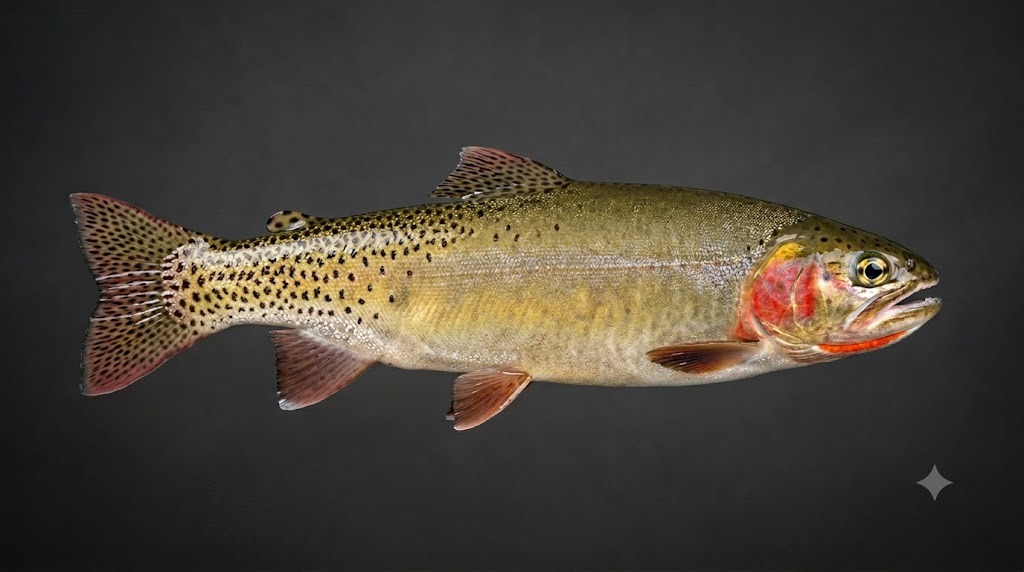
The defining mark is the pair of orange-to-crimson slashes along the underside of the lower jaw - the "cutthroat." Body color varies enormously by subspecies: golden-olive Yellowstone cutthroat with sparse spotting concentrated toward the tail; heavily spotted Westslope cutthroat with yellowish flanks and a rosy gill plate; brassy, brilliantly colored Lahontan and Bonneville fish; and silvery, sea-run coastal cutthroat with profuse fine black spots. Most have a moderately spotted body, a rounded snout, small teeth on the back of the tongue (the basibranchial teeth used to distinguish them from rainbows), and no white leading edges on the lower fins. Hybrids with rainbow trout - "cutbows" - are common and can blur identification. Sizes range from 6-inch headwater fish to double-digit lake giants.
Range & Habitat (US waters)
Cutthroat are native to the western United States, from the Pacific coast inland through the Rocky Mountains and Great Basin. Coastal cutthroat occupy streams and estuaries from Northern California to Alaska. Westslope cutthroat live in Montana, Idaho, Washington, and Oregon. Yellowstone cutthroat inhabit the Yellowstone region of Wyoming, Montana, and Idaho. Lahontan, Bonneville, Colorado River, Rio Grande, and Greenback cutthroat occupy their namesake basins. They thrive in cold, clean water: small mountain creeks, freestone rivers, alpine and reservoir lakes, and coastal tidewater.
Behavior & Feeding
Cutthroat are opportunistic, surface-oriented feeders, which is why they are famously easy to catch on dry flies. In streams they hold in current and dart up to grab drifting insects - mayflies, caddis, stoneflies, midges, and a steady diet of terrestrials like ants, beetles, and grasshoppers in summer. In lakes they cruise shorelines and drop-offs eating scuds, leeches, damselflies, and minnows. Coastal sea-run cutthroat chase baitfish and shrimp in estuaries and become more aggressive and silvery. Cutthroat are not as shy as brown trout, but in heavily fished or gin-clear water they still demand a careful approach and a drag-free presentation.
Best Seasons & Times to Catch
In mountain streams the prime window is summer through early fall, after spring runoff drops and clears - the high country fishes best from roughly July into October. Cutthroat spawn in spring, so many high-elevation streams open later to protect them. Alpine lakes fish well from ice-out through summer, especially the evening insect hatches. Coastal sea-run cutthroat are a fall and winter target in tidal rivers. Generally, midday is productive in cold mountain water, while morning and evening shine on warmer lowland water and during hatches.
Where to Find Them - Reading the Water
In streams, cutthroat hold in classic trout lies: foam lines and current seams, the heads and tailouts of pools, pockets behind boulders, undercut banks, and the soft water beside fast riffles. They love the bubble line where current concentrates drifting food. In high mountain creeks they will be in nearly every plunge pool. In lakes, look to drop-offs, inlet and outlet areas, weed edges, points, and shaded shorelines, especially early and late. Sea-run cutthroat patrol estuary shorelines, oyster beds, and the mouths of small tributaries on the tide.
Tackle & Rigs
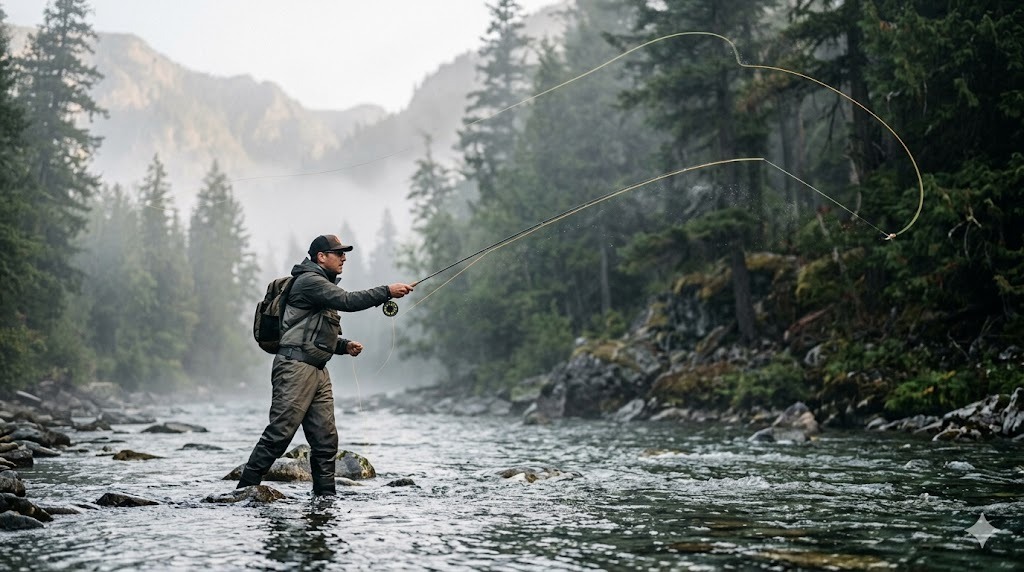
Fly fishing is the classic approach. A 4- or 5-weight rod, 8 to 9 feet, covers most stream and lake situations; small mountain creeks suit a short 2- or 3-weight, and big rivers or sea-run fishing a 5- or 6-weight. Use floating line, a 9-foot leader tapered to 4X or 5X, and dry-dropper rigs to cover surface and subsurface at once. Spin anglers do well with an ultralight 5- to 6-foot rod, a small reel, and 2- to 6-pound monofilament throwing tiny spinners and spoons. Keep terminal tackle light and natural - cutthroat reward a delicate presentation.
Best Baits & Lures
For fly anglers: attractor dry flies like Parachute Adams, Royal Wulff, Elk Hair Caddis, and Stimulators; terrestrials like foam hoppers, ants, and beetles in summer; and subsurface nymphs such as Pheasant Tail, Hare's Ear, Prince, and Copper John. Lake anglers add scud, leech, and damselfly patterns. For spin gear, small inline spinners (size 0-2) in silver, gold, and brown patterns, tiny spoons, and small soft-plastic minnows produce well. Where bait is legal, worms and salmon eggs work, but cutthroat are so willing on artificials that bait is rarely necessary.
Techniques - How to Fish for It
In streams, approach from downstream, stay low, and make short, accurate casts to likely lies. Drift a dry fly drag-free through foam lines and pocket water, mending to keep slack out. A dry-dropper rig - a buoyant dry with a nymph hung 18 to 30 inches below - is the most efficient way to find willing fish. In lakes, fan-cast shorelines and drop-offs, or slowly retrieve leeches and nymphs along weed edges; during a hatch, match the bug and cast to rises. For sea-run cutthroat, work estuary shorelines on the tide with baitfish flies or small spinners.
Common Mistakes
The most common mistake is drag - letting the current pull the fly unnaturally; even eager cutthroat refuse a dragging dry. Anglers also approach too carelessly in clear water, spooking fish with their shadow or heavy footsteps. Many overlook the small pocket water in mountain streams, fishing only the big obvious pools. On lakes, fishing too fast or too deep misses cruising surface feeders. Finally, anglers sometimes use line that is far too heavy for these often-modest fish, costing them strikes in clear water.
Size, Records & Eating Quality
Stream cutthroat commonly run 8 to 14 inches, with larger fish in big rivers. Lake-dwelling subspecies grow much bigger - the Lahontan cutthroat of Pyramid Lake, Nevada produces fish well over 10 pounds, and the all-tackle world record Lahontan cutthroat weighed 41 pounds. Eating quality is good, with delicate pink flesh, but because many subspecies are of conservation concern, most anglers release them, particularly native and trophy fish. Where harvest is legal and populations healthy, a couple of pan-sized cutthroat make an excellent shore lunch.
Pros & Cons (as a target species)
Pros: a native, beautiful fish that rises freely to dry flies; ideal for learning fly fishing; found in stunning backcountry settings; many subspecies to pursue across the West. Cons: often small in headwater streams; access can require hiking; short seasons at high elevation; many populations are protected with restrictive regulations; hybridization with rainbows muddies pure-strain identification.
Best Suited For
Cutthroat are perfect for fly anglers, beginners learning the dry fly, and anyone who values wild fish in wild places over sheer size. They suit hikers and backpackers chasing high alpine lakes and creeks, and adventurous anglers who enjoy collecting subspecies across different basins. They are less suited to anglers seeking large fish, fast lowland action, or convenient drive-up fishing - though big-water and reservoir cutthroat can satisfy the trophy hunter.
FAQ
How do I tell a cutthroat from a rainbow trout? Look for the orange-red slash marks under the lower jaw, small basibranchial teeth at the back of the tongue, and the absence of white-tipped lower fins. Be aware that "cutbow" hybrids can show mixed traits.
Why are cutthroat considered easy to catch? They are opportunistic, surface-oriented feeders that rise readily to dry flies, especially attractor patterns and terrestrials. In remote, lightly fished water they can be very willing.
When is the best time to fish for cutthroat? In mountain streams, summer through early fall after runoff clears. Alpine lakes fish well from ice-out onward, and coastal sea-run cutthroat are a fall and winter target.
Should I keep cutthroat trout? In many waters, no - numerous subspecies are conservation priorities and regulations require release. Where harvest is legal and populations are healthy, a couple of pan-sized fish are fine. Always check local rules.
What's the best all-around setup? A 4- or 5-weight fly rod with a floating line and a dry-dropper rig covers most stream and lake situations. Spin anglers do well with an ultralight rod and small spinners.