Flathead Catfish
The flathead catfish is the loner and the predator of the catfish world.
🗓️ Last reviewed: June 2026
Overview
The flathead catfish is the loner and the predator of the catfish world. Where blue and channel catfish will happily scavenge, the flathead is a dedicated hunter of live prey, a solitary heavyweight that lurks in the deepest, darkest cover of big rivers and reservoirs. It grows huge, fights with stubborn, head-shaking power, and is widely considered the best-eating catfish of all. Catching a big flathead is a calculated pursuit: knowing where the giants hide, presenting a lively bait into their lair, and being ready when a fish that can weigh 50 or 80 pounds tries to bury itself back in the wood. For trophy hunters and table anglers alike, the flathead is a top-tier target.
Identification & Appearance
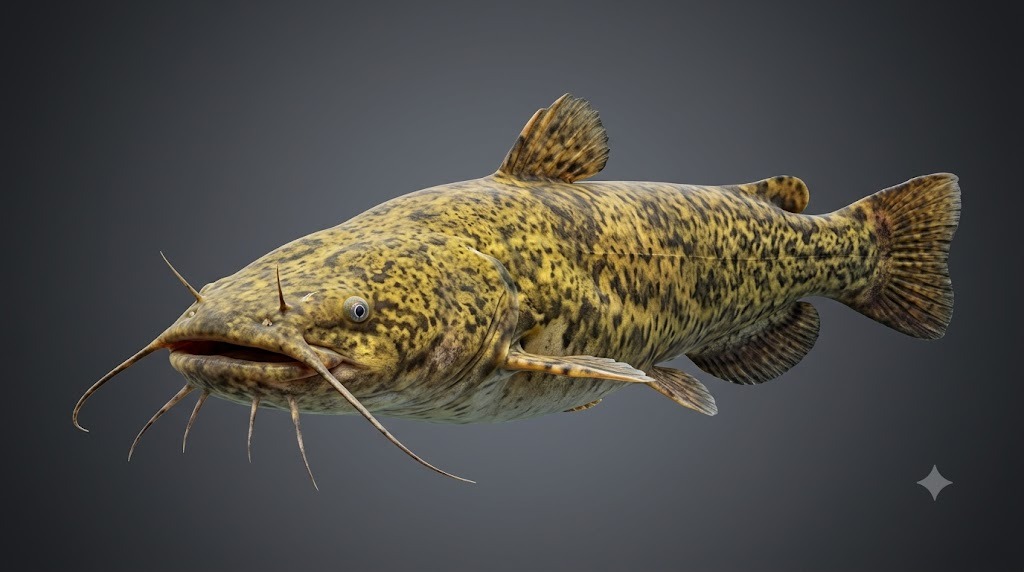
The flathead is unmistakable once you know it. The head is broad, flattened, and shovel-shaped - the source of the name - with small eyes set high. The body is mottled yellowish-brown to olive, often with a marbled or blotchy pattern, fading to a dirty cream or pale yellow belly, which earns it regional nicknames like "yellow cat" and "shovelhead." The single most telling feature, besides the flat head, is the lower jaw: a flathead's lower jaw projects beyond the upper jaw, an underbite no other North American catfish shows. The tail is only slightly notched, not deeply forked like a blue or channel cat's, and the body has a thick, muscular build.
Range & Habitat (US waters)
Flathead catfish are native to the large rivers of the central United States - the Mississippi, Missouri, and Ohio basins and the river systems of the Gulf states from Texas eastward. They have been widely introduced beyond their native range, including into rivers of the Atlantic coast and elsewhere, where they have become established (and, in some places, controversial) predators. Flatheads favor big rivers and reservoirs with deep holes and, above all, heavy cover: submerged logjams, root wads, undercut banks, brush piles, rocks, and any dark crevice a big fish can back into. They are creatures of structure and current, and they relate tightly to it.
Behavior & Feeding
Flatheads are nocturnal, solitary ambush predators. By day, a big flathead holds tight in heavy cover - inside a logjam, beneath an undercut bank, in the depths of a brush pile - barely moving. As darkness falls, it leaves the lair to hunt, moving onto adjacent flats, shallow shoals, and current breaks to feed. Their diet is overwhelmingly live prey: live fish of all kinds, crayfish, and other catfish. Unlike blues and channels, flatheads largely ignore cut bait and rotten "stink" baits - they want their meals alive and kicking. Each big flathead tends to claim a prime piece of cover, and another large fish will often move in if the resident is removed.
Best Seasons & Times to Catch
The flathead is a warm-water fish, and the prime season runs from late spring through early fall. Summer is peak time, when warm water has flatheads feeding aggressively and predictably. The pre-spawn period of late spring and the post-spawn recovery feed are both excellent. As water cools in fall, flatheads feed heavily before slowing dramatically in winter, when they hole up and barely eat - winter is the toughest season for them, the opposite of the blue catfish. The single most important timing factor is light: flatheads feed primarily after dark, and night fishing from dusk through the small hours is by far the most productive approach.
Where to Find Them - Reading the Water
Think cover and depth. By day, target the heaviest structure available: deep logjams, sunken timber, root wads on outside river bends, undercut banks, rock piles, and the deepest holes. These are the daytime lairs of big fish. At night, the strategy shifts to ambush points around that cover - the edges of holes, the upstream and downstream ends of logjams, current seams, gravel and sand shoals adjacent to deep water, and shallow flats where flatheads roam to hunt. In reservoirs, focus on standing timber, the old river channel, and brushy points. The presence of live forage near good cover marks the best spots.
Tackle & Rigs
Flathead fishing means heavy, no-compromise gear, because the fish must be turned away from cover immediately. Use a powerful 7 to 8 foot catfish rod with a strong backbone, paired with a stout baitcasting or large spinning reel with a heavy, smooth drag and a clicker. Spool with 50 to 80 pound braid or heavy monofilament. A simple slip-sinker (Carolina) rig with an egg sinker, a swivel, a heavy leader, and a strong circle hook from 6/0 to 10/0 is standard. Many anglers use a slip-float to suspend a livebait near cover or simply fish the bait on a tight line with just enough weight to hold. Sturdy rod holders are mandatory - a flathead's strike is violent.
Best Baits & Lures
Live bait is not just preferred for flatheads - it is essential. A big, lively baitfish is the key to a big flathead. Top choices include live bluegill and other sunfish (where legal to use as bait), bullheads, large shiners, goldfish, and creek chubs. The bait should be hardy and active, hooked through the back or lips so it stays lively and kicking. Size your bait to the fish you want: a hand-sized bluegill is a fine bait for a trophy flathead. Cut bait and prepared stink baits - staples for other catfish - are poor producers for flatheads. With this species, alive and kicking is the whole game.
Techniques - How to Fish for It
The classic flathead method is to fish live bait at night near heavy cover. Anchor or use a shallow-water anchor near a known logjam or hole, cast lively baits to the edges of the structure, set rods in solid holders, and wait through the dark hours. Position baits so a feeding flathead can find them as it leaves the cover to hunt. When a flathead hits, it often takes the bait hard and tries to return to cover instantly - be ready to lean into the fish immediately and turn its head before it buries you. Some anglers also drift or "tightline" live baits along productive cover edges. Patience after dark is the rule.
Common Mistakes
The most common mistake is fishing cut bait or stink bait - flatheads want live prey, and dead baits drastically underperform. Fishing in the daytime and in open water away from cover is another; flatheads hold tight to structure and feed mainly at night. Tackle that is too light loses the fish to a logjam in seconds. Hesitating after the strike - failing to immediately turn the fish away from cover - costs many trophies. Using small or sluggish bait fails to interest big fish. And fishing winter the same way as summer disappoints, since cold water shuts flatheads down.
Size, Records & Eating Quality
Flatheads are true giants. Fish of 5 to 20 pounds are common, 30 to 50-pounders are realistic trophies on quality water, and giants over 70 pounds are caught most years on premier rivers. The all-tackle world record flathead catfish weighed 123 pounds, taken from Elk City Reservoir in Kansas in 1998. As table fare, flatheads are the prize of the catfish family - many anglers rank them the best-eating catfish of all, with firm, white, sweet, mild fillets, a reputation helped by their clean live-prey diet. As with all big catfish, keeping eater-sized fish and releasing the large breeders is the responsible approach.
Pros & Cons (as a target species)
Pros: flatheads grow to genuine trophy size, fight with brutish, stubborn power, and are widely regarded as the best-eating catfish. They are predictable once you understand them - find the cover, fish live bait at night, and the giants are there. Cons: they demand live bait, which must be caught or sourced and kept lively; the best fishing is at night, which not everyone enjoys; heavy tackle is mandatory; winter fishing is poor; and a single piece of prime cover may hold only one big fish, so it is not a numbers game.
Best Suited For
Flathead catfish are best suited for patient, trophy-minded anglers who don't mind fishing through the night and are willing to deal with live bait. They reward anglers who scout cover carefully and fish it deliberately. River anglers, both from boats and from the bank near good structure, do well. They are not a fast-action, daytime, easy-bait species - but for anglers who want the best-eating catfish and a real shot at a 50-pound-plus river monster, the flathead is hard to top.
FAQ
How is a flathead catfish different from a blue or channel catfish? The flathead has a broad, flattened, shovel-shaped head, a mottled yellow-brown body, and a projecting lower jaw (underbite) - no other North American catfish has that underbite. Its tail is only slightly notched rather than deeply forked. Flatheads are also dedicated live-prey hunters, unlike the more scavenging blues and channels.
What is the best bait for flathead catfish? Live bait, period. Lively sunfish such as bluegill (where legal), bullheads, large shiners, goldfish, and creek chubs are the top choices. The bait must be big and active. Cut bait and stink baits, which work for other catfish, are poor for flatheads.
Why fish for flatheads at night? Flatheads are nocturnal. During the day they hold tight in heavy cover and barely move; after dark they leave the cover to actively hunt. Fishing from dusk through the night puts your bait in front of feeding fish.
How big do flathead catfish get? Flatheads of 5 to 20 pounds are common, 30 to 50-pound trophies are realistic on good water, fish over 70 pounds are caught most years, and the world record weighed 123 pounds.
Are flathead catfish good to eat? Yes - many anglers consider the flathead the best-eating catfish of all. The fillets are firm, white, sweet, and mild, a quality often credited to the flathead's clean diet of live prey. Keeping eater-sized fish and releasing the big breeders is the recommended practice.