Freshwater Drum
The freshwater drum is one of the most widely distributed yet least appreciated gamefish in North America.
🗓️ Last reviewed: June 2026
Overview
The freshwater drum is one of the most widely distributed yet least appreciated gamefish in North America. Known by a tangle of regional names - sheepshead, gaspergou, gou, croaker, grunter, white perch (in some areas, confusingly) - it is the only member of the drum family that lives its entire life in fresh water. Anglers most often catch it by accident while targeting walleye, catfish, or bass, and many toss it back with a shrug. That is a missed opportunity. The freshwater drum is a strong, dogged fighter, abundant almost everywhere, willing to bite year-round, and far better on the table than its reputation suggests.
The drum gets its name from a genuine and remarkable trait: it produces an audible drumming or grunting sound using special muscles vibrating against its swim bladder. Anglers in quiet conditions can sometimes hear the noise rising from the water. It is a distinctive fish with a distinctive voice, and it deserves more respect than it gets.
Identification & Appearance
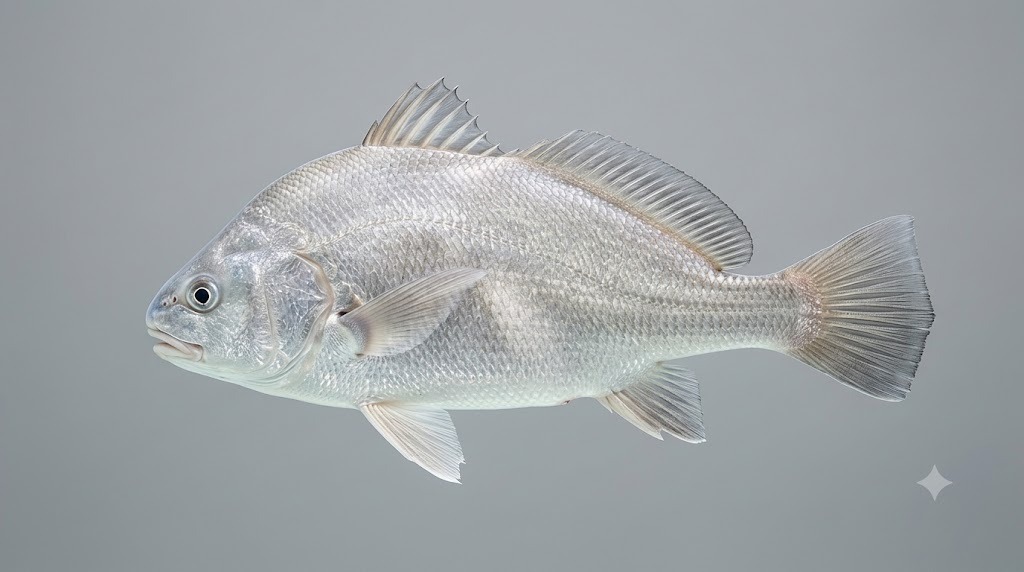
The freshwater drum has a tall, deep, laterally compressed body with a noticeably humped back and a steep forehead, giving it a hunched, rounded profile. Coloration is silvery to pearly gray, often with a bronze or pewter sheen, fading to a white belly; fish from clear water tend to be brighter and more silver, while those from turbid rivers are darker and grayer.
Key identifying features include a long, continuous dorsal fin divided into a spiny front section and a soft rear section, a rounded tail, and a downturned, somewhat underslung mouth suited to bottom feeding. The lateral line is distinctive in that it extends all the way onto the tail fin. Internally, the drum has large, flat, pearly throat teeth (pharyngeal teeth) for crushing shells, and round, ivory-like ear bones called otoliths - sometimes called "lucky stones" - that anglers occasionally keep as curiosities.
Range & Habitat (US waters)
The freshwater drum has one of the largest north-south ranges of any North American freshwater fish. It is found throughout the central United States, across the entire Mississippi River basin, the Great Lakes and their tributaries, the Missouri, Ohio, and Tennessee river systems, and many Gulf Coast drainages. It is abundant in big rivers and large reservoirs across the Midwest and South.
Drum favor large rivers and lakes with current or wave action and prefer firm bottoms of sand, gravel, or rock, though they also use mud flats. They are bottom-oriented and gravitate to deeper water, current breaks, channel edges, the bases of dams and wing dams, riprap banks, and the mouths of tributaries. They tolerate turbid water well and are common in murky river systems where sight-feeding fish struggle.
Behavior & Feeding
The freshwater drum is a bottom-feeding generalist with a specialized set of crushing throat teeth. Its diet is heavy on aquatic invertebrates - it is especially fond of mollusks, including invasive zebra mussels, as well as crayfish, immature aquatic insects, and small fish. The downturned mouth and pharyngeal mill let it root along the bottom and crush hard-shelled prey that few other fish can exploit.
Drum feed primarily by touch, smell, and the vibration-sensing lateral line rather than by sight, which is why they thrive in turbid water and feed actively at night and in low light. They are most active in warm conditions but feed across a wide temperature range, making them a genuine year-round species. Spawning occurs in late spring and early summer in open water; the eggs are buoyant and drift with current, an unusual strategy among freshwater fish. The famous drumming sound is produced mainly by males, likely related to spawning communication.
Best Seasons & Times to Catch
The freshwater drum is one of the more dependable year-round biters, but warm-water months are best. Late spring through early fall, when water temperatures are in the 60s to 80s, drum feed aggressively and are caught in good numbers. Early summer, around the spawn, often produces concentrations of fish and is a peak period.
Within a day, low-light periods - dawn, dusk, and especially after dark - are productive because drum feed heavily by touch and smell. They will, however, bite through the day, particularly in stained or murky water. Drum remain catchable in cooler water and even through winter in tailrace areas and deeper holes, though the pace slows. Stable, warm weather is best; like most species they can go quiet after a sharp cold front, but drum tend to be more weather-tolerant than many gamefish.
Where to Find Them - Reading the Water
Think bottom, current, and structure. In rivers, the most reliable drum spots are current breaks and seams - behind wing dams, below low-head dams in the tailrace, along channel edges, around bridge pilings, and on gravel or rock bars where current sweeps food along. Riprap banks and the rocky bases of dams are classic.
In reservoirs and large lakes, look for firm-bottomed flats adjacent to the main channel, points, humps, riprap shorelines, and the deeper water off dams. Drum often school, so where you catch one you will frequently catch several. Tributary mouths, where current and food concentrate, are excellent. Because drum tolerate and even prefer turbid water and feed by touch, do not be put off by muddy conditions - murky river water after a rain can produce excellent drum fishing.
Tackle & Rigs
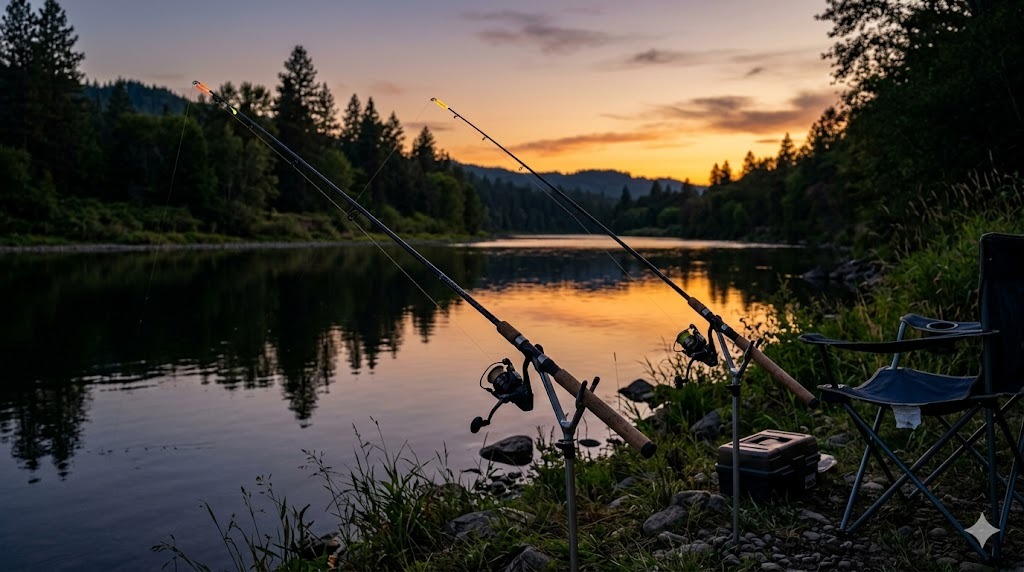
Freshwater drum do not require specialized gear; standard bottom-fishing tackle handles them well, and the same setups used for catfish, walleye, or river bass will catch drum incidentally and on purpose. A medium to medium-heavy rod, 6.5 to 7.5 feet, with a spinning or baitcasting reel and 10 to 20 lb line - mono or braid - covers most situations. Larger river drum and current call for the heavier end of that range.
The most effective rig is a simple bottom rig that keeps bait on or near the substrate. A Carolina rig or a fish-finder (slip-sinker) rig with enough weight to hold bottom in current is the standard, paired with a 1/0 to 3/0 hook. A three-way rig works well in heavier current, letting the sinker tap bottom while the bait drifts naturally. Drop-shot rigs are effective in lakes. Use enough weight to maintain bottom contact, since drum are firmly bottom-oriented, and a sturdy hook to handle their crushing jaws.
Best Baits & Lures
Drum are bottom feeders with a taste for invertebrates, and bait fishing is the most reliable approach. The top baits are nightcrawlers, crayfish (live or pieces), and cut bait, all fished on the bottom. Live minnows produce well, and many anglers catch drum on leeches, soft-shell craws, and even pieces of clam or mussel - fitting, given the drum's natural diet. Fresh, natural-scented bait fished hard on the bottom is the consistent producer.
Drum also strike lures more readily than their bottom-feeding reputation suggests. They hit jigs tipped with plastic or bait, blade baits, small crankbaits, lipless cranks, and spinners, especially when these are worked slowly along the bottom. Bottom-bouncing a jig or blade bait through current seams is an effective and active way to target them. Anglers fishing for walleye and smallmouth with bottom-contact lures frequently pick up drum as a bonus.
Techniques - How to Fish for It
The core technique is straightforward bottom fishing. Position upstream or up-current of likely structure, cast a bottom rig baited with nightcrawler or crayfish, let it settle onto the substrate, and keep the line semi-tight to feel the bite. Drum bites range from a subtle tap-tap to a solid, decisive pull; let the fish take the bait and load the rod, then set with a firm sweep. In rivers, allowing the rig to slowly drift and tumble along the bottom with the current covers water and mimics natural food movement.
For a more active approach, work a jig or blade bait with a lift-drop retrieve along the bottom through current seams and channel edges, staying in constant contact with the substrate. When you hook a drum, expect a strong, dogged, head-shaking fight - they pull hard, dig for the bottom, and use their deep bodies against you, often surprising anglers who expected an easy fish. Because drum school, stay put once you find them and work the area thoroughly.
Common Mistakes
The biggest mistake anglers make with drum is dismissing them - assuming they are worthless and not worth targeting, when in fact they fight well and eat well. On the water, the most common error is not keeping the bait on the bottom; drum are bottom feeders, and a bait drifting too high gets ignored. Using too little weight in current causes the same problem. Anglers also tend to leave a spot after one fish, when drum school and the area likely holds more. Misidentification is common too - drum are confused with carp, sheepshead from saltwater, or even called "white perch." Finally, many people mishandle the catch for the table by not bleeding and icing it promptly, which costs them good eating.
Size, Records & Eating Quality
Freshwater drum commonly run 1 to 5 pounds, with good fish in the 5 to 10 pound range and trophies exceeding 15 pounds. The all-tackle world record is 54 pounds 8 ounces, taken in Tennessee, making the drum one of the larger freshwater fish an angler is likely to encounter incidentally. Any drum over 10 pounds is a strong, memorable fish.
Eating quality is genuinely good and underrated. The flesh is firm, white, and mild with a slightly sweet flavor when handled properly - bled, iced immediately, and cooked fresh. Smaller and mid-sized drum are the best eating; very large old fish can be coarser. The firm texture holds up well to frying, blackening, grilling, and chowders. The keys to good drum on the plate are prompt bleeding and icing, removing the dark lateral musculature if desired, and not letting the fish sit warm. The pearly otolith "lucky stones" are a fun keepsake from a cleaned fish.
Pros & Cons (as a target species)
Pros: extremely abundant and widely distributed, so you can find them almost anywhere; a strong, dogged fighter that pulls harder than expected; a true year-round, all-conditions biter that tolerates turbid water; easy to target with inexpensive, standard bottom-fishing gear; surprisingly good eating when handled well; grows large enough to provide genuine trophies.
Cons: an undeserved poor reputation that means little recognition for catching them; a bottom-feeding habit that makes the fishing less visually exciting than topwater or sight fishing; large old fish can be coarse on the table; frequently caught by accident, which some anglers find anticlimactic; easily confused with other species.
Best Suited For
The freshwater drum is ideal for bottom-fishing anglers, river fishermen, and anyone who values consistent action over status. It is excellent for beginners and families because it bites readily, is widely available, and requires no special gear or technique. It suits anglers who fish big rivers and reservoirs, those who want a fish to bite when conditions are tough or water is muddy, and budget-minded anglers who want strong fights and good fillets without specialized tackle. It is less suited to anglers focused purely on prestige species or on visual, fast-paced fishing styles.
FAQ
Why is it called a "drum"? The fish produces a genuine drumming or grunting sound by vibrating specialized muscles against its swim bladder. The noise is made mainly by males and is likely related to spawning. In quiet conditions you can sometimes hear it from the surface.
Is freshwater drum good to eat? Yes, much better than its reputation suggests. The flesh is firm, white, mild, and slightly sweet. The keys are bleeding and icing the fish immediately and cooking it fresh. Smaller and mid-sized drum eat best; very large fish can be coarse.
What are the "lucky stones" in a drum? They are the otoliths - the fish's ear bones - which are unusually large, round, and ivory-like in freshwater drum. Anglers often clean and keep them as keepsakes, and they have a long history as good-luck tokens.
Is the freshwater drum the same as a saltwater sheepshead or croaker? No. It belongs to the drum and croaker family and is related to saltwater drums and croakers, but it is the only species in that family that lives entirely in fresh water. The shared regional nicknames cause a lot of confusion.
What is the single best bait for freshwater drum? A nightcrawler or piece of crayfish fished on the bottom with a slip-sinker rig is the most reliable. Drum are bottom feeders that key on invertebrates, so natural bait kept in contact with the substrate is hard to beat.