Kokanee Salmon
The kokanee is the landlocked, freshwater-resident form of the sockeye salmon.
🗓️ Last reviewed: June 2026
Overview
The kokanee is the landlocked, freshwater-resident form of the sockeye salmon. Identical in species to the famous sea-run sockeye, the kokanee completes its entire life cycle in fresh water, living and growing in cold, deep lakes and reservoirs rather than migrating to the ocean. The result is a smaller but spectacular fish: brilliant silver in its lake phase, blazing red at spawning time, and renowned as one of the finest-eating freshwater fish in North America. Kokanee fishing is a specialized, gear-driven pursuit centered on downrigger trolling, and it has a devoted following across the West. For anglers who enjoy precise, technical trolling and a cooler of premium orange fillets, the kokanee is a prized target.
Identification & Appearance
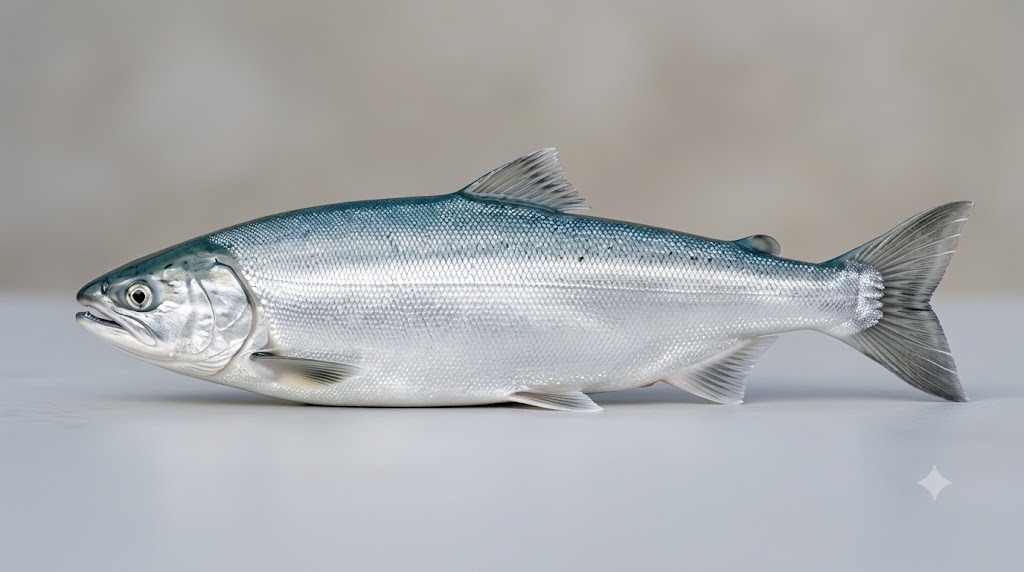
In its primary lake phase, the kokanee is a sleek, streamlined, bright-silver fish with a deep blue or greenish back, fine speckling, and no large black spots on the body or tail - a key feature separating it from trout and other salmon. It has the classic salmon shape with a small adipose fin. As spawning approaches in late summer and fall, the transformation is dramatic: the body turns brilliant crimson red, the head turns olive-green, and males develop a humped back and a hooked jaw, or kype. Kokanee have fine gill rakers reflecting their plankton diet. They are small for a salmon - typically 8 to 16 inches - though some lakes grow them considerably larger.
Range & Habitat (US waters)
Kokanee are native to some lakes in the Pacific Northwest and have been very widely stocked across the western United States. They are found in cold, deep, clear lakes and reservoirs throughout Washington, Oregon, Idaho, Montana, Wyoming, Colorado, Utah, Nevada, California, and beyond. They require cold, well-oxygenated, deep water with abundant zooplankton, and they cannot survive in warm or shallow lakes. Within a lake, kokanee suspend in open water at the depth where temperature and oxygen suit them - often quite deep in summer - following the plankton on which they feed.
Behavior & Feeding
Kokanee are primarily filter-feeders of zooplankton. Using their fine gill rakers, they strain tiny crustaceans like daphnia and copepods from the water, and they also eat small aquatic insects. They roam open water in schools, suspended at a preferred temperature and light level, constantly on the move following plankton concentrations. Because they do not chase baitfish, kokanee are not caught by appealing to a feeding response in the usual sense - instead, anglers trigger them through aggression, curiosity, and territoriality with bright, flashy attractors and small lures. Kokanee have notably soft mouths, which makes hooking and landing them a careful business. They mature, spawn, and die at three to five years of age.
Best Seasons & Times to Catch
Kokanee can be caught from ice-out through fall. Spring and early summer are excellent, with fish often higher in the water column and feeding actively as the lake warms. As summer progresses and the surface warms, kokanee go deep, and midsummer fishing means trolling 40, 60, or even 100-plus feet down. Late summer into early fall, mature fish begin staging near spawning tributaries and turn red, offering a final chance before they spawn and die. Early morning is the prime bite window; cloudy days extend it. In some lakes, ice fishing for kokanee is also productive.
Where to Find Them - Reading the Water
Kokanee live in open water, not along structure, so finding them means finding the right depth. A fish finder is essentially required: kokanee show as suspended schools, and you troll lures through those marks. They hold at the depth where water temperature is in the low 50s Fahrenheit and oxygen is adequate, which moves deeper as summer progresses. Early in the year they may be in the top 20 to 30 feet; by midsummer they may be 60 to 100 feet down. They often concentrate near the mouths of cold tributaries, around inflows, and over the main lake basin. Where you see schools on sonar, you set your gear.
Tackle & Rigs
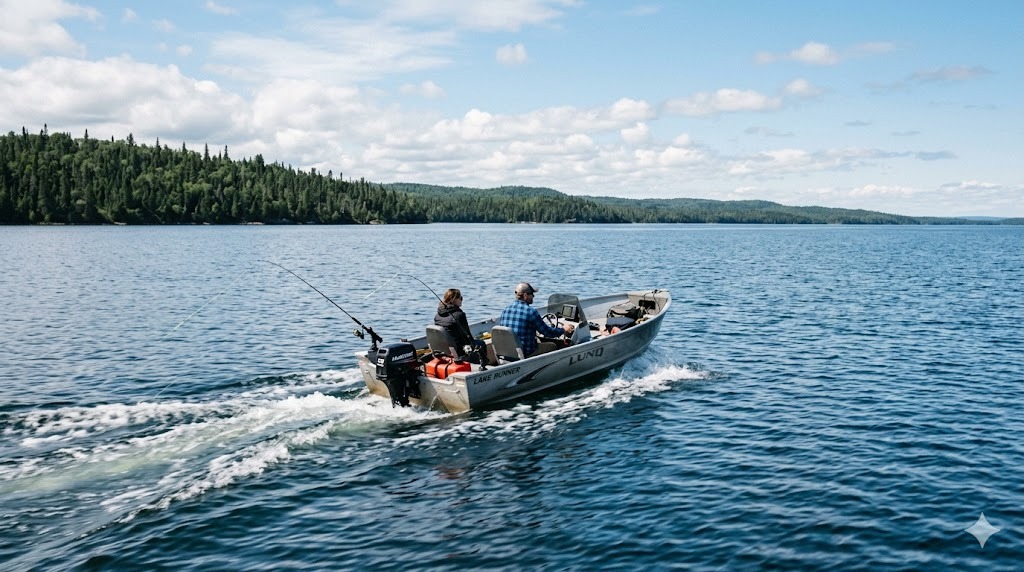
Kokanee fishing is downrigger trolling. The standard setup is a light, soft-action trolling rod, 7 to 9 feet, with a soft tip to cushion the kokanee's tender mouth, paired with a line-counter trolling reel and 10- to 15-pound monofilament. A downrigger places the lure at a precise depth. The terminal rig is a flashy attractor - a string of spinner blades (a "gang troll" or dodger) - followed by a short 12- to 24-inch leader to a small lure or hook. A dodger or small flasher adds the erratic action kokanee respond to. Many anglers add a rubber snubber to absorb shock and protect the soft mouth.
Best Baits & Lures
Kokanee lures are small and bright. Top choices include small spinners, hoochies (small squid skirts), micro-spoons, wedding-ring spinners, and tiny apex-style lures, almost always in pink, orange, red, chartreuse, or ultraviolet finishes. The lure is run behind a dodger or flasher for action and flash. Scent and bait tipping are critical: kokanee anglers tip the hook with white shoepeg corn (often soaked in scent), and add scents like krill, anise, or garlic. The combination of flash from the dodger, a small bright lure, and scented corn is the proven kokanee formula.
Techniques - How to Fish for It
Troll slowly - kokanee trolling speeds are typically 1.0 to 1.8 mph, slower than for trout or salmon. Use a downrigger to put the lure at the exact depth where sonar shows fish, and run a dodger ahead of a small bright lure tipped with scented corn. Trolling in an S-pattern or with speed variations makes the lure dart and flutter, which triggers strikes. When a kokanee hits, do not set the hook hard or pump the rod - their soft mouths tear easily. Instead, reel steadily with smooth, constant pressure and let the soft rod and a properly set, light drag absorb the fight. Net the fish promptly.
Common Mistakes
The biggest mistakes are mouth-related: setting the hook hard, pumping the rod, or horsing the fish all tear the kokanee's soft mouth and lose fish - steady, smooth pressure is essential. Trolling too fast is another classic error; kokanee want a slow presentation. Fishing the wrong depth, without using sonar to locate the schools, leads to empty trips. Skipping the scent and corn reduces strikes significantly. Anglers also sometimes use stiff rods or heavy drag that do not protect the soft mouth. Finally, fishing structure instead of open water misses these roaming, suspended fish entirely.
Size, Records & Eating Quality
Kokanee are small salmon, most commonly 8 to 16 inches and well under 2 pounds, though nutrient-rich lakes grow trophy kokanee of 3 to 6 pounds. The all-tackle world record kokanee is 9 pounds 10 ounces, caught in British Columbia in 2010. Eating quality is exceptional - kokanee have firm, deep-orange to red flesh with a rich, clean flavor, and they are widely considered among the very best freshwater fish for the table. They are superb grilled, baked, and especially smoked. Their fine eating, combined with the fact that they die after spawning anyway, makes them a popular fish to harvest.
Pros & Cons (as a target species)
Pros: outstanding eating, among the best of all freshwater fish; beautiful silver and crimson fish; abundant in many western lakes; a precise, rewarding technical trolling pursuit; can be caught in good numbers when patterns are dialed in. Cons: requires a boat with downriggers and electronics; not catchable from shore in most situations; small average size; soft mouths cause frequent lost fish; depth-finicky and pattern-dependent; limited to cold, deep western lakes.
Best Suited For
Kokanee are ideal for boat anglers who enjoy the technical, gear-intensive craft of downrigger trolling and who relish a cooler of premium fillets. They suit anglers in the western states with access to cold, deep lakes, and those who appreciate dialing in depth, speed, and lure combinations to crack a daily pattern. They are excellent for the table-focused angler. They are not suited to shore anglers, those without trolling boats and electronics, or anglers seeking large fish or a hard, drag-screaming fight.
FAQ
Are kokanee and sockeye the same fish? Yes - kokanee are the landlocked form of sockeye salmon, the same species. The difference is life history: sockeye migrate to the ocean, while kokanee complete their entire life in fresh water and stay smaller.
Why do kokanee have such soft mouths? Kokanee mouths tear easily, so anglers must use soft-tipped rods, light drag, and a snubber, and must never set the hook hard or pump the rod. Steady, smooth pressure lands far more fish.
Do I need a downrigger to catch kokanee? In most situations, effectively yes. Kokanee suspend at specific depths in open water - often very deep in summer - and a downrigger combined with sonar is the standard way to present lures precisely.
What is the secret to the kokanee setup? Run a dodger or flasher ahead of a small, bright pink or orange lure on a short leader, and tip the hook with scented white shoepeg corn. Troll slowly, around 1.0 to 1.8 mph.
Are kokanee good to eat? They are among the best-eating freshwater fish in North America - firm, rich, deep-orange flesh that is excellent grilled, baked, or smoked. Their fine table quality is a major reason anglers target them.