Lake Trout
The lake trout is the great deep-water predator of cold northern lakes - North America's largest char and a fish built for the cold, dark depths.
🗓️ Last reviewed: June 2026
Overview
The lake trout is the great deep-water predator of cold northern lakes - North America's largest char and a fish built for the cold, dark depths. Slow-growing, long-lived, and capable of reaching enormous size, the "laker" (also called a "mackinaw" or "togue" regionally) is a fish of clear, frigid water. It is a prize for trollers and deep-jiggers who probe the basins of the Great Lakes and the deep glacial lakes of the North, and a beloved target for ice anglers in the dead of winter. Catching a big lake trout means understanding cold water, depth, and the fish's relentless pursuit of cold and forage.
Identification & Appearance
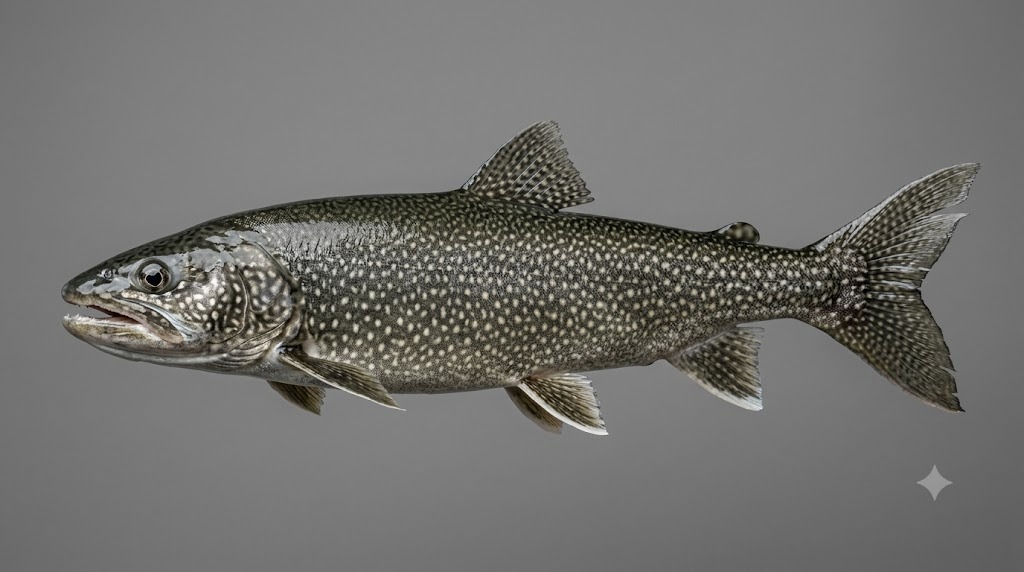
The lake trout is, despite its name, a char - closely related to the brook trout. It has a long, somewhat torpedo-shaped body colored gray to greenish or brownish, covered with a dense scattering of pale, irregular spots over the back, sides, head, and fins. Crucially, those spots are light on a dark background - the reverse of the dark-on-light spotting of true trout - and the body lacks the pink or red coloration of many other salmonids. The single most diagnostic feature is the tail: a lake trout's tail is deeply forked, more so than that of most other trout and salmon. The mouth is large, the lower fins often edged in white, and big lakers develop a heavy, thick body.
Range & Habitat (US waters)
Lake trout are native across the cold lakes of the northern United States and Canada. In U.S. waters they are found throughout the Great Lakes - where they are a cornerstone species - and in the deep, cold glacial lakes of New England, New York, the Upper Midwest, and the high mountain lakes of the West, including parts of the Rockies. They have also been widely stocked. The defining requirement is cold, well-oxygenated, deep water. Lake trout cannot tolerate warmth; they need water in the low 50s Fahrenheit and colder. In summer they retreat deep below the thermocline, while in cold periods they roam shallow, sometimes right to the surface.
Behavior & Feeding
Lake trout are coldwater predators that follow temperature and forage. In spring and fall, when the whole lake is cold, they cruise shallow and even patrol the surface. As summer warms the upper layers, they descend, often holding 50 to 100 feet down or deeper, below the thermocline where the water stays cold. They are roamers, covering large areas of open basin in pursuit of baitfish. Their diet centers on fish - ciscoes (lake herring), smelt, sculpins, and other small fish are staples - and big lakers are capable of eating surprisingly large prey. They feed in cold water year-round and are a primary winter target through the ice.
Best Seasons & Times to Catch
Lake trout fishing tracks water temperature. Spring, soon after ice-out, and fall are the easiest times, when cold water lets lakers roam shallow within reach of casting and shallow trolling. Fall also brings the spawn, when lake trout move onto rocky shoals and reefs. Summer is the technical season: the fish are deep, and success requires downriggers, lead-core line, or heavy jigs to reach them below the thermocline. Winter is excellent - lake trout are a premier ice-fishing species, aggressive even in frigid water, and reachable in lakes where summer access requires deep gear. Overcast days and low light can help, but depth and temperature matter more than time of day.
Where to Find Them - Reading the Water
The key is matching depth to season. After ice-out and in late fall, look for lakers shallow - over rocky points, reefs, shoals, and drop-offs, sometimes in less than 30 feet. As summer progresses, the fish slide down to and below the thermocline, suspending over deep basins and relating to deep humps and structure, frequently 60 to 120 feet down. Rocky reefs and shoals are critical in fall as spawning structure. In winter, target deep humps, points, and basin edges. Electronics are essential in summer to find both the thermocline and the fish. Everywhere, the presence of forage like ciscoes and smelt concentrates lake trout.
Tackle & Rigs
Lake trout gear depends on how deep you must fish. For shallow spring and fall fishing and for ice fishing, medium-power rods with 8 to 14 pound line handle casting and jigging. For deep summer trolling, the standard setup is a stout trolling rod with a line-counter reel, run behind downriggers or with lead-core or copper line to reach the depths. Trolling rigs include flashers or dodgers ahead of spoons, plugs, or cut-bait rigs. For deep vertical jigging, a sturdy rod with braided line handles heavy jigs and lets you feel bottom 80-plus feet down. Through the ice, a medium jigging rod with braid is ideal for working spoons and tube jigs.
Best Baits & Lures
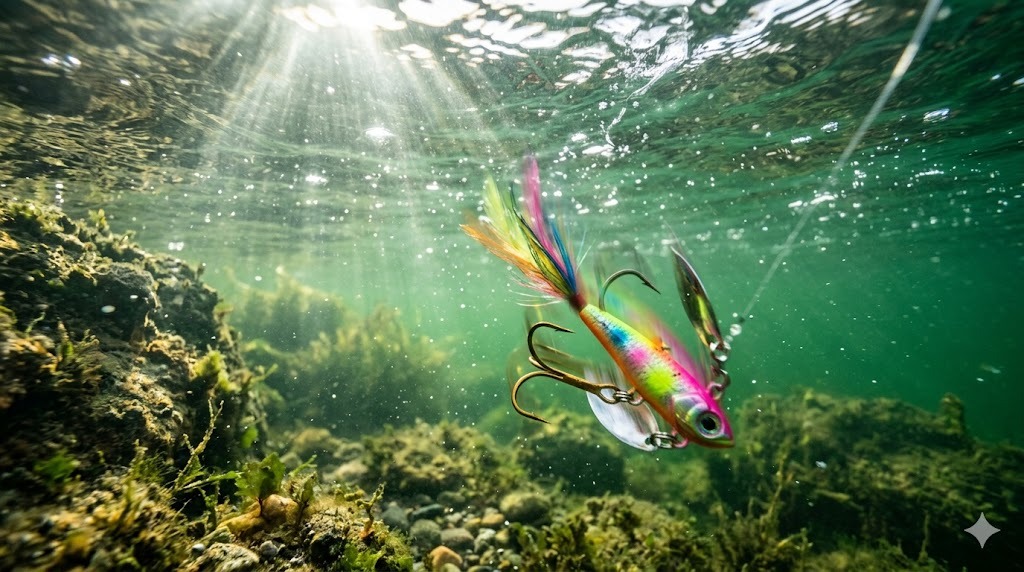
Lake trout chase baitfish, so flashy, fish-imitating lures dominate. For trolling, large spoons, minnow-imitating plugs, and cut-bait or whole-baitfish rigs behind attractors (flashers and dodgers) are the standard. For jigging, in summer over deep structure and through the ice, heavy spoons, white tube jigs, bucktail jigs, and soft-plastic swimbaits all produce - white and glow colors are perennial favorites in the dim depths. Tipping a jig or spoon with a piece of cut bait, a minnow, or a smelt adds scent that can be the difference. Lakers respond well to an erratic, fluttering presentation that imitates a dying baitfish.
Techniques - How to Fish for It
Trolling is the workhorse method for covering the vast open water lake trout roam, especially in summer - run flasher-spoon and plug rigs at the right depth with downriggers or lead-core, varying speed and depth until you find fish. Vertical jigging is deadly when fish are located on deep structure: drop a heavy spoon or tube jig to the bottom, then work it with sharp lifts and fluttering drops, since lakers often hit on the fall. In spring and fall, cast spoons and plugs over shallow shoals and points. Through the ice, jig aggressively to call fish in on the flasher, then tease them with subtler movements. Let lures flutter and look vulnerable.
Common Mistakes
The most common mistake is fishing the wrong depth - in summer, lake trout are deep, and baits above the thermocline simply will not reach them. Many anglers also fish too fast or too steadily; lakers want an erratic, dying-baitfish action. Skipping electronics in summer means guessing at both depth and fish location. In spring and fall, anglers often overlook how shallow lakers can be and fish deep out of habit. Underestimating these fish is another error - a big laker fights hard and deep, and light tackle or worn line costs trophies. Finally, mishandling slow-growing big fish meant for release can do real harm.
Size, Records & Eating Quality
Lake trout are long-lived and can grow enormous. A typical catch runs 2 to 10 pounds, fish of 15 to 25 pounds are quality trophies, and giants over 30 and 40 pounds come from premier waters every year. The all-tackle angling world record is around 72 pounds, from Great Bear Lake, and even larger lake trout have been recorded by nets. As table fare, lake trout are good - the flesh ranges from pale to orange and is rich and oily, which makes it superb smoked and very good grilled or baked. The oil content means it does not keep as long as leaner fish; eat it fresh or smoke it.
Pros & Cons (as a target species)
Pros: lake trout grow to genuine trophy size, fight with deep, bulldogging power, bite year-round including hard through the ice, and live in some of the most beautiful cold, clear lakes on the continent. They are a top target when warm-water species are out of season. Cons: summer fishing is gear-intensive and technical, requiring downriggers or lead-core and good electronics; they are slow-growing, so populations are vulnerable to overharvest; and the deep-water fishing is best from a boat, limiting shore opportunities outside the spring and fall shallow periods.
Best Suited For
Lake trout suit anglers who embrace cold water and don't mind investing in technique and gear. Trollers with downriggers, deep-jigging specialists, and ice anglers all find the laker an outstanding target. They are perfect for the angler who wants to keep fishing productively in the coldest months and after ice-out, when many fisheries are slow. They are less suited to a casual shore angler in summer, but in spring, fall, and especially through the ice, lake trout reward dedication with size, power, and a fish worth smoking.
FAQ
Is a lake trout actually a trout? Not exactly - the lake trout is a char, in the same genus as the brook trout, rather than a true trout. You can see the char traits in its light spots on a dark background, the reverse of a true trout's dark-on-light spotting.
How do I identify a lake trout? Look for a gray-to-greenish body densely covered with pale, irregular spots, no pink or red coloration, white-edged lower fins, and - most diagnostically - a deeply forked tail, more forked than that of other trout and salmon.
Why are lake trout so deep in summer? Lake trout are a coldwater species that cannot tolerate warm water. As summer heats the upper layers of a lake, the fish descend below the thermocline to find the cold, oxygen-rich water they need, often holding 60 to 120 feet down.
What is the best way to catch lake trout? It depends on the season. In summer, trolling with downriggers or lead-core line, or vertical jigging heavy spoons over deep structure, reaches the deep fish. In spring, fall, and through the ice, casting and jigging spoons over shallower rocky points and reefs works well.
Are lake trout good to eat? Yes - the flesh is rich and oily, ranging from pale to orange. That oil content makes lake trout excellent smoked and very good grilled or baked. Because the meat is oily it is best eaten fresh or preserved by smoking rather than long-stored.