Northern Snakehead
The northern snakehead is the most notorious invasive fish in American fresh water - a long, mottled, air-breathing predator from East Asia that arrived through the live food and aquarium trades and established wild populations in the United States in the early 2000s.
🗓️ Last reviewed: June 2026
Overview
The northern snakehead is the most notorious invasive fish in American fresh water - a long, mottled, air-breathing predator from East Asia that arrived through the live food and aquarium trades and established wild populations in the United States in the early 2000s. The headlines were lurid: a "Frankenfish" that could breathe air, walk on land, and devour everything in a pond. Much of that was exaggeration, but the core fact is real and serious. The northern snakehead is an aggressive, adaptable, voracious predator that does not belong in US waters and can damage native fish communities.
For the angler, this creates an unusual situation. The northern snakehead is illegal to transport alive and, in the waters where it has spread, anglers are actively encouraged to catch and kill them - never to release them. And there is an upside: the northern snakehead is a genuinely exciting gamefish. It hits topwater lures with explosive violence, fights hard with bulldogging runs, lives in shallow, accessible water, and - to the surprise of many - it is excellent eating. Targeting snakehead is one of the rare cases where catching a great gamefish is also an act of conservation.
Identification & Appearance
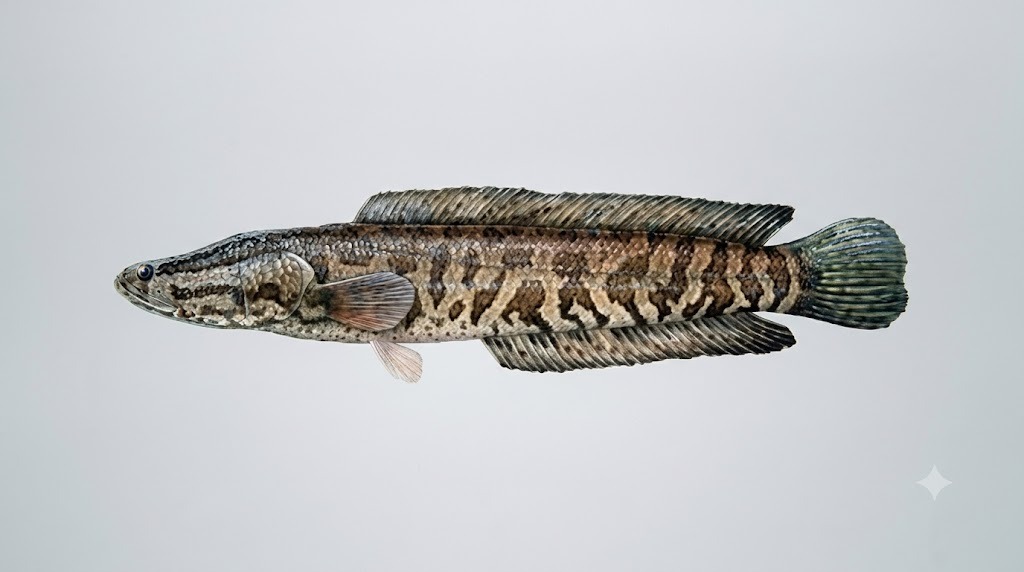
The northern snakehead is a long, cylindrical, heavily built fish, somewhat eel-like in its elongated profile but with a stout body. Coloration is a mottled, blotchy mix of dark brown, tan, and golden patches over a lighter background - effective camouflage in vegetated water - with the irregular dark blotches running along the flanks. The belly is pale.
The most diagnostic features are the long fins and the head. The dorsal fin and the anal fin are both very long, running most of the length of the back and belly toward the tail - the long anal fin in particular is a key identifier. The head is somewhat flattened and snake-like, with a large mouth full of small sharp teeth and large scales on top of the head. It is most often confused with the native bowfin, but the differences are clear: the snakehead has a very long anal fin, while the bowfin's anal fin is short, and the bowfin has a bony gular plate under its jaw that the snakehead lacks. Correctly telling the two apart matters, because a bowfin is a native fish to be respected and a snakehead is an invasive fish to be removed.
Range & Habitat (US waters)
The northern snakehead is established in several regions of the United States, with its strongest and best-known populations in the Mid-Atlantic. The Potomac River system around Washington, D.C., and its tributaries in Maryland and Virginia is the heart of the US snakehead range and the premier snakehead fishery. Populations also exist in other Mid-Atlantic waters, parts of the Delaware River drainage, areas in New York, and scattered other locations; established populations have also been found in Arkansas and parts of the South. The fish continues to be a focus of monitoring as managers track and try to limit its spread.
Northern snakeheads favor warm, shallow, slow or still water heavily choked with vegetation. Tidal river backwaters, marshes, weedy ponds, swamps, slow creeks, vegetated lake margins, and the back ends of coves are classic snakehead habitat. Because they breathe air, they thrive in warm, stagnant, low-oxygen water that excludes many other fish, and they can survive brief periods out of water in moist conditions. The general picture is shallow, weedy, warm, often mucky water.
Behavior & Feeding
The northern snakehead is an aggressive, ambush-oriented apex predator of the shallows. It holds in or near dense vegetation, then attacks prey with a fast, explosive lunge. It is a voracious, opportunistic carnivore: its diet is dominated by fish, and it also takes frogs, crayfish, aquatic invertebrates, and other available prey. Adult snakeheads are capable of eating sizable prey and feeding heavily, which is the root of their ecological impact on native fish.
A defining trait is air breathing. The snakehead has a suprabranchial chamber that functions as a primitive lung, so it must periodically surface to gulp air and can survive in oxygen-poor water - and out of water for a time in damp conditions. Snakeheads are also notably protective parents: they spawn in warm shallow water, can spawn multiple times in a season, and the parents fiercely guard the nest and the dense reddish-orange ball of fry. A snakehead guarding fry is intensely aggressive, and a visible school of fry signals that protective adults are right there to be caught.
Best Seasons & Times to Catch
Snakehead fishing is a warm-water pursuit. The prime season runs from late spring through early fall, when warm temperatures have the fish shallow, active, and feeding hard. Late spring and summer, the spawning and fry-guarding period, can be exceptional - snakeheads are shallow, territorial, and savagely aggressive toward anything near their nests and fry. The hot months that slow down many native gamefish are excellent for snakehead, because their air-breathing ability keeps them feeding in warm, stagnant water.
Within a day, low-light periods - early morning and evening - are often most productive for topwater action, but snakeheads will feed throughout the day in shaded, vegetated, or stained water. Warm, stable, even muggy conditions are good snakehead weather. Watch for fish surfacing to gulp air, which can happen any time and reveals their location. The fishing slows sharply as water cools; in winter, snakeheads become inactive and the bite largely shuts down across most of the US range.
Where to Find Them - Reading the Water
Snakeheads live in the thick stuff, so reading the water means hunting heavy shallow cover. Focus on dense aquatic vegetation - pads, hydrilla, milfoil, spatterdock, grass mats - and the shallow, weedy backwaters of tidal rivers, marshes, ponds, and slow creeks. The back ends of coves, weedy flats, vegetated shorelines, and the edges and pockets within weed mats are all prime. Soft, mucky bottoms are typical snakehead ground.
Watch the surface closely. Because snakeheads breathe air, you can see them roll, swirl, or break the surface as they gulp - a clear sign of where fish are holding. In spring and summer, look for the distinctive dense balls of reddish-orange fry near the surface; a fry ball means aggressive guarding adults are within casting distance, and casting to fry-guarding snakeheads is one of the most reliable ways to draw a strike. The general approach is to fish the shallowest, weediest, warmest water and to use your eyes for surfacing fish and fry balls.
Tackle & Rigs
Snakeheads are powerful fish that live in heavy cover and must be hauled out of it, so the tackle is stout - heavy bass and frog gear, not light tackle. A medium-heavy to heavy baitcasting rod, around 7 to 7.5 feet, with a strong backbone for casting weedless lures and driving hooks home and for pulling a strong fish out of vegetation, paired with a sturdy baitcasting reel, is the standard. Spool with heavy braided line, 40 to 65 lb test, which cuts through weeds and holds up to the snakehead's power and the abrasive cover.
A heavy braided main line is usually fished straight to the lure for topwater frog and weedless presentations in the slop; a heavy fluorocarbon leader is a reasonable option for certain presentations and for the snakehead's tooth-lined mouth. Terminal tackle centers on strong, sharp hooks - hollow-body frog hooks and stout worm and swimbait hooks - capable of penetrating a hard mouth and standing up to a hard hookset. Bring long pliers for unhooking, and remember the legal and practical reality: snakeheads are not to be released, so plan to dispatch and keep your catch.
Best Baits & Lures
Snakeheads are aggressive predators that respond beautifully to lures, and topwater is the headline. Hollow-body frogs worked across weed mats and pads draw the explosive, water-throwing strikes snakehead fishing is famous for, and the frog is the signature snakehead lure. Other topwater lures - buzzbaits, walking baits, poppers - also produce savage surface attacks. For subsurface, weedless soft-plastic swimbaits, paddletail and creature baits rigged Texas-style, chatterbaits, and spinnerbaits worked through and along vegetation all trigger strikes. Bright and natural colors both work; the key is a presentation that can be fished in and over heavy weeds.
Live bait is also effective. A live minnow, shiner, or small sunfish (where legal) fished near vegetation, or under a float, will draw snakehead strikes and is a productive approach for anglers who prefer bait. Across methods, the common thread is presenting an aggressive, lifelike target in or above the heavy cover where snakeheads ambush.
Techniques - How to Fish for It
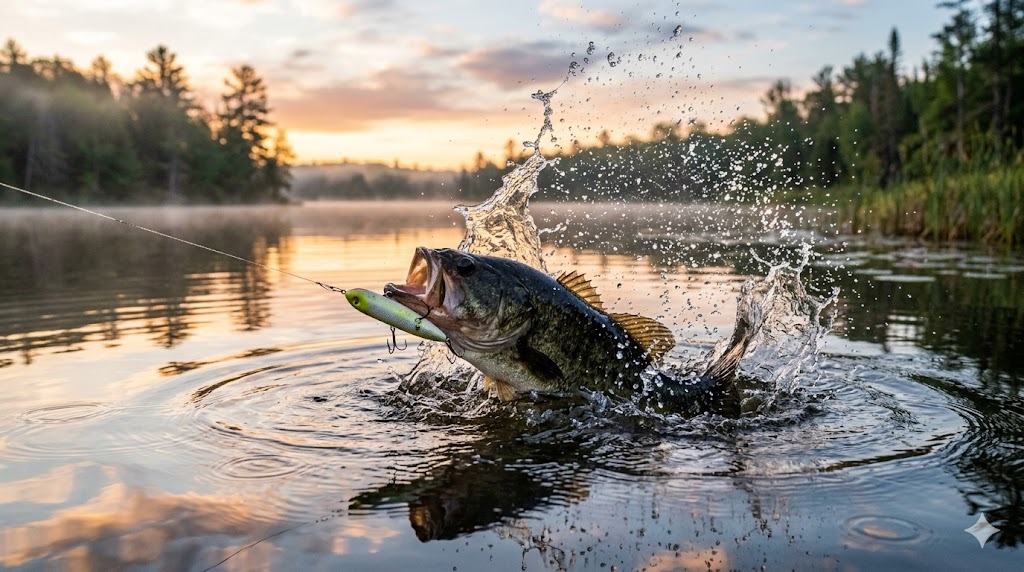
The classic and most thrilling technique is fishing a hollow-body frog over the slop. Cast the frog onto and across mats of vegetation and lily pads, and work it with a steady walking or twitching cadence, pausing in open pockets. A snakehead will erupt through the vegetation in a violent, water-throwing strike. The critical discipline is the hookset pause: when a snakehead blows up on the frog, wait a moment until you feel the fish's weight before setting, then drive the hook hard. Setting on the splash, before the fish has the lure, is the number-one cause of missed snakeheads.
Sight fishing the fry balls is highly effective in spring and summer: locate a reddish-orange ball of fry, cast a lure or bait right to it, and the guarding adults will usually attack at once. Once hooked, a snakehead fights hard - strong bulldogging runs, head-shakes, and a determined drive back into the weeds. Apply firm, heavy pressure and turn the fish before it buries. Land it, control the body, and unhook it with pliers. Then follow the law and the conservation ethic: do not release it. Dispatch the fish humanely and keep it - it is illegal to transport snakeheads alive in many places, and they make excellent table fare.
Common Mistakes
The single most common mistake is setting the hook too soon on a topwater strike - wait until you feel the fish, then set hard. Fishing too light is another serious error; light tackle loses snakeheads in the heavy cover they call home. Anglers also fish water that is too open and clean, when snakeheads live in the thickest weeds. Misidentifying a snakehead as a bowfin (or vice versa) leads to releasing an invasive fish or needlessly killing a native one - learn the anal-fin and gular-plate differences. The most serious mistake of all is releasing a snakehead or transporting it alive: this is harmful to native ecosystems and illegal in many jurisdictions. Always dispatch and keep snakeheads, and check local regulations.
Size, Records & Eating Quality
Northern snakeheads grow to a solid size. A typical fish runs 1 to 4 pounds, good fish reach 5 to 8 pounds, and trophies exceed 10 pounds, with the largest US fish topping 15 to 18-plus pounds and 30-plus inches. Any snakehead over 10 pounds is a notable, powerful fish. They fight hard at every size.
Eating quality is excellent and is one of the genuine pleasures of targeting them. The flesh is white, firm, dense, and mild, holding together well and cooking up clean - many anglers rate snakehead among the best-eating freshwater fish, comparable to or better than many prized native species. It fries, bakes, grills, and works in chowders and tacos. Because anglers are encouraged to harvest every snakehead they catch, and because the fish eats so well, snakehead fishing offers both sport and a quality meal with a clear conscience. Bleed and ice the fish promptly for the best results.
Pros & Cons (as a target species)
Pros: explosive topwater strikes that rival or exceed any largemouth bass; a hard, powerful, bulldogging fight; excellent table quality, among the best of freshwater fish; lives in shallow, accessible water; targeting and harvesting them is genuinely beneficial conservation, removing an invasive predator; an aggressive, willing biter in warm weather when native fish slow down.
Cons: limited US range, mainly the Mid-Atlantic and a few other regions, so many anglers must travel; lives in hot, weedy, often unpleasant water; can be confused with the native bowfin, risking mistakes; legally and ethically must never be released, which some catch-and-release anglers find uncomfortable; a poor cold-season fishery.
Best Suited For
The northern snakehead is ideal for aggressive lure anglers who love topwater frog fishing and savage, visual strikes - much the same crowd that loves heavy-cover largemouth fishing. It suits anglers in and visiting the Mid-Atlantic, especially the Potomac system, who want a hard-fighting, great-eating target. It is excellent for anglers who value harvesting a quality meal and who appreciate that their fishing actively helps native ecosystems. It is well suited to those comfortable dispatching and keeping their catch. It is not for strict catch-and-release purists, anglers far from snakehead waters unwilling to travel, or those who dislike fishing hot, weedy backwaters.
FAQ
Are northern snakeheads really dangerous "Frankenfish" that walk on land? The sensational headlines were exaggerated. Snakeheads cannot truly walk, and they are not a danger to people. But the serious part is true: they breathe air, survive in harsh conditions, can move short distances over wet ground, and are aggressive invasive predators that can harm native fish communities.
Can I release a snakehead if I catch one? No. In the waters where snakeheads are established, anglers are urged to kill every one they catch and never release them, and it is illegal to transport them alive in many jurisdictions. Dispatch the fish humanely and keep it - and always check local regulations.
How do I tell a snakehead from a native bowfin? Look at the anal fin and the chin. The snakehead has a very long anal fin and no bony plate under the jaw. The bowfin has a short anal fin and a distinctive bony gular plate under its lower jaw. Correct identification matters so you keep the invasive snakehead and respect the native bowfin.
Is snakehead good to eat? Yes, excellent. The flesh is white, firm, dense, and mild, and many anglers consider snakehead among the best-eating freshwater fish. Since you should harvest every snakehead you catch, the great table quality is a real bonus - just bleed and ice the fish promptly.
What is the best way to catch a snakehead? Fishing a hollow-body frog over heavy vegetation in warm, shallow water, especially around fry balls in spring and summer. Work the frog across the mats, wait for the explosive strike, pause until you feel the fish, then set the hook hard.