Redear Sunfish
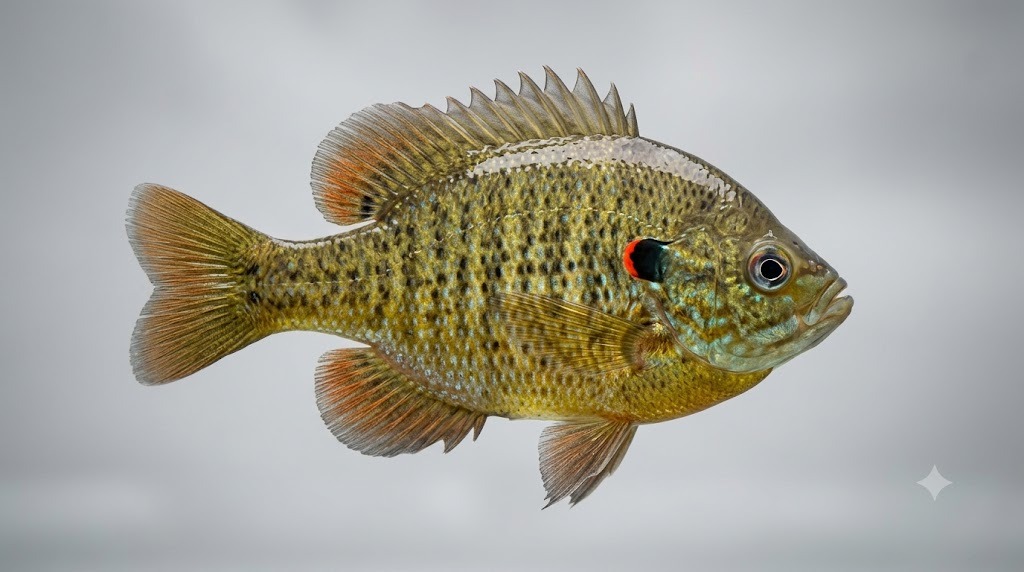
The redear sunfish - known across much of the South as the "shellcracker" - is the largest-growing and arguably most prized of the panfish.
🗓️ Last reviewed: June 2026
Overview
The redear sunfish - known across much of the South as the "shellcracker" - is the largest-growing and arguably most prized of the panfish. Where bluegill bite eagerly and stay relatively small, the redear is a deeper, harder-pulling fish that specializes in eating snails and small mollusks, crushing them with powerful pharyngeal teeth in its throat. That diet gives the fish its nickname and explains why anglers target the bottom for them. Redears are sought after for their size - fat, dinner-plate-sized "shellcrackers" of a pound or more are common in good water - and for their excellent table fare. They are a spring and early-summer favorite, especially around the spawn, when big redears stack up on bedding flats.
Identification & Appearance
The redear is a deep-bodied, laterally compressed sunfish, similar in shape to a bluegill but generally larger and a bit more elongated. Its body is olive to grayish-green on the back fading to a yellowish or pale belly, often with faint vertical bars and a peppering of small dark spots, especially on younger fish. The defining feature is the gill flap, or "ear": it is short and stiff, edged with a bright red or orange margin on males (orange on females). Unlike the bluegill, the redear has no dark blotch at the rear base of the dorsal fin and a smaller mouth. The pectoral fins are long and pointed. Large redears take on a thick, humpbacked profile.
Range & Habitat (US waters)
Redear sunfish are native to the southeastern United States, from the Carolinas and Florida west through the Gulf states and up the Mississippi Valley. They have been widely stocked beyond their native range and now thrive across much of the South, the lower Midwest, the Southwest, and into California - where some of the very largest redears in the country are caught in desert reservoirs. They prefer warm, clear, quiet water with firm or sandy bottoms: lakes, reservoirs, ponds, slow rivers, and backwaters. They relate to bottom structure, vegetation edges, and submerged wood, and tend to hold deeper than bluegill.
Behavior & Feeding
Redears are bottom-oriented feeders specialized for hard-bodied prey. Their throat teeth crush snails, small clams, and the larvae of caddisflies and other insects that live on the bottom and on vegetation. They also eat aquatic insects, small crustaceans, and worms. Because they root along the bottom, redears are less likely than bluegill to take a bait suspended high in the water column - successful anglers fish on or just above the bottom. Redears are also somewhat less aggressive and less surface-oriented than bluegill, so they can be overlooked. They spawn in spring when water reaches roughly 65-75 degrees, building bed colonies on firm-bottom flats.
Best Seasons & Times to Catch
Spring is the marquee season. Redears spawn earlier than bluegill in many waters, and the pre-spawn and spawn - typically from when water hits the mid-60s - concentrate big fish on shallow bedding flats, offering the year's best shot at numbers and size. Fishing stays good into early summer. As summer heats up, redears move to deeper structure and weed edges and bite best in morning and evening. Fall provides a secondary feeding push. Because they relate to the bottom, redears can be caught through much of the year wherever the water is comfortable.
Where to Find Them - Reading the Water
Look for firm bottoms - sand, gravel, clay, or shell - near cover. In spring, search shallow flats in 2 to 6 feet of water, often near vegetation, for the saucer-shaped beds, which redears build in colonies. Outside the spawn, focus on deeper structure: drop-offs, points, submerged brush piles, weed edges, creek channels, and the bases of standing timber, often in 8 to 20 feet. Redears love hard bottom near a transition. Docks, riprap, and any spot that holds snails will hold shellcrackers. They generally sit deeper and tighter to the bottom than bluegill.
Tackle & Rigs
Light tackle is the rule. A 6- to 7-foot light or ultralight spinning rod with a small reel spooled with 4- to 6-pound monofilament covers most situations. The most effective rig is simple: a small split shot or a slip sinker above a long-shank #6 to #10 hook, fished on or just off the bottom. A slip-bobber rig set to suspend bait inches above the bottom is excellent for working beds and brush. A drop-shot or a small bottom rig keeps the bait in the strike zone. Tiny jigs and tungsten ice jigs tipped with bait also produce well.
Best Baits & Lures
Live bait shines for redears because of their picky, bottom-feeding nature. Red wigglers and small pieces of nightcrawler are the top baits; crickets, mealworms, wax worms, grass shrimp, and even small snails or clam meat all work. Because their mouths are small, keep baits modest. Among artificials, small soft-plastic baits on tiny jigheads, micro tube jigs, and tiny crankbaits or grubs fished slow along the bottom can catch redears, but they are generally less effective than live bait. Natural and earthy colors are best.
Techniques - How to Fish for It
The core technique is fishing slow and on the bottom. Cast a bottom rig or slip-bobber to a likely flat, brush pile, or drop-off and let the bait settle to or just above the bottom; leave it relatively still and watch for the subtle tap or the bobber moving off. During the spawn, locate bedding colonies - often visible as light circular patches - and present bait directly to the beds. When fishing deeper structure in summer, vertically present bait to brush piles and timber. Patience and precise depth control beat fast, active retrieves for redears.
Common Mistakes
The most common mistake is fishing too high in the water column - redears feed on the bottom, and a bait suspended a foot up gets ignored. Anglers also fish too fast, expecting bluegill-style aggression; redears want a slow, still presentation. Using hooks and baits that are too large for their small mouths causes missed bites. Many anglers overlook redears entirely because they do not bite as readily as bluegill on the surface. Finally, fishing soft, mucky bottoms instead of firm, snail-holding bottoms reduces catches.
Size, Records & Eating Quality
Redears commonly run 8 to 10 inches, but a good shellcracker is 10 inches or better, and quality fisheries produce fish over a pound. They are the largest of the true sunfish. The all-tackle world record is 6 pounds 4 ounces, caught in 2021 at Lake Havasu, Arizona - and several recent records have come from Western reservoirs where redears feed on invasive mussels. Eating quality is outstanding: white, firm, sweet, mild flesh that fries up beautifully. Their larger average size makes them especially rewarding to clean and cook.
Pros & Cons (as a target species)
Pros: the largest-growing sunfish, with dinner-plate fish common; excellent, firm, sweet eating; strong, dogged fighters on light tackle; accessible from shore and small boats; spectacular spring bedding action. Cons: more finicky and less surface-aggressive than bluegill; require bottom-focused, patient fishing; relate to specific firm-bottom areas that must be located; often overlooked, so technique knowledge matters; can be hard to find in numbers outside the spawn.
Best Suited For
Redear sunfish are perfect for panfish specialists who enjoy a slightly more technical, bottom-oriented approach and the reward of bigger fish and excellent fillets. They suit shore anglers, families, and anyone who loves a spring panfish bonanza on the beds. They are great for filling a fryer. They are less suited to anglers who want constant, easy, surface-style bluegill action, since redears demand more deliberate, bottom-focused fishing - but the payoff in size and table quality is well worth it.
FAQ
Why is the redear called a "shellcracker"? Redears have strong pharyngeal (throat) teeth they use to crush the shells of snails and small mollusks, a major part of their diet. That shell-crushing habit earned them the nickname.
How is a redear different from a bluegill? Redears grow larger, have a stiff gill flap edged in red or orange, lack the dark blotch on the rear of the dorsal fin, have a smaller mouth, and feed on the bottom rather than throughout the water column.
What is the best bait for redear sunfish? Live red wigglers or pieces of nightcrawler fished on or just above the bottom are the top choice. Crickets, wax worms, and grass shrimp also work well.
When is the best time to catch redears? Spring, during the pre-spawn and spawn, when big fish concentrate on shallow bedding flats. Fishing stays good into early summer, with a secondary push in fall.
Are redear sunfish good to eat? Yes - they are considered one of the best-eating panfish. The flesh is white, firm, sweet, and mild, and their larger size makes them more rewarding to fillet than smaller sunfish.