Rock Bass
The rock bass is a stocky, red-eyed panfish that blurs the line between sunfish and bass.
🗓️ Last reviewed: June 2026
Overview
The rock bass is a stocky, red-eyed panfish that blurs the line between sunfish and bass. Despite the name, it is not a true bass - it belongs to the sunfish family - but it is bigger-mouthed, more aggressive, and harder-fighting than most panfish, and it shares much of its habitat with smallmouth bass. Anglers across the eastern and central United States know it by many names: rock bass, redeye, goggle-eye, rock perch. It is an abundant, willing, scrappy fish that bites readily, lives among rocks and wood, and is frequently caught alongside smallmouth and walleye. For the angler who wants steady action on light tackle and a fun fish that eats well, the rock bass delivers.
Identification & Appearance
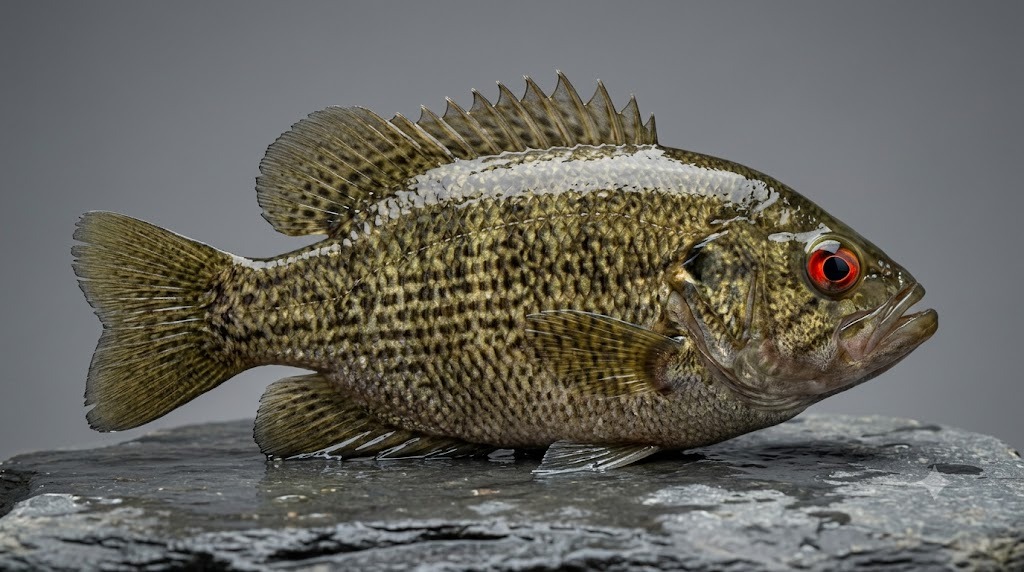
The rock bass has a deep, robust, slightly elongated body, generally olive to brassy or golden-brown, mottled and blotched so it blends with a rocky bottom. The two unmistakable identification features are its eyes - large and bright red, the source of the nickname "redeye" - and its mouth, which is noticeably larger than a typical sunfish's, befitting its more predatory habits. Rows of dark spots run along the lower flanks, often forming faint horizontal lines. The anal fin has six spines, more than the three of true sunfish. Rock bass can rapidly change color, sometimes appearing nearly black when stressed or dark when over dark bottom. Adults are commonly 6 to 10 inches.
Range & Habitat (US waters)
Rock bass are native to a broad swath of the eastern and central United States, from New England and the Great Lakes south through the Ohio and Mississippi valleys to the Gulf states, and they have been introduced elsewhere. They thrive in clear, cool to warm water with rocky bottoms and good current or wave action: streams and rivers with rock and gravel, the rocky shorelines of lakes, and clear reservoirs. As the name says, they love rocks - ledges, boulders, riprap, rubble - and they also relate to submerged wood and weed edges. They share habitat closely with smallmouth bass.
Behavior & Feeding
Rock bass are aggressive ambush feeders with an appetite bigger than their size suggests. Their larger mouth lets them eat crayfish, small fish, and minnows alongside the aquatic insects, larvae, and small crustaceans typical of panfish. Crayfish are a dietary staple wherever rock bass and crayfish coexist. They hold near cover and dart out to grab passing prey, and they are not shy - rock bass will hit a lure or bait quickly and decisively, often beating bass and other species to it. They are most active in low light and feed throughout the warm months. They spawn in late spring and early summer, with males guarding nests near rocks.
Best Seasons & Times to Catch
Rock bass bite well from spring through fall. Late spring and early summer, around the spawn, are especially productive as fish move shallow and feed hard. Summer offers reliable action in rocky streams and along lake shorelines, with the best fishing early and late in the day and on overcast days. Fall brings a strong feeding period. Rock bass are less active in cold water but can still be caught in winter, including occasionally through the ice. Generally, any warm-season day on rocky water can produce rock bass.
Where to Find Them - Reading the Water
Rocks are the answer. In rivers, fish around boulders, rock ledges, riffles and the pools below them, rubble bottoms, and current breaks where rock provides shelter. In lakes and reservoirs, target rocky points, riprap banks, boulder fields, ledges, and rocky drop-offs, plus any submerged wood near rock. Rock bass relate tightly to cover and to current breaks in moving water. They are often shallow, in 2 to 12 feet, near the bottom. Where you catch smallmouth bass, you will usually catch rock bass.
Tackle & Rigs
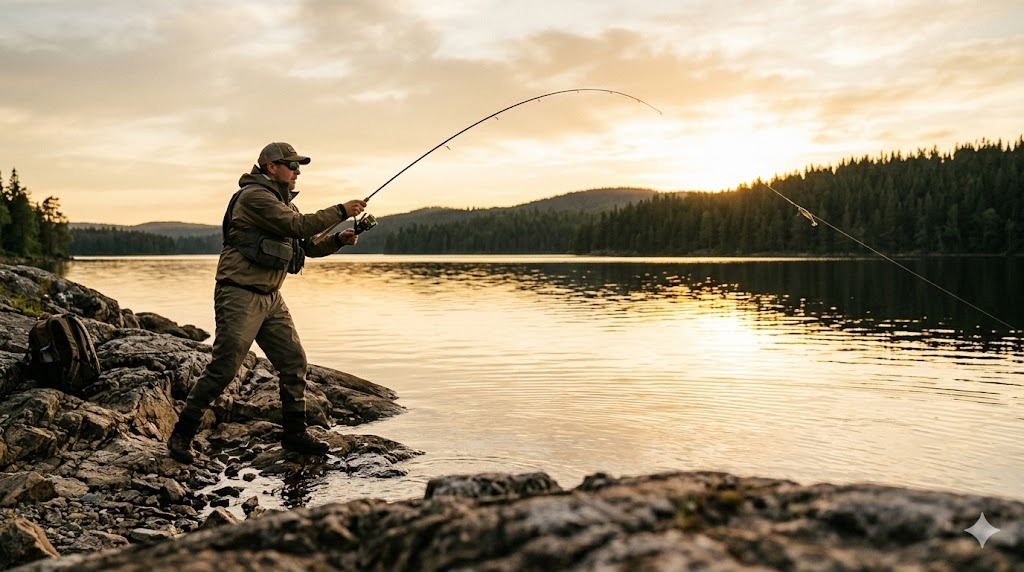
Light to medium-light spinning tackle is ideal: a 6- to 7-foot rod with 4- to 8-pound monofilament or light braid. Rock bass are not finicky, so terminal tackle is simple. A small jighead with a soft plastic, a split-shot rig with a live bait, or a small bottom rig all work. A slip-bobber rig is handy for presenting bait to specific rocks and wood. Because rock bass live among rocks, expect snags - keep rigs simple and bring extra hooks and jigs. Light tackle makes their scrappy fight more enjoyable.
Best Baits & Lures
Rock bass eat aggressively and are not picky. Live baits excel: nightcrawlers and worms, minnows, and especially small crayfish or soft-craw imitations. Among lures, small jigs with twister-tail or tube bodies, inline spinners, small crankbaits, soft-plastic crawfish, and small spinnerbaits all produce. Crayfish-colored and natural baits are reliable, but bright colors work too. Fly anglers catch rock bass on woolly buggers, crayfish patterns, nymphs, and small poppers. When fishing rocky water for smallmouth, the same baits will catch rock bass.
Techniques - How to Fish for It
Fish near the bottom and tight to rock. Cast a jig or soft plastic to boulders, ledges, and current breaks and work it slowly along the bottom with small hops and pauses - rock bass usually hit on the fall or the pause. Drift live bait through pools and along rock ledges in streams. With a slip-bobber, suspend bait just off the bottom near specific cover. Inline spinners and small crankbaits can be retrieved steadily past rocky cover for active fish. Strikes are fast and firm; set quickly and steer the fish out of the rocks.
Common Mistakes
The most common mistake is fishing too far from cover or up off the bottom - rock bass hold near rocks and near the bottom. Anglers also overlook rock bass as a "trash fish" caught by accident and never target them deliberately, missing reliable action. Using gear that is too heavy reduces the fun of their scrappy fight. In rocky water, failing to expect snags and not bringing enough terminal tackle cuts a trip short. Finally, fishing only midday in bright sun, when rock bass are least active, leaves better low-light bites on the table.
Size, Records & Eating Quality
Rock bass commonly run 6 to 9 inches; a 10-incher is a good fish and anything approaching 12 inches is a trophy. The all-tackle world record is 3 pounds, caught in Ontario in 1974, and most fish weigh well under a pound. Eating quality is decent - the flesh is white and flaky with a mild flavor, though some anglers find it slightly less sweet than bluegill and note it can have a stronger taste from warm or murky water. From clean, cool water rock bass make a fine addition to a panfish fry, and their somewhat larger size yields usable fillets.
Pros & Cons (as a target species)
Pros: abundant and willing, with fast, aggressive strikes; harder-fighting than most panfish; found in scenic rocky rivers and lakes; easy to catch on simple light tackle; great for kids and beginners; often a bonus catch while smallmouth fishing. Cons: small average size and no trophy potential; rock habitat means frequent snags; can be considered a nuisance by bass anglers; eating quality varies with water quality; less active in cold water.
Best Suited For
Rock bass are well suited to anglers who want steady, dependable light-tackle action in rivers and rocky lakes, and to smallmouth anglers who appreciate a hard-pulling bonus fish. They are excellent for kids and beginners because they bite readily and fight above their weight. River and wade anglers especially enjoy them. They are less suited to anglers focused on size or those who dislike fishing snaggy rock habitat, but as a fun, accessible, scrappy species they are a worthy target in their own right.
FAQ
Is a rock bass actually a bass? No. Despite the name, the rock bass is a member of the sunfish family, not a true bass. It is larger-mouthed and more aggressive than most sunfish, which is why it earned the "bass" name.
Why is it called a redeye or goggle-eye? Rock bass have large, prominent, bright red eyes, which led to the common names "redeye" and "goggle-eye." Those red eyes are one of the easiest ways to identify the fish.
What is the best bait for rock bass? Live bait works very well - nightcrawlers, minnows, and especially small crayfish. Among lures, small jigs, soft-plastic crawfish, tubes, and inline spinners fished near the bottom are reliable.
Where do rock bass live? Around rocks - boulders, ledges, riprap, and rubble in clear, cool to warm rivers and lakes. They relate tightly to rocky cover and are commonly found in the same water as smallmouth bass.
Are rock bass good to eat? They are decent eating, with mild white flaky flesh, best from clean, cool water. Their somewhat larger size compared to small sunfish gives usable fillets for a fry.