Sauger
The sauger is the walleye's smaller, river-loving cousin - a member of the perch family built for current, low light, and turbid water.
🗓️ Last reviewed: June 2026
Overview
The sauger is the walleye's smaller, river-loving cousin - a member of the perch family built for current, low light, and turbid water. Where the walleye is the celebrated trophy and table fish of clear lakes and reservoirs, the sauger is the workhorse of big rivers, particularly across the Midwest and the Tennessee, Ohio, Missouri, and Mississippi systems. It does not grow as large as a walleye, but it is abundant, willing, and excellent eating, and it offers some of the most dependable cold-water river fishing in the country. Sauger fishing peaks in fall and winter when these fish stack up in predictable spots, making the sauger a favorite of anglers who want consistent action when much of the fishing world has gone quiet.
Identification & Appearance
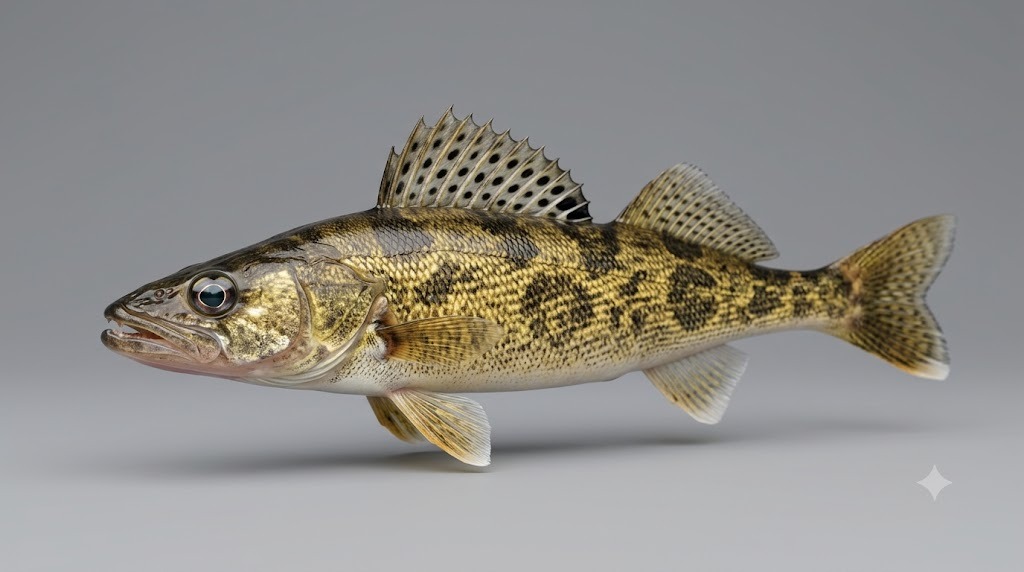
The sauger looks much like a walleye but has several reliable distinguishing features. Its body is more slender and its overall color is brassy to brownish-gold, marked with distinct dark brown saddles or blotches across the back and sides - a mottled, camouflaged pattern. The walleye, by contrast, is more uniformly colored. The spiny dorsal fin of the sauger is covered with rows of distinct black spots, while a walleye's spiny dorsal is plain or has only a dark blotch at the rear. The sauger lacks the white tip on the lower tail lobe that a walleye has. Both fish share the large, glassy, light-gathering eyes adapted for low-light feeding. Saugers commonly run 10 to 15 inches.
Range & Habitat (US waters)
Sauger range broadly across the central and eastern United States, centered on large river systems. They are abundant in the Mississippi, Missouri, Ohio, Tennessee, and Cumberland rivers and their reservoirs and tributaries, and they extend through the Great Lakes drainage and into the northern Plains. They are fundamentally a big-river fish, far more tied to current than the walleye. Sauger thrive in large, turbid, flowing water and in the river-influenced sections of reservoirs. They tolerate murky, silt-laden water better than walleye, often dominating where rivers run dirty. They relate to current, depth, and bottom structure.
Behavior & Feeding
Sauger are predatory bottom feeders that hunt primarily by sight in conditions of low light. Their large, reflective eyes let them feed effectively in turbid water and at dawn, dusk, and night when prey is vulnerable. Their diet is dominated by small fish - shad, minnows, young perch and drum - supplemented by aquatic insects, larvae, and crayfish. Sauger hold near the bottom in current, using structure and depth as breaks, and move into feeding positions in low light. They tolerate cold water well and feed actively through fall and winter. They make spawning runs upriver in late winter and early spring, concentrating below dams and other barriers.
Best Seasons & Times to Catch
Fall and winter are the marquee seasons for sauger. As water cools, sauger move and concentrate in predictable river locations, and the late-fall through late-winter period offers the most reliable fishing of the year. The pre-spawn run, from late winter into early spring, stacks sauger below dams in large numbers and produces outstanding fishing. Sauger can be caught in summer too, holding deeper in the river channel. Because they feed in low light, the best times each day are early morning, evening, night, and overcast or windy days that reduce light penetration.
Where to Find Them - Reading the Water
Sauger are a current-and-structure fish. The single best location is the tailwater below a dam, where current concentrates baitfish and sauger, especially in fall, winter, and the pre-spawn run. Beyond dams, focus on the river channel and its edges, wing dams and rock structures, deep holes and the slack water behind current breaks, channel-edge drop-offs, and the seams where fast and slow water meet. Sauger sit on or near the bottom, often in 10 to 30 feet or more, holding out of the heaviest current while staying close to it. Find current, structure, and depth together, and you find sauger.
Tackle & Rigs
A medium or medium-light spinning rod, 6 1/2 to 7 feet with a sensitive tip, paired with 6- to 10-pound monofilament or low-stretch braid, is the standard. Sensitivity matters because sauger bites are often light. The most effective presentation is a jig - typically 1/8 to 1/2 ounce, sized to hold bottom in the current. Bottom-bouncing rigs and three-way rigs with a sinker dropper and a bait or lure are excellent for working current seams and holes. Blade baits and jigging spoons are also productive in cold water. A bottom-contact, vertical or near-vertical presentation is key.
Best Baits & Lures
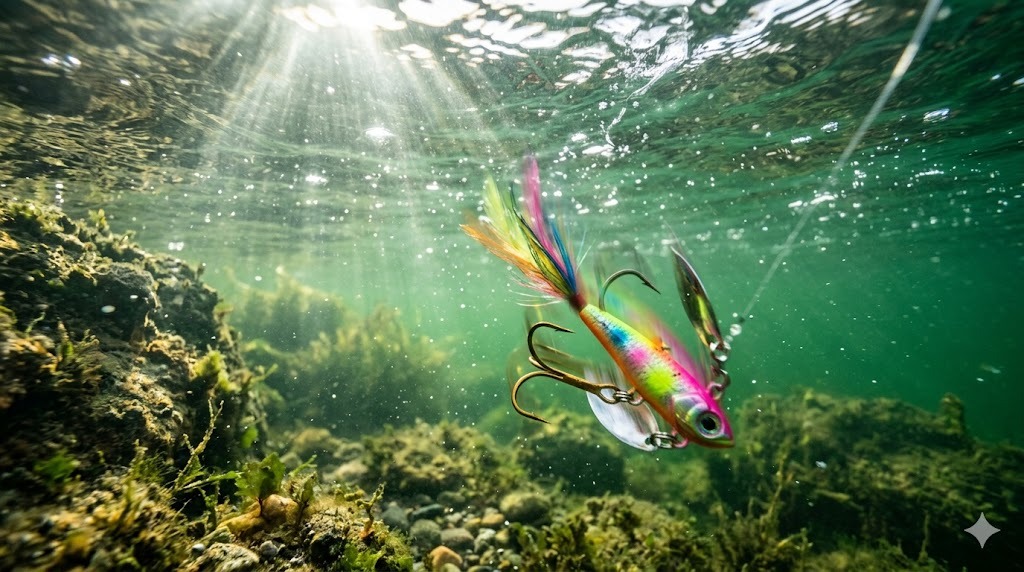
Jigs tipped with a minnow are the bread-and-butter sauger presentation - a leadhead jig with a soft-plastic body or hair, sweetened with a live minnow, fished on the bottom. Plain live minnows on a bottom rig also score well. Other top producers include blade baits, jigging spoons, hair jigs, soft-plastic swimbaits and paddletails, and small crankbaits trolled or cast in the current. In murky water, brighter colors - chartreuse, orange, white, pink - help sauger find the lure. The combination of a flash-and-vibration lure with the scent of live bait is hard to beat.
Techniques - How to Fish for It
Vertical jigging is the classic and deadliest method: position the boat over the fish or drift through a hole, and work a jig-and-minnow on or near the bottom with subtle lifts and drops, keeping contact with the bottom at all times. Strikes are often just a soft tick or weight - set on anything different. Drifting or slow-trolling bottom-bouncer and three-way rigs covers water along channel edges and seams. Casting jigs and blade baits and hopping them back along the bottom works well in tailwaters from boat or bank. Always keep the lure near the bottom and stay alert for light bites.
Common Mistakes
The most common mistake is fishing too far off the bottom - sauger feed on the bottom and a lure suspended above them gets ignored. Anglers also use jigs too light to hold bottom in current, losing contact and feel. Many miss the subtle, ticking bites because they are not paying close attention or are using insensitive gear. Fishing the bright midday hours instead of low-light periods reduces success, as does ignoring current and structure and fishing random water. Finally, anglers sometimes confuse small sauger with walleye and misjudge slot or size regulations.
Size, Records & Eating Quality
Sauger are smaller than walleye, commonly running 10 to 15 inches and well under 2 pounds; a fish over 2 pounds is a good one and anything past 3 pounds is a trophy. The all-tackle world record is 8 pounds 12 ounces, caught in North Dakota in 1971. Eating quality is excellent - sauger have the same firm, white, mild, flaky flesh that makes walleye so prized, and many anglers consider them just as good on the table. Their abundance in big rivers makes them a dependable source of fillets, and a limit of sauger is a fine reward for a cold day's fishing.
Pros & Cons (as a target species)
Pros: excellent, walleye-quality eating; abundant and willing in big-river systems; outstanding cold-water fishing when other species slow down; concentrate predictably below dams; catchable from boat and bank; tolerate and even prefer turbid water. Cons: small average size with limited trophy potential; tied to big rivers, so unavailable in many regions; bites are subtle and easy to miss; current and depth require some skill and the right jig weight; can be confused with walleye for regulation purposes.
Best Suited For
Sauger are perfect for big-river anglers, cold-weather and winter fishermen, and anyone who values a cooler of excellent fillets over trophy size. They suit anglers who enjoy vertical jigging and reading current and structure, and they reward dedication during the fall, winter, and pre-spawn periods when fishing is most reliable. They are a great fish for the table-focused angler. They are less suited to anglers seeking large fish, those without access to major river systems, and anglers who dislike subtle bites and bottom-contact fishing.
FAQ
How do I tell a sauger from a walleye? A sauger has dark brown saddle-shaped blotches on its back, distinct rows of black spots on the spiny dorsal fin, and no white tip on the lower tail lobe. A walleye is more uniformly colored, has a plain spiny dorsal, and has a white-tipped tail.
Are sauger good to eat? Yes, excellent - their flesh is firm, white, mild, and flaky, virtually the same quality as walleye. Many anglers cannot tell the difference on the plate.
When is the best time to catch sauger? Fall through late winter, when sauger concentrate in predictable river locations, and the late-winter to early-spring pre-spawn run, when they stack up below dams. Low-light periods each day are best.
Where should I fish for sauger? In big rivers, focus on dam tailwaters, the river channel and its edges, deep holes, wing dams, and current seams. Sauger hold near the bottom in or beside current.
What is the best lure for sauger? A jig tipped with a live minnow, fished on the bottom, is the classic and most reliable presentation. Blade baits and jigging spoons also work very well in cold water.