Smallmouth Bass
If the largemouth is the king of weeds and cover, the smallmouth bass is the bruiser of rock and current.
🗓️ Last reviewed: June 2026
Overview
If the largemouth is the king of weeds and cover, the smallmouth bass is the bruiser of rock and current. Pound for pound, the smallmouth is widely regarded as the hardest-fighting freshwater fish in North America - a stocky, muscular bronze predator that runs hard, jumps repeatedly, and never seems to quit. Anglers who chase smallmouth often become obsessed, drawn to clean, cool rivers and rocky lakes where these fish thrive. The smallmouth, affectionately called the "bronzeback" or "smallie," rewards anglers who learn to read current and rock with some of the most exciting fights in freshwater.
Identification & Appearance
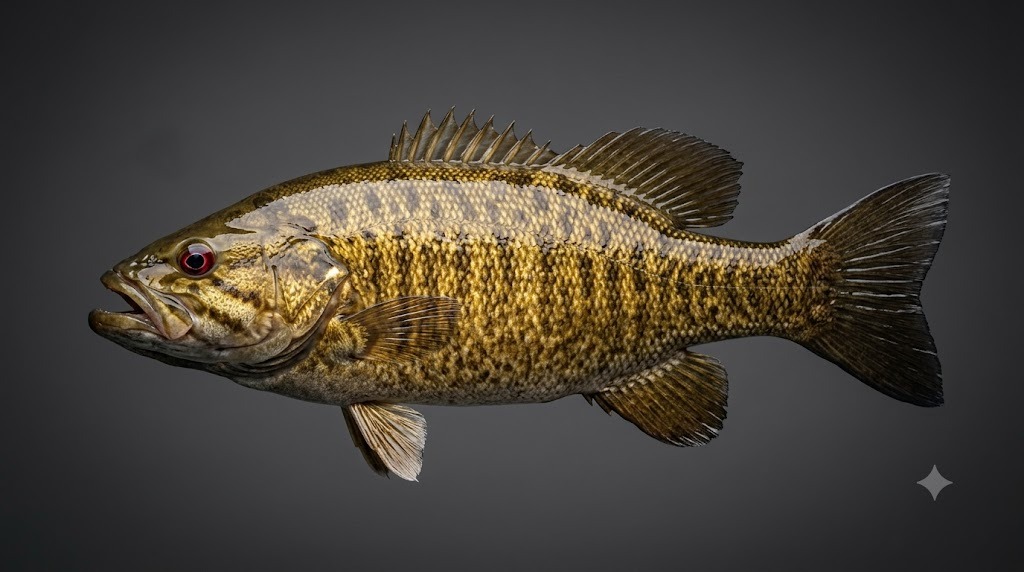
The smallmouth is a sunfish-family member built like a linebacker - deep-bodied, thick, and powerful. Its color ranges from brassy bronze to olive-brown, and unlike the largemouth it shows dark vertical bars or blotches along the flank rather than a horizontal stripe. The eye often has a distinct reddish or orange tint. The two reliable ways to separate it from a largemouth: the upper jaw stops at or before the rear edge of the eye, not past it; and the spiny and soft dorsal fins are connected with only a shallow notch between them. River smallmouth tend to be darker and more heavily barred than lake fish.
Range & Habitat (US waters)
Native to the upper Mississippi, Great Lakes, and Ohio River basins, the smallmouth has been widely stocked and now flourishes across the northern and central US, with strong fisheries from Maine to Minnesota and down through the mid-Atlantic and Ozark regions. It demands cleaner, cooler, more oxygen-rich water than the largemouth. Look for it in rocky natural lakes, deep clear reservoirs, and especially flowing rivers and streams with gravel, cobble, and boulder bottoms. The Great Lakes - Erie, Michigan, and the St. Lawrence River - produce world-class smallmouth fishing.
Behavior & Feeding
Smallmouth are aggressive, current-loving predators with a strong appetite for crayfish, which often make up the bulk of their diet, along with shad, minnows, sculpins, hellgrammites, and other aquatic insects. They are sight feeders that thrive in clear water and relate heavily to hard bottom and structure. In rivers, they hold near current breaks and dart out to ambush food drifting past. They are notably more affected by cold than largemouth at the surface, often moving to deep wintering holes, yet they remain catchable in cold water with slow presentations.
Best Seasons & Times to Catch
Spring and fall are the standout seasons. The pre-spawn period, as water climbs into the upper 50s, brings big fish shallow and hungry. Fall is legendary - cooling water triggers smallmouth to feed aggressively, and some of the largest fish of the year are caught in autumn. Summer fishing is excellent in rivers and on deep lake structure, especially early and late. Smallmouth feed actively across more of the day than largemouth, but low light, overcast skies, and a little wind to break the surface still improve the bite. In winter, they stack in deep holes and bite slowly fished baits.
Where to Find Them - Reading the Water
Think rock and current. In rivers, target current seams, the slack water behind boulders and ledges, the heads and tails of pools, gravel bars, and eddies. In lakes and reservoirs, focus on rocky points, gravel and chunk-rock flats, isolated boulders, humps, bluff walls, and the transition from rock to sand. Smallmouth love an edge where current or structure concentrates food. In summer, they often pull deeper to main-lake structure; in spring and fall they push shallow onto rocky flats. If you find clean rock, crayfish, and some current, you have found smallmouth water.
Tackle & Rigs
A medium-power spinning rod, 6.5 to 7 feet, is the smallmouth standard, paired with a 2500-3000 size spinning reel and 8-12 lb braid with a fluorocarbon leader, or straight 6-10 lb fluorocarbon. Finesse rigs dominate: the drop-shot for vertical presentations and pressured fish, the Ned rig for a subtle bottom-hugging bait, the tube jig fished on a stand-up jighead, and a simple split-shot rig in rivers. A medium-heavy baitcaster handles crankbaits, topwater, and jigs when fish are aggressive.
Best Baits & Lures
Because crayfish are king on the smallmouth menu, brown, green-pumpkin, and craw-pattern baits shine. Top lures include tube jigs, Ned-rig soft plastics, drop-shot minnows, hair jigs, crayfish-imitating crankbaits, jerkbaits, spinnerbaits, and topwater walking baits and poppers. Live bait is deadly - crayfish, hellgrammites, and minnows are hard to beat, and many rivers fish best with a live crayfish drifted naturally. Match natural, translucent colors in clear water, the norm for smallmouth fisheries.
Techniques - How to Fish for It
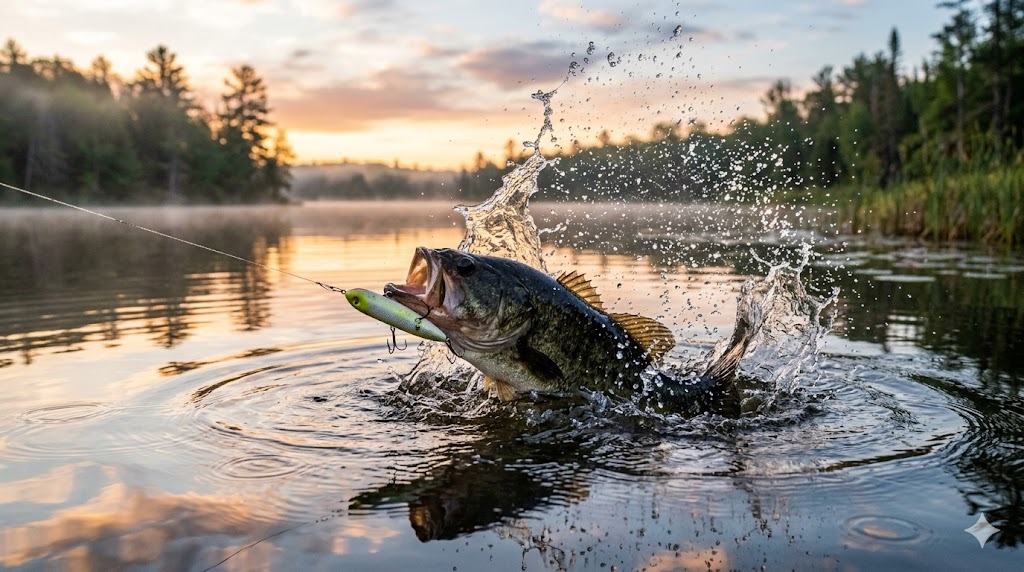
In rivers, the key is presenting a bait drifting naturally with the current - cast slightly upstream, let the bait tumble along the bottom through seams and behind boulders, and stay in contact without dragging unnaturally fast. On lakes, drop-shotting and Ned-rigging rocky structure produces consistently; let the bait do its work with subtle shakes. Jerkbaits worked with sharp twitches and long pauses are devastating in cool, clear water. When fish are up and aggressive, burn a spinnerbait or walk a topwater over rock flats. Smallmouth often jump immediately on the hookset - keep the rod up, the line tight, and the drag smooth.
Common Mistakes
A frequent error is fishing smallmouth water like largemouth water - hunting weeds instead of rock and current. Another is overpowering them with heavy line and big baits in clear water, when finesse and natural colors win. River anglers often drag baits too fast and unnaturally instead of letting the current carry them. Anglers also clamp down on the drag and lose fish on the violent jumps; a smooth, properly set drag and a bowed rod land far more smallmouth.
Size, Records & Eating Quality
A 12-15 inch smallmouth is a solid fish; anything over 18 inches or 3 pounds is excellent, and a 5-pound smallmouth is a genuine trophy almost anywhere. The all-tackle world record is 11 pounds 15 ounces, caught by David Hayes from Dale Hollow Lake on the Tennessee-Kentucky line in 1955 - a record that has stood for decades. Smallmouth have firm, mild, clean-tasting flesh and are good eating, but like other black bass they are overwhelmingly released to protect the fishery.
Pros & Cons (as a target species)
Pros: arguably the hardest-fighting freshwater fish, spectacular jumper, lives in beautiful clean rivers and clear lakes, eager to chase a wide range of lures, and fishable across most of the day. Cons: requires clean, cool water so it is unavailable in many warm southern lakes, more weather-sensitive than largemouth, often demands finesse tackle and patience, and pressured fisheries can turn finicky.
Best Suited For
Smallmouth bass suit anglers who love moving water, wading rivers, and the challenge of reading current and rock. They are ideal for kayak and wade anglers, finesse-tackle enthusiasts, and anyone who values a hard fight over sheer size. Fly anglers also prize smallmouth as a powerful, willing target on streamers and poppers.
FAQ
What's the difference between a smallmouth and a largemouth bass? Look at the jaw and the markings. A smallmouth's upper jaw stops at or before the eye and it has vertical bars and a bronze color; a largemouth's jaw extends past the eye and it has a horizontal stripe and a greener body.
Why are smallmouth bass such hard fighters? They are deep, muscular fish that live in current, which builds strength and stamina. They run hard, change direction, and jump repeatedly, making them feel far heavier than their actual weight.
What is the best bait for smallmouth bass? A tube jig or a live crayfish - both imitate the smallmouth's favorite food. On lakes, a drop-shot or Ned rig in natural brown and green tones is hard to beat.
Where should I look for smallmouth in a river? Find current seams and the slack water behind boulders, ledges, and at the heads and tails of pools. Smallmouth hold out of the heavy current and ambush food drifting past.
When is the best time of year to catch big smallmouth? Spring pre-spawn and fall. Cooling autumn water triggers heavy feeding and produces some of the biggest smallmouth of the entire year.