Spotted Bass
The spotted bass - "spot," "spotty," or "Kentucky bass" to those who chase it - is the underrated middle child of the black bass family.
🗓️ Last reviewed: June 2026
Overview
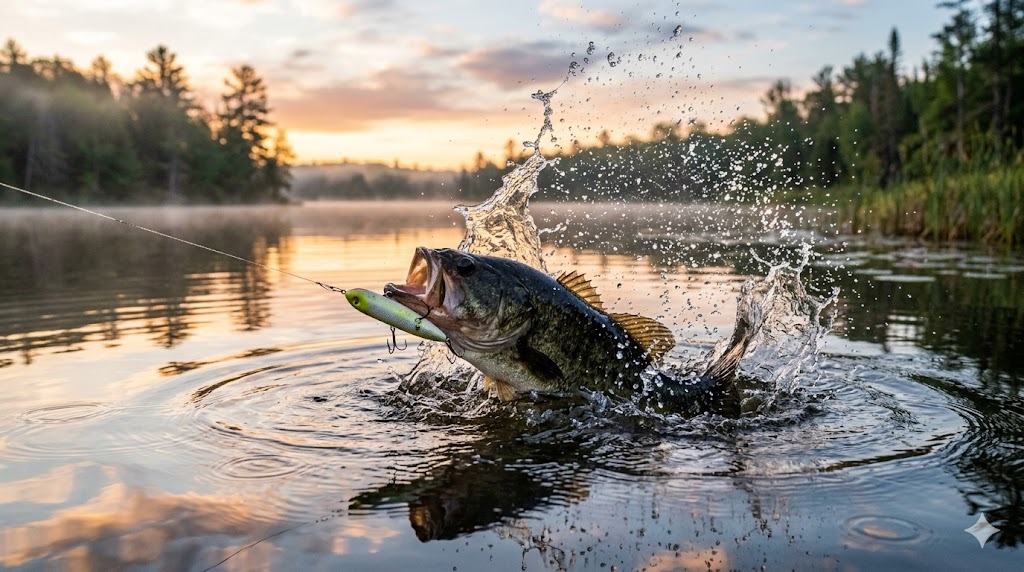
The spotted bass - "spot," "spotty," or "Kentucky bass" to those who chase it - is the underrated middle child of the black bass family. Often overlooked in favor of its famous cousins the largemouth and the smallmouth, the spotted bass is a fish that rewards anglers who learn its habits. It thrives in clear, rocky reservoirs and rivers, fights with the dogged, deep-running power of a smallmouth, schools more readily than either cousin, and is willing to bite all year, even in cold water. In the deep, clear highland reservoirs of the South and Southeast, the spotted bass is often the dominant and most exciting black bass an angler can catch.
Identification & Appearance
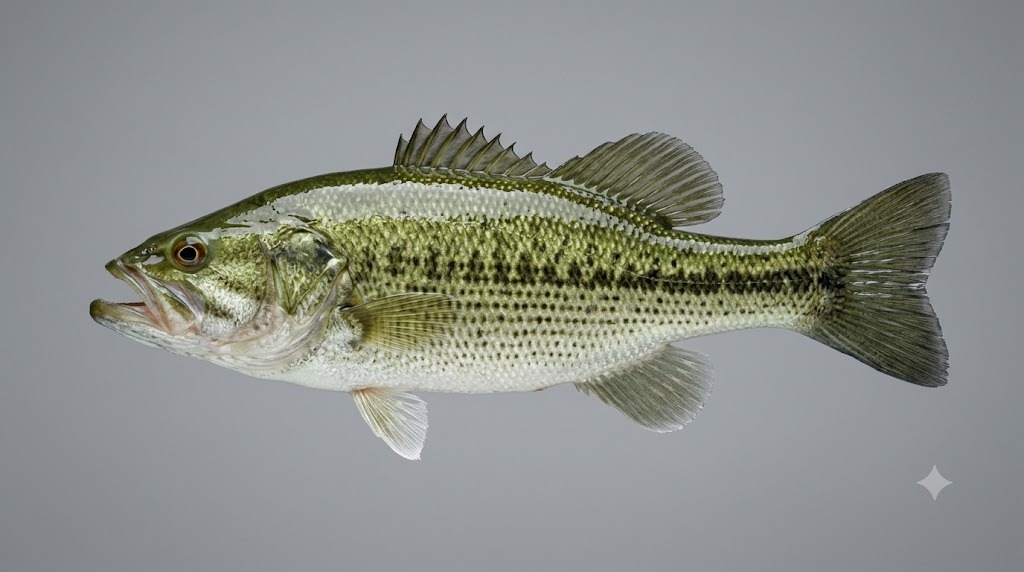
The spotted bass looks like a cross between a largemouth and a smallmouth, and telling them apart takes attention. The body is greenish with a dark lateral band of blotches, but unlike the largemouth that band is more broken and irregular. Below the lateral line, the spot's defining feature appears: rows of small dark spots that form distinct horizontal lines on the lower sides. The jaw, when the mouth is closed, ends about even with the rear of the eye - extending past it would mark a largemouth, and the upper and lower jaws of a largemouth separate clearly. The spotted bass also has a rough patch of teeth on its tongue, which a largemouth lacks, and the two dorsal fins are connected, not deeply notched.
Range & Habitat (US waters)
Spotted bass are native to the central and lower Mississippi River basin and the Gulf states, with their range centered on the South and Southeast - from Texas and Oklahoma across to Georgia and the Carolinas, up through Kentucky and Tennessee. They have also been introduced into Western waters, including California, where they have flourished - sometimes controversially - in deep, clear reservoirs. Spotted bass favor clearer, cooler water than largemouth and prefer current and rock. Classic spotted bass habitat is a clear, deep highland reservoir with rocky banks, bluff walls, and standing timber, or a flowing river with gravel and rock. They tolerate current well and often hold deeper than other black bass.
Behavior & Feeding
Spotted bass are aggressive, opportunistic predators that combine the schooling tendency of a smallmouth with a willingness to roam open water like a striper. They commonly group up, especially in cooler months and in deep water, and they relate strongly to rock, current, and structure. Their diet leans heavily on crayfish in rocky habitats and on shad and other baitfish in open-water reservoirs - a spotted bass is just as likely to chase a shad ball off a deep point as to crush a crawfish on a bluff. They feed actively in cold water, often holding and feeding deeper than largemouth, and they suspend off vertical structure more readily than either cousin.
Best Seasons & Times to Catch
Spotted bass bite year-round and are one of the better cold-water black bass - winter fishing in deep water can be excellent for them. Spring brings the spawn, and pre-spawn spotted bass stage on points and channel-related structure, feeding hard. Summer pushes them deep, where they school on offshore structure and humps and provide consistent action for anglers willing to fish vertical and deep. Fall is outstanding as cooling water sends them chasing shad, sometimes schooling and breaking on the surface. Low-light periods of dawn and dusk are reliably productive, and overcast, breezy days often extend the bite.
Where to Find Them - Reading the Water
Think rock and depth. In reservoirs, target bluff walls and steep rocky banks, main-lake and secondary points, channel swing banks, humps, deep brush, and standing timber. Spotted bass relate to vertical structure and the deeper end of cover, often holding 15 to 40 feet down. In rivers, focus on current - rocky runs, eddies behind boulders and ledges, current seams, and the deeper pools. The transition where rock meets a channel drop is a classic spot. Because spots school and roam after shad, electronics are valuable for locating offshore groups of fish on points and humps that hold no obvious shallow cover.
Tackle & Rigs
Spotted bass are caught on standard bass tackle, with a lean toward finesse because they live in clear water. A medium-power 6.5 to 7 foot spinning rod with 8 to 12 pound line (or 10 to 15 pound fluorocarbon with braid backing) covers most finesse presentations, while a medium-heavy baitcaster handles reaction baits and deeper jigs. Productive rigs include the drop-shot for vertical fishing over deep structure, the shaky head, the Ned rig, the Carolina rig for covering deep flats and points, and a football jig for crawling rocky bottoms. In clear, pressured water, a fluorocarbon leader and natural colors help. Spots fight hard and dive deep, so a quality drag matters.
Best Baits & Lures
Match the spotted bass's two main foods - crayfish and shad. For crawfish imitation, football jigs, Texas-rigged craws, and Ned-rig and shaky-head soft plastics worked on rock are deadly. For shad imitation, drop-shot minnows, fluke-style soft jerkbaits, underspin jigs with swimbait trailers, and spoons excel on offshore fish. Reaction baits - spinnerbaits, lipless and squarebill crankbaits, and jerkbaits - trigger active spots, and jerkbaits in particular are outstanding in cold, clear water. When fish school on the surface in fall, topwater walkers and small swimbaits draw explosive strikes. Natural shad and crawfish colors generally outproduce bright ones in clear water.
Techniques - How to Fish for It
Two themes dominate spotted bass fishing. The first is finesse: drop-shotting and shaky-heading deep structure - points, humps, brush, and bluff ends - for the schools of spots that hold offshore, fishing vertically and watching electronics closely. The second is the rock pattern: crawling a football jig or Texas-rigged craw down bluff walls and rocky banks, letting it tick and tumble like a fleeing crawfish. In current, work jigs and soft plastics through seams and behind structure, letting the flow do the work. In cold water, slow-roll a jerkbait with long pauses. When spots break on shad, run-and-gun with topwater and swimbaits.
Common Mistakes
A frequent mistake is treating spotted bass like largemouth and fishing shallow cover all day, when spots more often hold deeper and on rock and vertical structure. Fishing too fast or with baits too large for these clear-water fish reduces bites - finesse pays. Many anglers fail to use electronics to find offshore schools, missing the most productive water. Ignoring current in rivers, where spots tightly relate to seams and breaks, is another error. And in clear water, heavy line and unnatural colors spook fish - downsizing line and choosing shad and crawfish hues makes a real difference.
Size, Records & Eating Quality
Spotted bass generally run smaller than largemouth. A 1 to 2-pound spot is a typical catch, a 3-pounder is a quality fish on most waters, and a 4-pound-plus spotted bass is a genuine trophy. Certain deep, clear Western reservoirs, however, produce unusually large spots, and the all-tackle world record stands at just over 11 pounds, a startling fish from California's Lake Perris in 2001. As table fare, spotted bass are perfectly edible with mild white flesh similar to other black bass, though, like largemouth and smallmouth, they are most valued as sport fish and are widely released by bass anglers.
Pros & Cons (as a target species)
Pros: spotted bass bite year-round, including in cold water when other bass slow; they school, so finding one often means finding many; they fight with hard, deep-running power like a smallmouth; and they thrive in clear, scenic highland reservoirs. Cons: they typically run smaller than largemouth, disappointing pure trophy hunters; they often hold deep, demanding good electronics and vertical-fishing skill; clear water makes them line- and pressure-shy; and they can outcompete and hybridize with other black bass, which makes them a management concern in some waters.
Best Suited For
Spotted bass suit anglers who enjoy clear-water fishing, finesse techniques, and using electronics to hunt offshore structure. They reward the angler willing to fish deep and vertical rather than only beating the bank. They are a great cold-water option when the largemouth bite goes flat, and a thrilling, hard-pulling fish on light tackle. They are less suited to anglers fixated solely on giant fish, but for consistent, year-round action and a true test of finesse skill, the spotted bass is an excellent target.
FAQ
How do I tell a spotted bass from a largemouth? On a spotted bass, the closed jaw ends about even with the rear of the eye, while a largemouth's jaw extends past the eye. The spot has rows of small dark spots forming horizontal lines on its lower sides, a rough tooth patch on its tongue, and a connected dorsal fin. The largemouth has a deeply notched dorsal and no tongue teeth.
Do spotted bass fight harder than largemouth? Many anglers think so. Spotted bass fight with a dogged, deep-diving, head-shaking power more like a smallmouth than a largemouth, which tends to jump. Pound for pound, a spot is a strong, stubborn fighter.
Where do spotted bass like to hold? They favor rock and depth - bluff walls, steep rocky banks, main-lake points, humps, deep brush, and standing timber, often 15 to 40 feet down. In rivers they relate tightly to current, holding in seams and behind structure. They hold deeper and more vertically than largemouth.
What is the best lure for spotted bass? It depends on their forage. For crayfish imitation, football jigs and Ned or shaky-head soft plastics on rock excel. For shad imitation, the drop-shot, underspin, and jerkbait are top choices, with jerkbaits especially good in cold, clear water. Topwater shines when spots school on the surface.
Are spotted bass good to eat? They are edible, with mild white flesh similar to other black bass. That said, they are valued primarily as a sport fish, and most bass anglers release them. Where spotted bass have been introduced and threaten other species, local regulations may actually encourage harvest.