Striped Bass (Morone saxatilis) - Freshwater & Hybrid
The striped bass is the heavyweight of America's freshwater open-water scene.
🗓️ Last reviewed: June 2026
Overview
The striped bass is the heavyweight of America's freshwater open-water scene. Although natively an anadromous saltwater fish, stripers have been landlocked in reservoirs across the country, where they thrive as pure freshwater predators. Many fisheries also feature the "hybrid striped bass" - a cross between the striped bass and the white bass - bred for hardiness and stocked widely. Both versions are prized for the same reasons: they grow big, they fight with bulldogging power, they roam in roaming schools that crash baitfish on the surface, and they pull drag like a freight train. For the freshwater angler who wants raw size and brute strength without going to the ocean, the landlocked striper is the prize.
Identification & Appearance
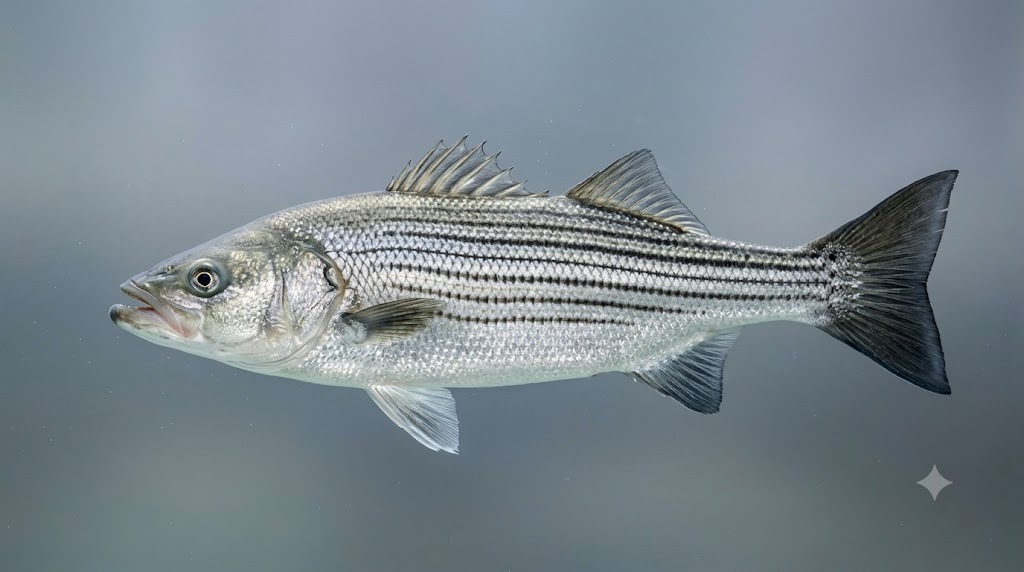
Striped bass have a long, streamlined, silvery body with a dark olive to blue-gray back and a white belly. The defining mark is a set of seven or eight clean, unbroken horizontal black stripes running the length of the body - straight, distinct, and continuous. Pure stripers grow long and torpedo-shaped, easily reaching 30 to 40-plus inches. The hybrid striped bass is deeper-bodied and stockier, with stripes that are usually broken or offset rather than perfectly continuous - a key way to tell the two apart. Hybrids rarely exceed the high single-digit to low-teen pound range, while pure landlocked stripers can top 50 pounds. Both have two distinct dorsal fins and a forked tail built for speed.
Range & Habitat (US waters)
Landlocked striped bass fisheries exist in large reservoirs across the South, Southwest, and into the Mid-Atlantic and beyond - famous waters include lakes in Tennessee, Georgia, the Carolinas, Texas, Oklahoma, and Arizona's Lake Powell and Lake Mead. Hybrids are stocked even more widely, including in many Midwestern reservoirs. These fish need big, open water with cool, oxygen-rich layers and, critically, abundant schools of shad - gizzard and threadfin shad are the engine of nearly every striper fishery. Stripers also run up tributary rivers, especially in spring, and some river systems support thriving year-round populations. They are wanderers, often covering miles of open water in a single day chasing bait.
Behavior & Feeding
Stripers are pure predators built around the chase. They hunt in schools, herding shad into balls and ambushing them with explosive feeding frenzies that can erupt on the surface - known as "schooling" or "surface busting." They are sensitive to water temperature and oxygen; in summer, they retreat to a cool, oxygenated band of water, often suspended over open basins, while in cooler months they roam shallow and chase bait aggressively. They feed most heavily in low light and during stable or rising baitfish activity. A striper's whole life revolves around following the shad, so wherever the bait moves, the stripers follow.
Best Seasons & Times to Catch
Spring is prime time. As water warms, stripers stage and run up rivers and creek arms on a spawning migration, gorging on shad and concentrating in catchable numbers. Fall is the other peak - cooling water sends shad shallow, and stripers follow with violent surface schooling that can be the most exciting fishing of the year. Summer fishing is good but technical, requiring anglers to find the thermocline and target suspended fish in deep, cool water. Winter slows things down but big fish still feed. Across all seasons, dawn and dusk are best, and overcast, windy days often outproduce bright, calm ones.
Where to Find Them - Reading the Water
Find the shad and you find the stripers. On big reservoirs, watch your electronics for bait balls and the larger arches of stripers beneath or beside them. Key areas include main-lake points, river and creek channels, humps, flats adjacent to deep water, and the mouths of major tributaries. In spring, focus on the upper ends of the lake and the rivers themselves. In summer, look for the thermocline - a defined depth band of cool, oxygenated water - and fish the suspended schools there. Birds working over the water, especially gulls and terns diving on shad, are a dead giveaway that stripers are feeding below.
Tackle & Rigs
Striper fishing demands stout gear. Use a medium-heavy to heavy rod 7 to 7.5 feet long, paired with a strong baitcasting or large spinning reel with a smooth, powerful drag. Spool with 15 to 30 pound monofilament or 30 to 50 pound braid, depending on the size of fish and amount of cover. The most productive live-bait technique is "down-rod" or "planer board" fishing with live shad, often using a Carolina-style or simple split-shot rig with a circle hook in the 3/0 to 7/0 range. Trollers run umbrella rigs and deep-diving plugs. For casting to schooling fish, no special rig is needed beyond a strong rod and good knots - these fish do not forgive weak tackle.
Best Baits & Lures
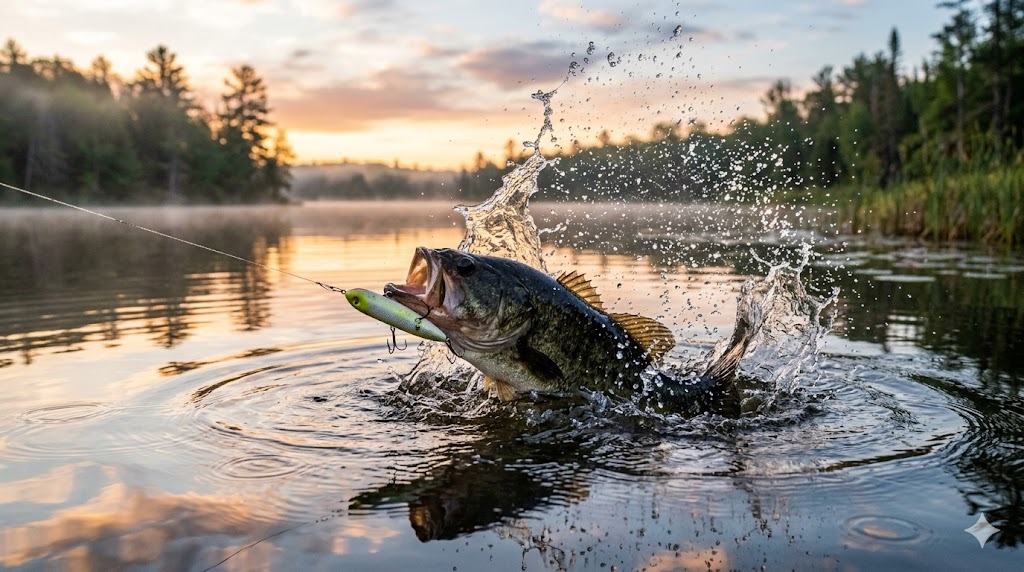
Live bait is the king of striper fishing, and live shad is the undisputed champion - gizzard or threadfin shad matched to what the fish are eating. Live herring, where legal, and large shiners also work. For artificials, big swimbaits, bucktail jigs, flutter spoons, and deep-diving crankbaits all imitate shad effectively. When stripers school on top, topwater plugs - walking baits and poppers - and casting spoons produce heart-stopping blowups. Umbrella rigs (Alabama rigs) shine when trolling or casting to suspended schools because they mimic an entire ball of bait. Bigger baits catch bigger stripers, so don't be shy with size.
Techniques - How to Fish for It
Live-bait fishing is the most reliable producer: locate suspended fish on sonar, then present live shad at the right depth using free-lines, weighted down-rods, and planer boards to cover a spread of water. Let the circle hook do the work - don't swing hard, just lean into the fish. Trolling crankbaits and umbrella rigs along channels and points covers ground and locates roaming schools. The most thrilling method is chasing surface-schooling fish: idle within casting range, kill the motor, and fire topwaters or spoons into the boil before it sinks. In tributary rivers, drift or anchor and present live bait or swimbaits in the current seams.
Common Mistakes
The biggest mistake is fishing where the bait isn't - without shad, there are no stripers. Anglers also commonly use tackle that's too light, losing big fish to broken line and stripped drags. In summer, fishing above or below the thermocline puts baits in water stripers won't enter. Setting the hook hard on a circle hook pulls it out of the fish's mouth - let it load up instead. Running the big motor right through a surface-schooling frenzy scatters the fish; ease in quietly. Finally, many anglers give up too soon - stripers roam, and patience while covering water pays off.
Size, Records & Eating Quality
Hybrid striped bass commonly run 2 to 8 pounds, with double-digit hybrids being exceptional. Pure landlocked stripers routinely reach 15 to 30 pounds, and trophy fisheries produce fish of 40 to 50-plus pounds. The landlocked freshwater record stands at over 69 pounds, and the all-tackle record striped bass (a saltwater fish) exceeds 81 pounds. As table fare, stripers are good eating - firm, white, flaky meat - though larger fish benefit from removing the dark red lateral muscle and the bloodline for a milder flavor. Smaller hybrids are excellent on the grill or in the pan.
Pros & Cons (as a target species)
Pros: stripers grow huge by freshwater standards, fight with relentless power, provide spectacular surface action, and roam in schools so multiple hookups are common once you find them. Hybrids are tough, fast-growing, and widely stocked, putting big-fish thrills within reach of many anglers. Cons: success hinges entirely on locating shad, which demands good electronics and time on the water; they require heavy, more expensive tackle; summer fishing is technical; and they can be feast-or-famine, with hours of searching between flurries.
Best Suited For
Freshwater stripers and hybrids are best suited for anglers who want size, power, and excitement and are willing to put in the effort to find roaming fish. They reward boaters with quality electronics and a willingness to cover water. Live-bait anglers, trollers, and run-and-gun topwater chasers all have a place. They are not the easiest fish for a casual shore angler, though tributary runs and dam tailraces do offer bank-fishing opportunities. For anyone craving a hard-pulling freshwater heavyweight, stripers deliver.
FAQ
What's the difference between a striped bass and a hybrid? Pure striped bass are long and torpedo-shaped with clean, continuous horizontal stripes, and they can exceed 50 pounds. Hybrid striped bass - a striper-white bass cross - are deeper-bodied and stockier, have broken or offset stripes, and usually top out in the high single digits to low teens.
What is the best bait for landlocked stripers? Live shad - gizzard or threadfin - is the number one bait nearly everywhere stripers swim. Match the size to what the fish are feeding on. Big swimbaits, bucktail jigs, flutter spoons, and topwater plugs are the top artificial choices.
How do I find stripers on a big reservoir? Find the shad first. Use your electronics to spot bait balls and the striper arches near them, watch for diving birds on the surface, and focus on main-lake points, channels, humps, and tributary mouths. In summer, target the thermocline.
Are striped bass good to eat? Yes - they have firm, white, flaky fillets. For the best flavor, especially on larger fish, trim away the dark red lateral muscle and the bloodline. Smaller hybrids in particular are excellent table fare.
Why do I keep losing big stripers? Usually tackle that's too light or a poor hookset on a circle hook. Use a medium-heavy or heavy rod, 15 to 30 pound mono or 30 to 50 pound braid, a strong drag, and fresh knots. With circle hooks, don't swing - just let the rod load and lean into the fish.