White Bass
The white bass is the freshwater angler's fast-action favorite - a scrappy, hard-fighting schooling fish that, pound for pound, punches well above its weight.
🗓️ Last reviewed: June 2026
Overview
The white bass is the freshwater angler's fast-action favorite - a scrappy, hard-fighting schooling fish that, pound for pound, punches well above its weight. A member of the true bass family (the same family as the striped bass and a parent of the hybrid striper), the white bass roams open water in enormous schools, chasing shad with reckless aggression. When you find a school of "whites," the fishing can be sensational: a fish on every cast, drag-pulling fights, and coolers filling fast. Add the famous springtime spawning runs up rivers, and the white bass becomes one of the most reliably fun and accessible fish in fresh water.
Identification & Appearance
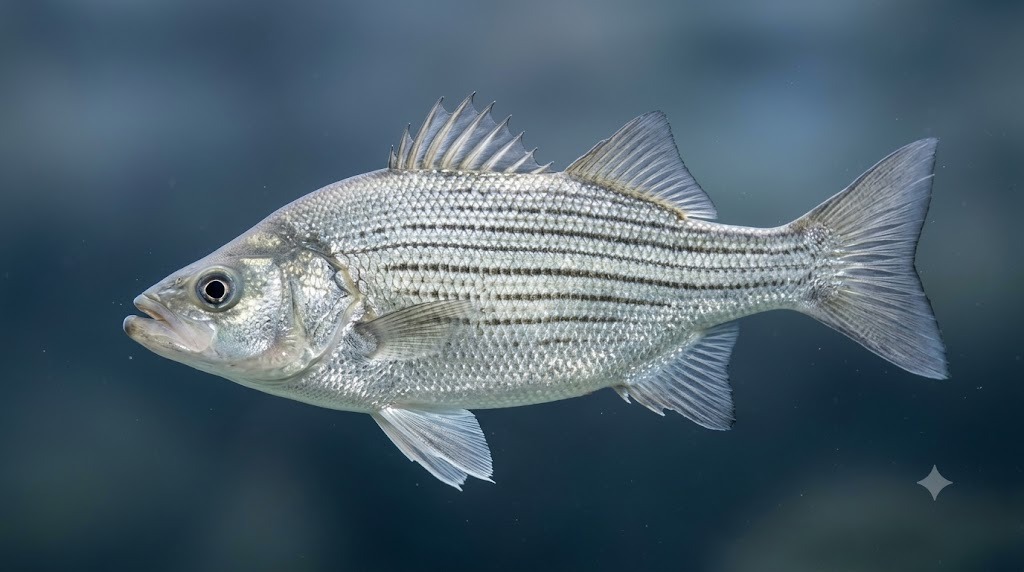
The white bass is a deep, somewhat compressed, silvery fish with a humped back behind the head. It has several thin, dark horizontal stripes along the sides - usually six to ten - though they are typically faint and often broken or interrupted, especially below the lateral line. The back is dark gray to greenish, the sides bright silver, and the belly white. White bass have two dorsal fins, the front spiny. They are easily confused with the smaller striped bass and the hybrid; the white bass is the most compact of the three, has a single tooth patch near the back of the tongue, and rarely exceeds a few pounds. Most white bass run 9 to 14 inches.
Range & Habitat (US waters)
White bass are widely distributed across the central and eastern United States, native to the Great Lakes, the Mississippi River basin, and many large rivers and lakes of the Midwest and South. They have been stocked widely beyond their native range and now thrive in reservoirs from Texas and Oklahoma through the Midwest and into the Southeast. They are fish of large, open water - big reservoirs, lakes, and the rivers connected to them. White bass favor clear-to-slightly-stained water with good populations of shad, and they roam constantly. They are highly migratory within a system, ascending rivers and creeks in spring and following baitfish around open water the rest of the year.
Behavior & Feeding
The white bass is a schooling, open-water predator built for the chase. Schools of similarly sized fish roam together, hunting shad and other small baitfish. When a school corners a ball of shad, the result is a feeding frenzy - fish slashing bait at and near the surface, sometimes pushing the shad into the air, with birds wheeling overhead. This "surface feeding" or "jumping" behavior is a hallmark of white bass and the source of some of the most exciting fishing they offer. They feed by sight, key heavily on shad, and are most active in low light and when baitfish are concentrated. They are aggressive, opportunistic, and almost always hungry.
Best Seasons & Times to Catch
Spring is the marquee season. As water warms, white bass make a powerful spawning migration up rivers and creeks, concentrating in huge numbers in current - the famous "white bass run" that draws crowds of anglers to riverbanks and tailraces. This is the easiest and most productive time to catch them, often from shore. Summer and fall offer outstanding open-water fishing as schools chase shad and erupt in surface frenzies, with dawn and dusk the prime windows. Winter slows them down but they still feed in deeper water. For nonstop action, time a trip to the spring run or to a summer evening surface bite.
Where to Find Them - Reading the Water
In spring, head up the rivers and creeks that feed a reservoir - focus on current breaks, eddies, gravel bars, the heads and tails of pools, and especially dam tailraces, where migrating fish stack up below an obstruction. The rest of the year, white bass are open-water fish: watch for surface activity and diving birds, and target main-lake points, humps, flats, river channels, and wind-blown shorelines where shad gather. Use electronics to spot bait balls and the schools of white bass beneath them. Because the fish roam, mobility matters - when a surfacing school goes down, idle and watch for the next eruption.
Tackle & Rigs
White bass are best matched with light to medium spinning gear: a 6 to 7 foot rod with a moderate-fast action, a 2500-size reel, and 6 to 10 pound monofilament or braid with a light leader. They are not leader-shy and not large, so terminal tackle is simple. A common approach in current is a small jig fished alone or a two-jig "tandem" rig that lets you catch doubles. For open-water schools, no special rig is needed - just tie on a jig, spoon, or small crankbait. The fun of white bass is in the simplicity: light tackle, small lures, and a fish that fights hard enough to make modest gear thrilling.
Best Baits & Lures
White bass are aggressive and not picky, but lures that imitate shad shine. Small lead-head jigs (1/8 to 3/8 ounce) dressed with soft-plastic grubs, twister tails, or small swimbaits in white, chartreuse, or shad colors are the top all-around producer. Casting spoons and small slab spoons are excellent, especially for jumping fish. Small crankbaits and lipless crankbaits, inline spinners, and small topwater plugs all draw strikes during surface activity. For live bait, small minnows and shad work well, particularly during the river run. Match the size of the local shad and you rarely go wrong.
Techniques - How to Fish for It
During the spring run, cast small jigs into current seams, eddies, and the heads of pools, letting them sweep naturally and hopping them along the bottom - fish hold on the edges of current. In tailraces, work the seams and slack pockets. For open-water schools, the classic technique is run-and-gun: cruise the lake watching for surfacing fish and birds, ease within casting range, and fire jigs or spoons into the boil. When fish go down, vertical-jig a spoon beneath the boat to stay on the school. Trolling small crankbaits also locates roaming schools. White bass hit hard, so the bite is rarely subtle.
Common Mistakes
A common mistake is racing the big motor right into a surfacing school and putting them down - ease in and cast from a distance. Anglers also miss the simplicity, overcomplicating tackle for a fish that just wants a small shad imitation. During the river run, fishing the heavy current instead of the seams and pockets along its edges wastes effort, since the fish hold on the current breaks. Failing to use electronics on open water means missing schools that aren't surfacing. And keeping every fish from a hot school can dent a population - practical, sensible harvest is wise.
Size, Records & Eating Quality
White bass are not big fish. A typical catch runs 9 to 14 inches and well under a pound to maybe a pound and a half; a 2-pounder is a very good white bass, and 3-pound-plus fish are exceptional. The all-tackle world record is just under 7 pounds. As table fare, white bass are good, with firm fillets, but they have a noticeable strong, somewhat "fishy" flavor that comes mainly from the dark red lateral muscle. Removing that red strip entirely, and eating the fish fresh, greatly improves the result. Many anglers fry them, and they hold up well to bold seasoning.
Pros & Cons (as a target species)
Pros: white bass offer fast, reliable, hard-fighting action; they school heavily so multiple hookups are common; they are widely distributed and accessible; the spring run provides outstanding shore-fishing for free; and the tackle and lures are simple and inexpensive. Cons: they are small, so they are not a trophy fish; the table quality is good but not great, and demands trimming the red meat; the open-water bite can be feast-or-famine as roaming schools come and go; and crowds gather on popular spring-run rivers.
Best Suited For
White bass are ideal for anglers who want action over size - beginners, kids, families, and anyone who enjoys catching a lot of fish. The spring run is one of the best opportunities in all of fishing for shore anglers and those without a boat to enjoy hot fishing. They also reward boaters who like the run-and-gun excitement of chasing surfacing schools. They are a good meat fish if trimmed properly. For pure fun and consistency on light tackle, the white bass is hard to beat.
FAQ
What's the difference between a white bass, a striped bass, and a hybrid? All three are in the true bass family. The white bass is the smallest and most compact, with faint, often-broken stripes, rarely topping a few pounds. The striped bass is long and large with clean unbroken stripes. The hybrid is a striper-white bass cross - stockier than a striper, larger than a white bass, with broken stripes.
When is the white bass run? The spring spawning run happens as water warms - generally early to mid-spring depending on latitude. White bass swarm up rivers and creeks feeding into reservoirs, concentrating in current and below dams, and this is the easiest, most productive time to catch them, often right from the bank.
What is the best lure for white bass? Small lead-head jigs dressed with soft-plastic grubs or swimbaits in white, chartreuse, or shad colors are the top all-around choice. Casting and slab spoons, small crankbaits, and inline spinners all work well too. Match the size of the local shad.
Are white bass good to eat? They are good, with firm fillets, but they have a strong flavor that lives in the dark red lateral muscle. Trim that red strip away completely, eat the fish fresh, and they make a fine fried meal that holds up to bold seasoning.
How do I find white bass when they aren't running the rivers? Treat them as open-water fish. Watch for surface-feeding frenzies and diving birds, target main-lake points, humps, flats, and wind-blown shorelines where shad gather, and use electronics to find bait balls and schools. Then run-and-gun to stay on the moving fish.