White Perch
The white perch is a small, scrappy, abundant fish that punches well above its weight as a target for everyday anglers.
🗓️ Last reviewed: June 2026
Overview
The white perch is a small, scrappy, abundant fish that punches well above its weight as a target for everyday anglers. Despite the name, it is not a true perch at all - it is a temperate bass, a close relative of the white bass and the striped bass, and it shares their schooling habits and willingness to feed. The white perch is a fish of the Atlantic coast and its connected waters, originally an estuary and coastal species that has also spread inland into many lakes and reservoirs.
For the angler, the white perch is approachable, dependable fun. It schools in huge numbers, bites readily on simple baits and small lures, fights with surprising spunk on light tackle, can be caught year-round including through the ice, and - importantly - it is genuinely excellent on the table, with sweet, white, flaky fillets. It is one of the best fish around for families, beginners, and anyone who wants steady action and a fish fry. It also has a complicated side: in some inland waters white perch are an invasive species that crowds out other fish, and there liberal harvest is encouraged.
Identification & Appearance
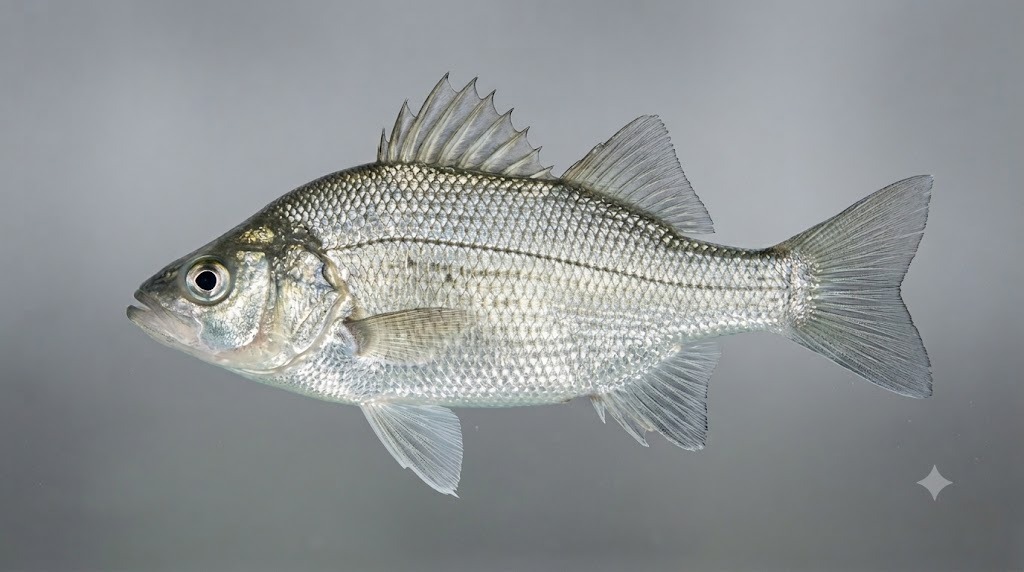
The white perch is a small to modest-sized fish with a deep, somewhat humpbacked body that is laterally compressed - taller and more slab-sided than a slender minnow or true perch. Coloration ranges from silvery to greenish, gray, or nearly olive-black on the back, fading to silvery sides and a white belly; fish from clear water are often paler and more silver, while those from dark or brackish water can be quite dark. Unlike its relatives the white bass and striped bass, the adult white perch lacks distinct dark horizontal stripes along its sides - its flanks are plain, an easy way to tell it apart.
It has the two-part dorsal fin typical of the temperate bass family - a spiny front section and a soft rear section, set close together or joined - and sharp spines on the dorsal and anal fins and on the gill cover, so handle it with a little care. The mouth is moderate-sized. The combination of a deep silvery body with no horizontal stripes and the temperate-bass fin structure identifies the white perch.
Range & Habitat (US waters)
The white perch is native to the Atlantic coast of the United States, from the Maritimes down through New England and the Mid-Atlantic to the Carolinas. It is fundamentally an estuary and coastal fish, abundant in brackish bays, tidal rivers, and coastal ponds, and the Chesapeake Bay and its tributaries are an especially famous white perch fishery. It tolerates a wide range of salinity, thriving in fresh, brackish, and even fully marine conditions.
Beyond its native coastal range, the white perch has spread widely into inland fresh water. It moved through canals into the Great Lakes, where it is now well established, and it has been introduced or has spread into many inland lakes and reservoirs across the Northeast, the Great Lakes region, and beyond. In these inland waters it lives in lakes, reservoirs, and slow rivers, often in large numbers. White perch are schooling, somewhat open-water fish that relate to structure, drop-offs, channels, points, and depth changes, and they move between shallow and deep water with the seasons.
Behavior & Feeding
The white perch is a highly social, schooling fish - it travels and feeds in groups, often large ones, which is central to how anglers catch it. It is an opportunistic, generalist feeder. Its diet shifts with size and season but centers on small fish and fish fry, aquatic insects and their larvae, small crustaceans, worms, zooplankton, and fish eggs. Larger white perch become more fish-oriented predators. White perch are notable egg predators and will eat the eggs of other fish, which is part of why they can be problematic where introduced.
White perch feed actively across a broad range of conditions and water temperatures, which makes them a year-round species. They tend to feed in low light and through the day depending on conditions, and they move vertically and horizontally as a school chasing forage and comfortable temperatures. They spawn in spring, running up into tributaries and the fresher reaches of estuaries, gathering in large numbers and broadcasting eggs - the spring spawning run concentrates fish and is a key fishing period.
Best Seasons & Times to Catch
The white perch is one of the most dependable year-round biters, but several periods stand out. Spring is prime: as white perch gather and run to spawn in tributaries and the upper reaches of estuaries and lakes, they concentrate in large, catchable numbers, and the spring run is a celebrated, action-packed time to fish for them. Summer and fall both produce well as schools roam and feed. White perch are also a popular ice-fishing target through the winter in their northern range, so the fishing genuinely continues all year.
Within a day, low-light periods - early morning and evening - are often the most productive, though white perch will bite through the day, especially in stained water or when a school is actively feeding. The key with white perch is less about the clock and more about locating an active school; once you find feeding fish, fast action follows regardless of the hour. Stable weather and an actively feeding school are the real keys to a great white perch day.
Where to Find Them - Reading the Water
Because white perch are schooling fish, the central task is locating a school - find one fish and you have usually found many. In tidal and coastal waters, focus on structure and current in brackish bays and tidal rivers: channel edges, drop-offs, points, bridge and pier pilings, oyster bars, deeper holes, and current seams where tide concentrates forage. During the spring run, follow the fish up into tributaries and the fresher upstream reaches.
In inland lakes and reservoirs, white perch relate to depth changes and structure: drop-offs, points, humps, channel edges, and the deeper basins, moving shallower or deeper with the season and the location of forage and comfortable water. Electronics are a real advantage - white perch schools show clearly on sonar, and locating the bait and the schools shortens the search dramatically. In winter, ice anglers find them over deeper structure and basins. The constant across all waters is to search for the school, often near structure and depth transitions, and then capitalize once you find feeding fish.
Tackle & Rigs
White perch are small fish, and the fishing is at its best - and its most fun - with light tackle. A light to medium-light spinning rod, 6 to 7 feet, with a sensitive tip to detect the often-subtle bite, paired with a small spinning reel and 4 to 8 lb line, mono or braid, is ideal. Light tackle makes these modest fish a genuine sporting catch and improves bite detection and lure presentation.
The terminal rigs are simple and inexpensive. A two-hook bottom rig - small hooks above a sinker, the classic "perch rig" - is a standard and lets you catch doubles from a school. A simple split-shot rig, a small jig, or a drop-shot rig all work well. Hook sizes are small, matched to the white perch's moderate mouth. For ice fishing, a light ice rod with small jigs and a small spinning reel covers it. A small float can suspend bait at the right depth over a school. The theme throughout is light, simple, and inexpensive tackle suited to a small, abundant, willing fish.
Best Baits & Lures
White perch are willing, generalist feeders and they bite a wide variety of baits and lures. For bait, small natural offerings are extremely effective: pieces of nightcrawler or garden worm, small minnows, grass shrimp, bloodworms (a favorite in brackish Mid-Atlantic waters), and pieces of other bait fished on a bottom rig or under a float. Natural bait on a simple perch rig is the most reliable approach and a great choice for beginners and kids.
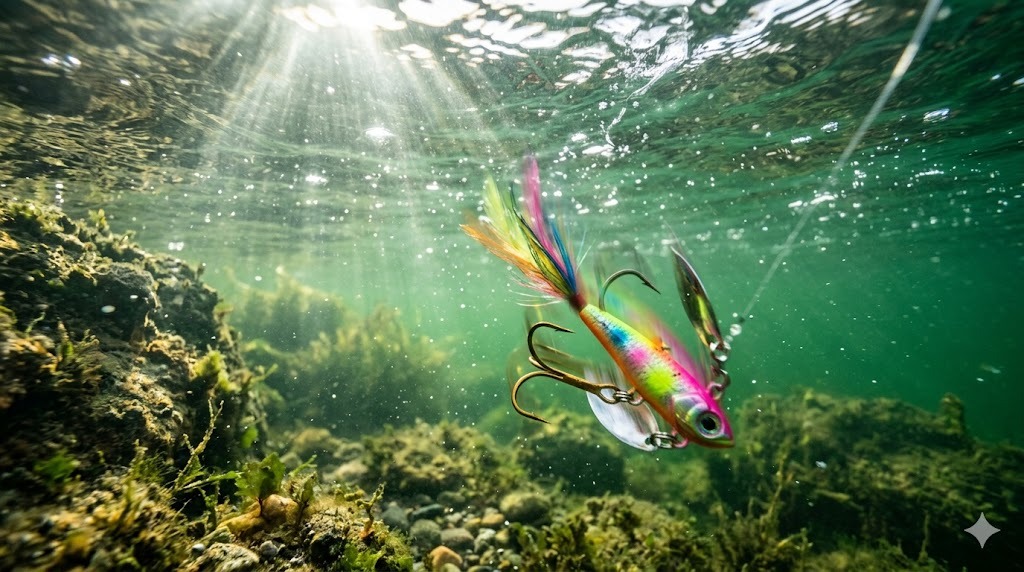
White perch also readily take small lures, and lure fishing for them is genuinely fun. Small jigs - marabou, plastic-tipped, or hair jigs - small spoons, small inline spinners, tiny soft-plastic grubs and shads, and small jigging spoons all catch white perch, especially when worked near a school. Tipping a small jig with a piece of worm or minnow combines lure flash with natural scent and is deadly. Small, flashy offerings that resemble the white perch's natural prey, fished at the depth of the school, are the consistent producers.
Techniques - How to Fish for It
White perch fishing is school fishing, and the method follows from that. The first step is locating an active school, using structure knowledge and electronics to find fish near drop-offs, points, channel edges, and pilings. Once a school is located, fishing is often fast: drop a baited two-hook bottom rig to the right depth, or cast and retrieve a small jig or spoon through the school, and the bites usually come quickly. Pay attention to the depth at which you get bites and keep your presentation there, because the school holds at a particular level.
Vertical jigging directly over a located school is highly effective - drop a small jig or spoon, work it with small lifts and drops, and let the school respond. When the school moves, follow it. Bites can be light, a subtle tap or a slight weight change, so a sensitive rod and attention pay off; set the hook with a gentle, controlled lift. White perch fight with a spirited, scrappy tussle for their size on light tackle. Because they school, stay on a productive spot and work it thoroughly, and once you have located the fish you can catch them steadily - and fill a cooler for a fish fry where harvest is appropriate.
Common Mistakes
A common mistake is fishing too heavy - using tackle meant for much larger fish robs the white perch of its sport and dulls bite detection; go light. Another is failing to fish at the right depth: white perch schools hold at a particular level, and a presentation above or below them gets ignored. Anglers also give up too soon, when locating the school is the whole challenge and persistence and electronics solve it. Missing subtle bites by using an insensitive rod or not paying attention is frequent. Some anglers wrongly assume white perch are too small to bother with, missing both great light-tackle action and an excellent meal. And in waters where white perch are invasive, releasing them works against the fishery - there, liberal harvest is the right move.
Size, Records & Eating Quality
The white perch is a small fish. A typical white perch runs 6 to 10 inches and well under a pound, a good fish reaches 10 to 12 inches, and a genuine trophy approaches or exceeds a pound to a pound and a half. The all-tackle world record is around 4 pounds 12 ounces, an exceptional fish; in most waters a white perch of a pound is a fine catch and a "jack perch" of that class is prized. They are caught in numbers rather than for individual size.
Eating quality is the white perch's great strength, and it is excellent. The flesh is white, sweet, firm, and flaky, and white perch is widely regarded as one of the best-eating panfish-class fish on the Atlantic coast - many anglers rate it at the very top. The fillets fry beautifully and also bake, broil, and work in chowders. Because white perch school and bite readily, it is realistic to catch enough for a quality fish fry. Where the fish are abundant, and especially where they are invasive, a generous harvest within the regulations is both rewarding eating and, in invasive waters, beneficial management. As always, follow local regulations and any consumption advisories.
Pros & Cons (as a target species)
Pros: abundant and widespread, with huge schools that mean fast, steady action once located; bites readily on simple, inexpensive baits and small lures; a year-round fishery, including ice fishing; excellent, sweet, flaky table quality, among the best of its size class; ideal light-tackle sport and a perfect fish for families and beginners; in invasive waters, harvesting them is beneficial.
Cons: small individual size, so not a trophy fish by weight; finding the roaming schools can take effort and benefits from electronics; sharp spines require careful handling; can be invasive and disruptive in some inland waters; bites can be subtle, demanding attention and sensitive tackle.
Best Suited For
The white perch is ideal for everyday anglers who want dependable action and a fish for the table - families, beginners, kids, and anyone who values a fun, productive, low-cost outing. It suits light-tackle enthusiasts who enjoy small, scrappy fish, anglers on the Atlantic coast and around the Chesapeake, Great Lakes, and Northeastern lakes, and ice fishermen looking for a reliable winter target. It is excellent for those who want to fill a cooler for a fish fry. It is not the fish for trophy-weight hunters or for anglers seeking large, hard-charging gamefish.
FAQ
Is the white perch a true perch? No. Despite its name, the white perch is a temperate bass, in the same family as the white bass and striped bass - not a member of the true perch family that includes yellow perch and walleye. It schools and behaves much like its temperate-bass relatives.
How do I tell a white perch from a white bass or striped bass? Look for stripes. White bass and striped bass have distinct dark horizontal stripes along their silver sides. The adult white perch has plain, unstriped flanks, along with the deep, somewhat humpbacked body typical of the species.
Is white perch good to eat? Yes, excellent. The flesh is white, sweet, firm, and flaky, and white perch is widely considered one of the best-eating fish of its size on the Atlantic coast. It fries especially well. Follow local regulations and any consumption advisories.
Why are white perch sometimes considered a problem fish? In some inland lakes and reservoirs where they were introduced or spread, white perch multiply heavily, compete with native fish, and prey on the eggs of other species, which can harm those fisheries. In such waters, agencies often encourage liberal harvest of white perch.
What is the best way to catch white perch? Locate a school near structure or a depth change, then drop a simple two-hook bottom rig baited with worm or minnow, or work a small jig or spoon through the school. Keep your presentation at the depth where the fish are holding, and once you find an active school the action is usually fast.