Yellow Perch
The yellow perch is one of North America's most beloved panfish - a scrappy, school-running predator that delivers fast action and arguably the best-eating fillet in fresh water.
🗓️ Last reviewed: June 2026
Overview
The yellow perch is one of North America's most beloved panfish - a scrappy, school-running predator that delivers fast action and arguably the best-eating fillet in fresh water. Found across the northern United States, perch are accessible to shore anglers, boaters, and ice fishermen alike. They rarely grow large, but their abundance, willingness to bite, and sweet white meat have made "perch jerking" a generations-old tradition on lakes from the Dakotas to the Northeast. For families, beginners, and anyone chasing a fish-fry dinner, the humble yellow perch is hard to beat.
Identification & Appearance
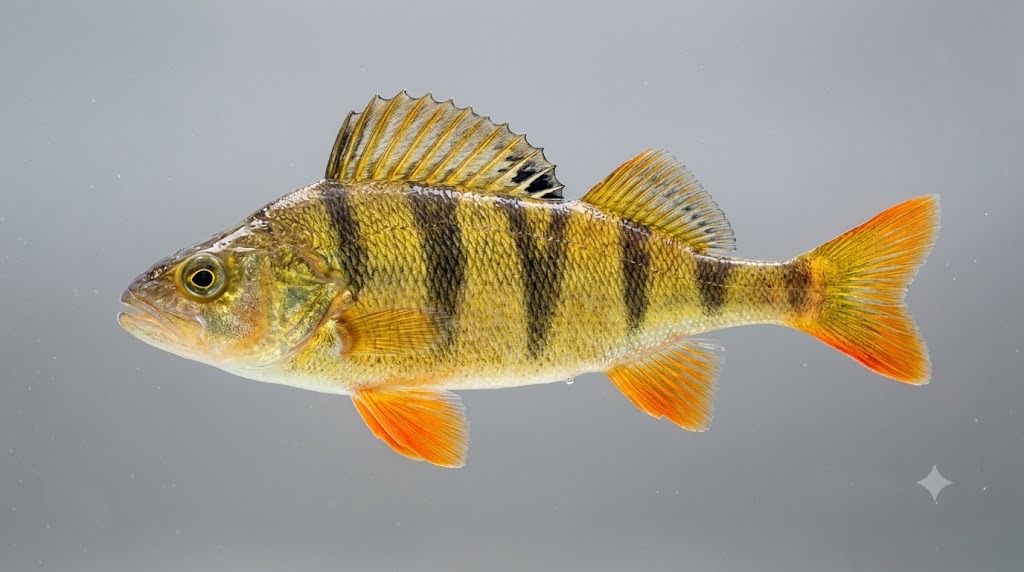
Yellow perch are unmistakable once you've seen one. The body is moderately deep and laterally compressed, colored golden-yellow to brassy green on the back fading to a pale belly. The signature feature is a series of six to eight dark vertical bars running down the sides - bold, tiger-striped, and unique among common freshwater fish. The lower fins, particularly the pelvic and anal fins, often glow bright orange or reddish, a color that intensifies in spawning males. Perch have two separate dorsal fins, the front one spiny, and a slightly raspy cheek. They lack the canine teeth of walleye (a close relative) but have abrasive tooth pads. Most perch run 6 to 10 inches; a 12-incher is a quality fish and anything over a pound is a true "jumbo."
Range & Habitat (US waters)
Native to the northern and eastern U.S., yellow perch thrive throughout the Great Lakes, the Upper Midwest, New England, and the mid-Atlantic. Lake Erie is the country's most famous perch fishery, supporting both a massive recreational fishery and a commercial one. They have also been widely stocked westward into reservoirs of the Rocky Mountain states and the Pacific Northwest. Perch prefer cool, clear-to-slightly-stained lakes and large slow rivers with moderate vegetation, gravel or sand bottoms, and abundant baitfish. They tolerate a range of conditions but avoid warm, mucky, oxygen-poor backwaters. They are a schooling fish through and through - find one, and dozens more are usually nearby.
Behavior & Feeding
Perch are daytime, sight-feeding predators that travel in tight, often size-segregated schools. They roam during daylight hours and largely shut down at night, the opposite of walleye. Their diet shifts with size: small perch eat zooplankton and insect larvae, while larger fish key on aquatic insects, crayfish, small minnows, and fish eggs - including those of other perch. They feed heavily near the bottom but will chase bait up into the water column. Schools constantly move in search of food, so a spot that's red-hot can go cold in twenty minutes, then refill an hour later. Perch are also notorious bait-stealers, picking and nibbling rather than slamming a hook.
Best Seasons & Times to Catch
Perch bite year-round and are a cornerstone of the ice-fishing world. Winter through early spring offers excellent action as perch school densely in deeper basins. The pre-spawn period of early spring, when fish stage near gravel shorelines before depositing their long ribbons of eggs, produces some of the biggest perch of the year. Summer fishing is reliable but fish push deeper and may scatter. Fall is a sleeper season - cooling water triggers heavy feeding as perch fatten up, and jumbos roam shallow again. Time of day matters: perch feed best from mid-morning through late afternoon, with the bite often dying at dusk.
Where to Find Them - Reading the Water
Look for perch relating to bottom structure: humps, gravel and sand flats, drop-off edges, weed lines, and the deep basin in winter. In summer they often stack on the first major break from shallow to deep, frequently in 15 to 35 feet of water. Weed edges hold smaller perch and the predators that follow them. In big lakes like Erie, anglers chase wandering schools over open mud and sand bottoms, watching electronics constantly. The key is mobility - perch schools move, and successful anglers move with them. Drift, watch your sonar, and don't anchor on a dead spot out of stubbornness.
Tackle & Rigs
Light or ultralight spinning gear is the standard: a 6 to 7 foot rod with a sensitive tip, paired with a small reel spooled with 4 to 6 pound monofilament or a 4 pound braid with a fluorocarbon leader. Perch have small mouths, so downsize hooks to #6 through #2. The classic open-water rig is a perch spreader or "crappie rig" - a wire or tandem-dropper setup holding two baited hooks above a bell sinker, presented straight down beneath a drifting or anchored boat. A simple split-shot rig also works for casting. For ice fishing, a short jigging rod with a spring bobber, fished with a small tungsten jig, is deadly for detecting their light bite.
Best Baits & Lures
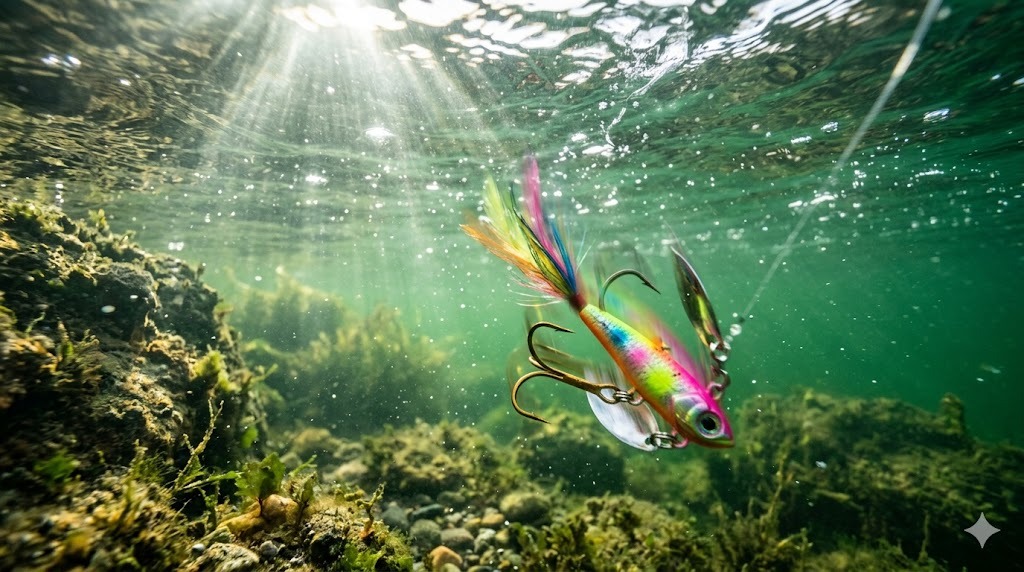
Live bait shines for perch. Minnows - fatheads, emerald shiners, or small golden shiners - are the top producer, hooked through the back or lips. Nightcrawler pieces, waxworms, spikes (maggots), and crayfish tails all catch fish. Perch eyes, harvested from caught fish, are a legal and surprisingly effective tipper in many states. For artificials, small jigging spoons, tungsten ice jigs, blade baits, and 1 to 3 inch soft-plastic grubs and minnow imitations all draw strikes. Tipping a jig or spoon with a minnow head or a couple of spikes combines the flash of a lure with the scent of live bait - often the best of both worlds.
Techniques - How to Fish for It
The bread-and-butter technique is vertical fishing with a spreader rig: lower baited hooks to the bottom, lift slightly so the sinker just ticks, and let drift carry the boat over schools. When you hit fish, deploy a marker buoy or drop a waypoint. Jigging a spoon tipped with a minnow head is excellent for triggering active fish - sharp lifts followed by a dead pause, since perch usually hit on the fall or the hold. Ice anglers jig aggressively to call fish in on the flasher, then slow down to a subtle quiver to seal the deal. Because perch nibble, watch your line or spring bobber closely and set the hook on the slightest tap. Set fast, fish fast, and chase the schools.
Common Mistakes
The biggest error is staying put when the bite stops - perch move, and so should you. Another is using hooks and baits that are too large for their small mouths, leading to endless missed bites. Many anglers fish too far off the bottom; perch usually want a bait within a foot of the floor. Anglers also miss subtle takes because they aren't watching their line. Finally, failing to use electronics on bigger waters means hours of fishing barren bottom while schools roam elsewhere. Stay mobile, stay light, and stay on the bottom.
Size, Records & Eating Quality
A typical keeper perch runs 7 to 10 inches and a few ounces. A foot-long fish is excellent, and "jumbos" of 12 to 14 inches and over a pound are the goal of dedicated perch hunters. The all-tackle world record, a remarkable 4-pound 3-ounce fish, was caught in New Jersey way back in 1865 - a record that has stood for over a century and a half. As table fare, yellow perch are widely considered the finest panfish in fresh water: firm, white, flaky, and sweet, with a clean flavor that anchors Friday fish fries across the Great Lakes region.
Pros & Cons (as a target species)
Pros: abundant and widely distributed, easy to catch for anglers of all skill levels, bite reliably year-round including through the ice, travel in big schools for fast action, and offer outstanding eating quality. Cons: they run small, so trophy hunters will be disappointed; schools are mobile and can be frustrating to relocate; they are aggressive bait-stealers that demand attention; and they shut down at night. They also share waters with - and are eaten by - walleye and pike, so populations can swing.
Best Suited For
Yellow perch are perfect for beginners, kids, and families looking for steady action and a guaranteed fish dinner. They are a favorite of ice anglers and of anyone who fishes for the table rather than the photo. Boat anglers with electronics will out-fish shore anglers on big water, but perch are accessible from docks and shorelines too. They are not the species for someone chasing one giant trophy, but for fun, food, and consistency, perch deliver beautifully.
FAQ
Are yellow perch good to eat? Yes - they are widely regarded as the best-tasting panfish in North America. The fillets are white, firm, flaky, and mildly sweet, holding up well to frying. The "Friday fish fry" tradition across the Great Lakes was built largely on yellow perch.
What's the difference between a yellow perch and a walleye? They are close relatives in the same family. Walleye grow much larger, have prominent canine teeth and a cloudy, light-gathering eye, and feed heavily at night. Perch stay small, have only tooth pads, sport bold vertical tiger stripes, and feed during the day.
Where can I catch the biggest perch? Lake Erie is the most famous big-perch fishery in the U.S., along with other Great Lakes waters and quality lakes across the Upper Midwest and West. Trophy "jumbo" perch over a pound usually come from deeper, food-rich lakes with good forage and not too much fishing pressure.
Why do perch keep stealing my bait? Perch have small mouths and feed by picking and nibbling. Downsize your hooks to a #4 or #6, use smaller bait pieces, watch your line closely, and set the hook on the very first tap rather than waiting for a hard pull.
Can you catch perch through the ice? Absolutely - yellow perch are one of the premier ice-fishing targets. They school densely in winter, and small tungsten jigs tipped with spikes or minnow heads, fished with a sensitive rod and a flasher, produce excellent action.