Bluefish
The bluefish is the pit bull of the Atlantic coast - a fast, ferocious, razor-toothed predator that hunts in voracious packs and feeds with a reckless violence unmatched by any other inshore fish.
🗓️ Last reviewed: June 2026
Overview
The bluefish is the pit bull of the Atlantic coast - a fast, ferocious, razor-toothed predator that hunts in voracious packs and feeds with a reckless violence unmatched by any other inshore fish. "Blues" are not subtle. They blitz bait in churning, bloody frenzies, slam any lure that moves, and fight with a wild, dogged energy all the way to the boat. They are simultaneously a blast to catch, a menace to tackle, and a genuine hazard to fingers. For surfcasters and boat anglers from Florida to Maine, the bluefish run is pure, accessible, no-nonsense excitement - a fish that will save a slow day and test your gear in equal measure.
Identification & Appearance
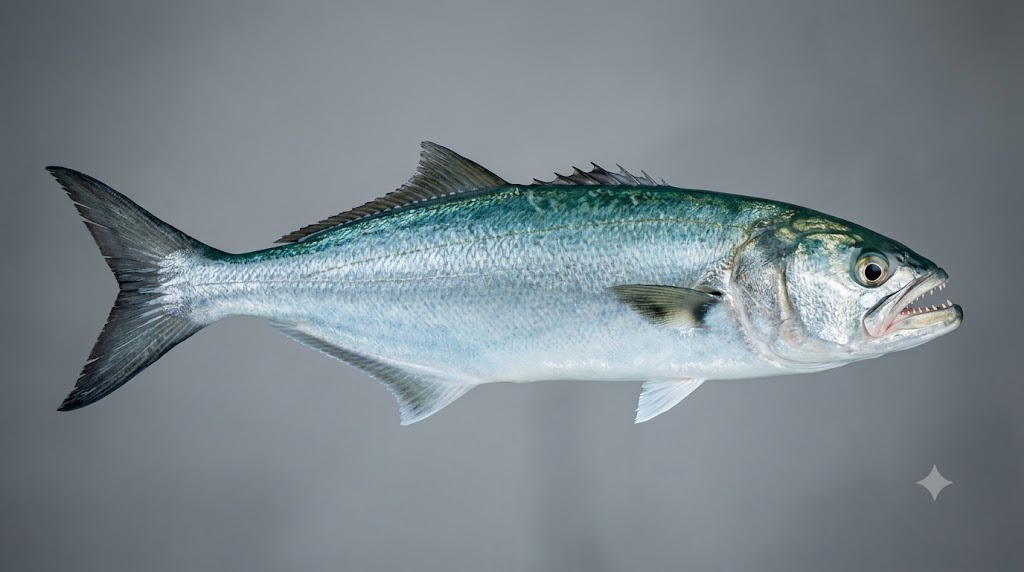
Bluefish are built for speed and aggression: a streamlined, moderately stout body that is greenish-blue to blue-gray on the back, fading to silvery sides and a white belly. The head is broad and the lower jaw protrudes slightly. The defining feature is the mouth - large, with a set of prominent, sharp, triangular teeth capable of slicing through bait, leaders, and careless hands with ease. There is often a dark blotch at the base of the pectoral fin. The body is slightly compressed with a forked tail. Small bluefish are called "snappers" or "snapper blues," mid-sized fish "cocktail blues," and the big ones simply "gators" or "slammers." Those teeth are the single most important thing to remember.
Range & Habitat (US waters - inshore / offshore)
Bluefish range along the entire Atlantic and Gulf coasts of the US, from Maine to Florida and into the Gulf of Mexico, with the greatest abundance and the largest fish along the Mid-Atlantic and Northeast. They are a wide-ranging migratory species.
Bluefish are not tied to bottom structure the way flounder or snook are - they are roving, pelagic-leaning predators that follow bait. They are found in the surf, around inlets and jetties, in bays and estuaries, off beaches, around bridges, and well offshore over open water and structure. They move inshore and nearshore wherever bait concentrates, and undertake long seasonal migrations, moving north and inshore in spring and south and offshore in fall.
Behavior & Feeding
Bluefish are arguably the most aggressive feeders in the sea. They hunt in fast-moving packs, herding baitfish - menhaden, herring, mullet, silversides, sand eels, squid - and attacking with such fury that they will continue killing and chopping bait even when full, scattering pieces and oil that create visible slicks. A bluefish blitz is a churning, often bloody surface frenzy under diving birds, with bait leaping to escape. They feed by sight and slash indiscriminately, which makes them easy to hook but tough on tackle. They are temperature-driven migrators and follow bait coastwise. Hooked, a bluefish fights hard with violent runs and head-shakes and frequently bites through leaders to escape.
Best Seasons & Times to Catch
Bluefish fishing tracks the migration and the bait. Spring brings fish moving north and inshore, with strong action as blues arrive - often April through June in the Mid-Atlantic and Northeast. Summer offers steady, reliable fishing throughout their range, with snapper blues filling bays and inlets. Fall is the standout: the southbound migration produces explosive blitzes and the year's hardest, fastest fishing, roughly September through November. In the south, blues can be caught much of the year. Bluefish feed throughout the day but are especially active at dawn and dusk and on moving tides; a blitz can erupt at any hour wherever bait gets cornered.
Where to Find Them - Reading the Water
Find the bait and you find the blues. The number one sign is diving, wheeling birds over breaking fish - a bluefish blitz is visible from a long way off. Look for bait showering at the surface, slicks (an oily sheen and a distinct fishy or melon smell from chopped bait), and nervous water. Fish inlets and jetties where current funnels bait, the surf when bait is pushed against the beach, bridges, and rips. Off the beach, troll or run-and-gun to breaking fish. Bluefish move fast, so be ready to relocate; a blitz that's hot in one spot may vanish and reappear down the beach minutes later.
Tackle & Rigs
Bluefish are not leader-shy, so durable tackle beats finesse. For surf, a 9- to 10-foot medium-heavy rod with a 5000-6000 spinning reel and 30-50 lb braid covers it; for boat and inshore, a 7-foot medium-heavy rod with a 4000-5000 reel works well.
The critical detail is the leader: because of those teeth, use a short wire leader (single-strand or coated multi-strand, roughly 30-50 lb) or at minimum a very heavy 50-80 lb mono/fluorocarbon "bite" leader - though wire is far more reliable against a big slammer. Common rigs include a fish-finder rig for chunk bait, a simple jig or plug on a wire leader, and a high-low rig with wire droppers for snapper blues. Always rig with the teeth in mind.
Best Baits & Lures
Bluefish will eat almost anything, which makes them wonderfully easy to bait. Top natural baits are chunk or whole menhaden (bunker), mullet, herring, mackerel, and squid; oily, bloody baits are best because blues home in on scent and commotion. Cut bait excels.
For lures, metal jigs and tins (Hopkins, Kastmaster-style) are perfect - they cast far, flash, and survive being chewed. Topwater poppers and pencil poppers draw spectacular blitz strikes. Swimming plugs, bucktail jigs, spoons, and tube lures all produce. Soft plastics work but get destroyed quickly. Bright, flashy colors and plenty of action draw strikes; durability matters more than subtlety, so favor metal and hard plastic over soft baits.
Techniques - How to Fish for It
Run-and-gun is the classic bluefish method: spot the birds and breaking fish, position the boat up-wind or up-current of the school, and cast metal or poppers into the edge of the frenzy. From the surf, cast tins for distance into blitzing fish or work poppers across the surface. Chunking - anchoring and putting out a chum and chunk-bait slick - pulls blues to the boat reliably. Trolling spoons and plugs locates scattered fish. Retrieve fast; bluefish love speed and a fleeing target. Use a steady, firm hookset. During the fight, expect violent runs, and bring the fish to a net - never lip a bluefish or put fingers near that mouth, even on a "dead" fish.
Common Mistakes
The most painful mistake is underestimating the teeth - bluefish bite through mono leaders constantly and will bite a hand badly, even after landing. Not using a wire or very heavy bite leader costs lures and fish. Lipping a bluefish like a bass is a guaranteed injury; always use pliers and a towel or net. Retrieving too slowly can mean fewer strikes, since blues key on fleeing prey. Anglers also waste time when blues are scattered by not running to the birds. Finally, using soft plastics and light lures in a heavy blitz means constant re-rigging - metal and hard baits hold up far better.
Size, Records & Eating Quality
Snapper blues run under a pound; cocktail blues a few pounds; quality fish 5-12 pounds; and big gator blues exceed 15 pounds. The IGFA all-tackle world record is a 31-pound, 12-ounce bluefish caught off Hatteras, North Carolina, in 1972. Bluefish are good eating when handled right but demand attention: the flesh is dark, oily, and strongly flavored, and it spoils fast. The key is to bleed the fish immediately and ice it hard, then eat it fresh - preferably within a day. Smaller blues are milder and better on the table than big gators. Bag limits apply in most states and have tightened in recent years; check current regulations.
Pros & Cons (as a target species)
Pros: Ferocious, easy-to-trigger strikes; hard, fast, dogged fight; abundant and widely accessible from surf, jetty, and boat; eager to hit lures and bait, ideal for fast action; a reliable way to save a slow day; great for getting kids on aggressive fish (snapper blues). Cons: Dangerous teeth - a real injury and tackle hazard; require wire leaders; flesh is oily, strong, and spoils quickly without immediate bleeding and icing; destroy soft plastics; move fast and unpredictably; can be a "pest" when you're targeting other species.
Best Suited For
Bluefish are best suited for the angler who wants action over finesse - fast, hard strikes and a wild fight with no waiting. They are perfect for surfcasters chasing blitzes, for boat anglers who love running to birds, and for introducing kids and newcomers to aggressive saltwater fishing via snapper blues. They suit anyone who values an accessible, exciting, hard-pulling fish and doesn't mind respecting a serious set of teeth.
FAQ
Do I really need a wire leader for bluefish? Yes, for anything beyond small snapper blues. Their teeth slice through mono and fluorocarbon easily; a short wire leader saves lures and fish.
Are bluefish good to eat? They can be very good if you bleed the fish immediately, ice it hard, and eat it fresh within a day. The flesh is dark and oily and spoils quickly, so handling is everything. Smaller blues are milder.
Why are bluefish dangerous to handle? They have sharp triangular teeth and powerful jaws, and they bite reflexively even after being landed. Never lip a bluefish - always use pliers and a towel or net.
How do I find bluefish? Look for diving birds over breaking fish, bait showering at the surface, and oily slicks. Blues blitz visibly and move fast, so run to the action.
What lure should I throw at a bluefish blitz? Metal jigs and tins, and topwater poppers. They cast far, draw violent strikes, and survive being chewed far better than soft plastics.