Bonefish
The bonefish is the original gray ghost of the flats - a sleek, silver, almost mythical fish that has built an entire style of fishing around the pursuit of a single, perfectly placed cast.
🗓️ Last reviewed: June 2026
Overview
The bonefish is the original gray ghost of the flats - a sleek, silver, almost mythical fish that has built an entire style of fishing around the pursuit of a single, perfectly placed cast. Found on the shallow tropical flats of South Florida and the Keys, the bonefish is rarely kept and almost never eaten; it is hunted purely for the sport, the challenge, and the experience. Spotting a bonefish tailing or cruising in a foot of crystal-clear water, making the cast, and then hanging on as it explodes into one of the fastest runs in all of fishing - that is the addictive heart of flats fishing. The bonefish is a catch-and-release icon, a fish that rewards stealth, skill, and patience above all.
Identification & Appearance
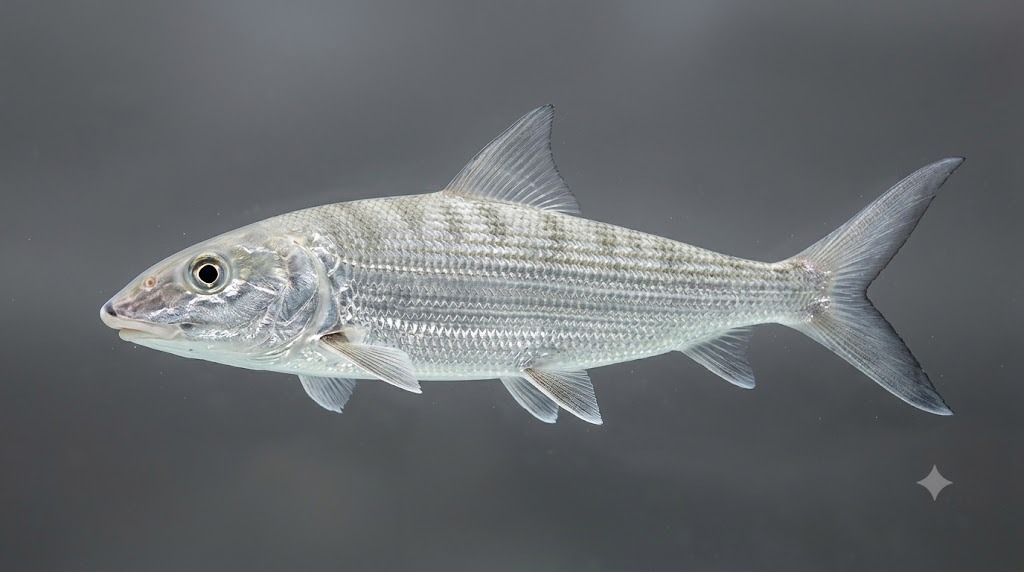
Bonefish are streamlined, torpedo-shaped fish with a bright, mirror-like silver body that can take on subtle blue, green, or pinkish hues, often with faint darker bars or shading along the back that provide perfect camouflage over a sandy or grassy flat. The head tapers to a distinctive conical, blunt snout with an inferior (downturned) mouth set well back and below, ideally positioned for rooting prey out of the bottom. The tail is large and deeply forked - the engine behind their famous speed. Their reflective sides make them nearly invisible on the flats, earning the nickname "gray ghost." There is little chance of confusing a bonefish once seen clearly; the snout and mirrored body are unmistakable.
Range & Habitat (US waters - inshore / offshore)
In U.S. waters, bonefish are found in the warm subtropical shallows of South Florida, most famously the Florida Keys and the flats of Biscayne Bay and Florida Bay. They are entirely an inshore, shallow-water fish - the very definition of a flats species. Their habitat is the skinny water of sand and turtle-grass flats, often less than two or three feet deep, along with the channels, basins, and mangrove edges adjacent to those flats. Bonefish move onto the flats to feed, frequently riding the incoming tide, and drop back into deeper channels and basins as the water falls or as conditions change.
Behavior & Feeding
Bonefish are bottom-feeding predators that root in the sand and grass for shrimp, small crabs, mollusks, marine worms, and tiny baitfish. When feeding head-down in shallow water, their tail breaks the surface - the famous "tailing" behavior that flats anglers live to spot. They also "mud," stirring up clouds of bottom sediment as they feed, and cruise in singles, pairs, or schools. Bonefish are extraordinarily wary, with keen eyesight and sensitivity to vibration; a heavy footstep, a clumsy cast, or a shadow can send a whole school bolting. When hooked, they make a blistering, line-melting run across the flat, often well over 100 yards, that is their signature.
Best Seasons & Times to Catch
South Florida and the Keys offer bonefishing much of the year, but the prime windows are the warmer months of spring through fall, when water temperatures are stable and comfortable for the fish. Cold fronts in winter can push bonefish off the flats into deeper, warmer water and shut the bite down temporarily. Tide is critical: bonefish typically feed best on a moving tide, riding the incoming water onto the flats and feeding actively as it floods. Calm, sunny days with good light and light wind are ideal for spotting fish - the whole game depends on seeing them before they see you.
Where to Find Them - Reading the Water
Flats fishing for bonefish is a hunt conducted with the eyes. Pole or wade slowly across sand and grass flats and scan for fish: look for tailing fish with their forks breaking the surface, for cruising "ghosts" - subtle gray shapes and shadows moving over the bottom - for "nervous water" where pushed water signals fish, and for muds where feeding fish have stirred the bottom. Bonefish often follow predictable routes onto a flat with the incoming tide, using channels and edges as highways. Edges where grass meets sand, potholes, and the mouths of channels are prime ambush and feeding spots. Polarized sunglasses and good light are essential.
Tackle & Rigs
Bonefish are pursued with both fly and light spinning tackle. The classic fly outfit is an 8-weight rod with a matching reel that has a smooth, strong drag and plenty of backing - at least 150 to 200 yards - to survive that long first run, paired with a tropical weight-forward floating line and a tapered leader of 9 to 12 feet ending in a 10 to 15-pound tippet. Spinning anglers use a light 7-foot rod with a 2500 to 3000-class reel, 8 to 10-pound braid, and a fluorocarbon leader. Whatever the tackle, presentations are light, leaders are long and unobtrusive, and the emphasis is on a delicate, accurate delivery rather than heavy gear.
Best Baits & Lures
On fly, bonefish are taken on small, weighted shrimp and crab imitations - patterns such as the Crazy Charlie, Gotcha, and various shrimp and crab flies - tied in tans, pinks, and natural colors to match the bottom and the prey, with the hook riding point-up to avoid snagging grass. Spinning and bait anglers use small jigs - light bonefish jigs hopped along the bottom - and live or fresh shrimp, the most reliable natural bait, fished on a small hook with minimal weight. Small live crabs also work. The common thread is a small, natural, bottom-oriented offering presented quietly.
Techniques - How to Fish for It
Bonefishing is sight-fishing, plain and simple. Move slowly and quietly - pole a skiff or wade carefully - and spot the fish first. When you locate a bonefish or a school, lead the fish: place the fly or bait a few feet ahead of and in the path of the fish so it discovers the offering naturally, never landing it on top of them. Let the fly or jig settle to the bottom, then give it a small, subtle twitch or short strip as the fish approaches; a bonefish will often tip down and tail on it. When the fish eats, come tight with a strip-strike or a smooth lift - do not yank - then clear the line and let it run, keeping the rod high and the drag smooth through that explosive first run.
Common Mistakes
The most common mistake is being too loud and too visible - heavy footsteps, hull slap, sudden movement, and casting shadows all spook these wary fish. Lining the fish, by casting over its back or dropping the fly right on its head, sends bonefish fleeing instantly. Poor lead - placing the offering behind the fish - means it never sees it. Stripping or moving the bait too aggressively looks unnatural. Trout-setting by lifting the rod hard, instead of strip-striking, pulls the fly away. Failing to clear line cleanly on the run causes tangles and break-offs. And fishing in poor light, when you cannot see the fish, makes the whole endeavor nearly impossible.
Size, Records & Eating Quality
Bonefish in Florida and the Keys are renowned for running large compared to many tropical destinations - a typical fish runs 3 to 6 pounds, a quality fish 7 to 9 pounds, and a genuine trophy exceeds 10 pounds, with the Keys historically producing some of the biggest bonefish in the world. The IGFA all-tackle world record is 19 pounds, caught in South Africa. As for eating quality, bonefish are full of small bones and are essentially not eaten as table fare in the U.S. They are a pure catch-and-release sport fish - handled gently, revived carefully, and released to be caught again.
Pros & Cons (as a target species)
Pros: one of the fastest, most thrilling runs of any fish; the ultimate sight-fishing and stalking challenge; accessible in shallow, scenic water; world-class trophy potential in the Keys; a premier light-tackle and fly-fishing target. Cons: not a food fish; extremely wary and demanding of skill and stealth; require good light and calm conditions; weather-sensitive and pushed off by cold fronts; can be humbling and frustrating for beginners.
Best Suited For
Bonefish are best suited to anglers who relish the hunt, the stalk, and the perfectly executed cast - fly fishers and light-tackle sight-fishers in particular. They are the ideal target for those who measure success in skill and experience rather than fillets in the cooler, and they reward patience, stealth, and quick, accurate casting. A guided flats trip in the Keys is the classic introduction. Anglers who want to fill a cooler or who prefer steady, easy action will find bonefish frustrating, but for the connoisseur of the flats, the gray ghost is a lifelong pursuit.
FAQ
Why are bonefish called gray ghosts? Their mirror-like silver sides reflect the bottom and surroundings so perfectly that they become nearly invisible on a flat. Anglers often see only a shadow or a subtle shape, hence "gray ghost."
Can you eat bonefish? In practice, no - bonefish are full of small bones and are not eaten as table fare in the U.S. They are a pure catch-and-release sport fish, valued entirely for the experience.
What does tailing mean? Tailing is when a bonefish feeds head-down on the bottom in shallow water and its forked tail breaks the surface. Spotting tailing fish is one of the great thrills of flats fishing.
Do I need a fly rod to catch bonefish? No. While fly fishing is the classic method, bonefish are readily caught on light spinning tackle with small jigs or live shrimp. Both approaches rely on quiet, accurate sight-fishing.
Why did the bonefish spook before I even cast? Bonefish are extremely sensitive to sound, vibration, movement, and shadow. A heavy step, hull slap, sudden motion, or your shadow crossing the fish can send a whole school fleeing.