Florida Pompano
The Florida pompano is the surf angler's golden treasure - a compact, silver-and-yellow disc of a fish that punches far above its weight, fights with darting, drag-pulling energy, and rewards the angler with what many consider the single best-eating fish in the sea.
🗓️ Last reviewed: June 2026
Overview
The Florida pompano is the surf angler's golden treasure - a compact, silver-and-yellow disc of a fish that punches far above its weight, fights with darting, drag-pulling energy, and rewards the angler with what many consider the single best-eating fish in the sea. Despite its modest size, the pompano commands premium prices at the fish market and devoted attention from beach fishermen up and down the Atlantic and Gulf coasts. It is the quintessential surf species: catchable by anyone willing to learn to read a beach, requiring no boat, and delivering both a spirited fight and a meal worth bragging about. For shore-bound anglers, few fish are as accessible and as prized as the pompano.
Identification & Appearance
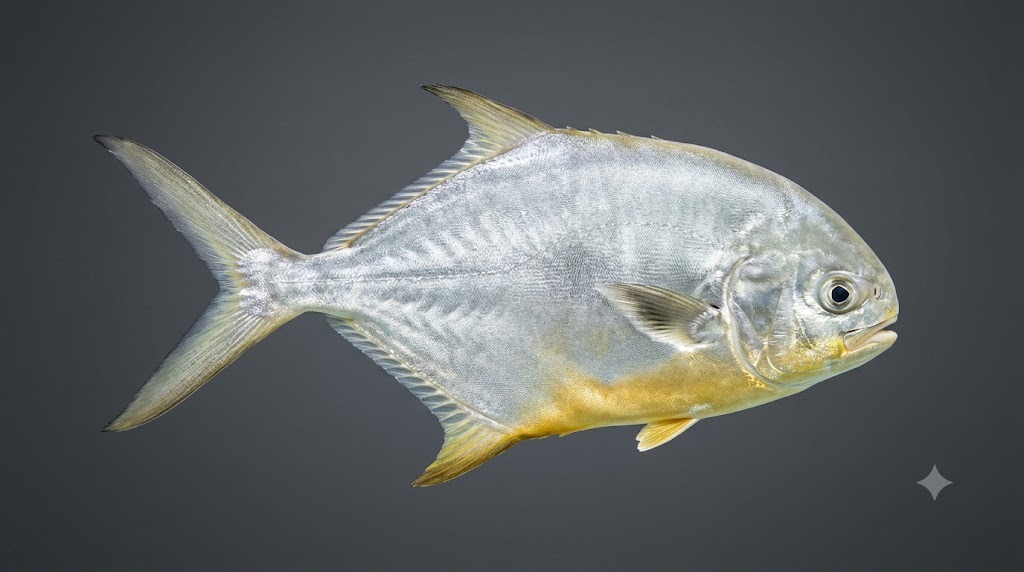
Florida pompano are deep-bodied, laterally compressed, and almost disc-shaped, with a small mouth and a blunt, rounded head. The body is bright silver, often washed with a beautiful golden-yellow on the throat, belly, and fins, and the back can show a greenish-gray sheen. The tail is deeply forked and the fins lack the long trailing filaments seen on some relatives. Pompano are frequently confused with the larger permit and with juvenile crevalle jack, but pompano stay relatively small, have that golden ventral wash, and lack the permit's deep body and oversized profile. Their firm, muscular build hints at both their fighting ability and their table quality.
Range & Habitat (US waters - inshore / offshore)
Florida pompano range along the U.S. Atlantic coast from roughly the Mid-Atlantic south around Florida and throughout the Gulf of Mexico. They are primarily a surf and nearshore species. Their classic habitat is the wave-washed beach, where they patrol the troughs and sloughs just behind the breakers, rooting in the sand for crustaceans. They also work inlets, passes, sandbars, and the edges of channels, and they move into bays and along grass-flat edges adjacent to clean sandy bottom. Pompano follow warm water and make seasonal migrations along the coast, concentrating where conditions suit them.
Behavior & Feeding
Pompano are bottom-feeding crustacean specialists. They cruise the surf zone nosing into the sand for sand fleas (mole crabs), small clams, tiny crabs, and marine worms, often in the turbulent water right where waves stir up food. They feed actively and move along the beach in loose schools, following the trough and the bait. Pompano are sensitive to water temperature and clarity and tend to bite best when the surf is moderately stirred - clean but with enough wave action to dislodge sand fleas. They strike with a quick, decisive take and then fight with hard, darting runs that feel much bigger than the fish.
Best Seasons & Times to Catch
Pompano fishing is driven by their seasonal migration and water temperature. Along much of the coast the peak runs occur in spring and fall as the fish migrate, with spring being especially celebrated by surf anglers. In Florida and the warmer Gulf, pompano can be caught through much of the cooler season as well. The fish prefer water that is warming into a comfortable range, so timing the runs is key. Within a day, moving water and the changing tides - particularly incoming tide pushing into the beach - concentrate feeding. Early morning and late afternoon are productive low-light windows.
Where to Find Them - Reading the Water
Success with surf pompano comes down to reading the beach. Look for the trough - the deeper, darker band of water running parallel to the shore between the sandbar and the beach - because pompano cruise these sloughs. Cuts and breaks in the sandbar, where water funnels in and out, are prime feeding lanes. Watch for "pompano holes," slightly deeper depressions in the trough. The presence of sand fleas digging in the wash at the waterline is a strong sign of feeding habitat. Aim casts to land baits in or just beyond the trough, and be willing to walk the beach until you locate fish.
Tackle & Rigs
Surf fishing for pompano calls for a long rod to reach beyond the breakers - typically a 9 to 12-foot surf rod paired with a 4000 to 6000-class spinning reel. Spool with 15 to 20-pound mono or 20 to 30-pound braid, with braid offering better casting distance and bite detection. The standard rig is the pompano rig: a multi-drop bottom rig with two or three hooks on short dropper loops, often dressed with small floats or colored beads to lift the bait slightly and add visual appeal, finished with a pyramid sinker (typically 2 to 5 ounces) to hold in the surf current. Hooks are small - number 1 to 2/0 circle hooks suit the pompano's small mouth.
Best Baits & Lures
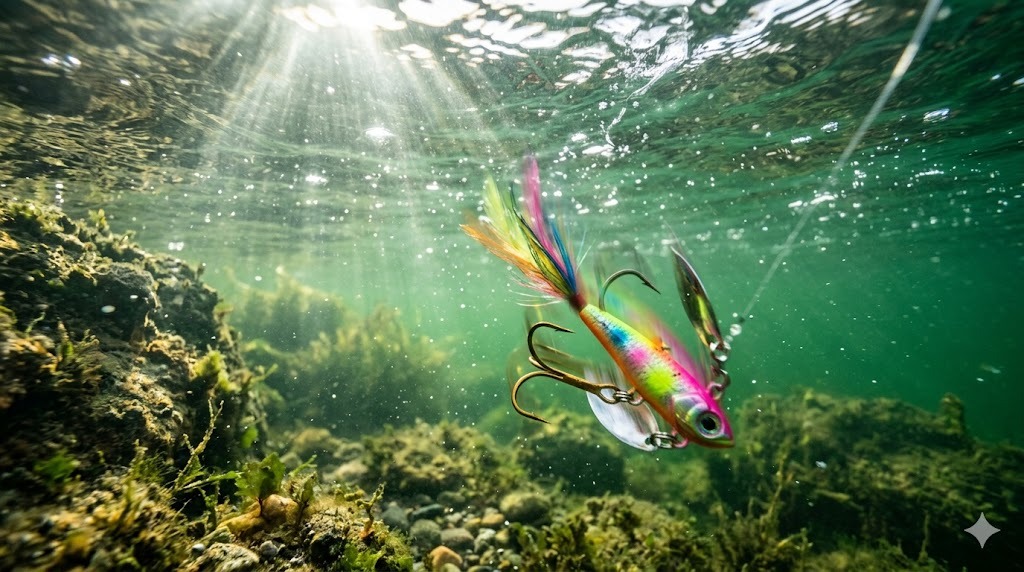
Sand fleas (mole crabs) are the undisputed top bait - pompano root for them naturally, and fresh ones are gold. Live or fresh sand fleas can be dug right from the wash. Other excellent baits include fresh shrimp, clam, and pieces of fiddler crab. Many anglers use the small floats and bright beads on the rig to make the bait more visible and to keep it just off the bottom where pompano can find it. On the artificial side, the pompano jig - a small, brightly colored banana-shaped jig - is highly effective worked along the bottom, especially in inlets and passes, and is a great way to cover water and stay mobile.
Techniques - How to Fish for It
The classic approach is surf bottom-fishing: rig with a pompano rig, bait the hooks with sand fleas, cast into or just beyond the trough, set the rod in a sand spike, and watch for the sharp tap of a feeding pompano. Keep a reasonably tight line so you can detect bites and let circle hooks do their work. Stagger multiple rods at different distances to find the productive zone, then concentrate there. Move along the beach if you are not getting bites - pompano are travelers. The alternative is the run-and-gun jigging approach, casting a pompano jig and hopping it back along the bottom, which is deadly in inlets and lets you cover ground quickly.
Common Mistakes
A frequent mistake is fishing the wrong water - casting onto a flat, featureless bar instead of into the trough where pompano actually feed. Using stale or frozen bait when fresh sand fleas are available costs bites. Hooks that are too large for the pompano's small mouth lead to missed fish. Anglers also use too little sinker weight, so the rig washes around in the surf instead of holding in the strike zone. Staying put on a dead stretch of beach rather than walking to find fish is another error. Finally, ignoring tide and not fishing the productive incoming water reduces your odds.
Size, Records & Eating Quality
Florida pompano are a modest-sized fish: a typical catch runs about 1 to 2 pounds, a quality fish is 2 to 3 pounds, and a true trophy - often called a "doormat" pompano by surf anglers - exceeds 4 to 5 pounds. The IGFA all-tackle world record is 8 pounds 4 ounces, caught in Florida. On the table, pompano are legendary - firm, mild, slightly sweet white flesh with a clean flavor that consistently ranks at or near the top of the list of best-eating fish, commanding premium market prices and starring in classic dishes. Their modest size belies their enormous table value.
Pros & Cons (as a target species)
Pros: completely accessible from the beach with no boat required; spirited, hard-darting fight for their size; arguably the best-eating fish in the sea; predictable seasonal runs; relatively inexpensive tackle. Cons: small average size; highly seasonal and migration-dependent; require reading the surf to locate; sensitive to water conditions; fresh sand fleas can be work to obtain.
Best Suited For
Florida pompano are perfect for surf anglers, beach-going families, and anyone who wants top-tier fishing without a boat. They reward patient anglers willing to learn to read a beach and to walk in search of fish, and they are an ideal target for those who fish primarily for the table, since few fish eat better. They suit light-tackle enthusiasts who enjoy a scrappy fight on modest gear. Anglers seeking large fish or non-stop action may find them too seasonal and too small, but for accessible, rewarding, and delicious fishing, the pompano is a coastal gem.
FAQ
What is the best bait for pompano? Fresh sand fleas (mole crabs) are by far the top bait - pompano feed on them naturally in the surf. Fresh shrimp, clam, and fiddler crab pieces also work well.
Where exactly do I cast for surf pompano? Aim for the trough, the deeper, darker band of water between the sandbar and the beach, and for cuts in the bar where water funnels through. Pompano cruise and feed in these sloughs.
What rig do I use for pompano? The pompano rig - a multi-drop bottom rig with two or three short dropper hooks, often dressed with small floats and beads, and a pyramid sinker heavy enough to hold in the surf.
When is the best time to catch pompano? The spring and fall migration runs are peak, with spring especially celebrated. In Florida and the Gulf, the cooler season produces well. Fish the incoming tide and low-light periods.
Are pompano good to eat? Exceptionally so - pompano are widely considered one of the very best-eating fish in the sea, with firm, mild, sweet white flesh that commands premium prices.