Grouper
"Grouper" covers a family of powerful, structure-loving bottom fish that are among the most prized targets in American saltwater fishing - most famously the gag grouper, red grouper, and the giant goliath grouper of the Gulf and South Atlantic.
🗓️ Last reviewed: June 2026
Overview
"Grouper" covers a family of powerful, structure-loving bottom fish that are among the most prized targets in American saltwater fishing - most famously the gag grouper, red grouper, and the giant goliath grouper of the Gulf and South Atlantic. Groupers are heavyweight brawlers built for one purpose: smashing a bait and bulldogging straight back into the rocks. Hooking a big grouper and stopping it before it reaches its hole is one of the most adrenaline-charged moments in bottom fishing. Add in firm, sweet, exceptional white fillets and a near-mythical status among offshore anglers, and it is easy to see why grouper trips are a bucket-list pursuit along the Gulf and Southeast coasts.
Identification & Appearance
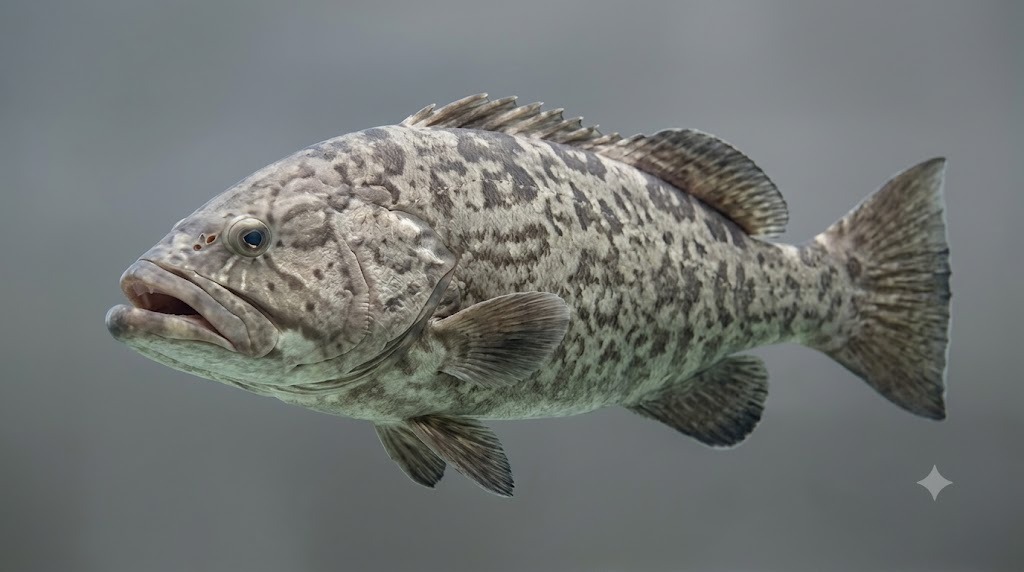
Groupers are stout, big-headed fish with a large mouth, a protruding lower jaw, and a heavy, muscular body built for short, brutal bursts of power. Appearance varies by species. Gag grouper are gray to brownish with faint dark wavy or marbled markings and dark fin edges. Red grouper are reddish-brown with scattered pale blotches and a distinctively short, rounded second dorsal profile. Black grouper are darker with rectangular blotches. Goliath grouper are enormous, mottled brownish-yellow giants with small eyes. All groupers share the cavernous mouth and the powerful tail that let them inhale prey whole and rocket back to cover.
Range & Habitat (US waters - inshore / offshore)
Groupers are found throughout the Gulf of Mexico and the South Atlantic, generally from the Carolinas south around Florida and across the Gulf. They are overwhelmingly a structure species. Red grouper favor hard bottom, limestone ledges, and rocky areas, often excavating depressions in the bottom. Gag and black grouper relate strongly to high-relief structure - wrecks, reefs, ledges, and rock piles - and gags will move into surprisingly shallow nearshore structure and even into nearshore reefs in cooler months. Goliath grouper haunt wrecks, bridge pilings, and reefs, sometimes in remarkably shallow water. Depths range from 30 feet inshore to several hundred feet offshore.
Behavior & Feeding
Groupers are ambush predators. They lie tight to structure, often inside a hole or beneath a ledge, and explode outward to engulf prey with a powerful suction of that huge mouth. Their diet includes fish, squid, octopus, crabs, and lobster - a large grouper can inhale a sizable baitfish in an instant. The defining grouper behavior is the moment after the strike: the fish immediately powers back toward its hole, and if it gets there, it wedges in and you are cut off. This "race to the rocks" defines grouper fishing. Groupers can also be wary on pressured spots and may shut down in extreme cold.
Best Seasons & Times to Catch
Grouper seasons are regulated and vary by species and region - gag grouper in particular have specific open and closed periods that change, and goliath grouper have been protected from harvest with only limited recent allowance. Always confirm current regulations. Generally, cooler months pull gag grouper shallower and closer to shore, creating excellent nearshore opportunities, while warmer months keep most groupers on deeper structure. Groupers feed throughout the day, but periods of moving water and low-light windows tend to trigger the most aggressive strikes. Calm seas make deep grouper structure far more fishable.
Where to Find Them - Reading the Water
Grouper fishing is a structure hunt. Use electronics to find ledges, wrecks, hard bottom, rock piles, and reefs, and look for the heavy marks that signal big fish holding tight to cover. Red grouper often relate to broken hard bottom and the depressions they dig. Gag and black grouper stack on high-relief structure and wreck edges. Nearshore, gags hold on rock piles, ledges, and even artificial reefs in cooler weather. The highest-relief, least-pressured structure usually holds the biggest fish. Position the boat to drop baits onto the up-current edge of the structure.
Tackle & Rigs
Grouper tackle must be heavy enough to stop a powerful fish before it reaches its hole - this is non-negotiable. Use a stout conventional boat rod with a strong, high-drag reel spooled with 65 to 100-pound braid, or heavier for big-fish wrecks. The standard rig is a fish-finder or knocker rig with a heavy egg or bank sinker, 6 ounces to over a pound depending on depth and current. Leaders should be 80 to 130-pound monofilament or fluorocarbon to resist abrasion on rock. Use stout circle hooks, 7/0 to 12/0, which are required in many federal waters. For goliath grouper, tackle scales up dramatically. Lock the drag down - a loose drag means a lost fish in the rocks.
Best Baits & Lures
Big live baits are the grouper standard - live pinfish, grunts, mullet, blue runners, and other baitfish are hard to beat, and a lively bait often draws the biggest fish. Fresh dead baits, large squid, and big cut chunks of fish such as bonito also produce. On the lure side, large heavy jigs - flat-fall and butterfly-style speed jigs - and big diving plugs trolled along ledges are extremely effective, especially for gag and black grouper. Trolling deep-diving lures over hard bottom is a classic technique for covering ground and triggering reaction strikes from aggressive fish.
Techniques - How to Fish for It
The defining moment in grouper fishing is the hookset and the first few seconds. Drop a bait to the structure, and when a grouper eats, you must immediately apply maximum pressure and gain line - lift hard and crank fast to pull the fish up and away from its hole before it can wedge in. Hesitate, and you lose. Lock down the drag and use the rod's backbone. Some anglers free-spool a live bait near structure, then come tight and lift. Trolling deep divers along ledges lets you locate and trigger active gags. When jigging, drop to the structure and work the jig with sharp lifts. Once a grouper is off the bottom and in open water, the fight becomes a more standard pull, but never give it slack near structure.
Common Mistakes
The number one mistake is using tackle that is too light or a drag that is too loose - a green grouper will reach its hole and break you off every time. The second is hesitating on the strike; you must turn the fish immediately. Anglers also fish too far from structure or position the boat poorly so baits drift off the productive edge. Letting a hooked grouper get slack near the rocks is fatal. Finally, ignoring the species-specific and seasonal regulations - which are complex for grouper - can lead to violations.
Size, Records & Eating Quality
Size varies enormously by species. Keeper gag and red grouper commonly run 5 to 20 pounds, with quality gags exceeding 30 to 40 pounds. Black grouper grow larger still. Goliath grouper are giants, regularly exceeding several hundred pounds - the IGFA all-tackle record goliath stands at 680 pounds. The gag grouper all-tackle record is over 80 pounds. On the table, grouper are superb - firm, thick, mild, sweet white fillets that are highly prized in restaurants and excellent grilled, fried, or blackened. Grouper sandwiches are a Gulf Coast institution.
Pros & Cons (as a target species)
Pros: explosive, powerful fight; reach trophy and even giant sizes; outstanding eating; abundant on Gulf and Southeast structure; the race-to-the-rocks adrenaline is unmatched. Cons: require heavy, capable tackle and an offshore boat; complex, species-specific seasons and regulations; live in snaggy structure that costs tackle; deep-water fish suffer barotrauma; goliath grouper are largely protected.
Best Suited For
Grouper are best suited to offshore anglers with seaworthy boats, solid electronics, and the strength and gear to muscle powerful fish out of structure. They reward anglers who enjoy raw, physical fights and the thrill of stopping a big fish in its tracks. Charter trips put first-timers on grouper with the right gear and guidance. Light-tackle finesse anglers and those without offshore access will find grouper difficult, but for power, table fare, and bottom-fishing prestige, few fish compare.
FAQ
Why is it so important to stop a grouper immediately? Groupers bolt straight for a hole or ledge the instant they are hooked. If a fish reaches its hole it wedges in and breaks you off, so you must apply maximum pressure and gain line in the first few seconds.
What is the best bait for grouper? Big live baits - pinfish, grunts, mullet, and blue runners - are hard to beat and often draw the biggest fish. Large cut bait, squid, and heavy jigs also work, and trolling deep divers is deadly for gags.
Can I keep a goliath grouper? Goliath grouper have long been protected from harvest, though some limited, permitted harvest has been allowed recently. Confirm current regulations - in most cases they must be released.
What tackle do I need for grouper? Heavy tackle: a stout conventional rod, a strong high-drag reel, 65 to 100-pound braid, an 80 to 130-pound leader, and stout circle hooks. The drag must be locked down to turn a powerful fish.
Are grouper good to eat? Yes - grouper are among the most prized eating fish in the country, with firm, mild, sweet white fillets. The grouper sandwich is a Gulf Coast classic.