King Mackerel
The king mackerel - universally called the "kingfish" or simply "king" - is the premier nearshore-to-offshore speedster of the Southeast and Gulf coasts.
🗓️ Last reviewed: June 2026
Overview
The king mackerel - universally called the "kingfish" or simply "king" - is the premier nearshore-to-offshore speedster of the Southeast and Gulf coasts. A king is a long, sleek torpedo built for one thing: speed. It strikes a slow-trolled bait with a sizzling, drag-melting run, sometimes launching into a high "skyrocketing" leap, and it sustains a hard, fast fight that demands good gear and a smooth drag. Kingfish anchor a passionate tournament scene and a huge recreational fishery because they are accessible from piers, small boats, and offshore craft alike, grow to "smoker" size, and are abundant along warm coasts. They are equal parts adrenaline and strategy - and razor-toothed enough to keep you on your toes.
Identification & Appearance
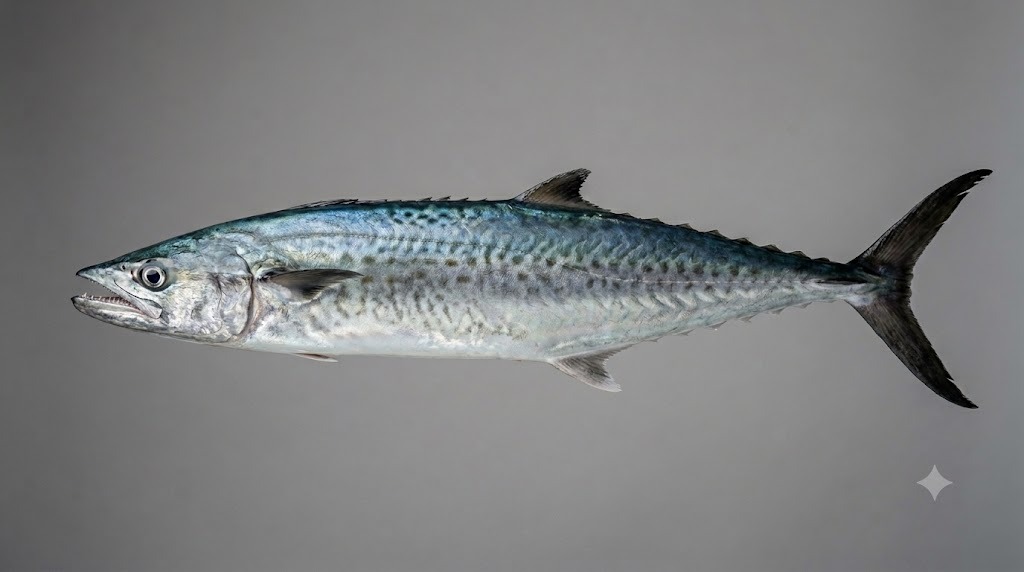
King mackerel are long, slender, and streamlined - torpedo-shaped, built for high speed. The body is iridescent steel-blue to greenish on the back, fading to silvery sides and a white belly. Adult kings are largely unmarked, while juveniles and smaller fish show rows of faint bronze or yellowish spots, which can lead to confusion with the closely related Spanish mackerel. Two key features separate them: the lateral line of a king mackerel takes a distinct sharp dip beneath the second dorsal fin, and the front portion of the first dorsal fin is pale or uniform in color. The mouth is large and lined with sharp, triangular cutting teeth. The tail is deeply forked. Kings dwarf Spanish mackerel in size.
Range & Habitat (US waters - inshore / offshore)
King mackerel range along the warm-water US coasts: throughout the Gulf of Mexico from Texas to Florida, and along the South Atlantic from Florida up through the Carolinas, with seasonal movement farther north in summer. They are a warm-water, migratory species that follows temperature and bait.
Kings are a pelagic, roving fish. They are found from just off the beach - within casting range of ocean piers - out to nearshore and offshore reefs, wrecks, ledges, and artificial reefs in depths from around 30 feet to well over 100. They relate to structure that concentrates bait, to color changes, current edges, and temperature breaks, and they follow migrating baitfish schools coastwise. They are not bottom fish; they cruise the mid and upper water column over and around structure.
Behavior & Feeding
King mackerel are fast, voracious open-water predators that feed primarily on schooling baitfish - menhaden (pogies), cigar minnows, threadfin and Spanish sardines, blue runners (hardtails), ribbonfish, and mullet - as well as squid. They hunt by speed and sight, slashing into bait schools at high velocity. A king's strike is explosive: it often hits a bait so fast and hard that it cuts a whole baitfish (or a hooked bait) cleanly in two, which is why a "stinger" rig with a trailing treble hook is standard. Big kings, called "smokers," tend to be more solitary and patrol structure and bait edges. Kings frequently skyrocket - launching vertically out of the water - when they slash a surface bait.
Best Seasons & Times to Catch
King mackerel fishing follows the warm water. In the Gulf and South Atlantic, the prime seasons are spring and fall as kings migrate along the coast - roughly April through June and again September through November in many areas - though in South Florida and the warmer Gulf, kings are available much of the year. Summer offers steady fishing, often a bit farther offshore as kings seek cooler, bait-rich water. Winter pushes the fishery into the southernmost range. The best fishing keys on bait presence and water temperature in the low 70s°F and up. Early morning and late afternoon are productive, but kings feed through the day wherever bait is concentrated.
Where to Find Them - Reading the Water
Find the bait. Kings hold around nearshore and offshore structure - reefs, wrecks, ledges, artificial reefs, and the rubble around them - because that structure holds baitfish. Look for bait schools showing on the sounder or flipping at the surface, diving birds, color changes, weedlines, and temperature breaks. Pier anglers target kings when bait moves within casting range of the structure. On the troll, work the edges of structure and color changes, and pay attention to current. Clean water with active bait over or near hard structure is "king water"; when you mark thick bait, slow down and fish it.
Tackle & Rigs
King mackerel demand quality tackle with a smooth drag because of their searing runs. A 7-foot medium-heavy rod with a 4000-6000 spinning reel, or a 20-30 lb conventional outfit, is standard; pier anglers use longer rods. Spool with 20-40 lb braid or mono.
The signature king rig is the "stinger rig": a wire leader (single-strand or coated, roughly 40-60 lb) with a forward live-bait hook (a small treble or J-hook through the bait's nose) and a trailing "stinger" treble hook left to swing free near the bait's tail. This trailing hook catches the kings that slash and cut bait short of the lead hook. Wire is essential - a king's teeth slice mono and fluorocarbon instantly. Trolling rigs use wire-leadered spoons and plugs.
Best Baits & Lures
Live bait is the king's downfall. Top live baits are menhaden (pogies), cigar minnows, threadfin and Spanish sardines, blue runners (hardtails), and ribbonfish - slow-trolled or drifted on a stinger rig. Big kings show a special fondness for live blue runners and ribbonfish. Fresh dead cigar minnows and ribbonfish also troll well.
For lures, large flashy trolling spoons (wire-leadered), diving and swimming plugs, and feather/jig combos produce, especially when run fast to cover water. Drone-style spoons are a classic. Bright, flashy finishes - silver, gold, chartreuse, blue - draw strikes from fast-moving fish. The constant across all of it is the wire leader and, for bait, the stinger hook.
Techniques - How to Fish for It
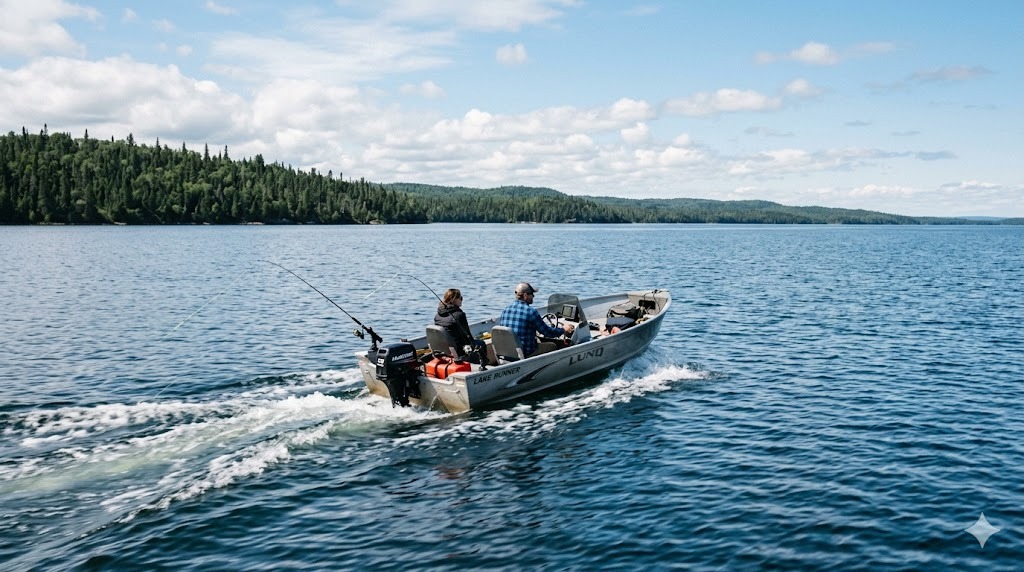
Slow-trolling live bait is the dominant method: pull lively baits on stinger rigs at a slow walk (around 1-3 knots) along structure edges, color changes, and bait schools, often with baits at varying depths using planers or downriggers. Drifting or "live-bait kite fishing" presents baits naturally over structure. Fast-trolling spoons and plugs (around 5-8 knots) covers water to locate scattered kings. Pier anglers slide a live bait out under a balloon or float toward the structure. When a king hits, let the smooth drag absorb the blistering run - do not clamp down - then fight the fish with steady pressure. Gaff kings at the boat; their teeth and thrashing make boatside handling hazardous.
Common Mistakes
The most expensive mistake is skipping the wire leader - kings cut mono and fluorocarbon every time. Leaving off the stinger hook means missing the many kings that slash and cut a bait behind the lead hook. Setting drag too tight invites a break-off on that first searing run. Trolling live bait too fast kills the bait and the presentation. Anglers also troll empty water instead of finding bait first. Mishandling a green king at the boat - those teeth, that thrashing - leads to injuries and lost fish; a gaff and care are essential. Finally, ignoring bag and size limits, which apply throughout the fishery, is both illegal and harmful.
Size, Records & Eating Quality
"Snake" or schoolie kings run a few pounds to about 12; quality fish 15-30 pounds; and big "smokers" reach 40, 50, and beyond. The IGFA all-tackle world record is a 93-pound king mackerel caught off San Juan, Puerto Rico, in 1999. King mackerel are good eating, with firm, flavorful, somewhat dark and oily flesh - best enjoyed fresh, smoked, or grilled, and improved by bleeding and icing immediately. Because king mackerel can carry elevated mercury, particularly in large fish, health advisories generally recommend limiting consumption of large kings; smaller fish are a better table choice. Size and bag limits vary by region and Gulf versus Atlantic stocks; check current regulations.
Pros & Cons (as a target species)
Pros: Blistering speed and drag-screaming runs; spectacular skyrocketing strikes; grow to large "smoker" size; accessible from piers, small boats, and offshore craft; abundant along warm coasts; supported by an exciting tournament scene. Cons: Razor teeth demand wire leaders and careful handling; require a stinger rig for good hookup rates; bite is bait- and temperature-dependent and seasonal; large fish carry mercury advisories; need quality reels with smooth drags; weather can shut down the offshore bite.
Best Suited For
King mackerel are best suited for the angler who craves speed and a hard, fast fight, and who enjoys the strategy of locating bait and structure. They are an excellent target for nearshore and small-boat anglers, for pier fishermen who want a real trophy from shore-connected structure, and for competitors drawn to the popular kingfish tournament circuit. Beginners can connect with guidance, but kings reward the angler who masters the stinger rig and the slow-troll.
FAQ
What is a stinger rig and why do I need one? A stinger rig is a wire-leader bait rig with a lead hook in the bait's nose and a free-swinging "stinger" treble hook near the tail. King mackerel often strike fast and cut a bait in half behind the lead hook - the stinger catches those short-strikers.
Do I have to use a wire leader for king mackerel? Yes. Kings have sharp, triangular cutting teeth that slice through mono and fluorocarbon instantly. A wire leader is mandatory.
How do I tell a king mackerel from a Spanish mackerel? A king's lateral line dips sharply downward beneath the second dorsal fin and its front dorsal fin is pale; a Spanish mackerel has a gently sloping lateral line, a black-tipped front dorsal fin, and bold yellow-gold spots. Kings also grow much larger.
Can I eat king mackerel? Yes - they are good eating, especially fresh or smoked, but large kings can carry elevated mercury, so advisories recommend limiting consumption of big fish. Smaller kings are a better table choice. Bleed and ice immediately.
What's the best bait for big "smoker" kings? Large live blue runners (hardtails) and ribbonfish, slow-trolled on a stinger rig near structure, are top choices for trophy kings.