Mahi-Mahi
Mahi-mahi - also called dolphinfish or simply "dolphin" (no relation to the marine mammal) - is one of the most spectacular and beloved offshore gamefish in US waters.
🗓️ Last reviewed: June 2026
Overview
Mahi-mahi - also called dolphinfish or simply "dolphin" (no relation to the marine mammal) - is one of the most spectacular and beloved offshore gamefish in US waters. It is dazzlingly colorful, blisteringly fast, acrobatic when hooked, and rated by many anglers as the finest eating fish in the ocean. Mahi grow astonishingly fast, school readily, and are drawn to floating debris and weedlines, which makes them accessible to a huge range of offshore anglers - from light-tackle enthusiasts to bluewater trollers. A blue-water day spotting a frigatebird over a weedline, watching electric-green-and-gold fish light up behind a bait, is the essence of warm-water offshore fishing.
Identification & Appearance
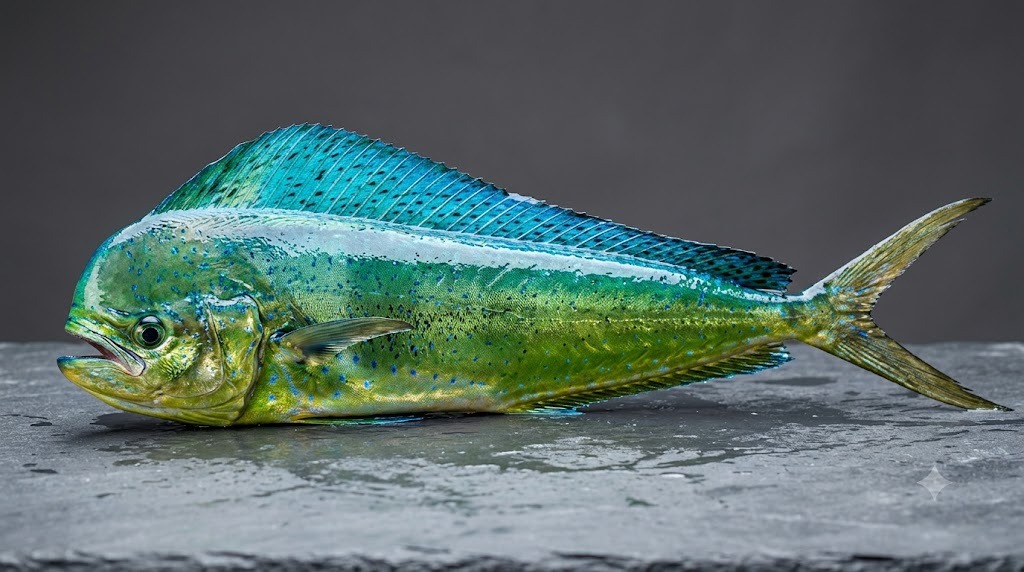
Mahi-mahi are unmistakable and breathtaking. The body is long, compressed, and tapered, with a single long dorsal fin running nearly the entire back. Living fish blaze with iridescent color - brilliant electric blues and greens along the back, golden-yellow flanks dappled with blue and black spots, fading to silver-gold below - and these colors flash and shift dramatically when the fish is excited or fighting, then fade quickly after death. The most distinctive sexual difference is the head: mature males ("bulls") develop a tall, blunt, vertical forehead, while females ("cows") have a smooth, rounded head. The forked tail is large and powerful. No other offshore fish combines that color, that long dorsal, and the squared bull's head.
Range & Habitat (US waters - inshore / offshore)
Mahi-mahi are a warm-water, open-ocean species found offshore throughout the warmer US waters - both coasts of Florida, the Gulf of Mexico, the South Atlantic up to the Carolinas (and farther north in summer), Southern California, and Hawaii. They are highly migratory and follow warm currents such as the Gulf Stream.
Mahi are a pelagic, surface-oriented fish - they live in the open blue water, not on the bottom or near shore structure. The key to finding them is floating cover: weedlines (sargassum rafts), floating debris, logs, buoys, and any flotsam that gathers baitfish and shade. They also relate to current edges, color changes, temperature breaks, and fish-aggregating devices (FADs) where present. Birds, especially frigatebirds, mark them. They are typically caught well offshore in depths over the continental shelf.
Behavior & Feeding
Mahi-mahi are voracious, fast-growing surface predators that hunt by sight in the upper water column. They feed on flying fish, ballyhoo, small tunas, squid, juvenile triggerfish and filefish, and other baitfish that shelter under floating cover. They are strongly drawn to shade and structure on the open ocean - even a small floating board can hold a school. Mahi often travel in schools, especially smaller "schoolie" fish, while big bulls may run alone or in pairs. A hooked mahi attracts others, so keeping one fish in the water beside the boat can hold the whole school. They are competitive feeders, fast and aggressive, and famous for spectacular greyhounding jumps when hooked.
Best Seasons & Times to Catch
Mahi fishing peaks in the warm months when water temperatures and weedlines set up. Off South Florida and the Atlantic Southeast, late spring through summer - roughly April or May through September - is prime, with the migration of fish up the Gulf Stream. In the Gulf of Mexico, summer is the heart of the season. Off Southern California, late summer and fall warm-water years bring mahi within range. Hawaii produces mahi much of the year with a cooler-season peak. Mahi feed throughout the day but morning is often best; the real key is finding good water - clean blue water, active weedlines, and birds - rather than a particular time of day.
Where to Find Them - Reading the Water
Run offshore and read the ocean. Look for weedlines - long ribbons of floating sargassum - and work along their edges. Hunt floating debris of any kind: logs, pallets, buoys, even a single board can hold a school. Watch for birds, especially frigatebirds, which hover over mahi pushing bait. Find color changes and rips where clean blue water meets greener water, and temperature breaks visible on satellite charts. Current edges concentrate bait and mahi alike. Clean, cobalt-blue water with scattered weed and the right temperature break is "mahi water"; once you find a school, you can often keep it close to the boat.
Tackle & Rigs
Mahi can be targeted on a wide range of gear. For schoolie mahi, a 7-foot medium spinning rod with a 4000-6000 reel and 20-30 lb braid is great fun. For trolling and bigger bulls, 20-30 lb conventional outfits are standard. Spool with 20-50 lb line depending on method.
Leaders are typically 40-80 lb fluorocarbon or mono - mahi are not extremely leader-shy, but heavy enough leader resists their teeth and abrasion. Trolling rigs use skirted ballyhoo or lures on the surface; for casting and pitching bait, a simple circle or J-hook (5/0-8/0) on a fluorocarbon leader works well. A spinning rod rigged with a bait or jig, kept ready to pitch to any fish that shows behind the boat or near debris, is essential.
Best Baits & Lures
Natural baits are excellent: rigged ballyhoo for trolling, and live or fresh-dead pilchards, sardines, squid, and small baitfish for pitching and chunking. Cut bait and chunked bait pull schoolies to the boat.
For trolling, skirted lures and feathers, cedar plugs, and ballyhoo combos in bright colors - blue/white, pink, green/yellow, chartreuse - produce well. For casting, bucktail jigs, soft plastic jigs and swimbaits, and small surface poppers all draw aggressive strikes from a school. Bright, high-visibility colors generally win because mahi feed visually in clear water. When a school is fired up beside the boat, almost anything thrown in will get eaten.
Techniques - How to Fish for It
Trolling is the classic method: pull a spread of skirted ballyhoo and lures at 6-9 knots along weedlines, debris, and color changes, covering water until you raise fish. The moment a mahi is hooked, the key tactic is to keep that fish in the water near the boat - the rest of the school will stay with it - and have crew immediately pitch baits or cast jigs to the followers, often resulting in multiple hookups. Run-and-gun sight-casting means motoring up to debris or birds and pitching live or cut bait to visible fish. Chunking can hold a school. Mahi jump wildly, so keep steady pressure and a bent rod, and gaff or net them only at the boat - green mahi thrash violently aboard.
Common Mistakes
The biggest mistake is fighting the first fish too quickly to the boat and gaffing it - losing the school that would have stayed with it. Not having a pitch rod rigged and ready means missing the frenzy when fish show. Anglers also run past good water - weedlines and debris - without working them thoroughly. Trolling too fast or too slow, or in greenish off-color water, reduces strikes. Bringing a "green," un-tired mahi over the rail leads to chaos, hooks flying, and injuries. Finally, failing to bleed and ice fish promptly costs some of the quality of what is otherwise superb table fare.
Size, Records & Eating Quality
Schoolie mahi run 2-10 pounds; quality fish 10-25 pounds; and big bulls commonly reach 30-50 pounds, with the largest exceeding that. The IGFA all-tackle world record is an 87-pound fish caught off Exuma, Bahamas, in 1998. Mahi-mahi grow extraordinarily fast and are short-lived, which supports a productive fishery. On the table they are outstanding - firm, moist, mild, slightly sweet white meat that is versatile and popular in restaurants worldwide. Bleed and ice fish immediately for the best quality. Size and bag limits apply in many regions and vary by area; check current regulations.
Pros & Cons (as a target species)
Pros: Stunningly beautiful; extremely fast-growing and abundant in warm seasons; acrobatic, hard-fighting, and aggressive; schools provide fast multiple-hookup action; catchable on light tackle and by trolling; among the very best eating fish in the ocean. Cons: Requires running well offshore and a seaworthy boat; highly seasonal and dependent on finding the right water; weather-dependent; quality drops fast without immediate bleeding and icing; green fish are dangerous thrashing aboard.
Best Suited For
Mahi-mahi are best suited for offshore anglers who love a visual, run-and-gun, fast-action fishery - and for anyone who fishes for the table, since mahi are world-class eating. They are an excellent species for light-tackle and casting enthusiasts as well as bluewater trollers, and a great "first offshore fish" because schools provide reliable, exciting action. The species rewards anglers willing to run offshore and read the open ocean.
FAQ
Is mahi-mahi the same as a dolphin? Mahi-mahi is a fish also commonly called "dolphinfish" or "dolphin," but it is completely unrelated to the marine mammal. The Hawaiian name "mahi-mahi" is widely used to avoid confusion.
Why should I keep the first mahi in the water? Mahi school tightly, and a hooked fish kept beside the boat will hold the rest of the school nearby - letting the crew pitch baits to the followers for multiple hookups. Gaffing the first fish often scatters the school.
Where do I find mahi-mahi? Offshore in clean blue water - work weedlines, floating debris, color changes, temperature breaks, and watch for frigatebirds, which hover over feeding mahi.
Is mahi-mahi good to eat? Yes - it is among the finest eating fish in the ocean, with firm, mild, slightly sweet white meat. Bleed and ice fish immediately for the best quality.
What's the difference between a bull and a cow mahi? Mature males (bulls) have a tall, blunt, squared-off forehead; females (cows) have a smooth, rounded head. Bulls also tend to grow larger.