Permit
The permit is widely regarded as the ultimate prize of the flats - a large, broad-shouldered, mirror-bright fish that combines extreme wariness, powerful runs, and a maddening reluctance to eat into one of the most coveted and humbling pursuits in all of saltwater fishing.
🗓️ Last reviewed: June 2026
Overview
The permit is widely regarded as the ultimate prize of the flats - a large, broad-shouldered, mirror-bright fish that combines extreme wariness, powerful runs, and a maddening reluctance to eat into one of the most coveted and humbling pursuits in all of saltwater fishing. To catch a permit on the flats, especially on fly, is considered a true milestone, the fish that completes the legendary inshore "grand slam" alongside the bonefish and tarpon. Found on the flats and reefs of South Florida and the Keys, the permit demands everything an angler has: stealth, the perfect cast, the right offering, and no small amount of luck. It is a fish that frustrates far more often than it rewards - which is exactly why landing one means so much.
Identification & Appearance
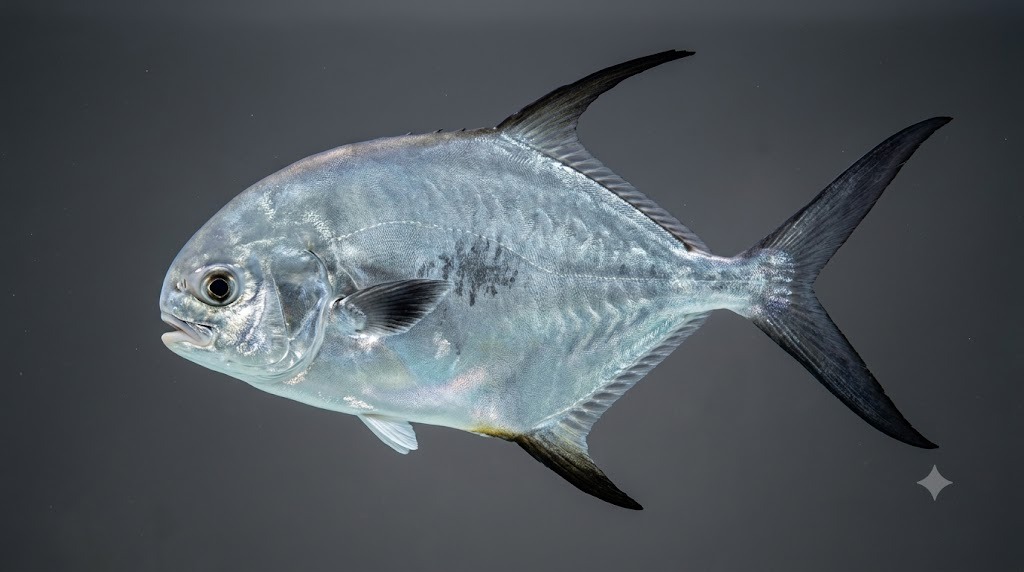
Permit are deep-bodied, strongly compressed, and almost circular in profile, with a high back and a small, blunt head. The body is brilliant, mirror-like silver, often with a dark or dusky back and frequently a yellowish or orange wash on the throat and belly, and the leading edges of the dorsal and anal fins can be dark and elongated, sweeping back in a sickle shape. The tail is large, deeply forked, and dark-edged - the powerhouse behind their strong fight. Permit closely resemble the smaller Florida pompano and are sometimes confused with the broad, deep profile of a crevalle jack, but permit grow far larger than pompano, lack the jack's distinct markings, and show that towering, disc-shaped body.
Range & Habitat (US waters - inshore / offshore)
In U.S. waters permit are found in the warm waters of South Florida, the Florida Keys, and the surrounding flats, channels, and nearshore reefs and wrecks. They lead a dual life. On the shallow flats - sand and grass bottom, often around coral, sponge, and the edges of channels - they cruise and tail in skinny water, hunting crabs, and this is the classic, most coveted scene for sight-fishing. They also inhabit nearshore waters, holding around wrecks, reefs, channels, and bridges, where larger schools of bigger permit can be found and where anglers target them with bait. Permit move between the flats and these deeper haunts with tide and conditions.
Behavior & Feeding
Permit are crustacean specialists, and the crab is their defining prey - small crabs are to permit what shrimp are to bonefish. They also eat shrimp, small mollusks, and other crustaceans, rooting and tailing on the flats much like bonefish but with more power and an even more frustrating selectivity. A flats permit will inspect an offering at length and refuse it for no apparent reason; they are notoriously moody and easily put off. They are extremely wary, spooking at noise, shadow, and clumsy presentation. When a permit does eat and is hooked, it fights with bulldogging power and strong, sustained runs, using its broad body to resist every inch - a genuinely punishing battle.
Best Seasons & Times to Catch
Permit can be found in South Florida and the Keys throughout much of the year, with the warmer months of spring through fall offering the most reliable flats action and stable conditions. Cold fronts in winter push fish off the shallow flats into deeper, warmer water, much as they do with bonefish. Around the wrecks and reefs, permit can be targeted across the seasons. Tide is crucial on the flats - moving water, particularly the stages that flood the flats and concentrate crabs, brings feeding fish. Calm, bright days with good light are essential for the sight-fishing that defines flats permit angling.
Where to Find Them - Reading the Water
On the flats, hunting permit is a visual game requiring patience and sharp eyes. Pole or wade quietly and scan for tailing permit with their dark sickle-shaped tails and fins waving above the surface, for the distinctive dark forked tail and dorsal of a cruising fish, for nervous water, and for muds. Permit often work the edges of channels, potholes in the grass, and the transitions between sand and grass. They frequently appear as a black tail and fin tip against the light bottom. Around the nearshore wrecks and reefs, look for schools holding over and near the structure, often visible as dark shapes near the surface in clear water.
Tackle & Rigs
Permit are pursued on both fly and spinning gear, and the tackle must handle a large, powerful fish. The classic fly outfit is a stout 9 or 10-weight rod with a powerful reel, a strong sealed drag, and ample backing of 200 yards or more, matched to a tropical floating line and a leader tapering to a 12 to 20-pound tippet. Spinning anglers favor a medium 7 to 7.5-foot rod with a 4000-class reel, 15 to 20-pound braid, and a fluorocarbon leader. For flats sight-fishing the rig is simply a crab fly or a live crab on a suitable hook with minimal weight. Around wrecks and reefs, a knocker rig or a free-lined live crab on a stout circle hook is standard.
Best Baits & Lures
The crab is king. For natural bait, a live crab - small blue crab, pass crab, or similar - is by far the most effective offering, whether sight-cast to a flats fish or fished around a wreck. Live shrimp will take permit too, but the crab is the proven choice. On the fly, crab patterns are the heart of permit fishing - flies such as the Merkin and other weighted crab imitations, designed to sink quickly and ride hook-up, tied in tan, olive, and natural tones to match the bottom. Some anglers also use shrimp patterns. Whatever the offering, it must look and behave like a real crab fleeing or settling to the bottom in front of the fish.
Techniques - How to Fish for It
Flats permit fishing is sight-fishing of the most demanding kind. Move slowly and silently, spot the fish, and make a quick, accurate cast that leads the permit so the crab lands a few feet ahead of and in its path. Let the crab fly or live crab sink to the bottom; as the permit approaches, a tiny twitch - or simply leaving it dead-still - often draws the eat, as the fish tips down to root it up. When the permit eats, come tight with a firm strip-strike or smooth lift, then clear the line and prepare for a powerful, sustained fight, keeping steady pressure as the fish bulldogs. Around wrecks, free-line or lightly weight a live crab back to the school and let a hungry fish find it. Patience is the real technique - permit reward persistence above all.
Common Mistakes
The defining mistake is rushing or forcing the encounter - permit punish impatience, poor casts, and noise. Lining the fish or dropping the offering on its head sends it bolting. A poor lead, placing the crab behind or too far from the fish, means a missed opportunity. Moving the crab too much makes it look unnatural; permit often want it nearly motionless. Trout-setting instead of strip-striking pulls the fly. Using tackle too light for such a strong fish leads to long, lost battles, while heavy, clumsy presentations spook them. And fishing in poor light or choppy conditions, when fish cannot be spotted, dooms the flats game before it starts.
Size, Records & Eating Quality
Permit are a substantial fish: a typical flats permit runs 10 to 20 pounds, a quality fish 20 to 30 pounds, and a genuine trophy exceeds 30 to 40 pounds, with the largest fish - often found around wrecks - surpassing 40 pounds. The IGFA all-tackle world record is 60 pounds, caught off Brazil. As table fare, permit are rarely eaten in the U.S.; they are overwhelmingly a catch-and-release sport fish, prized for the challenge of the catch rather than the plate. Anglers handle them with care, revive them thoroughly, and release them to fight again - the permit's value lies entirely in the pursuit.
Pros & Cons (as a target species)
Pros: the ultimate flats challenge and a true milestone catch; powerful, bulldogging fight; large trophy sizes; completes the inshore grand slam; available both on scenic flats and around nearshore wrecks. Cons: extraordinarily difficult and selective - many trips end without an eat; demands elite stealth, casting, and patience; weather- and light-dependent; not a food fish; humbling and frustrating for newcomers.
Best Suited For
Permit are best suited to the dedicated, experienced angler who craves the hardest, most rewarding challenge the flats can offer - particularly accomplished fly fishers and skilled light-tackle sight-fishers. They reward patience, precision, and persistence above all, and a single permit can stand as the achievement of a fishing lifetime. A guided trip in the Keys with a knowledgeable poler is the classic path to a shot at one. Anglers seeking steady action, easy success, or fish for the table will find the permit endlessly frustrating, but for those chasing the pinnacle of inshore sport, no fish is more revered.
FAQ
Why are permit considered so hard to catch? Permit are extremely wary and famously selective - they will inspect an offering closely and refuse it for no obvious reason. Combined with the need for stealth, a perfect cast, and the right conditions, this makes a hooked permit a rare and treasured event.
What is the best bait for permit? A live crab is by far the top choice, whether sight-cast on the flats or fished around a wreck. On the fly, weighted crab patterns such as the Merkin are the proven offerings.
What is the inshore grand slam? The grand slam is catching a bonefish, a tarpon, and a permit in a single day. The permit is usually the hardest of the three, making it the centerpiece of this celebrated achievement.
Do permit and pompano look the same? They are closely related and similar in shape, but permit grow far larger, have a more towering, disc-shaped body, and show dark sickle-shaped fins. A flats permit dwarfs a typical pompano.
Can you eat permit? In practice they are rarely eaten in the U.S. and are valued almost entirely as a catch-and-release sport fish. Anglers release them carefully after the fight.