Sheepshead
The sheepshead is one of the most distinctive and rewarding inshore targets along the U.S.
🗓️ Last reviewed: June 2026
Overview
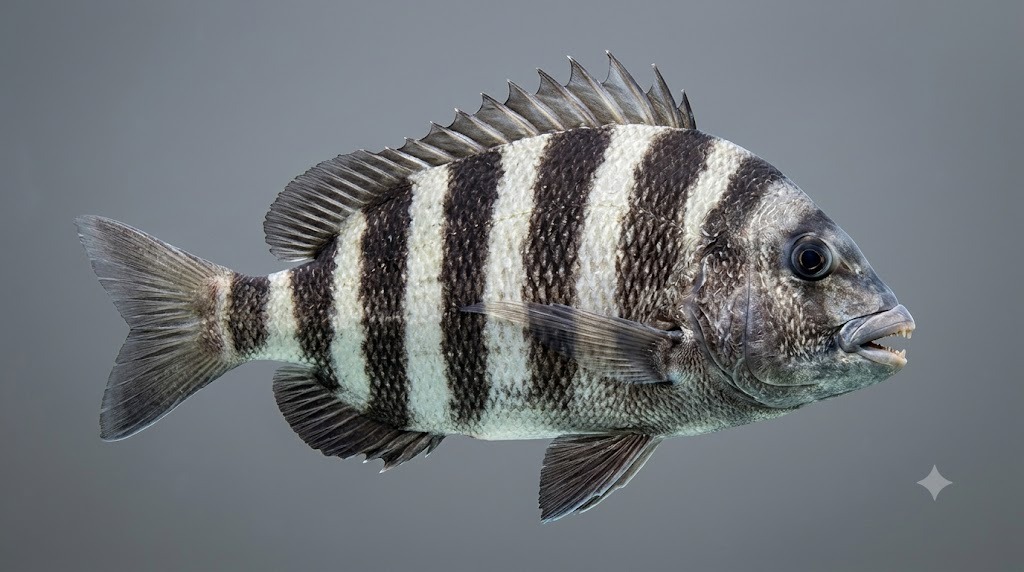
The sheepshead is one of the most distinctive and rewarding inshore targets along the U.S. Atlantic and Gulf coasts. Nicknamed the "convict fish" for its bold black-and-white vertical bars, it is famous for two things: a mouthful of human-like teeth and a maddening ability to steal bait without ever getting hooked. Anglers who learn to outsmart this structure-loving panfish are rewarded with hard-pulling fights and some of the best-eating fillets in saltwater. Sheepshead are accessible to shore-bound anglers, kayakers, and boaters alike, which makes them a true everyman's fish. They thrive around the very structure that frustrates other anglers - barnacle-encrusted pilings, jetties, oyster bars, and bridge fenders - so once you know where to look, you rarely have to travel far.
Identification & Appearance
Sheepshead are deep-bodied, laterally compressed fish with a steep forehead and a small but powerful mouth. The most obvious feature is the pattern of five to seven dark vertical bars running down a silvery-gray to olive body, which gives them their convict nickname. Open the mouth and you'll see the real signature: broad, flat molars in the back of the jaw and stout incisor-like teeth in the front, perfectly designed for crushing barnacles, crabs, and shellfish. The dorsal fin carries sharp, stiff spines, and the anal fin has three strong spines as well - handle them with care. Juvenile sheepshead and the occasional black drum can cause confusion, but black drum have chin barbels and lack the prominent teeth, while pinfish are far smaller and more slender.
Range & Habitat (US waters - inshore / offshore)
Sheepshead range from the Mid-Atlantic states down around Florida and throughout the Gulf of Mexico to Texas. They are overwhelmingly an inshore and nearshore species. You'll find them around bridge pilings, dock and pier pilings, jetties, rock piles, oyster reefs, seawalls, channel markers, and wrecks. In winter, larger adults stage on nearshore reefs and artificial structure in slightly deeper water to spawn, sometimes 30 to 70 feet down. They tolerate a wide range of salinity and routinely push well up into brackish estuaries, but they always relate tightly to hard structure encrusted with the shellfish they eat.
Behavior & Feeding
Sheepshead are precision feeders. Those molars let them scrape barnacles off pilings and crunch through crab shells and oysters with ease. They feed by easing up to structure, picking at growth, and inhaling small crustaceans - which is exactly why they are so hard to hook. A sheepshead can mouth a fiddler crab, strip the meat, and spit the hook back out before a careless angler ever feels a bump. They are not aggressive chasers; they are deliberate, almost dainty, and they spook in clear, calm water. Cold weather concentrates them, and the pre-spawn winter aggregations create the year's best fishing.
Best Seasons & Times to Catch
Winter and early spring are prime time. As water temperatures drop, sheepshead gang up on structure to feed and stage for the spawn, which generally peaks from February through April depending on latitude. This is when limits of big "convicts" are most realistic. Summer fishing is still productive around docks and bridges, though fish are more scattered and often smaller in the heat. Moving water is critical regardless of season - target the strong middle portions of the incoming and outgoing tide. Many veterans favor the few days around a new or full moon when tidal flow is strongest.
Where to Find Them - Reading the Water
Look for the crustiest, ugliest structure you can find. Pilings caked in barnacles and oysters, the corners of bridge fenders, the down-current side of jetty rocks, and the shaded edges of docks are all magnets. Sheepshead hold tight - often within inches of the wood or rock - so your bait must be presented right against the structure. In rivers and creeks, oyster bars on a current edge are excellent. Offshore in winter, nearshore wrecks and artificial reefs in 30 to 60 feet hold big spawning fish. A telltale sign is seeing sheepshead "tailing" or finning near pilings as they pick at growth.
Tackle & Rigs
A medium or medium-heavy spinning or conventional rod of 7 to 7.5 feet with a fast tip is ideal - the fast tip telegraphs the subtle bite while the backbone pries fish away from structure. Spool with 15 to 20-pound braid for sensitivity and a 20 to 30-pound fluorocarbon leader. Sheepshead are leader-shy in clear water, so go lighter when bites are tough. The two go-to rigs are the knocker rig (an egg sinker sliding directly to the hook) and a simple Carolina rig. For dock and piling fishing, many anglers free-line or use a split shot with just enough weight to hold near the structure. Use small, strong hooks - a 1 or 1/0 short-shank live-bait hook - because a sheepshead's small mouth demands a compact, sharp point.
Best Baits & Lures
Sheepshead are bait fish, not lure fish, by a wide margin. Fiddler crabs are the undisputed champion bait. Live shrimp, small pieces of blue crab, sand fleas (mole crabs), oysters, clams, and barnacles scraped from pilings all produce. Many anglers chum by scraping barnacles off a piling with a hoe or pressure washer, releasing a cloud of crushed shellfish that pulls fish in and puts them in a feeding mood. Artificial lures rarely work, though small jigs tipped with shrimp will occasionally fool one. The rule is simple: match what they eat naturally, and fresh beats frozen every time.
Techniques - How to Fish for It
The mantra among sheepshead anglers is "set the hook before the bite." Drop your bait right against the structure and stay in constant contact with it. When you feel the slightest tick, change in weight, or your line moving sideways, swing immediately. Many experts keep a slightly tight line and watch it like a hawk. Vertical presentations alongside pilings are most efficient - lower the bait, let it hold near the barnacle line, and feel for the subtle take. When fishing offshore reefs, drop straight down and keep the bait near the bottom structure. Once hooked, lead the fish away from cover quickly before it can break you off on a barnacle.
Common Mistakes
The number one mistake is waiting too long to set the hook - by the time most anglers feel a "real" bite, the bait is already gone. The second is using hooks that are too large or dull; sheepshead have hard, bony mouths and a small gape. Fishing slack tide is another error, since these fish feed best in moving water. Many anglers also fish too far from the structure - your bait needs to be inches away, not feet. Finally, using stale frozen bait when fresh fiddlers or shrimp are available will quietly cost you fish all day.
Size, Records & Eating Quality
A typical keeper sheepshead runs 1 to 4 pounds, with quality fish from winter aggregations reaching 5 to 8 pounds. Trophy specimens over 10 pounds exist but are rare. The IGFA all-tackle world record stands at 21 pounds 4 ounces, caught in Louisiana. On the table, sheepshead are outstanding - firm, white, sweet fillets often compared to a cross between snapper and crab, a natural result of their shellfish diet. They are notoriously tough to clean because of their thick skin and bony structure, but the reward is worth the effort.
Pros & Cons (as a target species)
Pros: accessible from shore, piers, and small boats; available year-round with a fantastic winter bite; excellent eating; hard-fighting for their size; abundant in many areas. Cons: extremely difficult to hook for newcomers; bait-stealers that demand constant attention; spiny fins make them awkward to handle; tedious to clean; they live in snaggy structure that costs you tackle.
Best Suited For
Sheepshead are ideal for patient, detail-oriented anglers who enjoy a finesse challenge and want a fish they can target without a big boat. They are perfect for pier and bridge fishermen, kayak anglers, and families looking for accessible cold-weather action. Anglers who crave non-stop screaming-drag runs may find them frustrating, but those who appreciate skill, structure fishing, and a great meal will fall in love with the convict fish.
FAQ
Why do sheepshead have human-like teeth? Their molars and incisors are specialized for a diet of barnacles, crabs, oysters, and other hard-shelled prey. The flat back teeth crush shells while the front teeth scrape growth off structure.
What is the best bait for sheepshead? Fiddler crabs are the top choice, followed by live shrimp, sand fleas, and pieces of blue crab. Fresh bait always outperforms frozen.
When is the best time to catch big sheepshead? Late winter and early spring, roughly February through April, when fish aggregate on structure to spawn. Fish moving water during these months for the biggest catches.
How do I know when to set the hook? Don't wait for a thump. Stay in constant contact with your bait and set the hook on any subtle tick, sideways movement, or change in weight. With sheepshead, sooner is almost always better.
Are sheepshead good to eat? Yes - they are among the best-eating inshore fish, with firm, sweet white fillets. The challenge is cleaning them, as they have thick skin and a bony frame.