Snook
The common snook is the crown jewel of subtropical inshore fishing - a sleek, hard-charging, ambush-loving predator that explodes on bait and bolts straight for structure.
🗓️ Last reviewed: June 2026
Overview
The common snook is the crown jewel of subtropical inshore fishing - a sleek, hard-charging, ambush-loving predator that explodes on bait and bolts straight for structure. Famous for its prominent black lateral line, its slashing strikes, and its tendency to break off the unprepared angler in seconds, snook have an almost cult following along Florida's coasts. They are temperature-sensitive and cannot tolerate cold, which keeps them confined to the warmest US waters and adds a strategic, almost obsessive quality to chasing them. A snook eat under a dock light at night, a topwater blowup in the surf at dawn, a giant pulling drag toward a bridge piling - these are the moments that define inshore fishing for many serious anglers.
Identification & Appearance
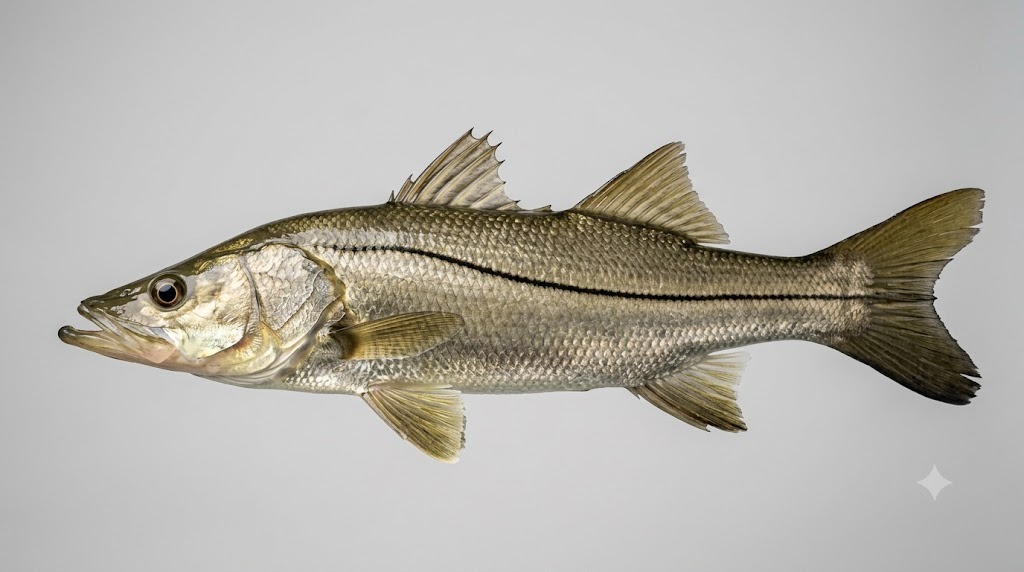
Snook are unmistakable. The body is long and streamlined, brassy-gold to silvery on the flanks with a yellowish or olive back. Running boldly down each side from gill to tail is a sharp black lateral line - the single most distinctive feature of the fish. The head is pike-like with a long, sloping forehead and a large, protruding lower jaw. The mouth is huge, and the gill plates are razor-sharp - sharp enough to slice a leader or a careless hand. Fins often carry a yellowish tint, and the tail is forked. Juveniles look much the same. The combination of the black stripe and the underslung jaw makes the snook impossible to confuse with any other inshore fish.
Range & Habitat (US waters - inshore / offshore)
In US waters snook are essentially a Florida fish, found from roughly Tampa Bay and the central east coast southward, all around the peninsula and the Keys. They are extremely cold-intolerant - water below the low 50s°F can kill them - so their northern limit shifts with winters, and hard freezes cause documented die-offs. Strays occasionally appear in Texas.
Snook are structure-oriented inshore fish. They live around mangrove shorelines, dock pilings, bridge fenders, jetties, seawalls, passes and inlets, beaches and the surf zone, and far up into brackish and even fresh water in coastal rivers and canals. They use the structure as ambush points and current breaks. In winter they push up rivers and into canals seeking warmth.
Behavior & Feeding
Snook are classic ambush predators. They tuck behind a piling, a mangrove root, or a current edge and wait for the tide to deliver baitfish, then strike with a powerful slashing rush. They feed heavily on baitfish - pilchards, mullet, pinfish, croaker, glass minnows - as well as shrimp and crabs. They are strongly tide-driven; a snook will feed hard on a moving tide and shut off on slack water. They're also light-sensitive and famously feed at night under dock and bridge lights, where the light gathers bait. Hooked, a snook makes a violent first run for the nearest structure and will use its sharp gill plates and any barnacle-encrusted piling to cut you off.
Best Seasons & Times to Catch
Snook fishing peaks in the warm months. Late spring through summer is prime, when snook stack in passes, inlets, and along beaches to spawn - June through August is the height of the run. Fall offers excellent fishing as snook feed heavily before cooling water. Winter is the toughest season: snook retreat into rivers, canals, and warm-water refuges, the bite slows, and many states close the harvest season for protection. Dawn, dusk, and night are by far the most productive times - snook are low-light feeders, and dock-light fishing after dark is a signature tactic. Always fish a moving tide.
Where to Find Them - Reading the Water
Think structure plus current. Mangrove points, dock pilings, bridge fenders, jetty rocks, seawall corners, and the down-current edges of any obstruction are prime ambush spots. In passes and inlets, fish the current seams and edges of channels, especially on outgoing tides that flush bait out. On the beach, snook cruise the trough just off the sand, often visible as dark torpedoes against the bottom. At night, find dock and bridge lights - snook hold in the shadow line just outside the light, facing into the current, picking off bait drawn to the glow. Look for the shadow line; that's where they sit.
Tackle & Rigs
Snook demand stout gear because they bury into structure. A 7- to 7.5-foot medium-heavy fast-action spinning rod with a 3000-4000 reel is standard for inshore work; for big fish around bridges, step up to a heavy rod and a 5000-6000 reel. Spool with 20-30 lb braid.
The leader is critical: 30-50 lb fluorocarbon, because snook have sandpaper-rough mouths and sharp gill plates, and you'll fish around abrasive structure. Common rigs are simple - a live bait free-lined or fished on a jighead, a circle hook for live or cut bait, and a single hook or jighead for soft plastics. Heavier leaders for bridges, lighter and longer for clear, calm beach water.
Best Baits & Lures
Live bait dominates: live pilchards (whitebait), finger mullet, pinfish, croaker, and large live shrimp are top producers. Croaker is a legendary big-snook bait. Cut bait and large shrimp also produce, especially around bridges at night.
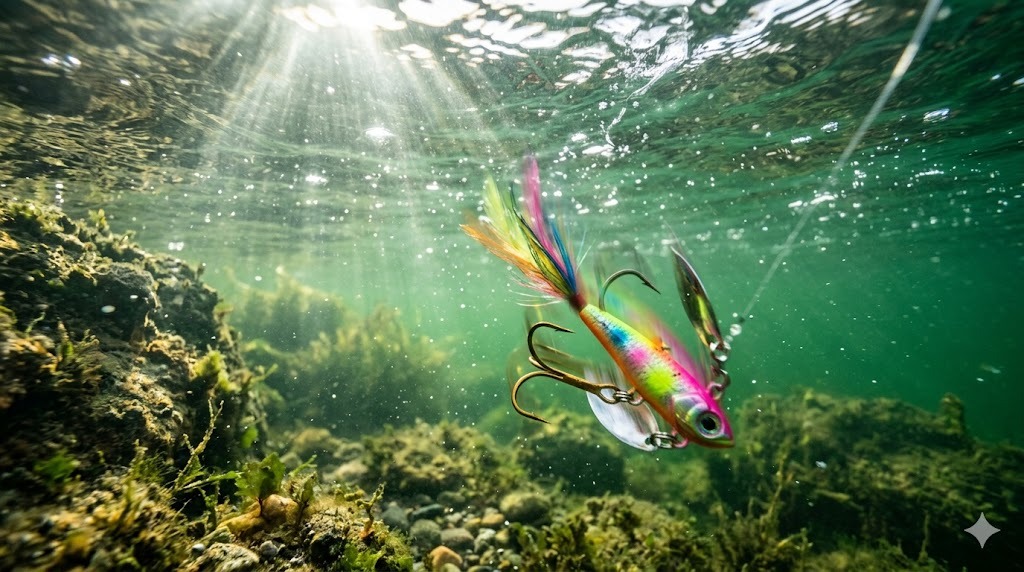
For artificials, soft plastic jerkbaits and paddletails on a jighead are the all-around standard. Topwater walking plugs draw thrilling dawn and dusk blowups. Suspending twitchbaits and swimbaits work along beaches and dock lights. Bucktail jigs are a bridge and pass classic. Use natural white and silver tones in clear water, and darker profiles for night fishing where snook silhouette the lure against the light.
Techniques - How to Fish for It
Live-bait fishing is the most reliable: free-line a lively pilchard or mullet up-current of structure and let the tide carry it naturally into the strike zone. Around dock lights at night, cast a small jig or jerkbait up-current and let it drift through the shadow line - present it so it swims naturally with the flow, never dragged against it. On the beach, sight-fish cruising snook by leading them with a soft plastic or fly. When a snook eats, set firmly and immediately turn its head away from structure - the first three seconds decide the fight. Keep maximum pressure and never give a snook slack near a piling.
Common Mistakes
The number one mistake is going too light - undersized leaders and drag get cut off or spooled into structure. Letting a hooked snook run free toward a piling instead of turning it immediately loses big fish. Fishing slack tide is wasted effort; snook need moving water. At dock lights, casting into the light instead of the shadow line spooks fish. Anglers also handle snook poorly - the sharp gill plates cut hands and leaders, and overhandling stresses a fish that's often catch-and-release. Finally, ignoring the closed harvest season and slot regulations is both illegal and harmful to a fishery that's already cold-vulnerable.
Size, Records & Eating Quality
A typical snook runs 20-32 inches and 3-10 pounds. Fish over 38 inches and 20 pounds are genuine trophies, and the largest exceed 40 pounds. The IGFA all-tackle world record is a 53-pound, 10-ounce common snook caught in Costa Rica. Snook are excellent eating - firm, white, mild fillets often compared to grouper - but the skin must be removed because it carries a strong, soapy flavor. Snook are tightly regulated in Florida with slot limits, low bag limits, seasonal closures, and a required permit; harvest only legal slot fish and check current rules, as the species is protected and pressure-sensitive.
Pros & Cons (as a target species)
Pros: Spectacular, violent strikes; powerful structure-busting fights; eager to eat lures, bait, and flies; available shore-bound from bridges, docks, and beaches; superb table fare (skinned); a true light-tackle trophy. Cons: Restricted to the warmest US waters and vulnerable to cold kills; demands heavy leaders and skill to land near structure; tightly regulated with closed seasons; sharp gill plates make handling tricky; very tide- and light-dependent.
Best Suited For
Snook are best suited for the angler who craves adrenaline and a worthy adversary - the explosive strike and the do-or-die structure fight reward focus and quick reflexes. They're a fantastic target for Florida shore anglers working bridges and dock lights, for sight-fishermen and fly casters on the beach, and for anyone willing to learn the tide. Beginners can absolutely catch snook with live bait under guidance, but the species truly rewards the dedicated.
FAQ
Why do snook break me off so easily? Snook bolt straight for structure and have rough mouths and sharp gill plates. Use a 30-50 lb fluorocarbon leader, a stout rod, and turn the fish's head away from pilings the instant it's hooked.
Can I keep a snook? Only legal slot-sized fish during open season, and you need a Florida snook permit. Snook are heavily regulated with seasonal closures - always check current rules.
Is snook good to eat? Yes - firm, white, mild flesh comparable to grouper. You must remove the skin, which carries an unpleasant soapy taste.
Why fish dock lights at night for snook? Lights attract bait, and snook stack in the shadow line just outside the glow to ambush it. Casting up-current and drifting a lure through that shadow edge is deadly.
What water temperature is dangerous for snook? Prolonged temperatures below the low 50s°F can be lethal. Hard winter freezes have caused major snook die-offs in Florida.