Spanish Mackerel
The Spanish mackerel is the fast, flashy, accessible little cousin of the king mackerel - and one of the most fun, action-packed nearshore fish on the Southeast and Gulf coasts.
🗓️ Last reviewed: June 2026
Overview
The Spanish mackerel is the fast, flashy, accessible little cousin of the king mackerel - and one of the most fun, action-packed nearshore fish on the Southeast and Gulf coasts. Spanish are abundant, travel in fast-moving schools, hammer small flashy lures with reckless aggression, and put up a spirited, drag-burning fight on light tackle far out of proportion to their size. They are catchable from beaches, piers, jetties, and small boats, which makes them a perfect target for casual anglers, families, and light-tackle enthusiasts. When a school of Spanish mackerel pushes a glittering wad of glass minnows to the surface under a cloud of diving terns, the fishing is as fast and visual as it gets.
Identification & Appearance
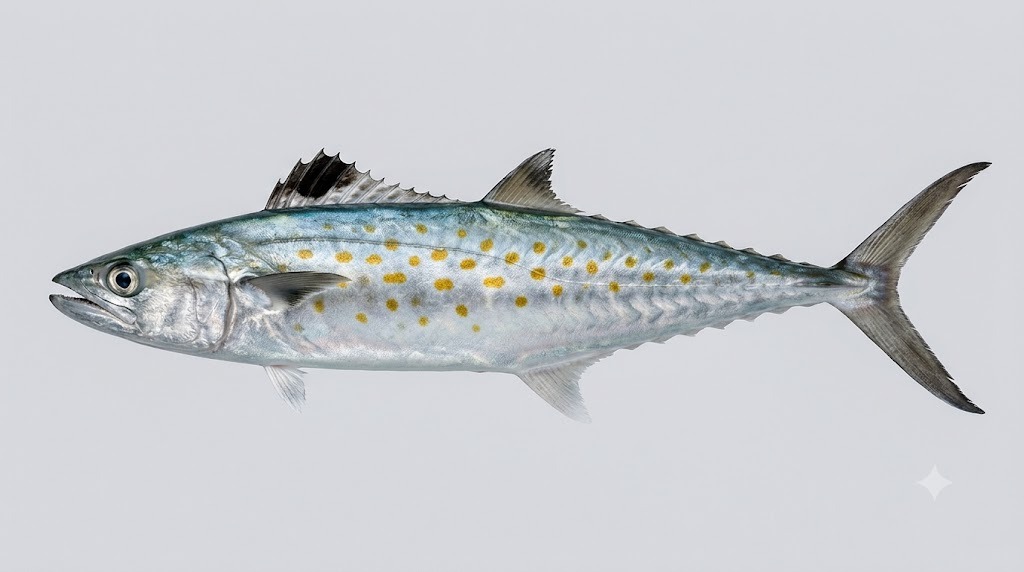
Spanish mackerel are small, sleek, and built for speed - a slender, streamlined, slightly compressed body, iridescent steel-blue to greenish on the back fading to bright silvery sides. The unmistakable markings are rows of distinct round-to-oval golden-yellow or bronze spots scattered along the flanks, vivid in fresh fish. Two features cleanly separate Spanish from juvenile king mackerel: the front portion of the first dorsal fin is jet black, and the lateral line slopes gently and evenly toward the tail rather than dipping sharply. The mouth is moderately large with sharp teeth, and the tail is forked. Spanish mackerel are much smaller than kings - a large Spanish would be a small king.
Range & Habitat (US waters - inshore / offshore)
Spanish mackerel range along the warm US coasts: throughout the Gulf of Mexico and along the Atlantic from Florida north to the Chesapeake region and, in summer, beyond. They are a warm-water, schooling, migratory species that follows water temperature and bait.
Spanish are a nearshore and inshore pelagic fish. They are found in the surf and just off the beach, around inlets, jetties, and ocean piers, in bays and large estuaries, over nearshore reefs and grass flats, and around any structure or open water that concentrates baitfish. They are far more accessible than king mackerel - much of the fishery happens within sight of land. They move inshore as water warms and follow bait schools coastwise, retreating to warmer or deeper water as it cools.
Behavior & Feeding
Spanish mackerel are fast, voracious schooling predators that hunt by speed and sight, feeding heavily on small baitfish - glass minnows (bay anchovies), silversides, threadfin herring, small menhaden, and similar - as well as shrimp and squid. They corral bait into tight balls and slash through them at high speed, often driving the bait to the surface in a frenzy marked by diving terns and gulls. Because they key on small, fast-moving prey, they respond best to small, fast, flashy presentations. They are not structure-bound; they roam in schools wherever bait is found. Spanish often feed throughout the day and can be intensely competitive when a school is fired up, making for fast multiple hookups.
Best Seasons & Times to Catch
Spanish mackerel fishing is a warm-water affair. In the Gulf and South Atlantic, the season runs as water warms - roughly spring through fall, with prime fishing often from April or May into October as fish migrate and concentrate nearshore. In South Florida and the warmer Gulf, Spanish can be available much of the year. Summer is reliable, with fish in the surf and around inlets. Spanish typically push north in spring and retreat south as water cools in late fall. They feed through the day, but mornings and the times when bait is active and tides are moving - especially around inlets - produce the fastest action.
Where to Find Them - Reading the Water
Look for the birds. Diving, hovering terns and gulls over breaking fish are the classic giveaway of a Spanish mackerel school crushing bait at the surface. Watch for bait flipping and glittering at the surface, nervous water, and slicks. Fish the surf and the water just off the beach, the mouths of inlets where current funnels bait, jetties, ocean piers, and nearshore reefs and bars. On the boat, run-and-gun to working birds. Spanish move fast, so be ready to relocate as the school shifts. Where you find concentrated small bait near the beach or an inlet, expect Spanish nearby.
Tackle & Rigs
Light tackle makes Spanish mackerel a blast. A 7-foot medium-light to medium fast-action spinning rod with a 2500-4000 reel and 10-20 lb braid is ideal - light enough to enjoy the fight and cast small lures far.
The leader is the key detail: Spanish have sharp teeth and are also somewhat leader-shy in clear water, so the common solution is a short length of light single-strand wire (around 30-40 lb) or, when fish are finicky, a long 30-40 lb fluorocarbon leader and quick re-tying after cut-offs. Many anglers compromise with light wire for steady fishing. Productive rigs include a small flashy lure tied directly to the leader, a "Spanish rig" or sabiki-style multi-lure trolling rig, and a small jig under a casting float. Keep everything small and fast.
Best Baits & Lures
Spanish mackerel are primarily a lure fish, and small-and-flashy is the rule. Top lures are small silver and gold spoons (Clarkspoon-style, a Spanish classic), small metal jigs and casting spoons, small soft plastics on light jigheads, straw or tube "Gotcha"-style plugs popular off piers, and small flashy trolling spoons. Tiny topwater plugs draw exciting strikes when fish are crashing bait.
When using bait, small live baitfish such as glass minnows and finger-sized menhaden, and strips of cut bait, all work - often fished under a float. Bright, reflective finishes that imitate small baitfish - silver, gold, chartreuse - are most effective, and a fast retrieve that mimics fleeing prey triggers the most strikes.
Techniques - How to Fish for It
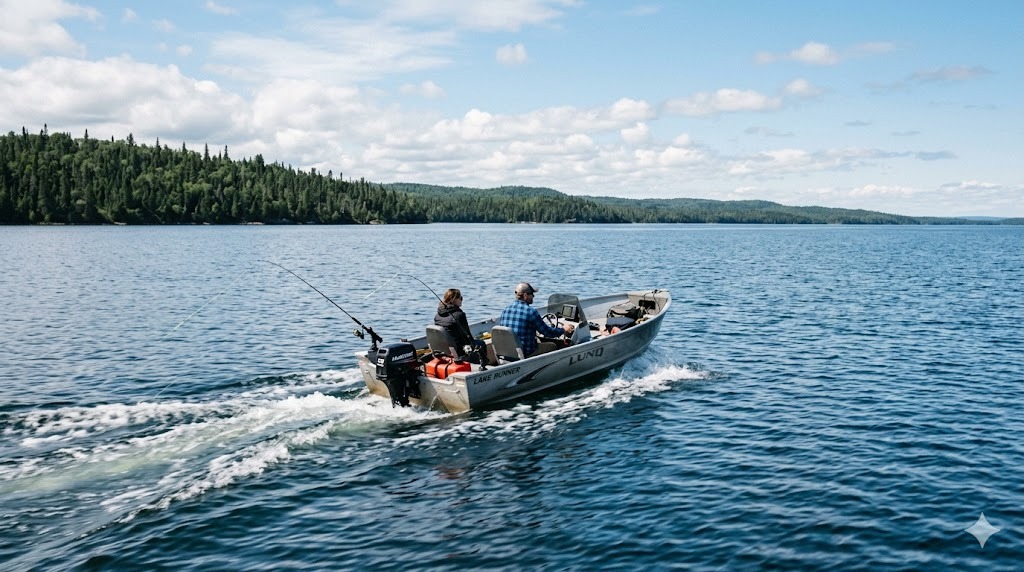
Casting to breaking fish is the most exciting method: spot the diving terns, ease within casting range without running over the school, cast a small spoon or jig past the fish, and retrieve fast - Spanish chase down a quick-moving lure. Trolling small spoons behind planers or trolling weights, often on multi-lure Spanish rigs, covers water and is deadly along the beach and around inlets; troll at a brisk 4-7 knots. Pier and jetty anglers cast and rapidly retrieve Gotcha plugs and spoons. Off the beach, fan-cast and retrieve fast through likely water. A firm, steady hookset works; let the light drag handle the run, and a small net or simply swinging in modest fish finishes the job - but watch the teeth.
Common Mistakes
Retrieving too slowly is the most common mistake - Spanish key on fast-fleeing prey, and a slow lure gets ignored. Using lures that are too large mismatches the small bait Spanish actually eat. Running the boat straight over a breaking school scatters the fish; ease in and cast from the edge. Skipping any bite protection means constant cut-offs from those teeth, while using heavy visible wire in clear water spooks finicky fish - match the leader to conditions. Anglers also handle Spanish carelessly; the teeth are small but sharp. Finally, ignoring bag and size limits, which apply to Spanish mackerel, is both illegal and harmful.
Size, Records & Eating Quality
Most Spanish mackerel run 1-3 pounds and 14-20 inches; a quality fish is 4-6 pounds, and a true trophy exceeds 8 pounds. The IGFA all-tackle world record is a 13-pound Spanish mackerel caught off Ocracoke Inlet, North Carolina, in 1987. Spanish mackerel are good eating when handled properly - the flesh is somewhat dark and oily but flavorful, excellent fresh, grilled, or smoked. The crucial step is to bleed the fish immediately and ice it hard, because the flesh softens and loses quality fast at warm temperatures. Eaten fresh, a well-cared-for Spanish is a fine table fish. Size and bag limits vary by state and region; check current regulations.
Pros & Cons (as a target species)
Pros: Fast, aggressive strikes and a spirited light-tackle fight; abundant and highly accessible from beaches, piers, jetties, and small boats; schooling behavior gives fast multiple-hookup action; great for families and newcomers; good eating when iced promptly; inexpensive to target with simple gear. Cons: Teeth cause cut-offs and call for wire or careful leader management; can be leader-shy in clear water; bite is seasonal and migration-dependent; flesh spoils quickly without immediate bleeding and icing; schools move fast and can be hard to stay on.
Best Suited For
Spanish mackerel are best suited for anglers who want fast, accessible, light-tackle fun without a long offshore run - beach and pier fishermen, families and kids, and light-tackle and fly enthusiasts. They are an outstanding "gateway" saltwater gamefish: easy to reach, eager to bite, hard-fighting for their size, and good on the table. They equally satisfy the experienced angler who enjoys sight-casting to breaking schools under diving birds.
FAQ
How do I tell a Spanish mackerel from a small king mackerel? A Spanish mackerel has a jet-black front dorsal fin and a gently sloping lateral line; a king's front fin is pale and its lateral line dips sharply beneath the second dorsal. Spanish also have bold gold spots and stay much smaller.
Do I need a wire leader for Spanish mackerel? Their teeth cause cut-offs, so a short light wire leader helps - but Spanish can be leader-shy in clear water, so many anglers use a long light fluorocarbon leader instead and accept occasional cut-offs. Match the leader to the conditions.
What's the best lure for Spanish mackerel? Small, flashy lures retrieved fast - silver and gold spoons (Clarkspoon-style), small metal jigs, and Gotcha plugs are all classics. Small and fast is the rule.
How do I find Spanish mackerel? Look for diving terns and gulls over breaking fish near the beach or inlets, and for bait flipping at the surface. Ease in and cast to the edge of the school.
Are Spanish mackerel good to eat? Yes, when handled right - the flesh is flavorful but somewhat oily and softens fast. Bleed and ice the fish immediately and eat it fresh, grilled or smoked.