Spotted Seatrout
The spotted seatrout - known across the South as "speckled trout" or simply "specks" - is the everyman's inshore gamefish.
🗓️ Last reviewed: June 2026
Overview
The spotted seatrout - known across the South as "speckled trout" or simply "specks" - is the everyman's inshore gamefish. It's abundant, eager, beautiful, and one of the finest-eating fish in coastal waters. Despite the name, it isn't a trout at all but a member of the drum family, related to redfish and croaker. Seatrout reward the angler who pays attention to tide, grass, and bait, and they can be caught on everything from a live shrimp under a cork to a fly. They form schools, so where you catch one you'll usually catch more. From wade fishermen in the Texas surf to anglers drifting Louisiana grass, the speckled trout anchors inshore fishing across the Gulf and South Atlantic.
Identification & Appearance
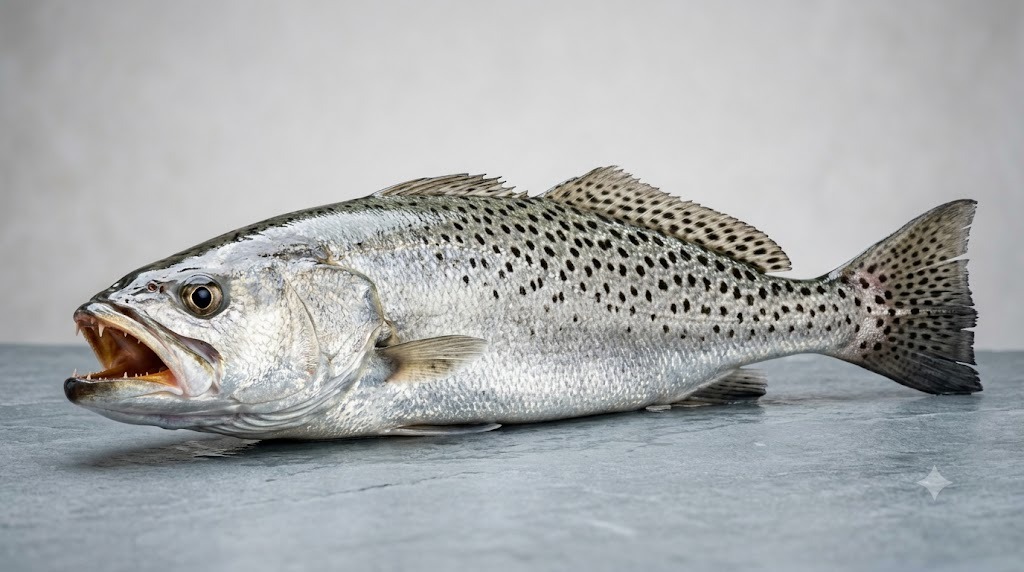
Spotted seatrout are sleek and elongated with a silvery body that shades to a dark, iridescent gray or olive-green on the back. The defining feature is the scatter of distinct round black spots across the upper body, dorsal fin, and tail - irregular, well-defined, and extending onto the fins (unlike a redfish's single tail spot). The mouth is large with a pair of prominent canine "fang" teeth on the upper jaw, used to grip baitfish. The body is soft-mouthed overall, meaning hooks tear free easily during a fight. Large females, called "gator trout," can look almost yellow-bellied and heavy-shouldered. Their soft, easily torn jaw tissue is the single most important physical trait for an angler to remember.
Range & Habitat (US waters - inshore / offshore)
Spotted seatrout range from the Chesapeake Bay region south around Florida and throughout the entire Gulf of Mexico to Texas. They are overwhelmingly an inshore and estuarine species - you will rarely catch one well offshore.
Their core habitat is the seagrass meadow: turtle grass, shoal grass, and widgeon grass beds in bays and lagoons. They also relate to sandy potholes within grass, oyster reefs, deeper bayous and channels, marsh shorelines, passes, and the surf zone along open beaches. Trout move seasonally between shallow flats and deeper holes depending on water temperature, but they remain tied to the estuary their whole lives. The healthiest trout populations track directly to the health of seagrass.
Behavior & Feeding
Seatrout are ambush predators that hold over and along grass edges, waiting to dart out and grab shrimp and small baitfish. They feed heavily on shrimp, mullet, pinfish, menhaden, and glass minnows. They are sound- and sight-oriented, which is why a "popping cork" - mimicking the noise of feeding fish - is so effective. Trout school by size class, so a string of small fish in one spot can be left for a different area holding bigger gators. They are sensitive to temperature extremes, retreating to deep holes in winter heat-loss and to shaded depths in summer. Big trout become more solitary, more nocturnal, and far more likely to eat a substantial baitfish than a small shrimp.
Best Seasons & Times to Catch
Seatrout bite year-round but the rhythm changes with the seasons. Spring is outstanding as fish move shallow to feed and pre-spawn. Summer brings consistent action, best at dawn, dusk, and even after dark when gator trout prowl the shallows; midday means fishing deeper, cooler water. Fall is a feeding frenzy as trout fatten ahead of winter - many anglers' favorite season. Winter concentrates fish in deep mud-bottom holes and canals that hold heat; the bite is slower but the biggest fish of the year are caught working soft plastics painfully slowly through those holes. Tide matters everywhere: a moving tide, especially the first push or last fall, switches the bite on.
Where to Find Them - Reading the Water
Focus on grass edges and the sandy potholes scattered through grass beds - trout sit on the down-current side waiting for bait to wash by. Oyster bars, points, drop-offs into channels, and the mouths of bayous are all prime. Look for nervous bait, slicks (a watermelon or fresh-cut-grass smell often accompanies a trout slick), and diving birds over schools driving shrimp to the surface. In winter, hunt the deepest dark-bottom holes you can find. In summer heat, fish deeper grass and channel edges. Wading lets you cover productive water quietly and is the trademark approach of serious trout fishermen.
Tackle & Rigs
A 7- to 7.5-foot medium or medium-light fast-action spinning rod with a 2500-3000 reel is the standard. Spool with 10-15 lb braid and a 15-20 lb fluorocarbon leader. The light tip helps cast light lures and, crucially, cushions the fight so hooks don't tear free of the trout's soft mouth.
Top rigs: a popping cork with a live shrimp or soft plastic suspended 18-30 inches below; a simple jighead (1/8-1/4 oz) for soft plastics; a free-lined live bait on a light wire hook; and a Carolina rig for fishing deeper holes. In winter, downsize everything and use the lightest jighead that still maintains bottom contact.
Best Baits & Lures
Live shrimp is the universal seatrout bait - fished under a cork, free-lined, or on a jighead. Live mullet, pinfish, and croaker are top choices for targeting big gator trout. Cut bait works but is less productive than for redfish.
For lures, soft plastic shrimp and paddletail/jerk-style baits on a jighead are the everyday standard. Suspending twitchbaits (MirrOlure-style plugs) are deadly on cooler water and big fish. Topwater walking plugs draw spectacular strikes at dawn and dusk. Gold and silver spoons round things out. Natural and glow colors in clear water; dark, chartreuse, and "morning glory" patterns when stained.
Techniques - How to Fish for It
The popping cork is the great equalizer: cast it out, let it settle, give the cork a sharp pop-pop, pause, and repeat - the noise calls trout in and the suspended bait does the rest. With soft plastics, the rhythm is a slow lift-and-fall - let the lure sink, twitch it off the bottom, and watch your line on the drop, because most strikes come as the lure falls. Twitchbaits get a twitch-twitch-pause cadence; the pause is when fish eat. Topwater calls for a steady walk-the-dog. The cardinal rule on the hookset: do not jerk hard - a smooth sweep keeps the hook from ripping out of that soft mouth, and a steady rod through the fight is what lands gators.
Common Mistakes
Setting the hook violently is mistake number one - it tears the soft mouth and loses fish. Fishing too fast in cold water is mistake two; winter trout want an agonizingly slow retrieve. Anglers also leave fish to find fish - if you catch one small trout and move on, you may be abandoning a school. Ignoring the tide and fishing dead slack water wastes time. Many anglers also overlook the role of bait: if you don't see shrimp, mullet, or birds, you're probably not on fish. Finally, wading or motoring noisily over a shallow grass flat spooks the very fish you're hunting.
Size, Records & Eating Quality
Most keeper seatrout run 14-20 inches and 1-3 pounds. A "gator" trout of 24+ inches and 5+ pounds is a genuine trophy, and the rare giants top 9 pounds. The IGFA all-tackle world record is a 17-pound, 7-ounce fish caught in Fort Pierce, Florida, in 1995. Seatrout are superb eating - delicate, white, mild fillets - though the flesh is soft and best eaten fresh rather than frozen. Many anglers now release the big females, which are the most productive spawners, and keep the smaller "eater" fish. Bag and slot limits vary by state and have tightened in many areas, so check current regulations.
Pros & Cons (as a target species)
Pros: Abundant and widespread; eager biters that hit lures, bait, and flies; school up for fast action; excellent light-tackle and fly target; outstanding eating; accessible to waders and small-boat anglers. Cons: Soft mouth means a high rate of pulled hooks; very tide- and temperature-sensitive; fillets don't freeze well; populations are vulnerable to cold-kill events and habitat loss.
Best Suited For
Spotted seatrout are ideal for the angler who loves light-tackle action and consistent catching - a beginner can connect under a popping cork, while the specialist wading at dawn for a 28-inch gator is chasing one of inshore fishing's true trophies. They are a perfect species for fly anglers, kayak fishermen, and anyone who values a fish that's as good on the plate as it is on the line.
FAQ
Why do I keep losing seatrout at the boat? Seatrout have very soft, easily torn mouths. Don't set the hook hard, keep steady pressure during the fight, and use a net rather than swinging fish aboard.
Are speckled trout and rainbow trout related? No. The "spotted seatrout" is a member of the drum family and has nothing to do with freshwater trout - the name comes only from its spotted appearance.
What's the best all-around bait for seatrout? A live shrimp fished under a popping cork is the most reliable choice across all conditions and skill levels.
When is the best time of day for big trout? Dawn and dusk in warm months, and even after dark, are prime for gator trout. In winter, the warmest part of a sunny afternoon over deep mud holes is best.
Can I eat spotted seatrout? Yes - they're excellent, with delicate white fillets. Eat them fresh, as the soft flesh doesn't hold up well to freezing.