Striped Bass
The striped bass - "striper," "rockfish," "linesider" - is the signature gamefish of the Atlantic coast and the heartbeat of Northeast and Mid-Atlantic saltwater fishing.
🗓️ Last reviewed: June 2026
Overview
The striped bass - "striper," "rockfish," "linesider" - is the signature gamefish of the Atlantic coast and the heartbeat of Northeast and Mid-Atlantic saltwater fishing. A migratory, hard-fighting, beautifully marked predator, the striper draws a fervent following of surfcasters, boat anglers, and fly fishermen from the Carolinas to Maine. Stripers blitz bait in roiling, gull-screaming feeding frenzies, prowl rocky shorelines after dark, and grow to enormous "cow" size. They are equal parts sport fish and cultural institution along the coast, and their seasonal migration sets the calendar for an entire fishing community. This guide focuses on the coastal, saltwater striped bass fishery.
Identification & Appearance
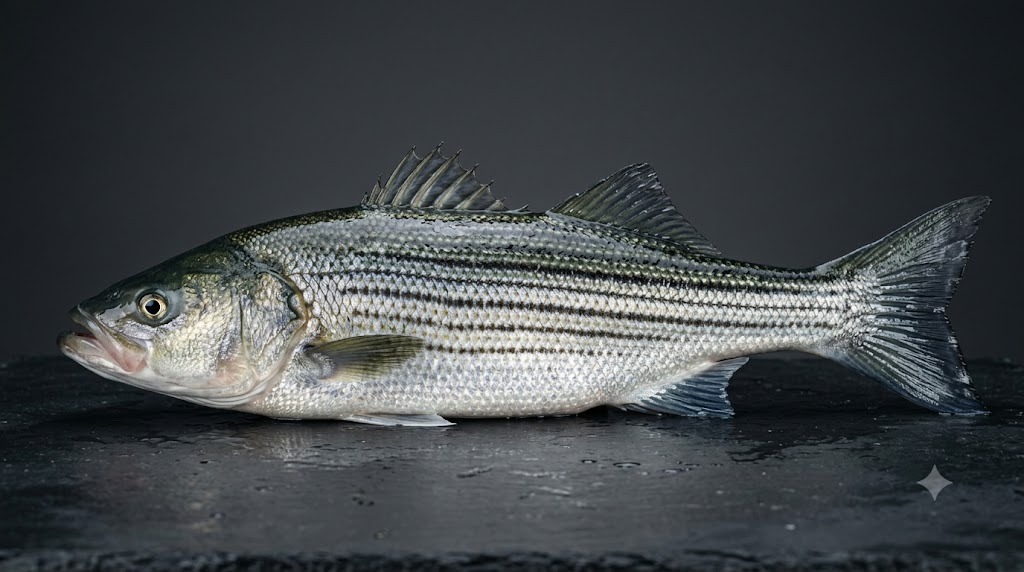
Striped bass are sleek, powerful, and silvery-white on the sides shading to a dark olive or steel-blue back and a white belly. The unmistakable feature is a series of seven or eight dark, continuous horizontal stripes running the length of the body from the gills to the tail - the source of "striper" and "linesider." The body is elongated and moderately deep, with two separate dorsal fins and a forked tail. The mouth is large. Stripers are often confused with white perch (much smaller, no clean stripes) and with hybrid striped bass found inland; the true coastal striper has clean, unbroken stripes and reaches far greater size. Large fish develop a heavy-shouldered, big-bellied "cow" profile.
Range & Habitat (US waters - inshore / offshore)
The coastal striped bass ranges along the Atlantic from roughly North Carolina to Maine and into Canada, with major populations centered on the Chesapeake Bay, the Hudson River, and the Delaware system, which serve as the primary spawning estuaries. Stripers are anadromous - they spawn in fresh and brackish river water and spend their adult lives in salt.
Habitat is varied: rocky shorelines, sandy surf beaches, inlets and rips, jetties, bridges, estuaries, bays, river mouths, and structure such as boulder fields, reefs, and rips formed by tide over ledges. They move nearshore and into bays and rivers, and follow bait along open beaches. Stripers undertake long seasonal coastal migrations, moving north and inshore in spring and south and offshore in fall.
Behavior & Feeding
Striped bass are aggressive, opportunistic predators that feed heavily on baitfish - menhaden (bunker), herring, mackerel, silversides, sand eels, mullet - as well as crabs, lobsters, squid, and worms during seasonal worm hatches. They are strongly tide- and current-oriented, using rips and current edges to ambush bait being swept along. They feed especially hard at dawn, dusk, and after dark, and big stripers are notably nocturnal. The famous "blitz" occurs when stripers (often with bluefish) corral bait against a beach or the surface, producing chaotic surface feeding under diving birds. Their migration is keyed to water temperature, and they follow the bait coastwise on a predictable seasonal schedule.
Best Seasons & Times to Catch
Striper fishing follows the migration. Spring brings fish moving north and inshore, with strong action as stripers feed after spawning - often April through June depending on latitude. Summer offers steady fishing, best in cooler water, at night, and around current and structure; in the warmest areas summer can slow as fish seek cooler depths. Fall is the legendary season: the southbound migration produces blitzes and the year's best surf and boat fishing, roughly September through November, as huge schools chase bait down the coast. Winter fishing is limited to the southern range and holdover fish in some estuaries. Dawn, dusk, night, and moving tides - especially around rips - are consistently the most productive.
Where to Find Them - Reading the Water
Read current and structure. Rips - turbulent water where tide flows over a ledge, bar, or around a point - are striper magnets, with fish holding in the calmer water on the down-current side. Fish jetties, boulder fields, bridge shadow lines at night, inlets, and the troughs and cuts in surf beaches where waves dig holes. Look for diving birds, breaking fish, bait flipping at the surface, and slicks. On a beach, fish the deeper trough and the cuts where it connects to the open ocean. At night, work the shadow line of bridge lights. Wherever current concentrates bait against structure, expect stripers.
Tackle & Rigs
Striper tackle scales with the venue. For surfcasting, a 9- to 11-foot medium-heavy rod with a 5000-8000 spinning reel and 30-50 lb braid handles distance casting and big fish. For boat and inshore work, a 7- to 8-foot medium-heavy rod with a 4000-6000 reel suffices. Use a 30-50 lb fluorocarbon or mono leader; heavier around rocks and rough structure.
Common rigs: the fish-finder/sliding-sinder rig for bait on the bottom (bunker chunks, clams, worms); a three-way rig for fishing rips and current; the classic surf rig with a pyramid sinker; and a simple jig or plug clipped to the leader. Live-lining a bunker or eel uses a single circle hook with little or no weight. Circle hooks are required for bait fishing for stripers in many jurisdictions.
Best Baits & Lures
Top natural baits are live or chunked menhaden (bunker), live eels (a legendary big-striper bait, especially at night), herring, mackerel, sandworms and bloodworms, clams, and live mackerel or pollock where available. Chunk bunker is the everyday surf and bay standard.
For lures, the striper box is deep: bucktail jigs (perhaps the single most versatile striper lure), soft plastic paddletails and jerk shads, swimming plugs and metal-lipped swimmers, pencil poppers and topwater plugs for blitzes, metal jigs and tins for distance casting and jigging, and large flies for fly anglers. Natural bunker and sand-eel tones in clear daylight; dark colors (black, dark purple) at night, when stripers silhouette the lure against the sky.
Techniques - How to Fish for It
Surfcasting means reading the beach, casting plugs, tins, or bait into troughs and cuts, and working lures with the wash. In rips, drift or anchor up-current and present bait or a bucktail bounced along the bottom in the turbulent seam. Live-lining an eel or bunker - drifting it naturally near structure, especially at night - is a premier big-fish method. Trolling tubes, umbrella rigs, and swimming plugs covers water and finds scattered fish. During a blitz, cast a topwater or tin into the edge of the breaking fish, not the center. At night, work dark plugs slowly through bridge shadow lines. With circle hooks, let the fish load the rod rather than striking hard.
Common Mistakes
A frequent mistake is fishing the wrong tide - stripers key on moving water and rips, and slack tide often shuts the bite off. Fishing only midday in summer misses the dawn, dusk, and night windows when big fish feed. Casting into the center of a blitz instead of the edges puts the lure where the bait is densest and the fish least likely to single it out. Going too light around jetties and boulders gets fish broken off. Many anglers also overlook night fishing, which is when the largest stripers are most catchable. Finally, mishandling and poorly reviving large fish - vital breeding cows that are often released - harms the resource.
Size, Records & Eating Quality
"Schoolie" stripers run 16-28 inches and a few pounds; quality fish reach the 30s and 40s of inches and 15-35 pounds; trophy "cows" exceed 50 pounds. The IGFA all-tackle world record is an 81-pound, 14-ounce striped bass caught off Westbrook, Connecticut, in 2011. Striped bass are fine eating - firm, white, mild fillets - and a moderate-sized fish is excellent table fare. However, the striped bass stock has faced serious conservation concern, and regulations now feature strict slot limits, low bag limits, mandatory circle hooks for bait, and seasonal rules that vary widely by state. Check current regulations before keeping any fish, and consider releasing large breeding females.
Pros & Cons (as a target species)
Pros: Hard-fighting and powerful; grows to enormous size; accessible to surfcasters, boat, and fly anglers; thrilling blitz fishing; available along nearly the entire Atlantic seaboard; good eating within the slot; rich fishing culture and community. Cons: Highly seasonal and migration-dependent; bite keyed tightly to tide, current, and low light; the stock is a conservation concern with strict, complex, and changing regulations; big fish require careful handling and release; surfcasting demands specialized gear and weather can shut it down.
Best Suited For
Striped bass are best suited for the angler who embraces the rhythm of the migration and the tides - the dedicated surfcaster patrolling a night beach, the boat angler working rips, and the fly fisher chasing a blitz. They suit those who value a powerful, sizeable, hard-fighting fish and a deep, varied skill set. Beginners can readily catch schoolies on bait and bucktails, while the pursuit of a 50-pound cow can occupy a serious angler for life.
FAQ
What's the best bait for big striped bass? A live eel, drifted near structure at night, is a legendary big-striper bait. Live or chunked menhaden (bunker) is the everyday standard.
Why do I have to use circle hooks for stripers? Circle hooks are mandatory for bait fishing for striped bass in many states because they hook the corner of the jaw, greatly reducing gut-hooking and improving survival of released fish - important for a stock under conservation concern.
When is the best time to catch stripers? The fall migration (roughly September-November) produces the year's best fishing and blitzes. Day to day, dawn, dusk, night, and moving tides around rips are most productive.
Can I keep a striped bass? Often yes, but only within a strict slot limit and low bag limit that varies by state and changes frequently due to conservation rules. Always check current regulations, and consider releasing large breeding cows.
Where do I cast during a striper blitz? Cast to the edges of the breaking fish, not the center. In the chaotic middle your lure competes with thousands of real baitfish; on the edge it stands out.