Wahoo
The wahoo is offshore fishing's drag-burning speed demon - a sleek, electric-striped pelagic that hits a trolled lure like a lightning bolt and peels line off the reel faster than almost any fish in the sea.
🗓️ Last reviewed: June 2026
Overview
The wahoo is offshore fishing's drag-burning speed demon - a sleek, electric-striped pelagic that hits a trolled lure like a lightning bolt and peels line off the reel faster than almost any fish in the sea. Built like a living torpedo and armed with a mouthful of razor teeth, the wahoo delivers the single most explosive strike in blue-water fishing: a smoking, reel-screaming run that can empty hundreds of yards of line in seconds. Found in warm offshore waters along both U.S. coasts, in the Gulf, and around the islands, wahoo are coveted not only for that thrilling strike but also for their clean, mild, white meat - among the finest eating fish that swims.
Identification & Appearance
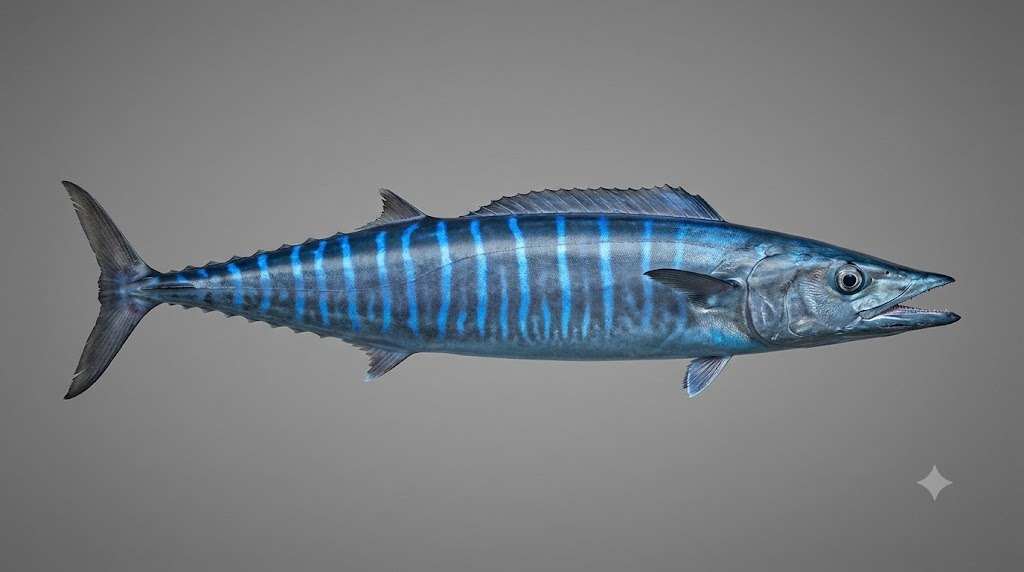
Wahoo are unmistakable: an extremely long, slender, steel-blue body with a series of vivid cobalt-blue vertical bars or "tiger stripes" down the sides that can glow with iridescence on a fresh fish. The head tapers to a long, beak-like snout, and the jaws are lined with triangular, razor-sharp teeth. A long, low first dorsal fin runs much of the back. The body is built entirely for speed - narrow, firm, and finished with a stiff, deeply forked tail. Wahoo can superficially resemble king mackerel, but the bold vertical stripes, more pointed snout, and elongated dorsal set them apart immediately.
Range & Habitat (US waters - inshore / offshore)
Wahoo are a warm-water offshore pelagic found along both U.S. coasts, throughout the Gulf of Mexico, and abundantly around the islands and warm currents such as the Gulf Stream. They have no use for the bottom; they roam the open ocean and relate to features that concentrate bait. Prime areas include current edges and temperature breaks, color changes, weed lines, offshore reefs and humps that create upwelling, floating debris, and the deep edges where the continental shelf drops away. They are often found in or near blue water, frequently at the edges where bait gathers.
Behavior & Feeding
Wahoo are solitary or loosely schooling apex predators that hunt by raw speed. They ambush and run down baitfish, squid, and other prey, using bursts that are among the fastest of any fish - capable of well over 40 miles per hour in short sprints. They typically slash through a school, then circle back to pick off the wounded, and those razor teeth often shear a baitfish - or a hooked lure - clean in half. Wahoo strike a trolled bait with a violent, instantaneous take and an immediate screaming run. They are aggressive but can be sparse and scattered, so covering water to find them is part of the game.
Best Seasons & Times to Catch
Wahoo are available much of the year in warm offshore waters, but most regions have a peak. In many Atlantic and Gulf areas the cooler months - fall through spring - produce concentrated, predictable wahoo fishing, and dedicated "wahoo runs" draw fleets at certain times of year. Around the islands and warm currents, wahoo are reliable through the cooler season. Dawn and the low-light periods are classic prime times, and the hours around major moon phases are favored by many wahoo specialists. Stable conditions and a defined current edge improve your odds.
Where to Find Them - Reading the Water
Wahoo fishing rewards anglers who read the ocean. Hunt temperature breaks and color changes where blue water meets green, current rips, and weed lines that hold bait. Offshore humps, ledges, and the drop-off at the edge of the shelf create upwelling and concentrate prey - classic wahoo zones. Watch for bait on the surface and on the sounder, and for frigatebirds and other birds working. Floating debris can hold fish. Many wahoo specialists run a defined depth contour or the edge of a current and troll until they locate the fish, then work that productive zone.
Tackle & Rigs
Wahoo combine extreme speed with razor teeth, so tackle must be tough and trolling rigs must resist cut-offs. For high-speed trolling, heavy conventional outfits in the 50 to 80-pound class with strong lever-drag reels are standard, spooled with heavy mono or braid. The defining terminal tackle is wire leader - single-strand or cable wire is essential to prevent the teeth from shearing the line, used ahead of a heavy mono or fluorocarbon section. Lures are run with heavy trolling weights or planers to get them down to the fish at speed. For live-baiting or slow trolling, stout conventional gear with a wire bite leader is used. Always assume a wahoo will test the weakest point.
Best Baits & Lures
Wahoo respond to fast-moving offerings. High-speed trolling lures - heavy-headed, bullet- or jet-style lures designed to run true at 12 to 18 knots - are the signature wahoo tool, often run deep with trolling leads. Skirted lures and rigged ballyhoo trolled at more standard speeds also produce, especially with a wire leader. Diving plugs and large swimming plugs draw vicious strikes. For live bait, blue runners, mullet, and other baitfish slow-trolled or fished on a wire leader work well. Dark color patterns - black-and-red, black-and-purple - and bright "wahoo" colors are perennial favorites.
Techniques - How to Fish for It
High-speed trolling is the marquee wahoo technique: pulling heavy bullet-head lures with trolling weights at 12 to 18 knots, far faster than typical trolling, which both covers vast water and triggers wahoo's reaction strikes. The lures are run at staggered depths using leads of varying weight. Standard-speed trolling with skirts and rigged ballyhoo over wahoo structure also produces. When a wahoo hits, the strike is unmistakable - a screaming run - so let the drag and the fish do the work initially, then settle into the fight. Slow-trolling or live-baiting along a current edge is effective when fish are located. Whatever the method, the wire leader is non-negotiable.
Common Mistakes
The single most common mistake is fishing without a wire leader - a wahoo's teeth will shear straight through mono or fluorocarbon, and bite-offs are heartbreaking. Trolling too slowly when high-speed trolling is called for misses the reaction strikes. Drags set too loose let a fish spool you on that first run; too tight risks a pulled hook on the strike. Anglers also troll blind instead of hunting current edges and temperature breaks. Mishandling a green wahoo at the boat is dangerous - those teeth and that thrashing power cause serious injuries. Finally, failing to bleed and ice the fish quickly degrades the excellent meat.
Size, Records & Eating Quality
Wahoo commonly run 15 to 50 pounds, with quality fish exceeding 60 pounds and true trophies topping 80 to 100-plus pounds. The IGFA all-tackle world record is 184 pounds, caught off Baja Mexico. On the table, wahoo are exceptional - clean, mild, slightly sweet white meat with a fine texture, excellent grilled, seared, or as sashimi, and widely regarded as one of the best-eating offshore fish. As with all premium pelagics, bleeding and icing the fish immediately preserves the quality.
Pros & Cons (as a target species)
Pros: the most explosive strike and fastest run in offshore fishing; reach trophy sizes; superb, clean white eating; available much of the year in warm water. Cons: require an offshore-capable boat and the long run to blue water; razor teeth demand wire leaders and careful handling; fish can be scattered and require covering water; high-speed trolling burns fuel; specialized gear adds cost.
Best Suited For
Wahoo are best suited to offshore anglers who relish the hunt and the heart-stopping strike of a true speedster. They reward boaters with the range to reach warm blue water and the willingness to cover ground hunting current edges. Charter trips, especially during seasonal wahoo runs, give first-timers a shot at this prize. Wahoo are ideal for anglers who want a spectacular fight, a clean and delicious fish, and the offshore experience - though those wanting steady, close-to-shore action should consider other targets.
FAQ
Why do I need a wire leader for wahoo? Wahoo have triangular, razor-sharp teeth that slice straight through monofilament and fluorocarbon. A single-strand or cable wire bite leader is essential to avoid losing fish to bite-offs.
What is high-speed trolling? High-speed trolling means pulling heavy bullet- or jet-head lures with trolling weights at 12 to 18 knots - far faster than normal trolling. The speed covers huge amounts of water and triggers wahoo's reaction strikes.
When is the best time to catch wahoo? Wahoo are available much of the year in warm water, but many regions see peak, concentrated fishing in the cooler months. Dawn and the periods around major moon phases are classic prime windows.
How fast can a wahoo swim? Wahoo are among the fastest fish in the ocean, capable of bursts well over 40 miles per hour, which is why their first run after the strike is so explosive.
Are wahoo good to eat? Yes - wahoo are considered one of the best-eating offshore fish, with clean, mild, slightly sweet white meat. Bleed and ice the fish immediately for the best quality.