How to Keep Amano Shrimp at Home
An honest guide to keeping amano shrimp as the best algae eaters in the hobby, and why breeding them at home is genuinely hard.
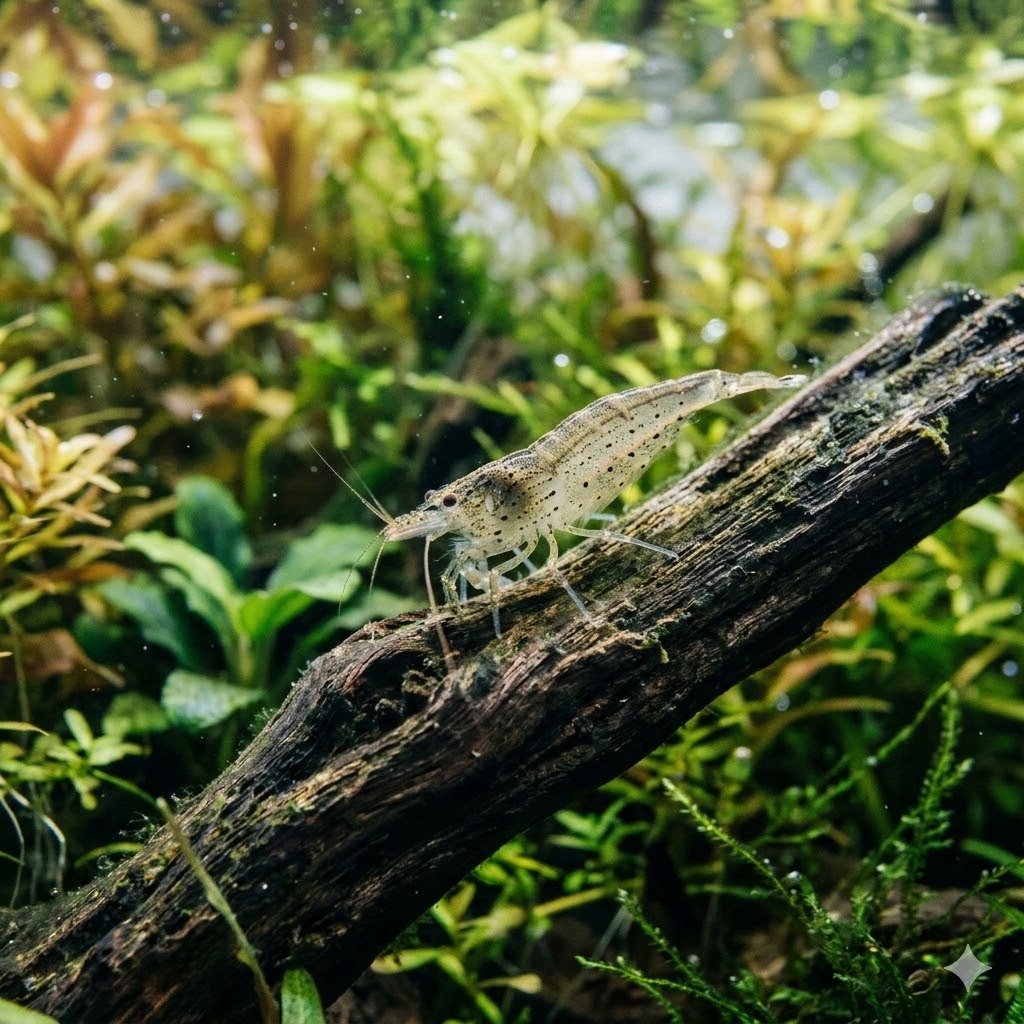
Amano shrimp are the hardest-working algae eaters in the freshwater hobby. A few of them will keep a planted tank noticeably cleaner, grazing types of algae that most other cleanup animals ignore. They are hardy, larger than most ornamental shrimp, and easy to keep alive once the water is stable. If your goal is a spotless planted tank, amanos are one of the best tools available.
Here is the honest part up front: keep amano shrimp for cleanup, not for breeding. They will readily produce eggs, but the larvae need saltwater to survive, which makes home breeding a real project rather than something that happens on its own. If you want a colony that renews itself, cherry shrimp are far simpler. Amanos are a working animal you buy, keep, and enjoy - not a self-sustaining crop.
Why raise amano shrimp
Amano shrimp are kept for one main reason, and they are excellent at it.
- Algae cleanup. This is their headline job. They graze soft algae, hair algae, and biofilm all day and are among the most effective algae eaters you can add to a planted tank. A small group can transform a lightly overgrown tank.
- Larger and hardier than most shrimp. At full size they are big enough to hold their own alongside peaceful fish, and they tolerate a reasonable range of conditions.
- Long-lived and low-drama. Kept well, an amano can live for a few years, quietly doing its job.
Set expectations honestly. Amano shrimp are almost never a breeding project, so you are not building a colony - you are maintaining a small cleanup crew that you occasionally replace. They are not colourful ornamentals, they are not bait, and they are not a source of income. Buy them because you want a clean tank and a hardy, interesting shrimp, not because you expect them to multiply.
The tank and setup
Amano shrimp are bigger than cherry shrimp and appreciate a bit more room, but they still live comfortably in modest planted tanks.
- A planted tank is ideal, since that is where their cleanup skills shine. Anything from a small to a medium tank works; they are most effective where there is algae to graze.
- Plants, moss, and cover. Live plants and moss give them grazing surface and shelter, and make them feel secure enough to forage in the open. Amanos moult regularly and like a hide or two to shelter in while their new shell hardens.
- Sponge filter or guarded intake. As with all shrimp, gentle filtration is safest. Adult amanos are large enough not to be sucked into most filters, but a sponge filter or a guarded intake is still the sensible choice.
- A secure enough tank. Amanos can be escape artists, occasionally climbing out through gaps around the lid or filter, especially if water quality drops. A well-fitted lid reduces the risk.
They do best in warm, stable, well-established tanks. As with any shrimp, add them only to a mature tank with settled biology and some biofilm to graze.
Water and stability
The guiding rule is the same across all shrimp: stability beats chasing exact numbers. Amano shrimp tolerate a fairly broad range of temperature and hardness, but they dislike sudden swings and large, abrupt changes.
Two rules are non-negotiable:
- Copper is lethal. Copper kills shrimp at concentrations that fish shrug off. It hides in some fish medications, a few plant fertilisers, and can leach from old copper plumbing. Read every label and keep copper out of the tank entirely.
- Cycle the tank first. Shrimp cannot survive ammonia or nitrite spikes. Establish the nitrogen cycle before adding them, so bacteria convert ammonia to nitrite and then to far less harmful nitrate, which you export with water changes. Our systems and water quality guide covers this if it is new to you.
Keep maintenance gentle. Small, regular water changes with dechlorinated, temperature-matched water are far kinder than big infrequent ones. Match the hardness of replacement water so the mineral balance stays steady, and avoid dropping the temperature sharply during changes.
Feeding and daily care
In a planted tank with algae, amano shrimp largely feed themselves - that is the point of keeping them. Because they are efficient grazers, you feed sparingly.
- If the tank is very clean and algae is scarce, offer a small amount of algae-based food, blanched vegetable, or a sinking pellet a couple of times a week.
- In a tank with plenty of algae and biofilm, you may barely need to feed them at all.
- Never overfeed. Amanos are big enough to eat well, but leftover food fouls the water and defeats the purpose of a clean tank.
A useful sign: if your amanos are constantly swarming the food you drop for fish, the tank may not have enough algae to keep them busy, and you can offer a little extra. If they ignore added food, they are finding plenty on the surfaces, which is exactly what you want.
Daily care is mostly watching. Check they are active and grazing, that they moult cleanly (a shed shell is normal, not a dead shrimp), and that none have wandered out of the tank. A quick daily glance is enough.
Breeding and raising the young
This is the honest heart of the guide. Amano shrimp breeding at home is impractical for almost everyone, and it is worth understanding why before you pin any hopes on it.
Females readily carry eggs, and you will often see berried amanos in a healthy tank. But when the eggs hatch, they release larvae, not miniature shrimp - and those larvae require brackish or saltwater to develop. In pure freshwater they simply do not survive. This is completely different from cherry shrimp, whose babies hatch ready to live in the same tank as their parents.
To actually breed amanos you would need to:
- Catch the larvae as they hatch and transfer them to saltwater.
- Feed them appropriate microscopic food through a long larval stage.
- Gradually acclimate the survivors back to freshwater once they metamorphose into juvenile shrimp.
It is doable, and dedicated hobbyists have succeeded, but it is a demanding project with high losses and a lot of fiddly work. For the vast majority of keepers, it is not worth it.
The honest recommendation: keep amano shrimp for cleanup and simply buy replacements as needed. If you want a shrimp that renews itself with no effort, get cherry shrimp instead - they breed in the same freshwater tank they live in and build a colony on their own. Choose amanos for the algae control and accept that they will not multiply for you.
Common mistakes
Most amano problems come from a familiar list.
- Expecting them to breed. The larvae need saltwater; a freshwater colony will not build itself. Plan to replace, not reproduce.
- Copper exposure. Still the number one killer. Keep all copper away from the tank.
- Adding them to a new tank. Without established biology and algae, they are stressed and underfed. Use a mature tank.
- Instability. Big water changes and temperature swings stress them. Keep maintenance gentle and gradual.
- Escapes. Amanos can climb out through gaps, especially if water quality slips. Use a well-fitted lid.
- Overfeeding. Defeats the purpose and fouls the water. Feed lightly, if at all.
A responsibility note: amano shrimp are non-native in most places they are kept, and released aquarium animals or plants can become invasive. Never release shrimp, snails, or plants into natural waterways. Rehome any you no longer want to another hobbyist.
Is amano shrimp right for you?
Amano shrimp are right for you if you keep a planted tank and want the best freshwater algae eater available, and if you are comfortable treating them as a cleanup crew you occasionally replace rather than a colony you grow. They are hardy, effective, and genuinely satisfying to watch at work.
They are the wrong choice if you want a self-sustaining, colourful colony or a breeding project - the saltwater larval stage puts serious breeding out of reach for almost everyone, and cherry shrimp will give you a renewing population with a fraction of the effort. They are also not bait or feeders.
If you want a clean planted tank and a tough, hard-working shrimp, amanos are an excellent pick. Just go in knowing you are keeping them for their labour, not their offspring.