How to Raise Koi in a Backyard Pond
A practical guide to keeping koi at home - pond size, filtration, spring spawning and the mistakes that cost beginners their fish.
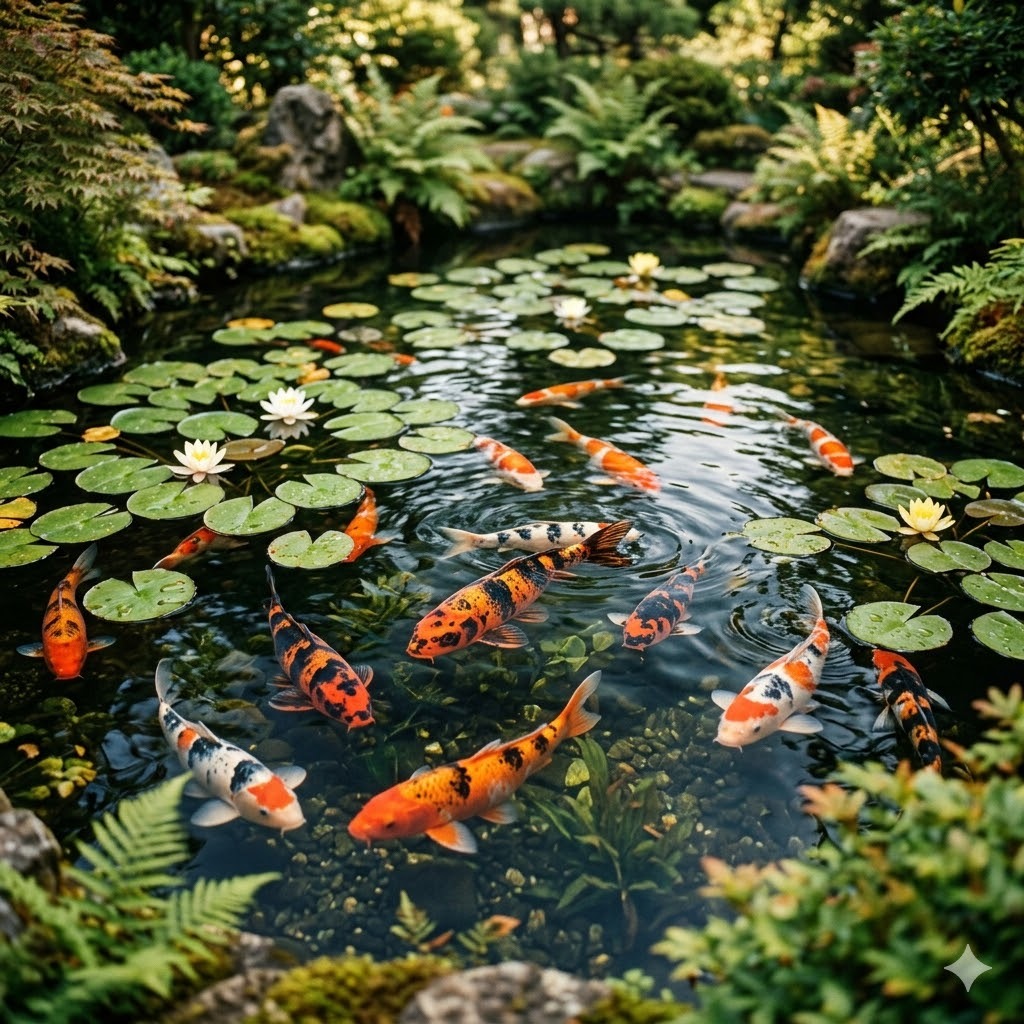
Koi are worth raising if you want a long-term outdoor project and you have the space and budget for a proper pond. These are large, tame, long-lived fish that will hand-feed and follow you along the edge of the water, and a well-kept pond of good koi can become a genuine hobby that also breeds fish worth real money. They are not a casual purchase. Koi grow to a foot or more, live for decades, and need serious filtration to stay healthy, so they suit someone with a garden, patience and a willingness to build the system properly the first time.
If that sounds like a lot, it is - but it is also the reason people stay in the hobby for years. Few backyard projects reward you the way a mature koi pond does.
Why raise koi
Koi give you a living centrepiece for a garden. They are hardy, they recognise the person who feeds them, and many become tame enough to take food from your hand. Watching a group of large, colourful fish glide through clear water is the whole appeal, and it does not fade.
There is also a breeding side. A good line of koi can produce young that other keepers genuinely want, and healthy, well-marked fish trade and sell for real sums. You will not get rich, and the fish that sell for headline prices come from decades of careful bloodline work - but a backyard breeder can raise fish that cover their costs and then some, which is more than most fishkeeping offers.
Be realistic about what you are signing up for. Koi are a long commitment. They outlive dogs, they need year-round care, and the pond has to run through winter as well as summer. This is a hobby you grow into, not one you dabble in.
The pond or tank
Koi need a pond, not a tank. A tank of any sensible household size cannot hold enough water for fish this large and this messy, so plan for an outdoor pond from the start.
Build it bigger than feels necessary. A useful rule is deep and roomy: aim for a pond that holds several thousand litres even for a small group, with a depth of at least a metre so the water stays stable and gives the fish somewhere to shelter. More water is more forgiving - it dilutes waste, holds temperature steady and buys you time when something goes wrong.
Filtration is not optional. Koi produce a heavy load of waste, and without strong mechanical and biological filtration the water fouls quickly. You want a filter system rated well above the pond's volume, plus good water movement so the whole pond turns over. A pump that seems oversized on paper is usually about right in practice. See our systems and water quality guide for how mechanical and biological stages work together.
- Bigger pond, stronger filter than you think you need
- Depth of a metre or more for stable water and winter shelter
- A pump and filter rated above the pond volume, running constantly
Water and temperature
Koi are temperate fish. They handle a wide range of temperatures, from cool to warm, which is one reason they thrive outdoors in most climates. What they do not tolerate is dirty water.
The heart of a healthy pond is the nitrogen cycle. Fish waste and uneaten food break down into ammonia, which is toxic. Beneficial bacteria in your filter convert ammonia to nitrite, then nitrite to far less harmful nitrate, which you remove through water changes and plants. A new pond has to build this bacterial colony before it is safe to stock heavily, and that takes weeks. Rushing it is the single most common way beginners kill fish.
Keep the water well oxygenated. Large fish in warm water need plenty of dissolved oxygen, and warm water holds less of it, so aeration matters most in summer. Moving water, a waterfall or an air pump all help.
Overwintering is straightforward if the pond is deep enough. Koi slow down as the water cools and effectively rest through the cold months, eating little or nothing. The pond must not freeze solid, so depth matters, and you should keep a small area of the surface open for gas exchange if ice forms. Do not feed heavily in cold water - their digestion slows and uneaten food fouls the pond.
Feeding and daily care
Feed koi a good quality floating food, and feed to appetite rather than to a schedule. A useful habit is to give only what they clear in a few minutes, once or twice a day in warm weather. Overfeeding is the usual cause of cloudy, polluted water, because everything they do not eat rots.
Adjust with temperature. As the water warms, koi eat more and grow faster. As it cools in autumn, cut back, and stop feeding almost entirely once the water is cold, because their bodies cannot process food they cannot digest.
Daily care is mostly observation. Watch the fish each day - active, feeding koi with clear skin and open fins are healthy koi. Check your filter is running, top up for evaporation, and test the water regularly, especially in a young pond. A quick daily look catches most problems while they are still small.
Breeding koi
Koi spawn in spring, triggered by rising water temperature and longer days. In a mature pond, a group of adults will often spawn on their own once the water warms, with the females scattering large numbers of sticky eggs over plants or spawning brushes and the males fertilising them.
The catch is that koi eat their own eggs and fry. If you want to raise the young, you need to move the eggs or the spawning material to a separate tank or a protected section of the pond, away from the adults. The eggs hatch in a few days, and the tiny fry need very fine food at first, then gradually larger food as they grow.
Selection is where the real work lies. A single spawn produces thousands of fry, and most will be plain or poorly marked. Serious breeders cull hard and repeatedly, keeping only the best-shaped, best-coloured fish at each stage. This is uncomfortable for beginners, but growing out every fry means a hopelessly overcrowded pond and stunted, unhealthy fish. Decide before you spawn them how you will handle the numbers - trade, sell, rehome or cull.
Health and the common mistakes
Most koi health problems trace back to water, not disease. Get the water right and the fish are remarkably robust. The common mistakes are almost always about overload:
- Overcrowding. Too many fish in too little water is the number one cause of sick koi. Stock light and let them grow.
- Underestimating their size. Koi grow to a foot or more. A pond that suits small fish becomes badly overstocked as they mature.
- Weak filtration. Filters sized for the pond you have today, not the load large koi produce, cannot keep up.
- Overfeeding. Excess food fouls the water and drives the problems above.
- Keeping every fry. A spawn of thousands cannot be raised in a backyard pond. Overstocking fry stunts them all.
One rule matters beyond your own pond: never release koi into wild lakes, rivers or ponds. Released koi are a serious invasive problem around the world - they survive, breed, uproot plants and muddy the water, damaging native fish. In many places it is also illegal. If you cannot keep a fish, rehome it to another keeper. Do not let it go.
Is koi right for you?
Koi suit you if you have outdoor space, a real budget for a pond and filtration, and you want a long-term project rather than a quick one. They reward patience and steady care with tame, striking, long-lived fish and a breeding hobby that can pay for itself.
They are the wrong choice if you want something small, cheap or low-effort, or if you cannot commit for the long haul. A cramped pond with a weak filter is not a kindness to a fish that wants to grow large and live for decades.
If you have the room and the mindset, few backyard hobbies are as rewarding. Build the pond bigger and the filtration stronger than feels necessary, stock lightly, and let the fish grow into it. Do that, and a garden pond becomes something you tend happily for years.