How to Raise Rainbow Trout at Home
Rainbow trout are the finest eating fish you can raise at home, if you can give them cold, clean, oxygen-rich water year-round.
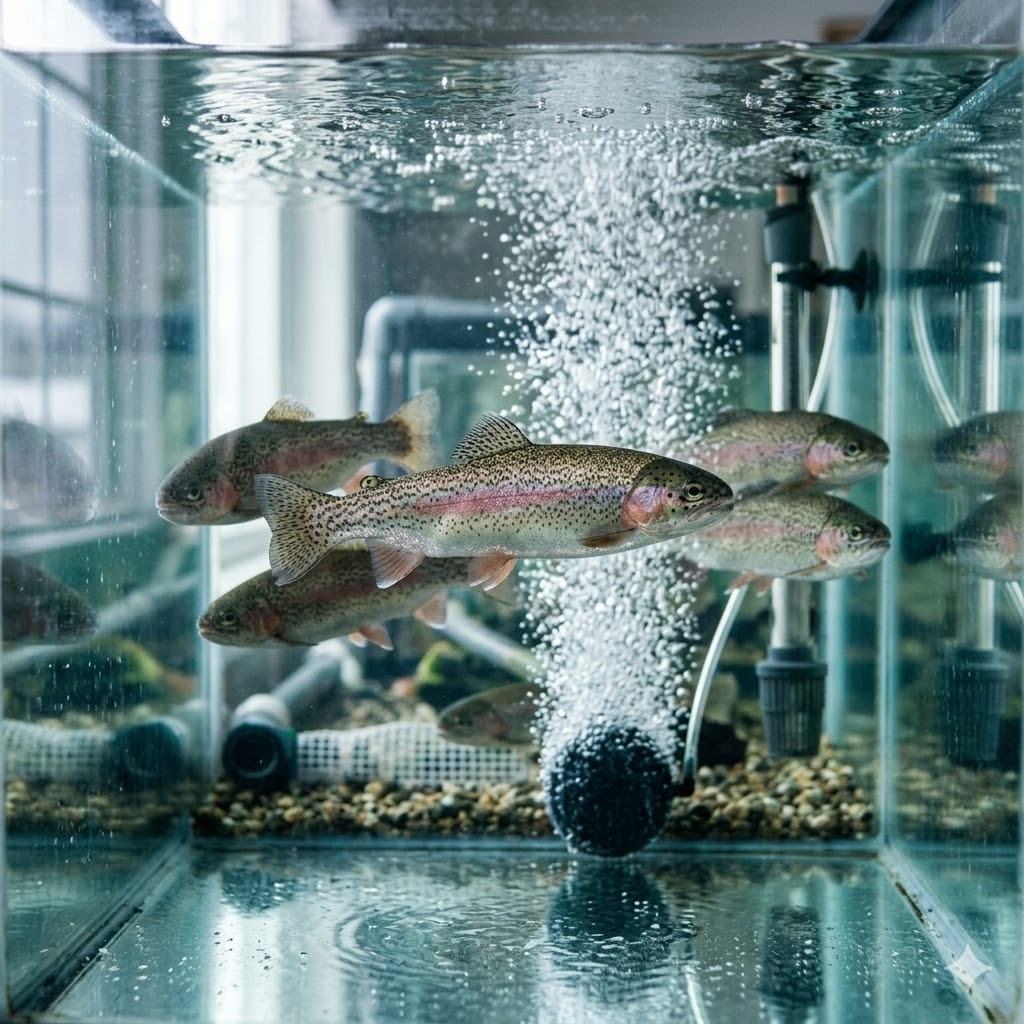
Rainbow trout are the cold-water counterpart to tilapia, and for many people they are the best-eating fish you can raise at home. The catch is that they are far less forgiving. Trout demand clean, cool, oxygen-rich water, and they will not tolerate the warm, murky, low-oxygen conditions that catfish and carp shrug off. But if you live in a cool climate or have a cold tank or a spring-fed pond, they are a natural fit and the reward is premium fish that would cost a fortune to buy.
This suits the grower who has cold water on hand and is ready to pay more attention than a beginner fish demands. It is an intermediate project - not hard, but unforgiving of the two things trout care about most: temperature and oxygen.
Why raise rainbow trout
Trout give you the finest eating fish in home aquaculture - firm, clean-flavoured flesh that many people rate above any warm-water species. In good, cold water they grow steadily and reach a plate size of around 300 to 500 grams in roughly nine to twelve months, sometimes faster in ideal conditions.
What you get:
- Premium table fish that is expensive to buy and excellent to eat.
- A species that thrives in cool climates where warm-water fish struggle or need heating.
- A natural match for a spring-fed or cold-flow pond, which does much of the work for you.
The honest trade-off is that trout leave you little margin for error. They need genuinely cold, well-oxygenated water, and a warm spell or an aeration failure can be fatal fast. This is a fish that pays you back for good management and punishes neglect.
The system and space
Trout suit a cold tank or a cold pond, and cool running water is the ideal. A spring-fed pond or a system with a steady flow of cold water is close to perfect, because moving cold water carries oxygen and keeps the temperature down naturally.
A workable setup includes:
- A tank or pond with a good volume of cold water - more volume means more stable temperature.
- Strong, continuous aeration or a flow of fresh cold water.
- Good filtration to keep the water clean, since trout are sensitive to fouling.
- Shade or depth to keep summer sun from warming the water.
In a tank you will need serious aeration and reliable biological filtration. In a spring-fed or cold-flow pond, the incoming water does much of the aerating and temperature control, which is why that setup is the easiest way to keep trout. Whatever you use, plan around keeping the water cold in the warmest part of the year - that is the real constraint.
Before you commit, be honest about your summer. Trout can be kept in most cool climates through autumn, winter, and spring without much trouble; the question is what happens in the hottest weeks. If you have a spring or a cold stream feeding the system, summer is largely solved for you. If you rely on a tank in a shed, you may need to shade it, insulate it, and accept that a prolonged heatwave is your real risk window. Some growers time the whole crop around this, stocking so the fish are harvested before or grown through the peak heat rather than sitting at maximum size in the warmest water.
Water and temperature
Trout live or die by temperature and oxygen. Keep the water below about 18C and heavily aerated. Trout are most comfortable and grow best somewhere around 10 to 16C. As the water climbs above the high teens they get stressed, stop feeding, and above roughly 20 to 22C they start dying. Warm, still water is the fastest way to lose them.
Oxygen is tied directly to this. Cold water holds more oxygen, warm water holds less, and trout have a high oxygen demand. Keep aeration running continuously, and never let the water go both warm and still. In a flow-through pond the fresh cold water handles this; in a tank you must provide it mechanically and have a backup.
The nitrogen cycle still applies. Ammonia from the fish must be converted by beneficial bacteria to nitrite and then to safer nitrate, and that biological filter takes several weeks to build. Cycle a tank before stocking, add fish gradually, and test ammonia, nitrite, nitrate, and pH regularly - trout are less tolerant of poor water than hardier species, so keep it clean. Our systems and water quality guide covers cycling, aeration, and testing.
Stocking and feeding
Buy rainbow trout as fingerlings from a trout hatchery or aquaculture supplier. Breeding trout at home is impractical, so start with bought stock. Time your stocking so the fish grow through the cool part of the year rather than facing a summer heat spell while small.
Stock conservatively. Because trout demand so much oxygen, a lightly stocked tank or pond is far safer than a crowded one, and it is the single best insurance against a warm-night loss. Match your stocking to your aeration and your coldest guaranteed water conditions, not to how many fish you would like.
Feed a floating trout pellet, which is formulated with the higher protein trout need. Feed small amounts once or twice a day and only what they eat promptly - uneaten feed fouls water that trout are quick to react badly to. Feeding drops off as the water warms in summer, so cut back then. Steady feeding in cold, clean water gives the best growth.
Because trout are sensitive, feeding behaviour is one of your best early-warning signs. Healthy trout in cold water feed briskly. When they hang low and ignore food, the usual cause is water that is too warm, low on oxygen, or fouled, and that should send you straight to your test kit and thermometer rather than tempting you to feed more. In warm spells cut feeding right back or stop it - a fish that is already stressed by heat cannot handle the extra oxygen demand that digesting a meal creates, so a heavy feed on a hot day can do real harm.
Health and the common mistakes
Most trout losses come down to temperature and oxygen, not exotic disease. The real mistakes:
- Letting the water get too warm. A summer heat spell is the classic trout killer.
- Under-aerating, especially as water warms. Trout suffocate before hardier fish would notice.
- Overstocking, which multiplies both the oxygen demand and the water-quality load.
- Overfeeding and fouling water that trout are sensitive to.
- Having no backup for aeration or cooling - a single equipment failure on a warm day can wipe out the batch.
When disease appears it usually follows warm or dirty water. Watch for fish gasping, going off feed, or showing fungus, spots, or ragged fins. The first response is to check temperature, oxygen, and water quality and correct them. With trout, prevention through cold clean water is far more effective than any treatment after the fact.
Harvesting rainbow trout
Trout reach a plate size of around 300 to 500 grams in roughly nine to twelve months in good cold water, sometimes sooner. You can harvest selectively, taking the largest fish as you want them.
Processing is simple and clean. Dispatch the fish quickly and humanely, then gut them - trout have fine scales and are usually cooked with the skin on rather than skinned. They are excellent whole, filleted, or smoked, and they freeze well. Stopping feed for a day before harvest empties the gut and makes cleaning easier. Trout raised in cold, clean water rarely have any off-flavour, which is part of why they eat so well.
Is rainbow trout right for you?
Rainbow trout are right for you if you have cold water - a cool climate, a cold tank you can keep cool, or best of all a spring-fed or cold-flow pond - and you are willing to manage temperature and oxygen closely. The payoff is the best eating fish in home aquaculture.
They are the wrong fish if your water gets warm in summer and you cannot keep it below the high teens in C, or if you want a forgiving beginner project - tilapia or catfish suit that far better. They are also wrong if you cannot guarantee reliable aeration, since trout leave no margin when oxygen drops.
Rainbow trout are non-native in many regions and stocking is often regulated, so check your local rules before buying or introducing any. Never release fish into the wild - escaped or dumped trout can establish and harm native fish. Keep them contained in your system and enjoy them on the plate.