๐ŸŽฃ Honest fishing guides, tested on the water NEW 60 fish species profiles published ๐Ÿ“ฉ Weekly newsletter As an Amazon Associate we earn from qualifying purchases
๐ŸŽ’ What you actually need

Fishing gear

Tackle shops are a wall of choice, and beginners buy far more than they need. This is the honest version - by category, what actually matters, what to skip, and where it pays to spend. No brands, no links, no upsell. One balanced combo catches fish; add the rest as your fishing tells you what you are missing.

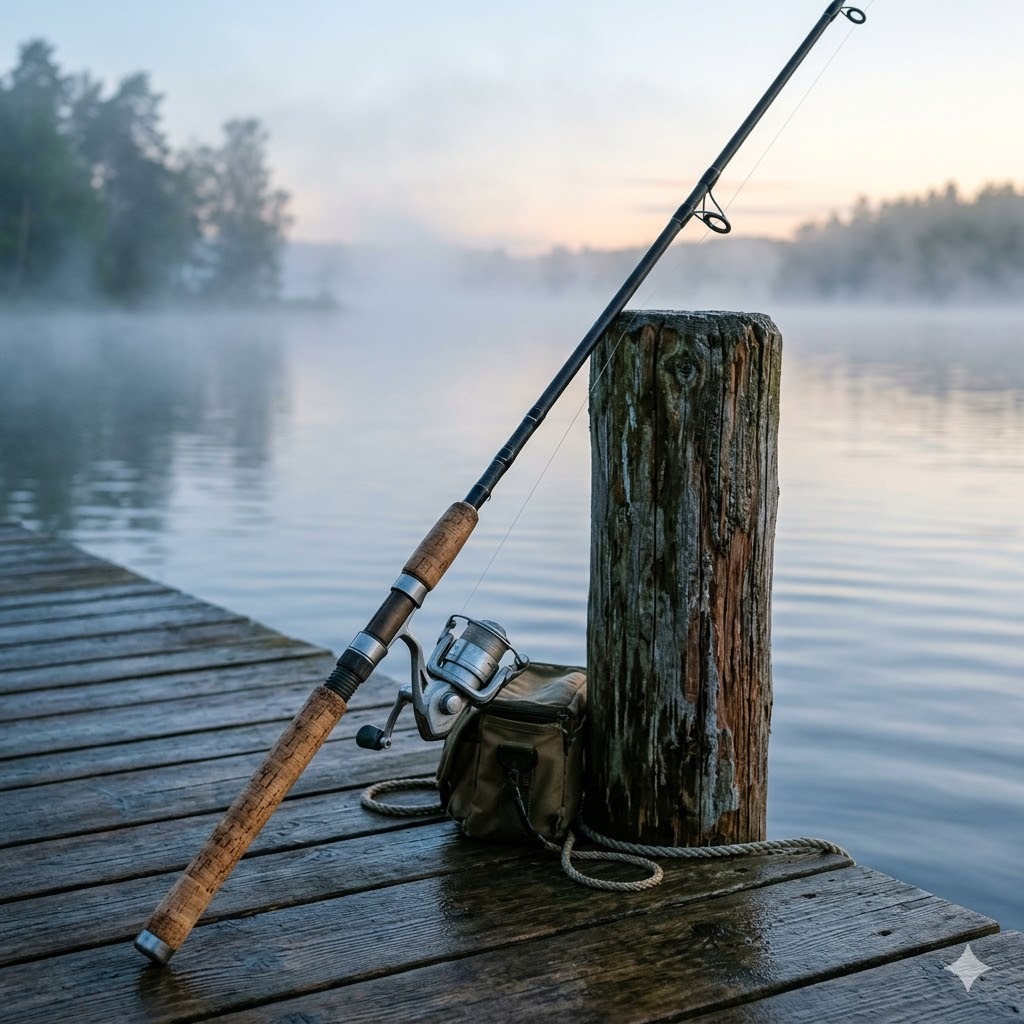
Rod ๐ŸŽฃ

Rod

Your most personal choice. A rod is rated for a line and lure weight and comes in a length and action that suit a style of fishing - there is no single 'best' one.

What matters: Matching the rod to your fishing: a light spinning rod for lures and small fish, a heavier one for distance or big fish. Length affects casting distance and control.

Skip: Buying five specialist rods before you have caught anything. One versatile medium rod covers a huge range while you learn.

Budget: A mid-price rod lasts years. The jump from the cheapest to a decent rod is worth it; the jump to premium is not, early on.

๐Ÿ’ก Start with one balanced rod-and-reel combo in a medium rating - it will handle most freshwater fishing while you find your style.
Reel ๐ŸŽ›๏ธ

Reel

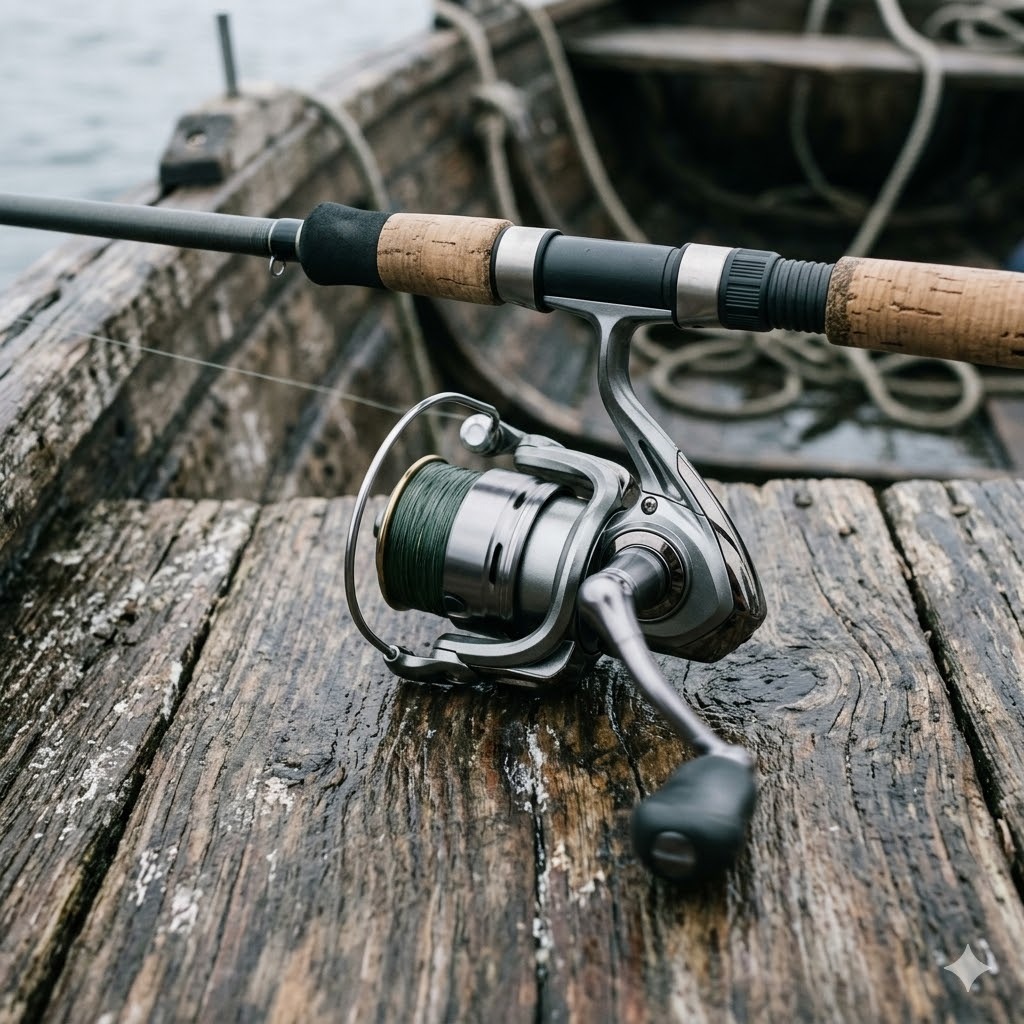
Holds and controls your line. A spinning reel is the easy, forgiving all-rounder most beginners should start with; baitcasters and others come later.

What matters: A smooth drag (the brake that tires a fish out) and a size that balances your rod. Match the reel size to the line you will use.

Skip: High gear-count 'bearing wars' marketing and oversized reels. More bearings does not mean better, and a heavy reel unbalances a light rod.

Budget: Mid-price is the sweet spot. A reliable sealed drag matters far more than a big brand name.

๐Ÿ’ก Learn to set your drag: it should give line under a hard, steady pull, well before your knot or line would break.

Line ๐Ÿงต

Line

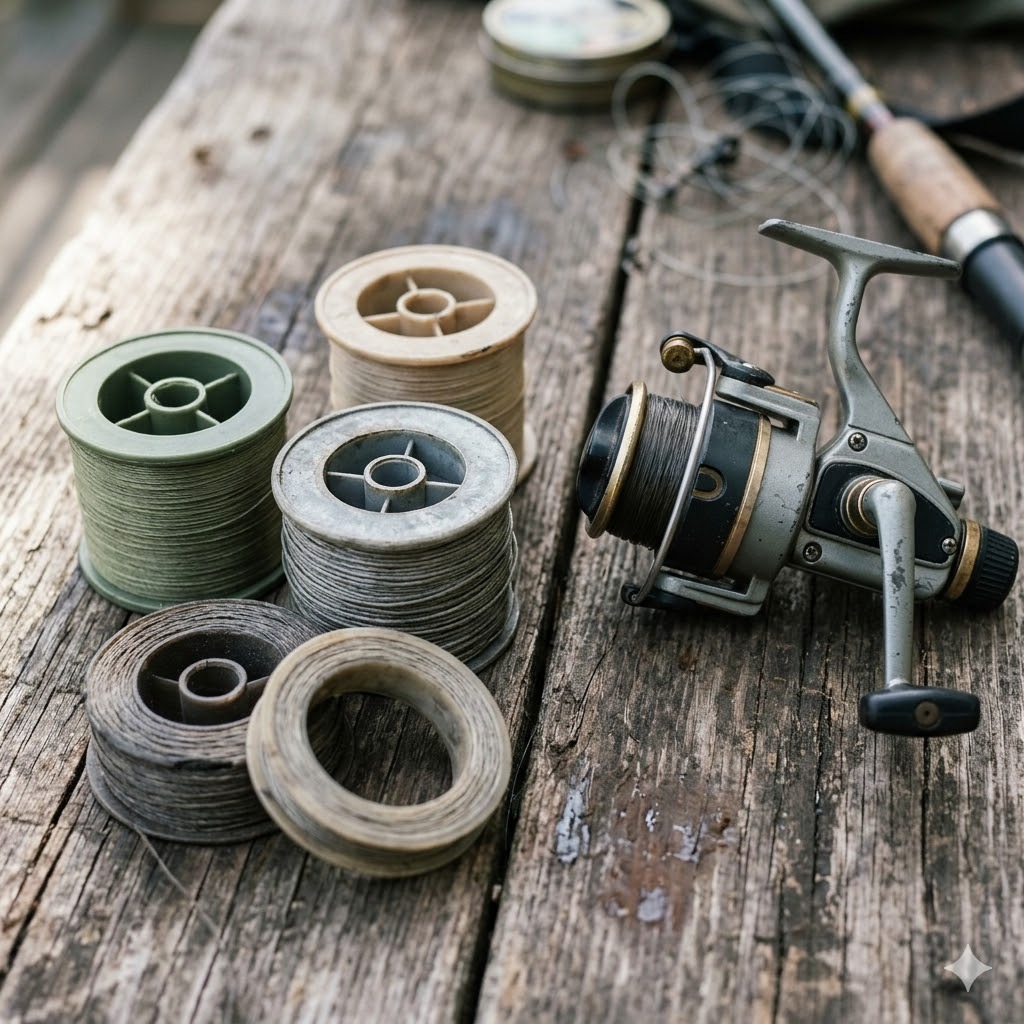
The cheap link between you and the fish, and the one most worth getting right. Monofilament, fluorocarbon and braid each suit different jobs.

What matters: The right type and breaking strain for your target. Mono is forgiving and cheap; fluorocarbon is near-invisible for leaders; braid is thin and strong for distance and feel.

Skip: Overly heavy line 'to be safe' - thick line casts poorly and puts fish off. Match the strain to the fish, not your nerves.

Budget: Cheap and worth replacing often. Old, brittle line loses fish; fresh line is the best-value upgrade there is.

๐Ÿ’ก Re-spool with fresh line at the start of each season - sunlight and age weaken it long before it looks worn.

Hooks, Weights & Swivels ๐Ÿช

Hooks, Weights & Swivels

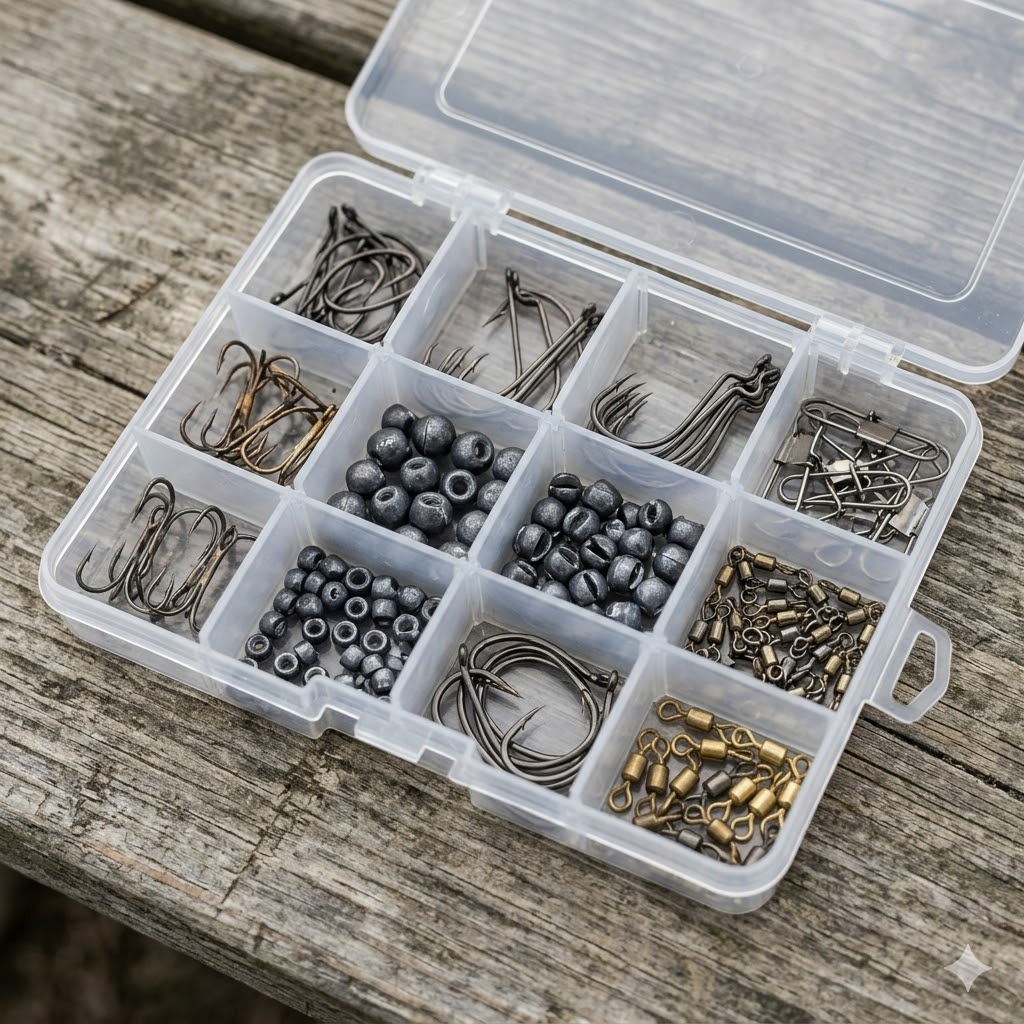
The small end tackle that makes up your rig - hooks, sinkers, swivels, beads and floats. A little organised box of these covers most situations.

What matters: Sharp hooks in a few sizes to suit your bait, a range of sinker weights for depth and current, and swivels to stop line twist.

Skip: Giant assortment packs full of sizes you will never use. Buy the few sizes your fishing actually calls for.

Budget: Cheap. Spend on quality sharp hooks; everything else can be basic.

๐Ÿ’ก Check your hook point on a thumbnail - if it does not bite and drag, it is blunt. Change it. Most missed fish are blunt hooks.

Landing Net ๐Ÿฅ…

Landing Net

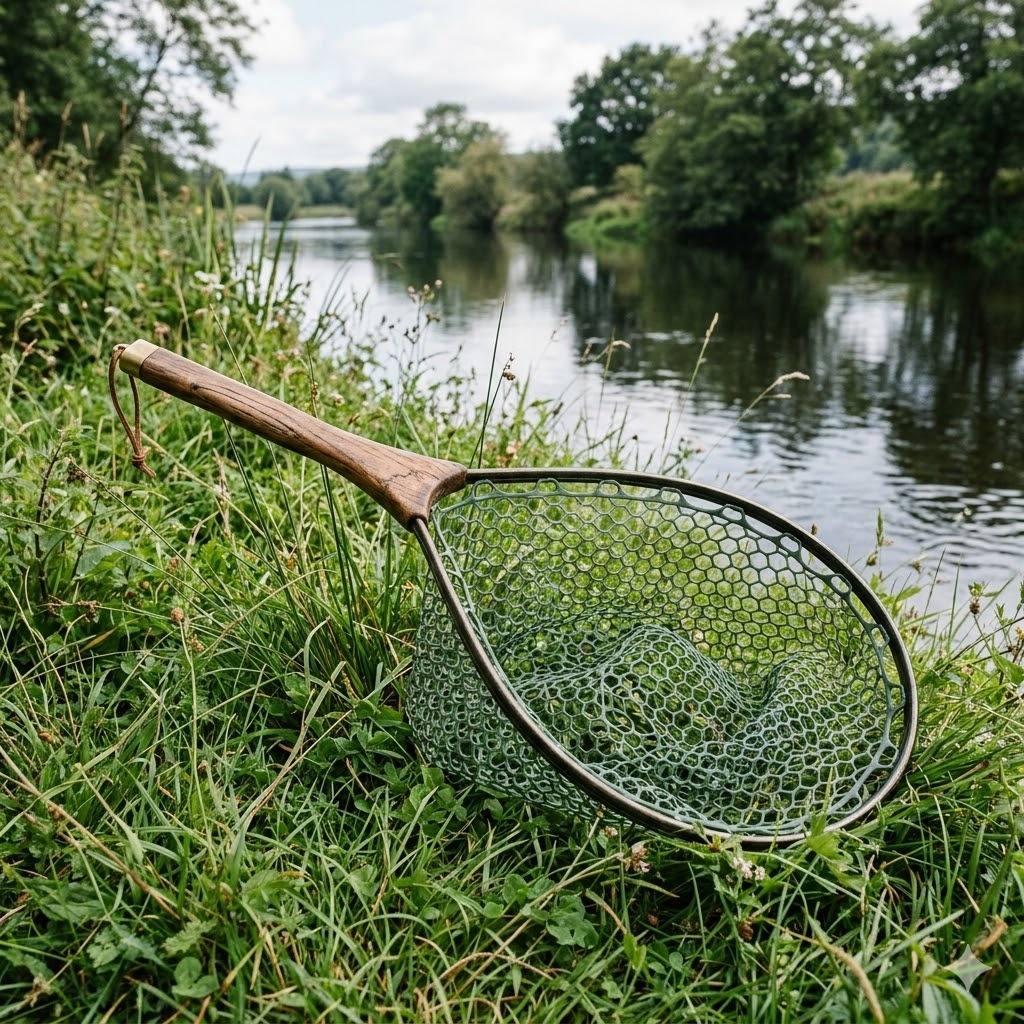
Lands fish safely without dropping or harming them, and saves plenty of last-second losses at the bank. Easy to overlook until you need one.

What matters: A soft, knotless, rubberised mesh that protects fish (and does not tangle hooks), on a handle long enough for your bank or boat.

Skip: Cheap knotted nylon mesh - it damages fish slime and snags trebles badly. Not worth the few coins saved.

Budget: Inexpensive. A rubberised net costs a little more and is kinder to fish and to your patience.

๐Ÿ’ก Net a fish head-first and let it come to the net - chasing its tail is how they throw the hook.

Pliers & Line Tools ๐Ÿ› ๏ธ

Pliers & Line Tools

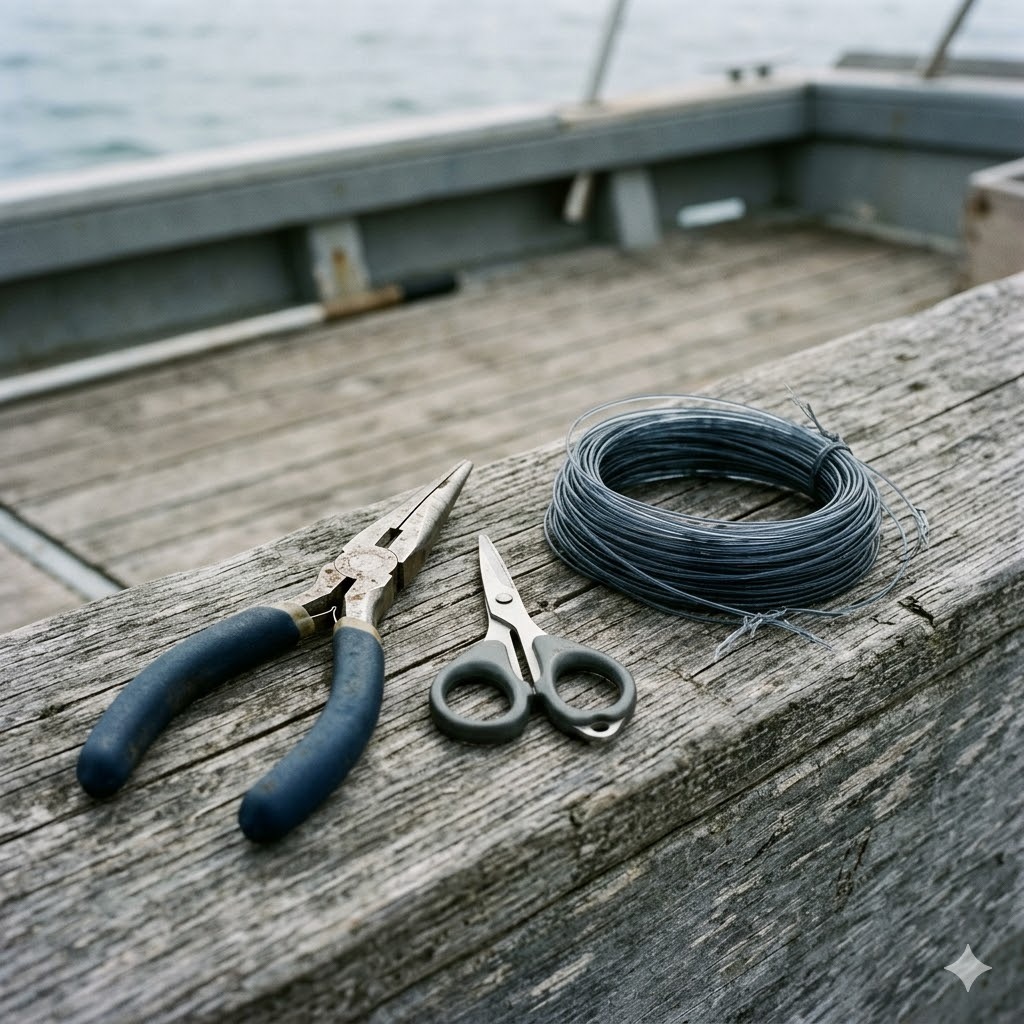
The small tools that make a day run smoothly - unhooking fish, cutting line, crimping and pinching barbs. A forgotten essential.

What matters: Long-nose pliers or forceps to remove hooks safely (for you and the fish) and a sharp line cutter. A disgorger for deep hooks.

Skip: Bulky multi-tools that rust. Simple corrosion-resistant pliers and braid scissors do the job.

Budget: Cheap and essential. Corrosion resistance is the one feature worth a little extra, especially in saltwater.

๐Ÿ’ก Keep pliers on a retractable lanyard - the tool you drop overboard is the one you needed most.

Tackle Box & Storage ๐Ÿงฐ

Tackle Box & Storage

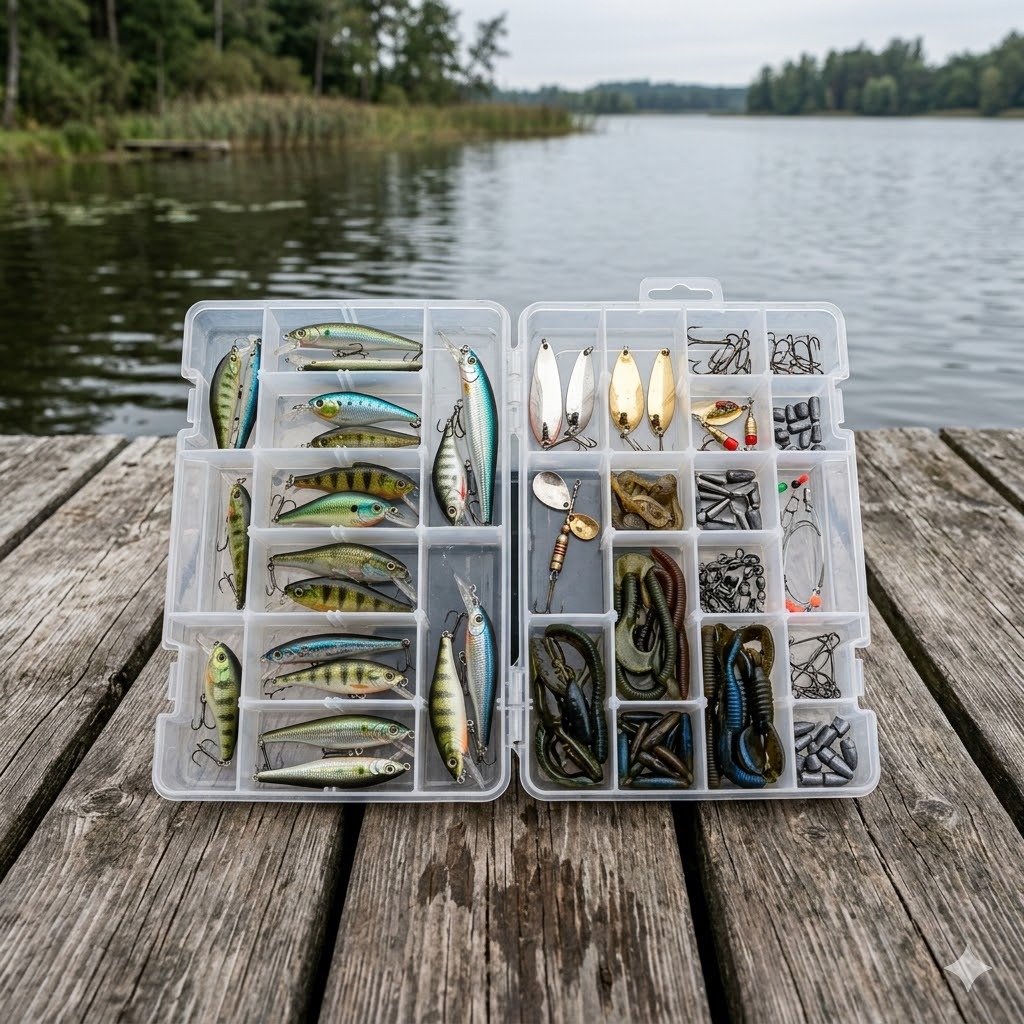
Keeps your gear findable and dry. A simple system beats a heap of tangled tackle in a bag every time.

What matters: A box with adjustable dividers so you can sort by type, and a size that suits how far you carry it. Waterproofing helps.

Skip: A giant tackle chest you cannot carry to the water. Buy for the fishing you do, not the fishing you imagine.

Budget: Cheap. A basic divided box is fine; you are paying for organisation, not performance.

๐Ÿ’ก Dry your terminal tackle after a session - a closed box of damp hooks and swivels is a box of rust by next week.

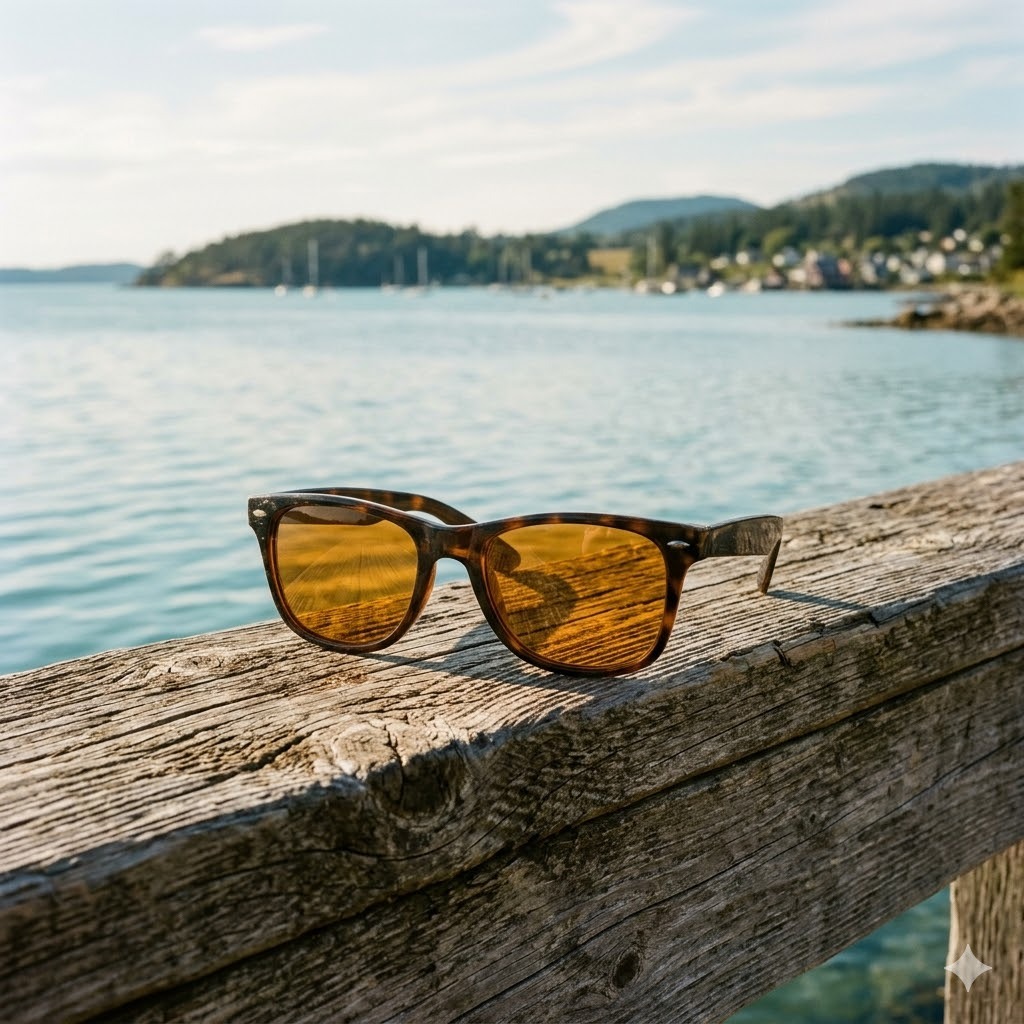
Polarised Sunglasses ๐Ÿ•ถ๏ธ

Polarised Sunglasses

Cut the glare off the water so you can see fish, structure and your line - and protect your eyes from stray hooks. A genuine fish-finder.

What matters: True polarised lenses (not just tinted) and good coverage. Amber or copper tints lift contrast in most freshwater light.

Skip: Cheap 'polarised-look' fashion glasses that are only tinted - they do not cut glare and defeat the point.

Budget: Mid-price gets real polarisation. Pay for the lens, not the logo.

๐Ÿ’ก On bright days, polarised glasses let you spot fish and drop-offs you would never see with the naked eye - use them to read the water.

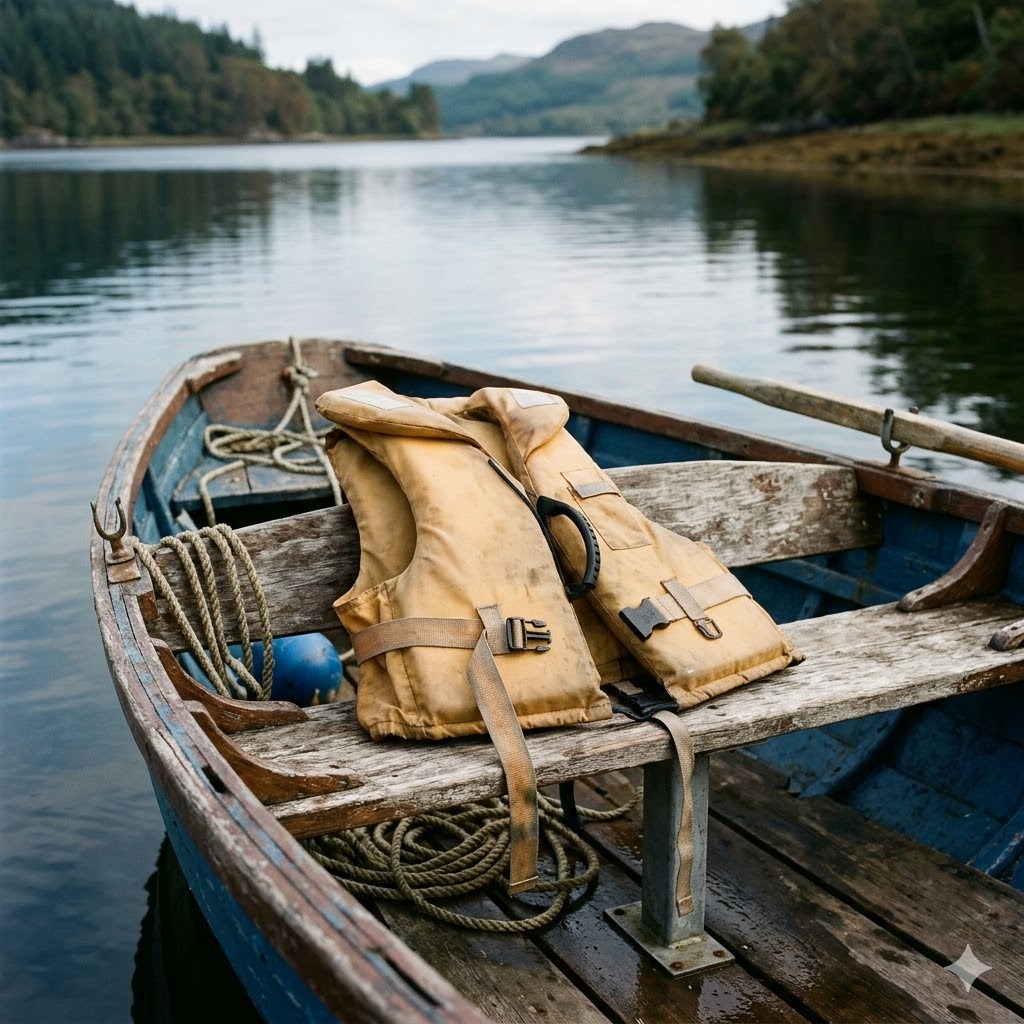
Safety & Life Jacket ๐Ÿฆบ

Safety & Life Jacket

The gear that gets you home. A life jacket afloat, plus sun and weather protection on the bank, are not optional extras.

What matters: A properly fitted buoyancy aid or life jacket whenever you fish from a boat, kayak or steep bank, and sun protection for long days out.

Skip: Nothing here - this is never the place to save money or weight. Wear the jacket, do not just carry it.

Budget: A good buoyancy aid is affordable and lasts years. Cheapest insurance you will ever buy.

๐Ÿ’ก Tell someone where you are going and when you will be back, and check the weather and tides before you set out.

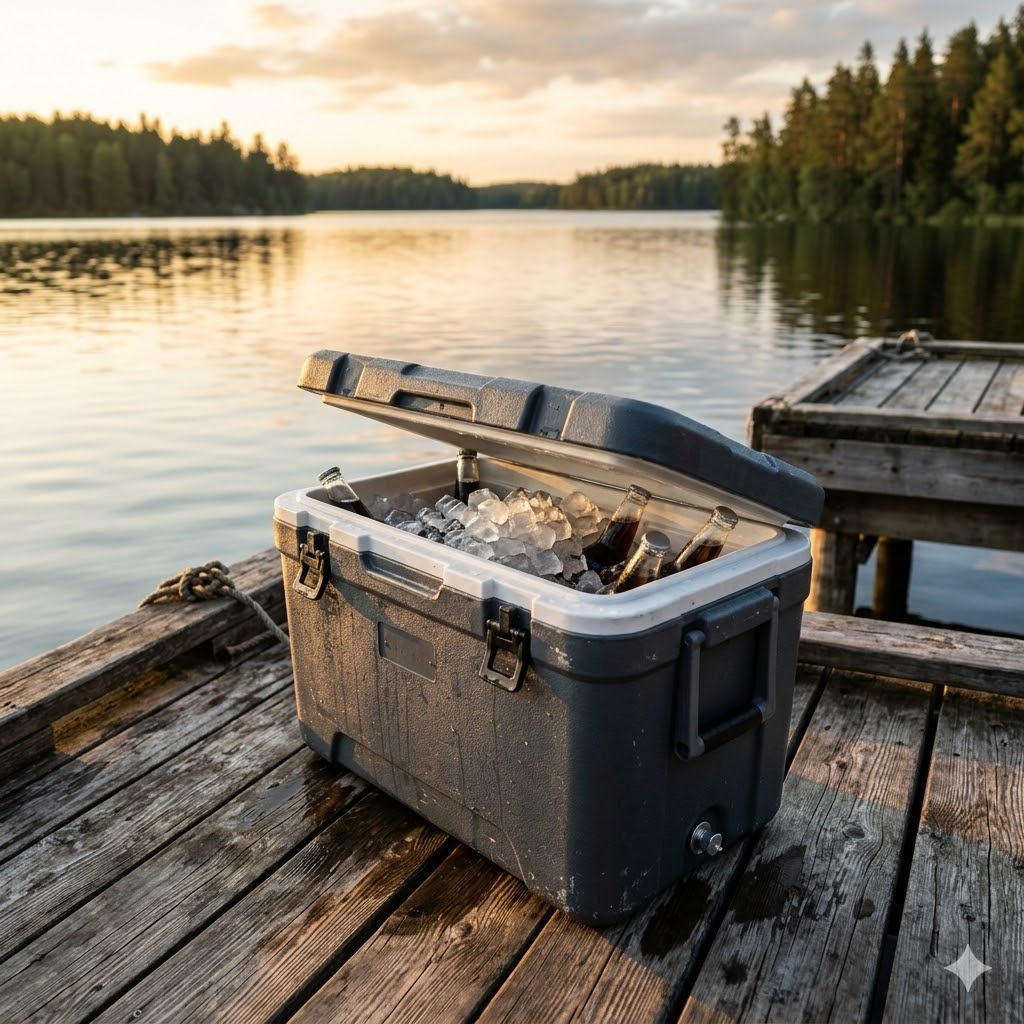
Cooler & Fish Care ๐ŸงŠ

Cooler & Fish Care

Keeps fish you plan to eat fresh and safe, or unhooked fish healthy for release. How you handle a catch matters as much as landing it.

What matters: A cooler with ice for fish you keep, and wet hands plus quick, gentle handling for fish you release. Know your local size and bag limits.

Skip: Leaving keepers on a warm bank or in a bucket - the meat spoils fast. And do not keep more than you will use.

Budget: A basic cooler is cheap; the real cost is care and attention, which is free.

๐Ÿ’ก For release, keep the fish wet, support its weight, minimise air time, and let it swim off under its own power.

โš ๏ธ Gear helps, but watercraft catches fish - reading the water, being quiet, and fishing the right spot at the right time beat any purchase. Once you are kitted out, learn a few knots and rigs, get your bait and lure choices right, and if you are just starting, read fishing for beginners. Always check your local licence, size and bag limits.

Tight lines, every week.

A weekly email for anglers - what's biting, what's worth buying, and the skills behind it. One click to opt out.

๐ŸŽฃ
๐ŸŸ
๐ŸŒŠ