Catch to Kitchen: Clean & Cook
You kept a fish - now what? An honest, beginner-friendly guide to dispatching, cleaning, filleting and cooking your catch so it tastes its best.
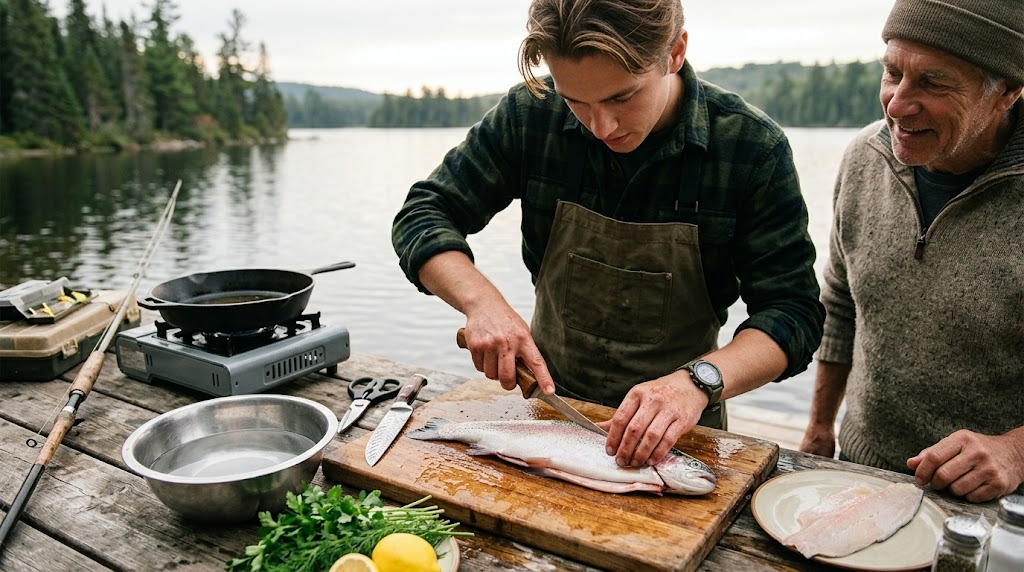
Plenty of new anglers can hook a fish and have no idea what to do once it’s in the net. That’s a shame, because a fish you caught, cleaned and cooked yourself is one of the best meals there is. This is the honest, no-squeamishness walk-through from the bank to the plate.
New to this series? “Catch & Kitchen” picks up where the cast ends - dispatching, cleaning, filleting and cooking your catch. Keep only what you’ll eat, and do it justice.
1. Decide: keep or release - then commit
Before anything, know your local size and bag limits, and only keep fish you’ll actually eat. If you’re releasing, wet your hands, unhook quickly, support the fish in the water and let it swim off. If you’re keeping it, the kindest and best-tasting choice is to dispatch it immediately rather than letting it slowly suffocate.
- Dispatch humanely: a firm, sharp knock to the top of the head (a “priest”) stuns it instantly; many then “spike” or bleed it.
- Bleed it: cut the gills and let it bleed into the water or a bucket. Bled fish has cleaner, paler, better-tasting flesh.
- Get it cold: straight onto ice. Warm fish goes soft and “fishy” fast - cold is the whole secret to fish that tastes fresh.
2. Two ways to clean a fish
Gutting & scaling (whole fish): scale from tail to head with the back of a knife, slit the belly, remove the guts, and rinse. Good for small fish you’ll cook whole.
Filleting (most fish): the skill worth learning. The basic motion:
- Cut down behind the gill/pectoral fin to the backbone.
- Turn the knife and run it along the spine, tail-ward, keeping the blade riding the bones.
- Free the fillet, flip, repeat on the other side.
- Skin it if you like: lay fillet skin-down, angle the knife, and slide between flesh and skin.
- Trim the rib bones and any dark, strong-tasting bloodline.
A flexible fillet knife and a few fish of practice and you’ll have it. Pin bones come out with tweezers or a careful angled cut.
3. Match the cooking to the fish
- Lean, white, flaky (perch, walleye, bass, cod-like): they have little fat, so don’t overcook. Pan-fry, bake, or batter-and-fry. Done the moment the flesh turns opaque and flakes.
- Oily, rich (trout, salmon, mackerel): more forgiving and flavourful. Great grilled, baked, or pan-seared skin-on for crispy skin.
- Firm (pike, larger species): hold up to stews, cakes and frying; mind the bones on pike (the “Y-bones”).
- Whole small fish: scaled and gutted, scored, and pan-fried or grilled whole - simple and delicious.
4. Three honest first recipes
- Pan-fried fillets: pat dry, season, dredge lightly in seasoned flour, fry in butter/oil 2-3 minutes a side until golden and just opaque. Squeeze of lemon. Hard to beat.
- Whole trout, baked: stuff the cavity with lemon and herbs, dot with butter, wrap in foil, bake until it flakes. Almost foolproof.
- Crispy-skin sear: oily fillet, skin-down in a hot pan, press flat, cook ~80% from the skin side, flip for seconds. Restaurant skin at home.
The universal rule: stop cooking the moment it flakes and turns opaque. Fish goes from perfect to dry in under a minute - pull it early and let carry-over heat finish it.
5. Keeping and preserving
- Fresh: eat within a day or two, kept very cold.
- Freeze: for lean fish, freezing in water (or vacuum-sealed) prevents freezer burn; oily fish keeps a shorter time.
- Smoke or cure: oily fish like trout and mackerel take beautifully to hot- or cold-smoking - a project worth growing into.
A note on safety
Some fish are best not eaten raw without proper freezing (parasites); follow local advice on fish-consumption advisories (mercury, pollutants) for the waters you fish, especially for kids and pregnancy. Cook fish you’re unsure about thoroughly.
The point of all this
Catch-and-cook closes the loop on fishing. You learn to take only what you’ll use, treat it with respect from the moment it leaves the water, and turn it into a meal that no shop can match for freshness. Learn to clean and cook your catch and every trip means something on the plate.
Next in the series: filleting six common species step by step, and a beginner’s guide to smoking your own trout.