How to Raise Redclaw Crayfish at Home
A practical guide to raising redclaw crayfish at home - a warm-water cray that breeds without a larval stage and grows large with good cover.
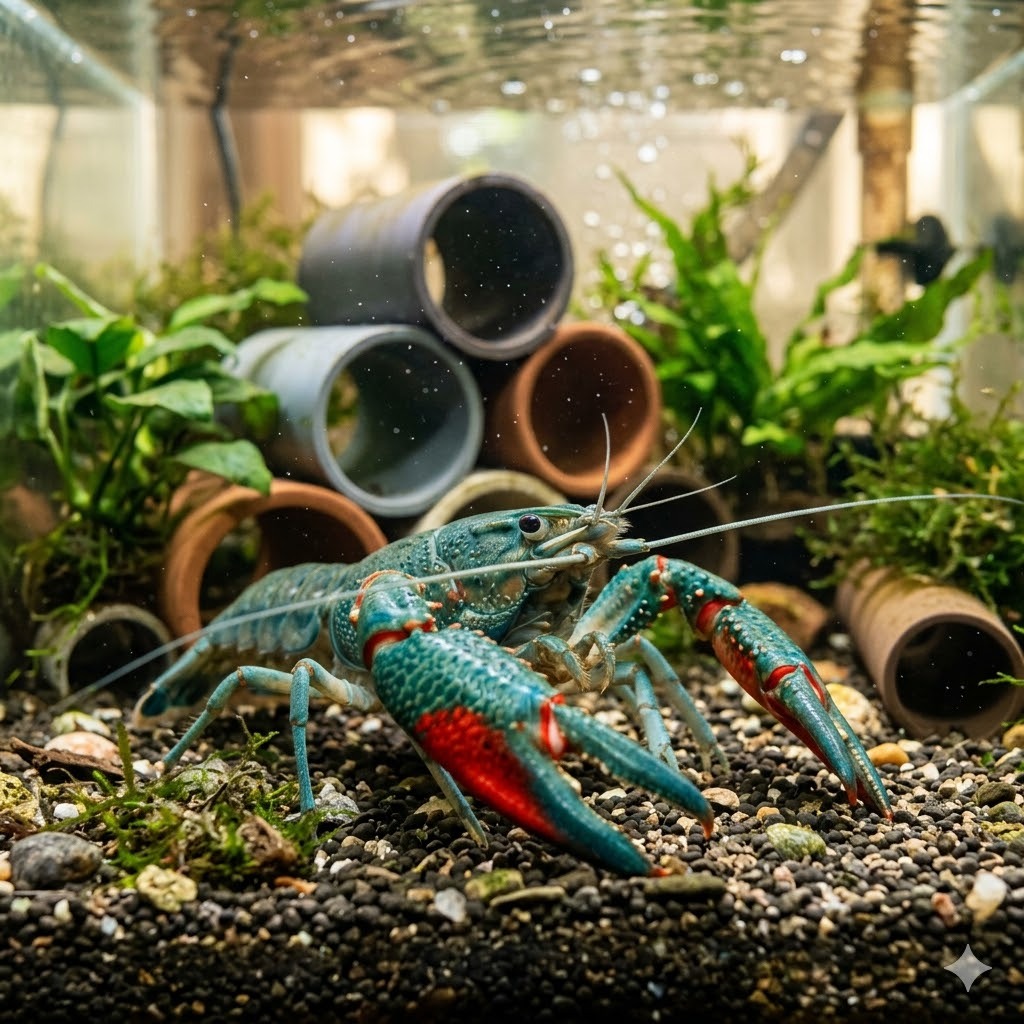
Redclaw are one of the easier crayfish to raise at home if you can keep the water warm year-round. They grow large, taste clean, and - unlike freshwater prawns - they breed straight in the tank or pond with no fiddly brackish larval stage. That makes them a genuinely rewarding project for a hobbyist who wants a self-sustaining food crop rather than a one-off harvest.
The honest catch is heat. Redclaw are tropical, and they stop growing and start dying if the water dips cold for long. If you live somewhere with real winters, you are committing to a heated indoor tank or a greenhouse pond, and that costs power. Suited best to warm climates, keen aquarists, or anyone happy to run a heated system.
Why raise redclaw crayfish
The payoff is protein you produced yourself. A well-run system gives you table-sized crays - often 60 to 120 grams each - within roughly six to twelve months from juveniles, depending on how warm and well-fed they are. Because they breed readily, a starter group of adults can seed the next generation, so after the first year you are harvesting the big ones and letting the young grow on.
Redclaw are peaceful by crayfish standards. They still fight and cannibalise, but far less than most crays, which means you can stock them denser and lose fewer to aggression. For a home grower that translates into more meat per tank and less heartbreak.
Do not expect income unless you scale up hard. As a hobby, treat it as fresh food, a fun project, and breeding stock you can share.
It also helps to know what a realistic system produces. A single well-managed indoor tank or small greenhouse pond might carry a few dozen crays through to harvest size at once, not hundreds - the limits are oxygen, space to hide, and how much fouling your filtration can handle. Growers who chase big numbers in one system usually end up with stunted, stressed crays and a batch thinned by cannibalism. Steady and modest beats crowded and ambitious every time with redclaw.
The system and space
Redclaw are flexible. You can raise them in a large aquarium or tote indoors, or in a lined or earthen pond outdoors in a warm climate. What matters more than the container is what is inside it.
Cover is not optional. Crayfish are moulting animals, and a freshly moulted cray is soft and defenceless for a day or two. Without hiding spots, the others will find it and eat it. Fill the system with cover:
- Stacks of PVC pipe offcuts, mesh tubes, or clay tiles
- Bundles of plastic mesh or netting rolled into tubes
- Rock piles, bricks with holes, or stacked pots
The rule of thumb is simple - give every cray a hole to hide in, then add a few more. More cover means less fighting, fewer cannibalised moulters, and more crays surviving to harvest size.
Keep a lid or a barrier lip. Redclaw are less prone to wandering than yabbies, but a determined cray will still climb an air line or a corner if the water is poor.
Think about how you will service the system before you fill it. You will want to net out dead animals, feed daily, and do water changes without tearing the whole layout apart, so build the cover in loose stacks you can lift rather than one cemented structure. A bare bottom or a thin layer of clean gravel is easier to keep clean than deep substrate that traps waste. The tidier and more accessible the system, the more likely you are to keep on top of it week after week - and consistency is what carries a batch of redclaw to size.
Water and temperature
Warmth is the whole game. Redclaw grow best around 24 to 30 degrees Celsius. Below about 20 they slow right down, and prolonged cold - roughly below 10 to 15 - will kill them. In a cool climate this means a heater and insulation, and that power bill is your main running cost.
Oxygen matters more than people expect. Warm water holds less oxygen, and a tank full of feeding, moulting crays uses a lot. Run an air stone or a small aerator, and never let the system go still and stagnant. Poor oxygen shows up as crays climbing the walls or gathering at the surface.
Moulting drives everything. To grow, a cray sheds its shell, then rebuilds a bigger one - and it pulls calcium from the water to do it. If your water is soft, add hardness and calcium so shells set hard and fast. A cray that cannot harden its new shell stays vulnerable far longer. Keep ammonia and nitrite near zero with filtration and water changes, the same fundamentals covered in our systems and water quality guide.
Stocking and feeding
Source juveniles or breeding adults from a licensed aquaculture supplier or a hobbyist breeder. Before you buy anything, check the legal note below - redclaw are not native to most places and are frequently restricted.
Stock conservatively. Overcrowding is the classic beginner mistake: it spikes aggression, fouls the water, and multiplies cannibalism. Start lighter than you think you need, watch how they behave, and add more only once you trust your water and your cover.
Feeding is easy because redclaw eat almost anything:
- Sinking pellets formulated for crayfish or shrimp
- Vegetable scraps - carrot, pumpkin, leafy greens, blanched where needed
- Occasional protein such as earthworms or a little fish
Feed small amounts and remove anything uneaten the next day. Leftover food rots, drops your oxygen, and pollutes the water faster than anything else. Underfeeding a touch is safer than overfeeding.
Cannibalism is a fact of life. The best defences are plenty of cover, steady feeding so no one goes hungry, and grading - separating the big crays from the small so the little ones are not outcompeted or eaten during their vulnerable moults.
Health and the common mistakes
Most redclaw losses trace back to a handful of avoidable errors.
- Moulting deaths. A cray that moults into soft or cold water, or into a crowd with nowhere to hide, often does not make it. Fix this with calcium, warmth, and cover.
- Cannibalism. Almost always a symptom of too little cover, too high a density, or hunger. Add hides, thin them out, feed steadily.
- Water crashes. Warm water plus heavy feeding plus weak aeration equals low oxygen and rising ammonia. Test regularly, change water, keep the air running.
- Escapes. Less of a problem than with yabbies, but a poorly kept lid and bad water will still send them climbing.
Handle crays as little as possible, and never move a soft, freshly moulted one. If a cray dies, remove it promptly before it fouls the water or gets eaten.
Watch for the warning signs that a system is heading for trouble. Crays clustered at the surface or climbing the walls usually means low oxygen. A sudden refusal to feed can flag a water-quality problem before your test kit does. Crays with missing limbs are not necessarily doomed - they regrow lost claws and legs over successive moults - but a rash of injuries points to too much fighting, which means more cover or fewer animals. Catching these signals early and acting on them is most of what separates a grower who loses batches from one who does not.
Harvesting or breeding redclaw crayfish
This is where redclaw shine. They breed without the brackish larval stage that makes prawns so hard - the female carries the eggs, then the tiny crays, under her tail, and releases fully formed miniature crayfish. No hatchery, no saltwater, no special larval tanks.
To encourage breeding, keep the water warm and stable, provide lots of cover, and keep a healthy mix of mature males and females. A berried female (one carrying eggs or young under her tail) is best left undisturbed, ideally with extra hiding spots so the babies can scatter and hide as they detach.
Harvest by hand, by trap, or by draining. Take the largest crays and leave the mid-sized ones and breeders to keep the cycle going. Grading as you harvest - big ones out, small ones back - keeps the system productive year after year.
Is redclaw right for you?
Redclaw suit you if you live somewhere warm, or you are happy to run and pay for a heated tank or greenhouse pond. They reward growers who like a self-sustaining project: breed, grow, harvest the big ones, repeat.
They are not for you if you want food fast with no running cost, or if a cold-climate power bill would sour the whole thing. In that case a yabby is the tougher, cheaper choice.
One firm rule before you start: redclaw are non-native almost everywhere and are a serious invasive risk. In many regions they are strictly regulated or outright banned. Check your local law before you buy or keep them, get any permit you need, and never - under any circumstances - release them into wild waterways, drains, or natural ponds. A hobby that escapes into local rivers becomes an ecological problem that outlives the hobby.