How to Breed Cherry Shrimp at Home
A beginner guide to raising a self-sustaining colony of cherry shrimp in a planted nano tank for cleanup, trading, or fun.
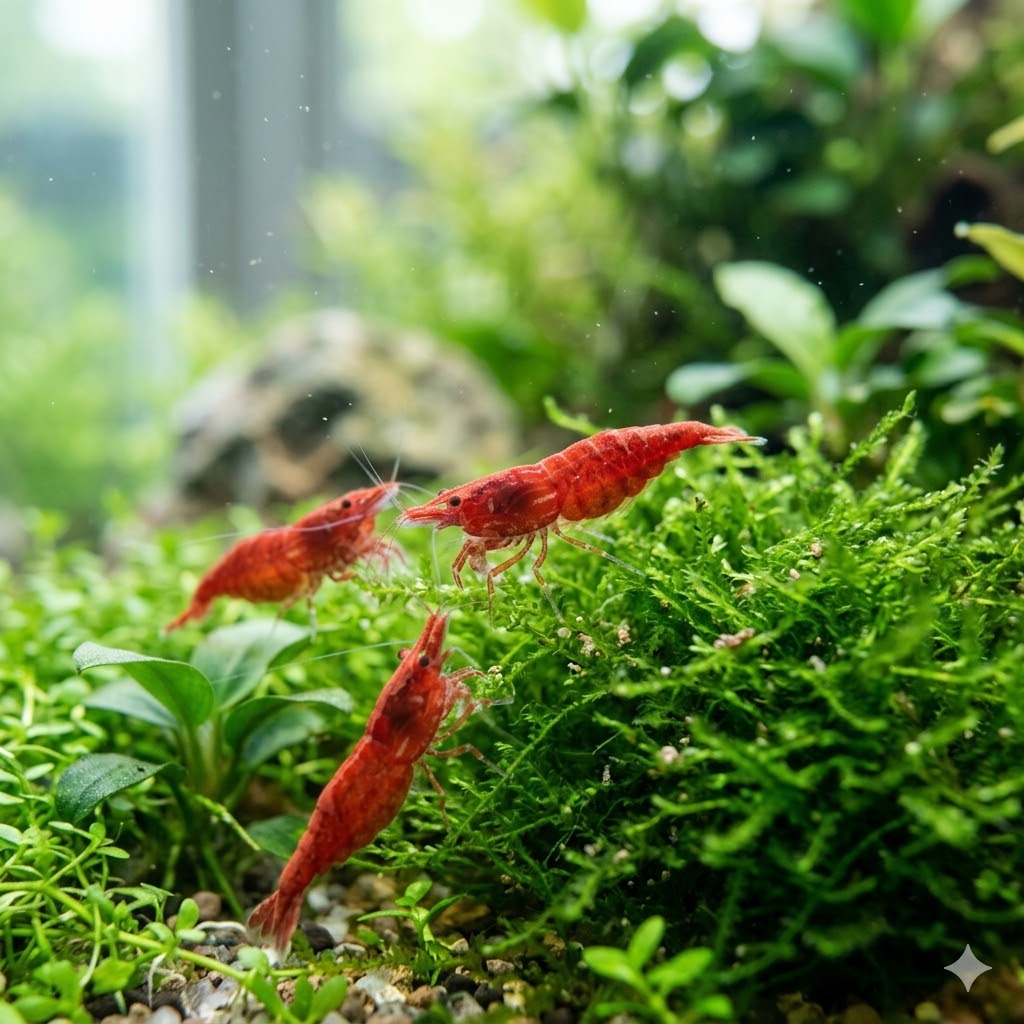
If you want the easiest living thing to breed in water, cherry shrimp are it. A handful of them in a stable, planted nano tank will multiply on their own into a colourful colony that grazes algae, tidies leftover food, and gives you shrimp to trade, sell, or simply watch. They ask for very little once the water is settled, and they fit on a bookshelf, which makes them the best first invertebrate for almost anyone.
The one honest catch is that "stable water" does a lot of heavy lifting in that sentence. Cherry shrimp are not fussy about exact numbers, but they are sensitive to swings and to copper. Get the setup right at the start and the colony mostly runs itself. Get it wrong and you will lose shrimp faster than they can breed.
Why raise cherry shrimp
Cherry shrimp earn their place for a few practical reasons.
- Cleanup. They pick at soft algae, biofilm, and uneaten food all day. In a small planted tank they keep surfaces tidier than most fish do.
- A living colony. Because they breed readily, a starter group of ten or so becomes dozens within a few months. It is genuinely satisfying to watch a population build itself.
- Trading and selling. Healthy, well-coloured shrimp are always in demand locally. Deep red "fire" grades fetch more, but even standard reds trade easily among hobbyists.
- Low cost and space. The whole operation runs on a nano tank and a sponge filter. Running costs are tiny.
Be realistic about the limits. Cherry shrimp are too small and too valuable to use as fishing bait or feeders - that is a job for ghost shrimp. And while you can sell surplus, this is pocket-money territory, not a business. Keep them because they are a pleasant, low-effort hobby that happens to produce something you can share.
The tank and setup
Cherry shrimp are small, so a nano tank of around twenty to forty litres is plenty. A larger tank is actually easier to keep stable, so if you have room, do not go too tiny.
The core of a good shrimp tank is plant cover and gentle filtration.
- Plants and moss. Live plants and a clump or two of aquatic moss are the single best thing you can add. They give shrimp grazing surface, shelter, and - crucially - hiding spots for newly hatched babies. Moss in particular traps the biofilm that tiny shrimplets feed on.
- Sponge filter. Use a sponge filter rather than a strong hang-on or canister intake. It provides biological filtration, oxygenates the water, and will not suck in babies. If you already run a powerful filter, cover the intake with a fine sponge or mesh.
- Hides and leaf litter. A few dried botanicals or a leaf or two of Indian almond give shrimp cover and slowly release tannins and biofilm they graze on. Simple pieces of driftwood or rock work as hides too.
- Substrate. A dark, fine substrate shows off their colour and supports plant roots, but shrimp are not picky. Aim for something inert unless you are also chasing a low pH.
Mature the tank before adding shrimp. A tank that has been running with plants and filter for a few weeks has the biofilm and stable bacteria that shrimp need. Adding them to a brand-new setup is the most common early mistake.
Water and stability
The most important idea in shrimp keeping is this: stability beats perfect numbers. Cherry shrimp tolerate a fairly wide range of temperature and hardness, but they hate sudden change. A tank held steadily at slightly imperfect values will keep shrimp alive far better than one that swings around the "ideal" range.
They like warm, settled water. Room temperature in a heated home is often enough; a small heater helps in cold months. Avoid rapid temperature drops and large, cold water changes.
Two hard rules keep colonies alive:
- Copper is lethal. Copper kills shrimp at levels that are harmless to fish. It hides in some fish medications, in a few plant fertilisers, and occasionally in tap water run through old copper plumbing. Check the label of anything you add and choose shrimp-safe fertilisers. When in doubt, keep it out.
- Cycle the tank first. Shrimp cannot survive ammonia or nitrite spikes. Before adding them, run the nitrogen cycle so beneficial bacteria are established: ammonia from waste is converted to nitrite, then to far less harmful nitrate, which you export with water changes. Our systems and water quality guide covers cycling in detail if it is new to you.
Once cycled, keep things simple. Small, regular water changes with dechlorinated, temperature-matched water are gentler than big infrequent ones. Top up evaporation with fresh water, but replace what you remove during changes with water of similar hardness so the mineral content stays steady.
Feeding and daily care
Cherry shrimp are grazers first. In a mature planted tank, most of their diet is the algae and biofilm growing on every surface. That means you feed lightly - much more lightly than you think.
- Offer a small amount of prepared shrimp food, blanched vegetable, or algae-based pellet a few times a week, not daily.
- Give only what they clear within a couple of hours. Remove anything left over.
- Vary the menu occasionally. A little blanched spinach, zucchini, or a piece of leaf litter keeps them well-fed and shows off their colour.
Overfeeding is the classic killer. Leftover food fouls the water, spikes ammonia, and feeds pest snails and planaria. When in doubt, feed less. A slightly hungry shrimp tank is a healthy one, because the shrimp keep grazing the surfaces clean.
Daily care is mostly observation. Watch that shrimp are active and grazing, that they moult cleanly, and that the water stays clear. A quick look each day tells you more than any test kit.
Breeding and raising the young
This is where cherry shrimp shine, because you barely have to do anything. In stable, warm, mature water they breed on their own. You will notice a female "berried" - carrying a clutch of eggs tucked under her tail, which she fans to keep oxygenated. After a few weeks the eggs hatch directly into tiny, fully formed shrimplets. There is no drifting larval stage to manage, unlike ghost or amano shrimp.
Your only real job is to give the babies somewhere to survive.
- Moss and leaf litter provide cover and grazing biofilm for the smallest shrimplets, which are too tiny to compete in open water.
- Gentle filtration matters most here. A sponge filter will not draw in babies; an uncovered intake will.
- Patience. A young colony grows slowly at first, then noticeably faster as more females mature. Resist the urge to add fish that eat shrimplets if you want the numbers to build.
If you keep them in a species-only tank with plenty of cover, the population will climb steadily until it settles at whatever the tank can support. To improve colour, simply remove and rehome the palest individuals over time so the reddest shrimp do the breeding.
Common mistakes
Most shrimp losses come from a short list of avoidable errors.
- Copper exposure. The single most preventable killer. Read labels, avoid copper-containing meds and ferts, and be wary of old plumbing.
- An uncycled or new tank. Adding shrimp before the tank is mature exposes them to ammonia and to a lack of biofilm. Wait.
- Instability. Big water changes, temperature swings, and mismatched top-up water stress and kill shrimp even when the average conditions look fine.
- Overfeeding. Fouls water and causes pest outbreaks. Feed less than feels natural.
- Strong filter intakes. These quietly vacuum up babies. Use a sponge filter or guard the intake.
A note on responsibility: cherry shrimp are not native to most places they are kept, and released aquarium shrimp, snails, or plants can become invasive. Never tip a tank, its plants, or unwanted shrimp into a natural waterway. Rehome surplus to other hobbyists instead.
Is cherry shrimp right for you?
Cherry shrimp are the right first invertebrate for almost anyone with a little patience and a small amount of space. They suit you if you want a low-effort, self-sustaining colony that adds colour and cleanup to a planted tank, and if you are happy to set the tank up carefully at the start rather than rushing shrimp into fresh water.
They are less suited to you if you want live bait or feeders - they are too small and too slow-breeding for that, and ghost shrimp do the job better. And they are not a serious income source; treat any sales as a bonus.
If you can wait a few weeks for a tank to mature, keep copper away, and resist overfeeding, cherry shrimp will reward you with one of the most hands-off, quietly rewarding little colonies in the whole hobby.